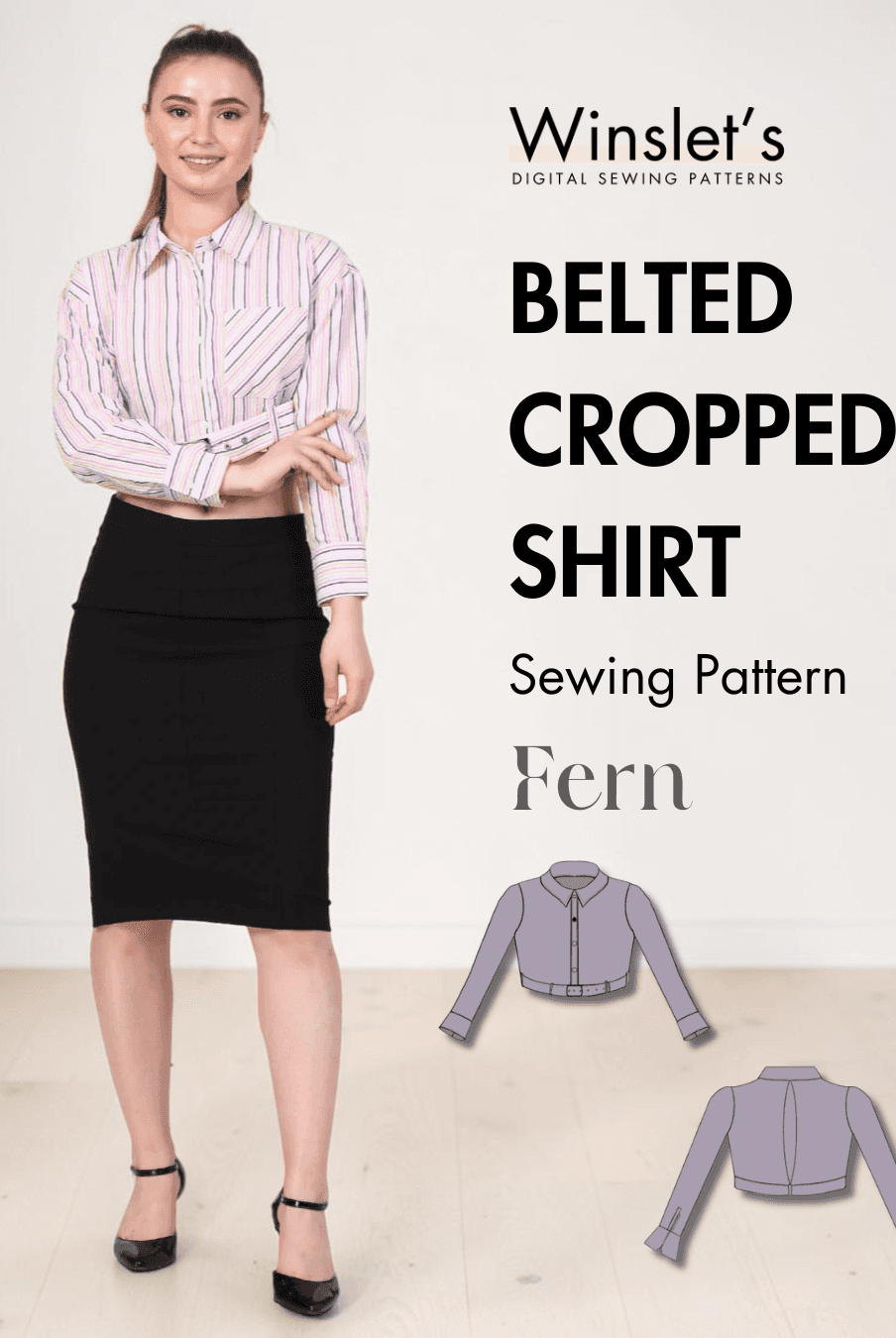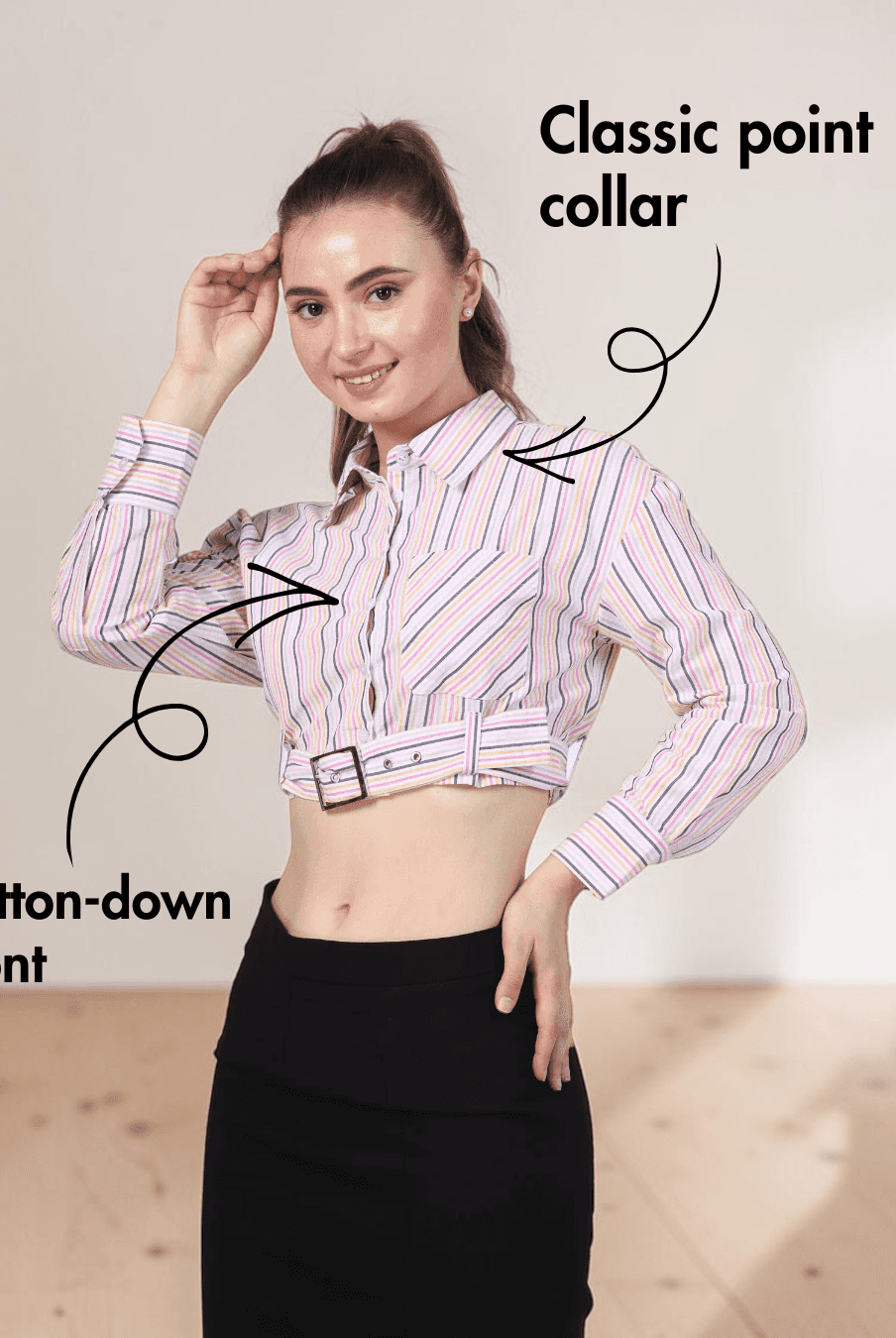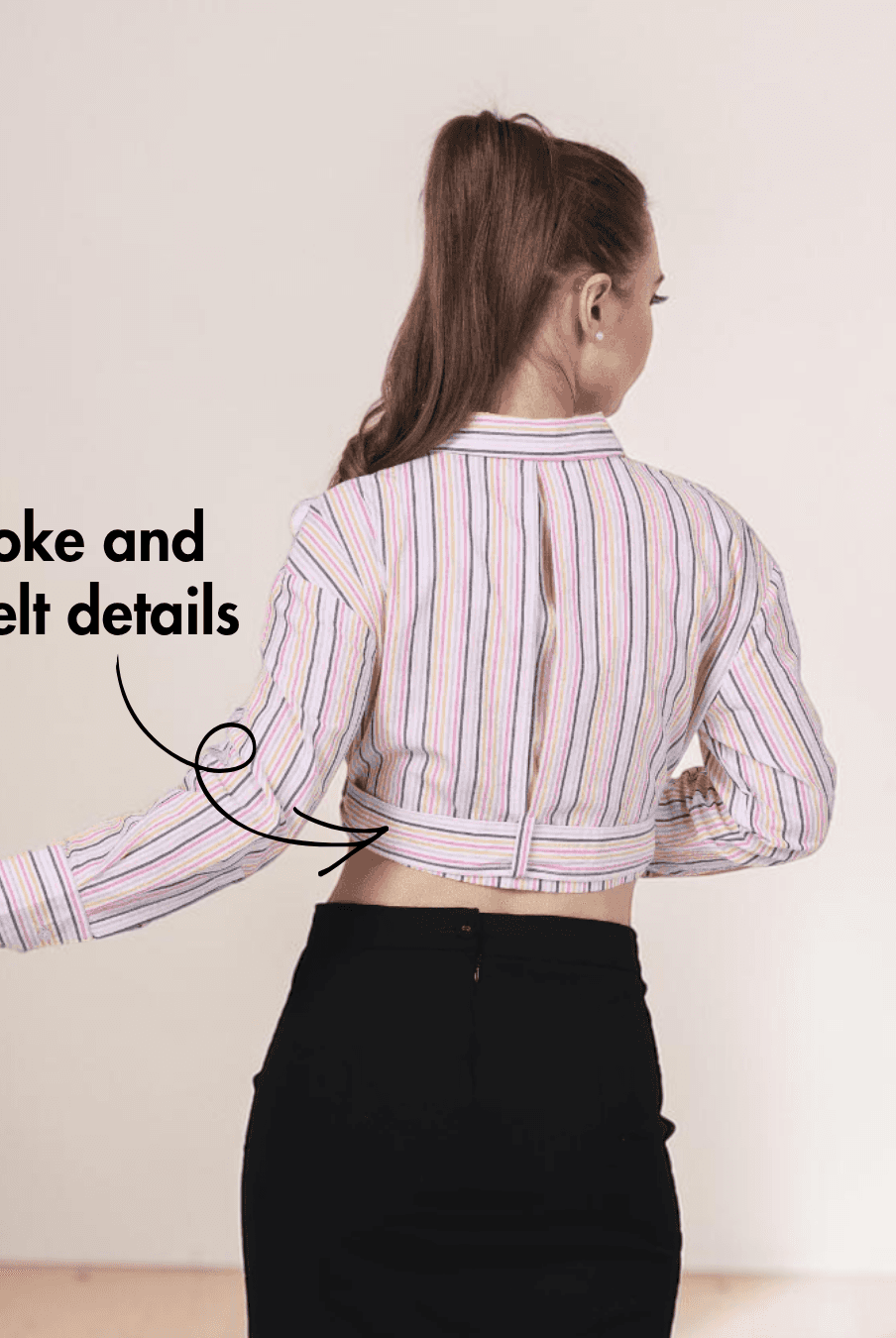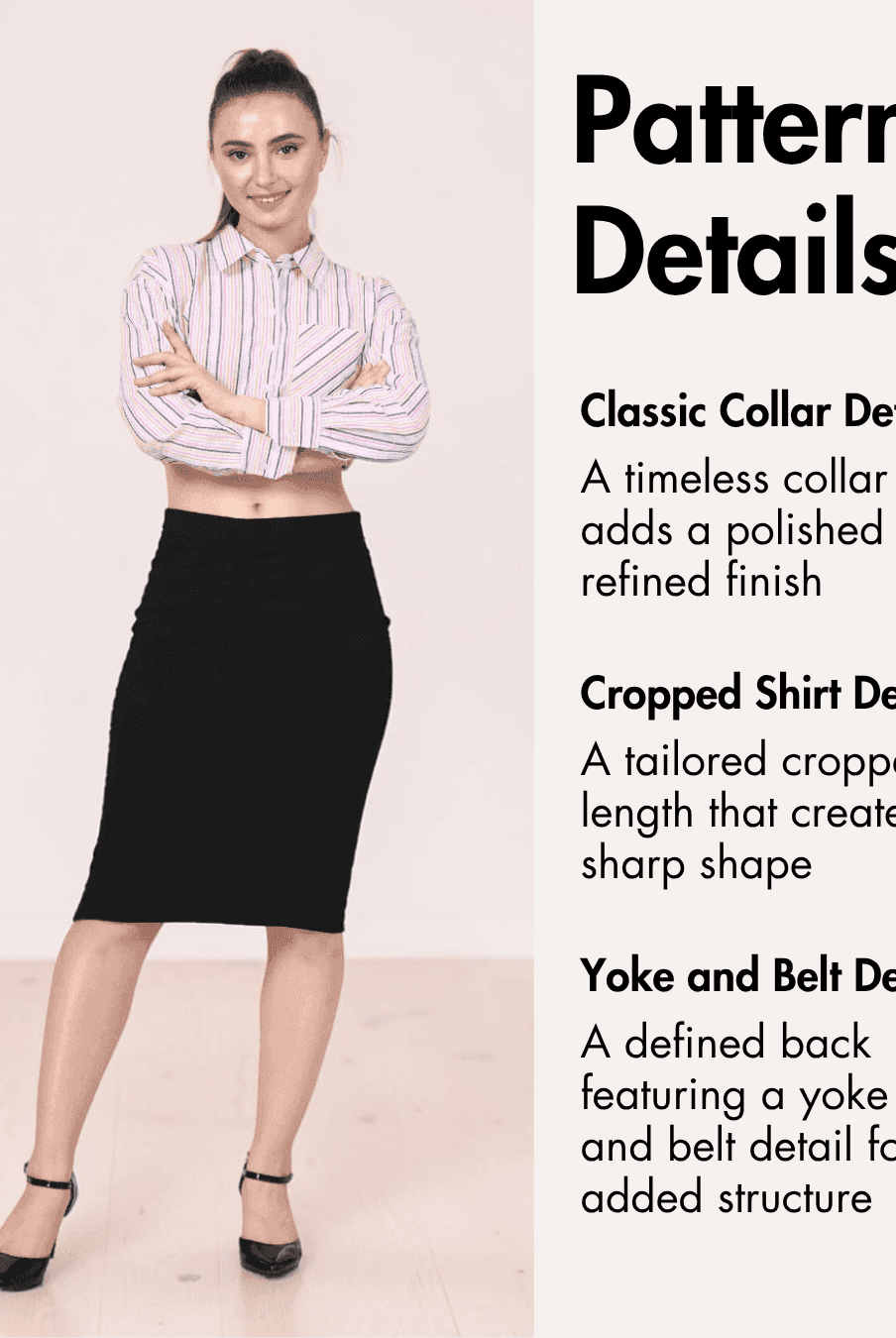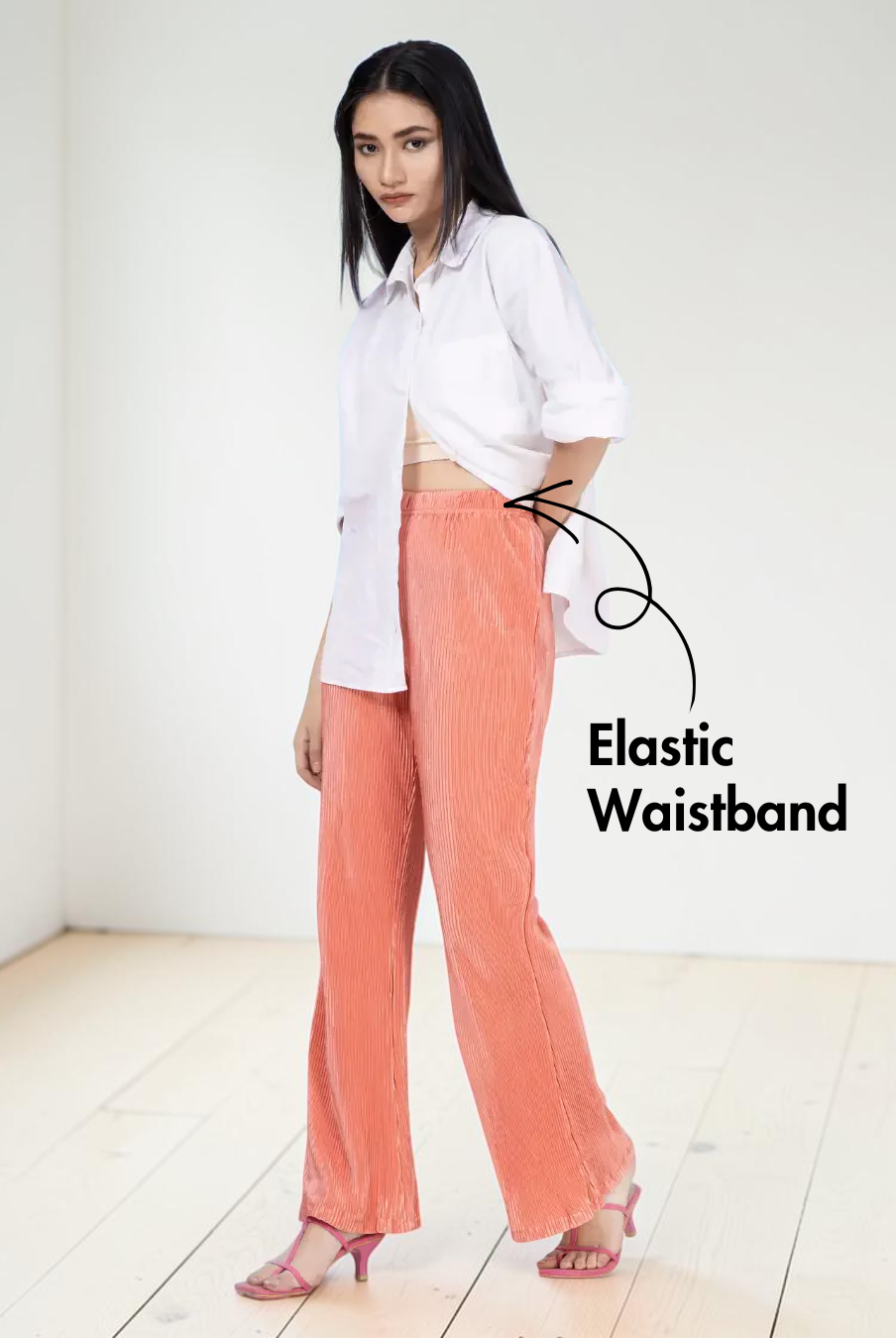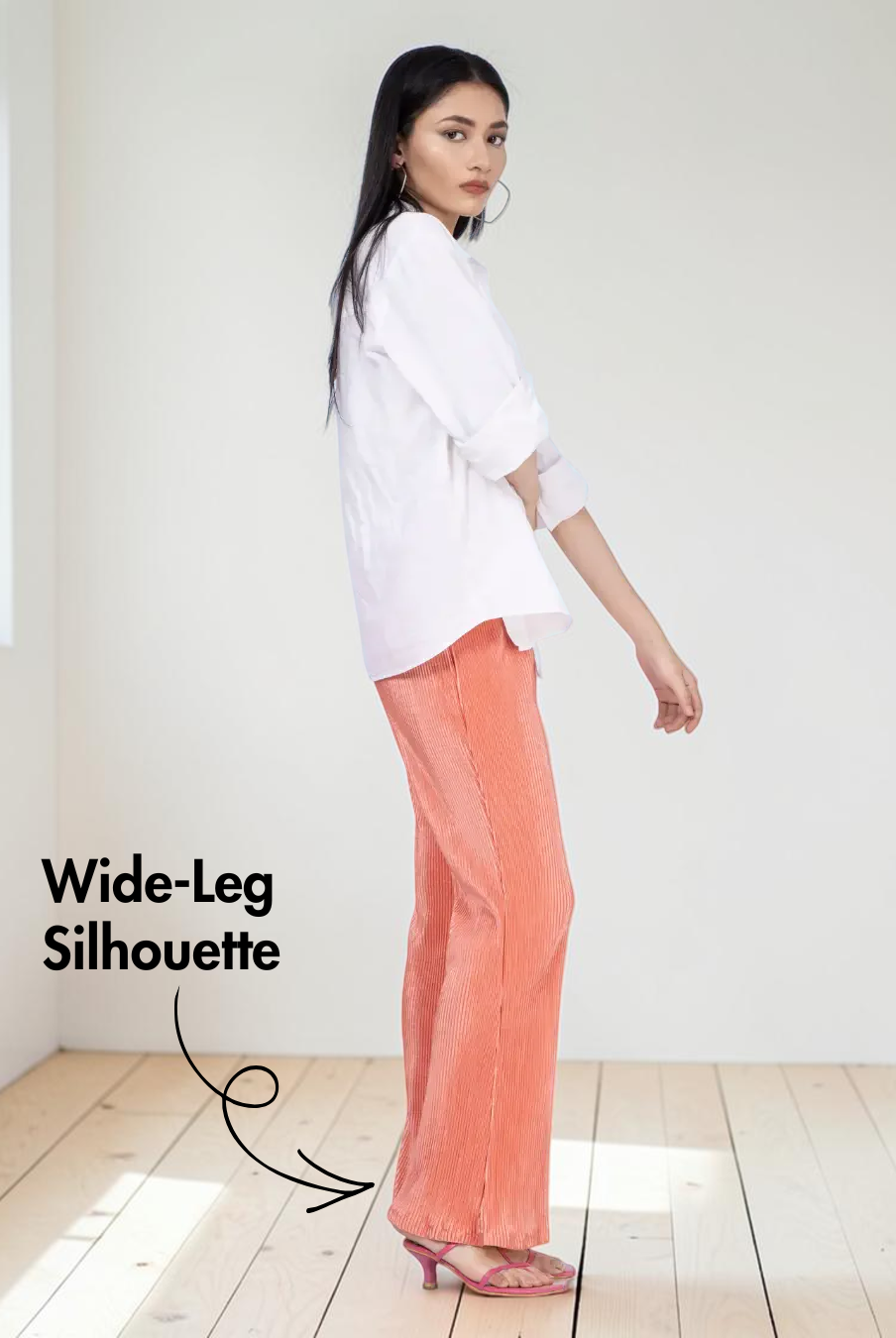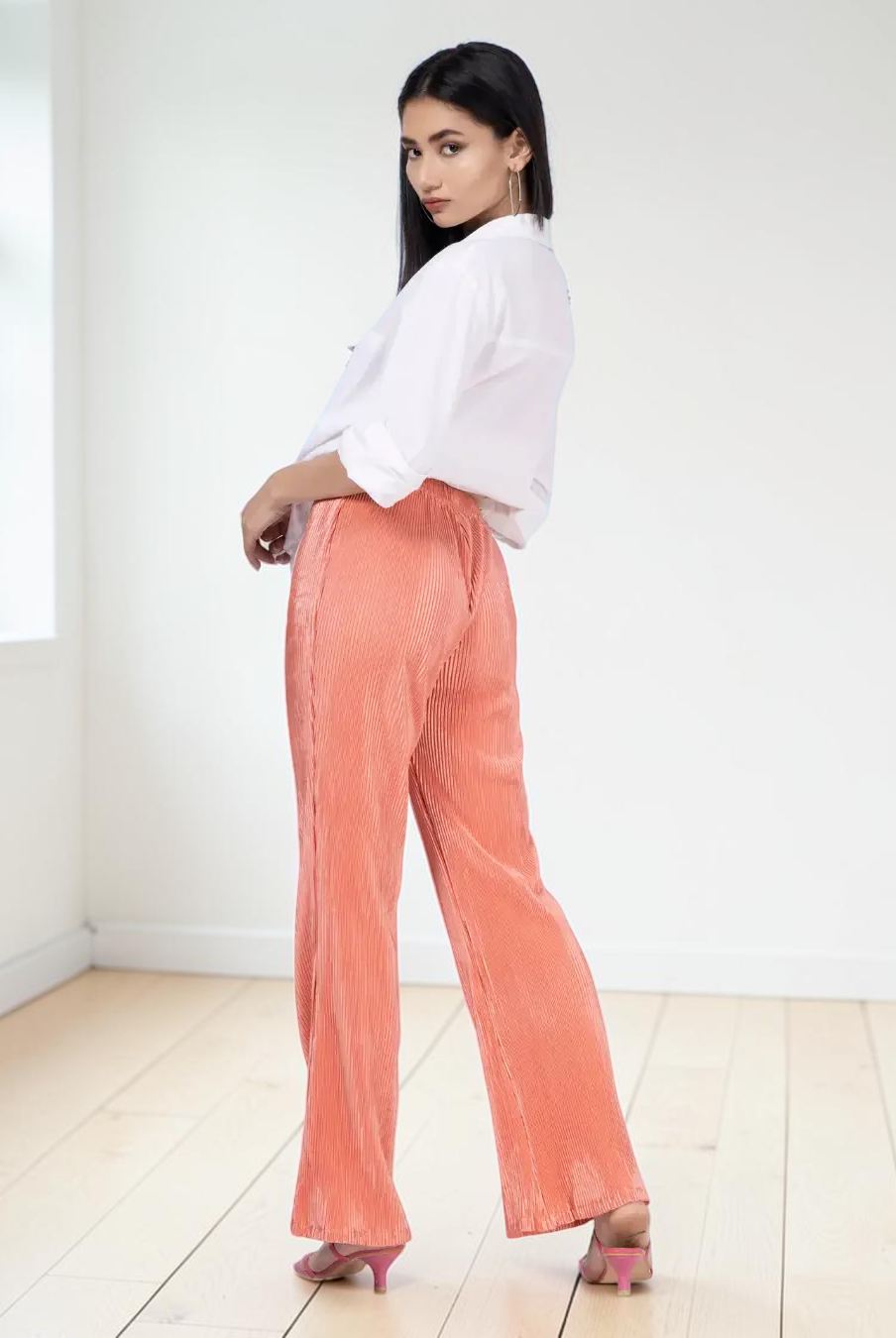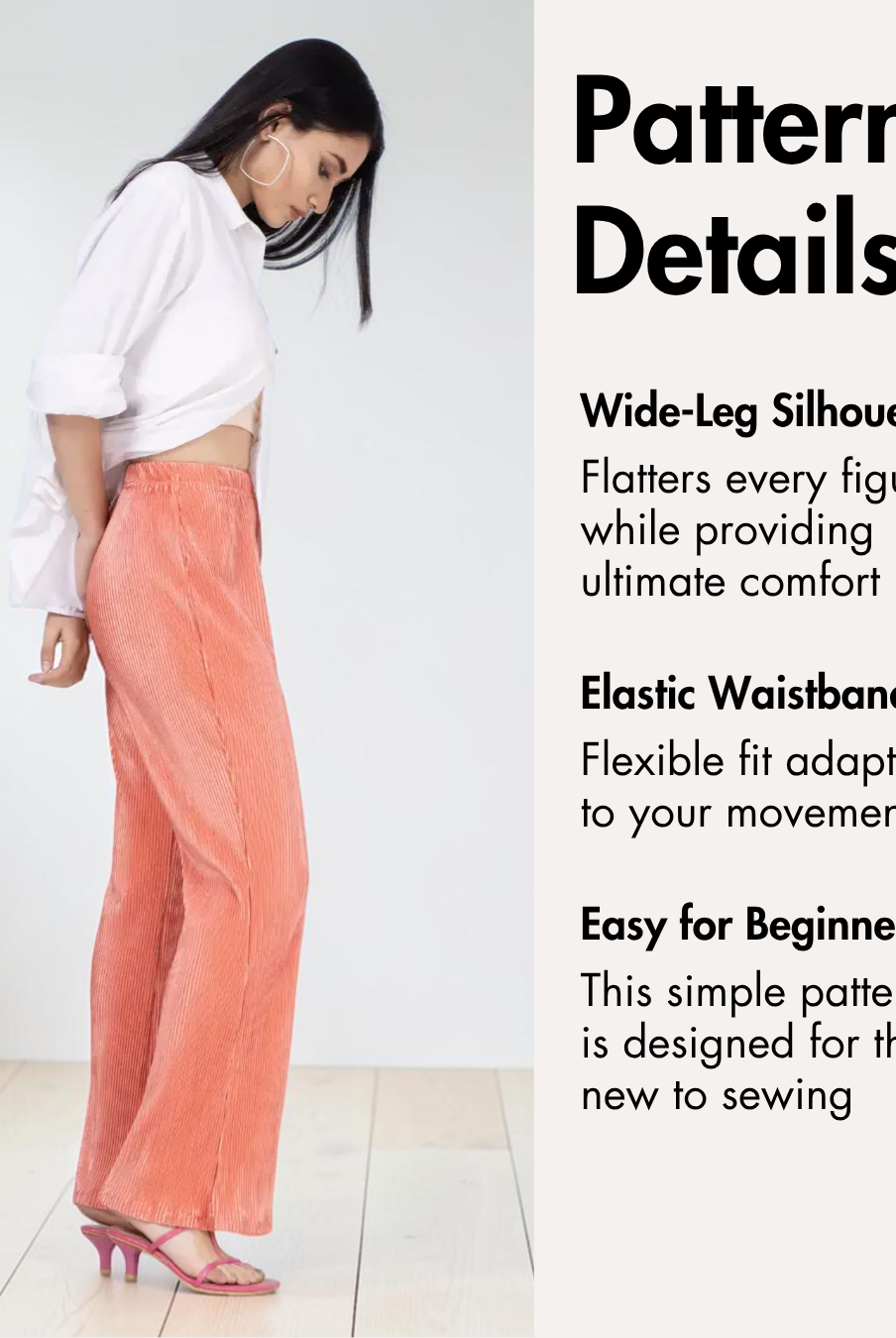
A collared shirt is one of the most versatile garments you can add to your handmade wardrobe. It can be styled for work, casual outings, or special occasions, making it a timeless sewing project. While shirtmaking introduces techniques such as collars, cuffs, plackets, and buttonholes, the finished result is both rewarding and practical.
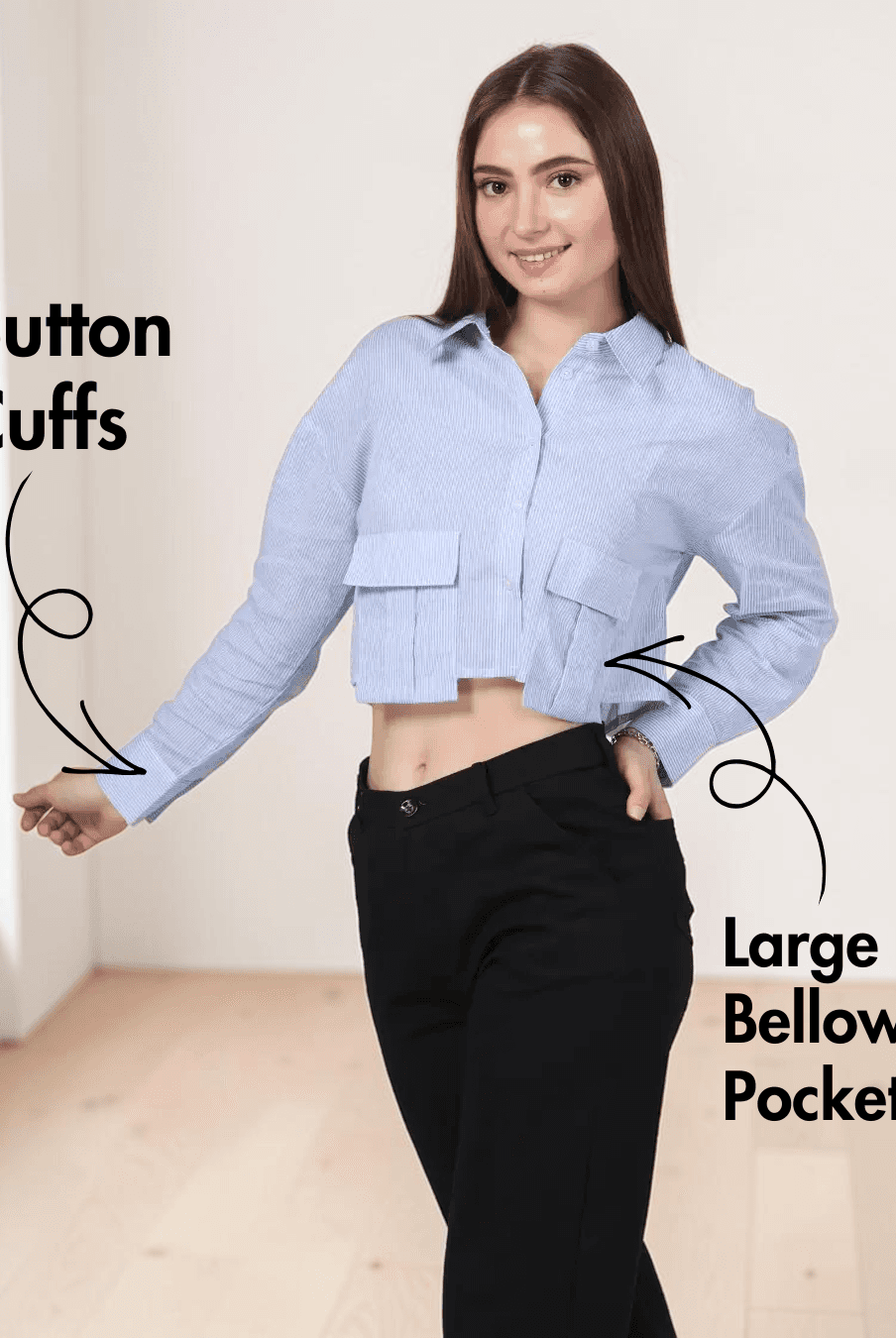
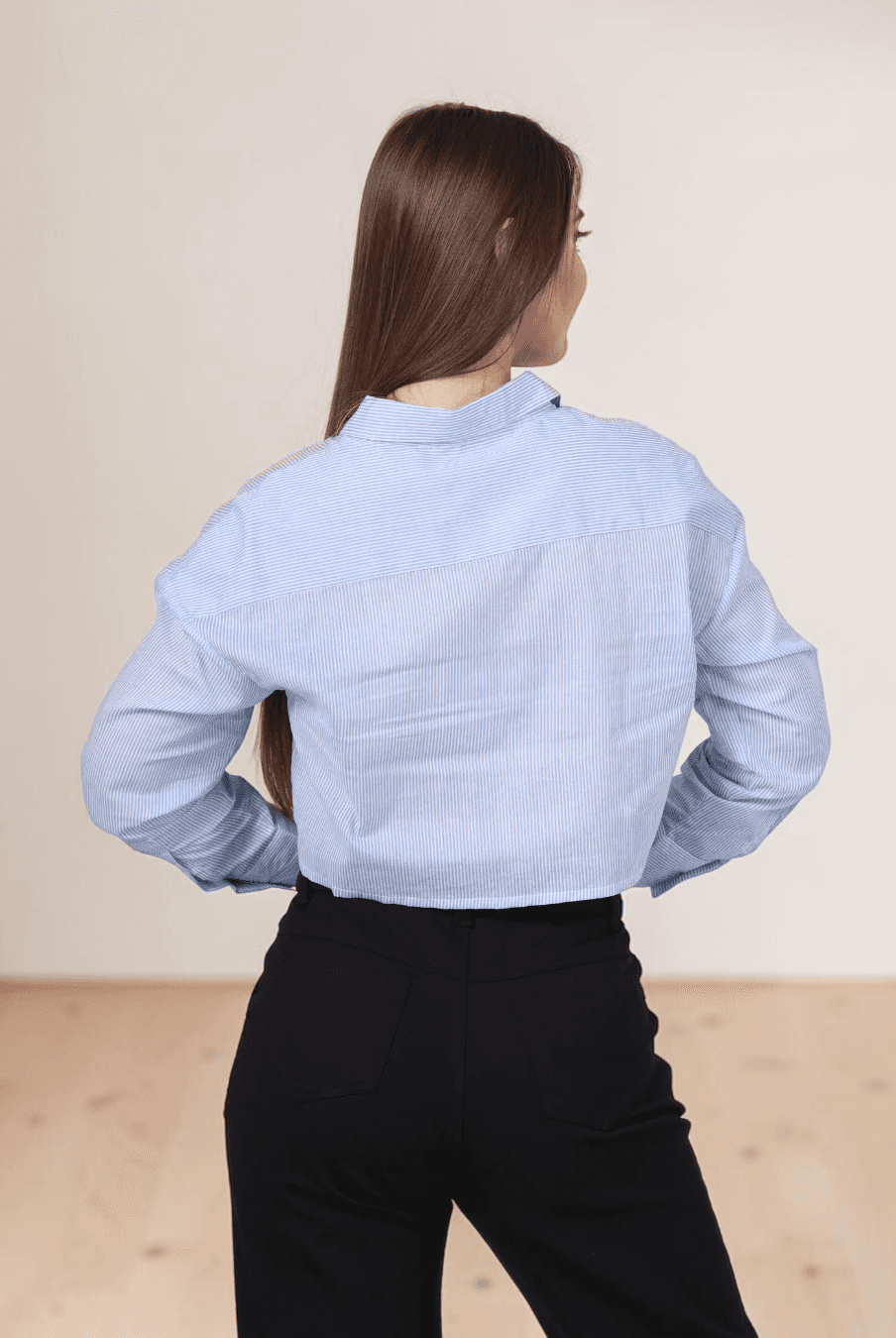
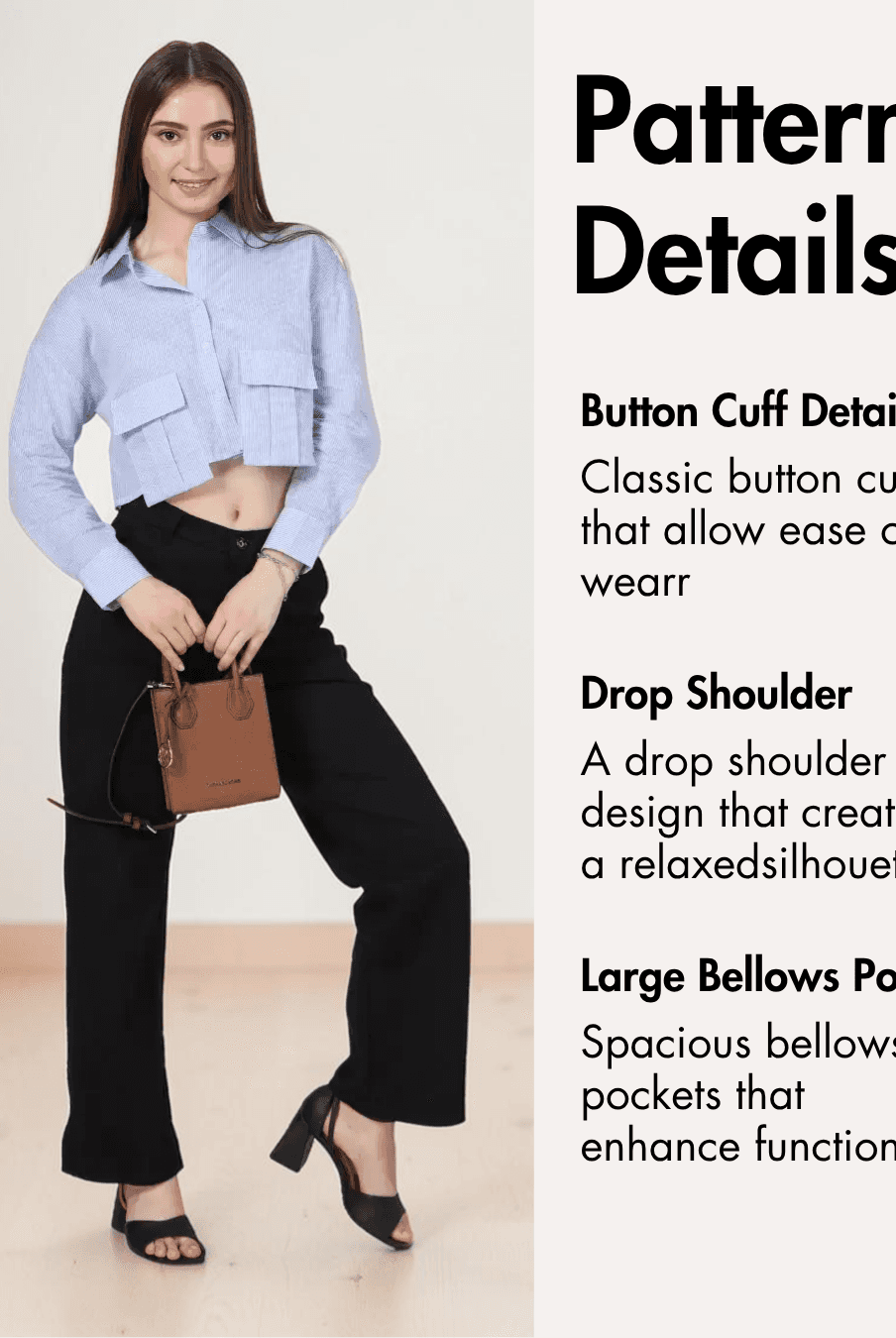
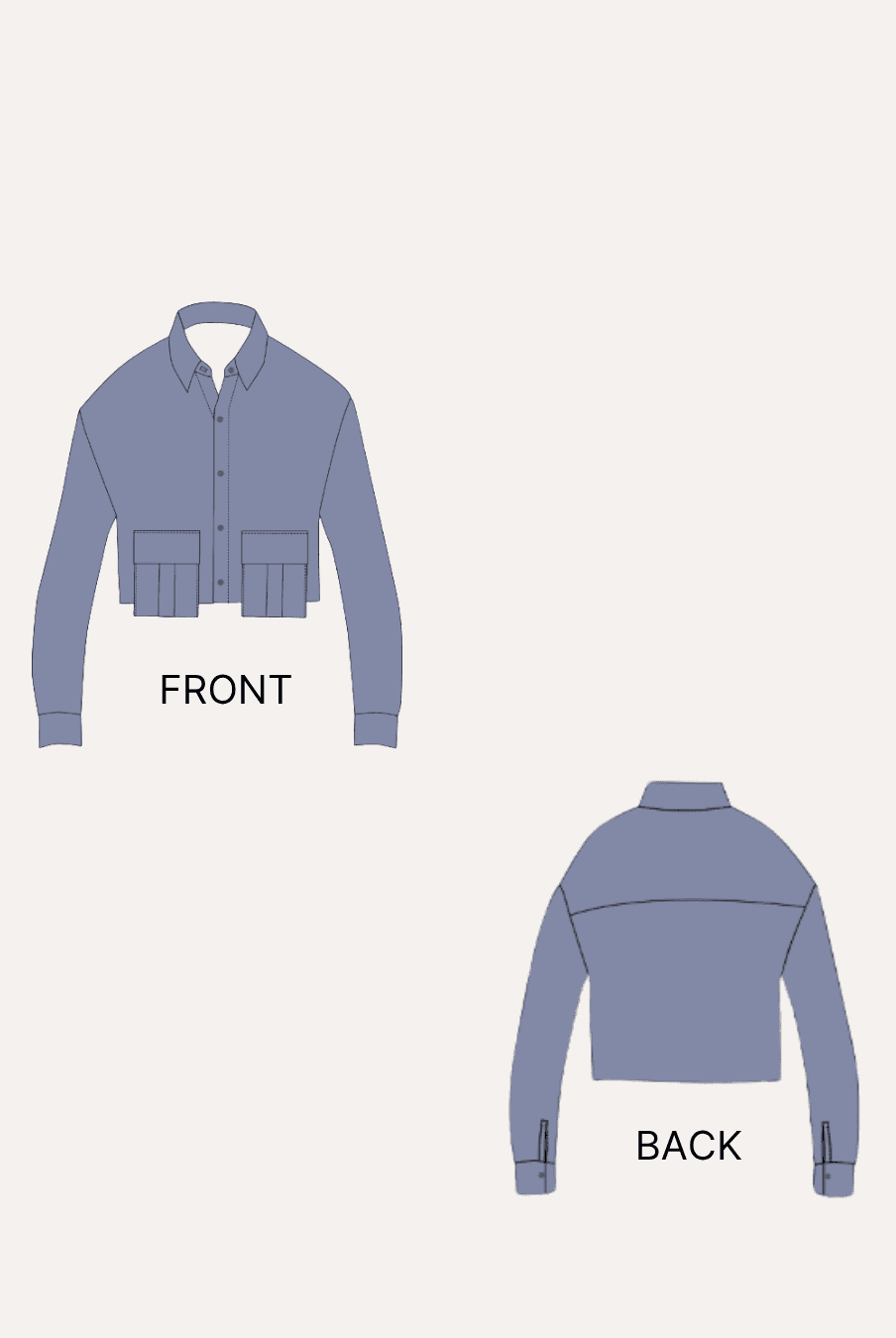
The Aspen Collared Shirt Sewing Pattern by Winslet's is a stylish long-sleeve shirt featuring a classic collar, button-front closure, back yoke, and cuffs. Designed for intermediate sewists, it offers an excellent opportunity to develop shirtmaking skills while creating a polished garment you'll wear again and again.

Why Sew a Collared Shirt?
- Creates a timeless wardrobe staple suitable for many occasions.
- Offers endless styling options for casual and dressy outfits.
- Features classic tailoring details such as a collar, cuffs, and front placket.
- Allows sewists to customize fabric choices and fit.
- Provides an opportunity to learn important garment construction techniques.
- Works well as a layering piece throughout the year.
- Produces a professional-looking handmade garment.
Why Choose the Winslet's Aspen Collared Shirt Pattern?

The Aspen Collared Shirt Sewing Pattern is designed to help sewists create a polished woven shirt with classic tailoring details and a comfortable fit.
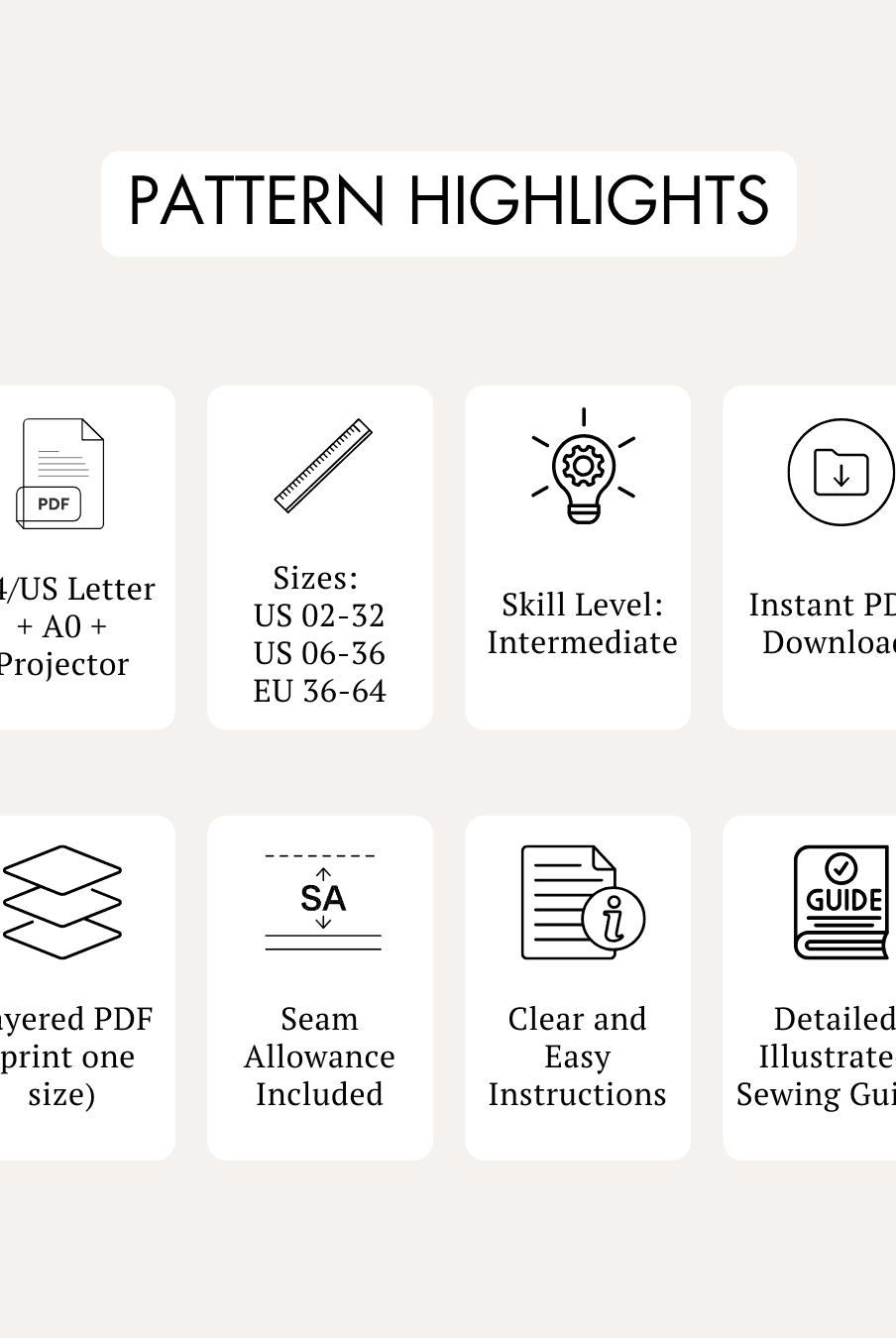
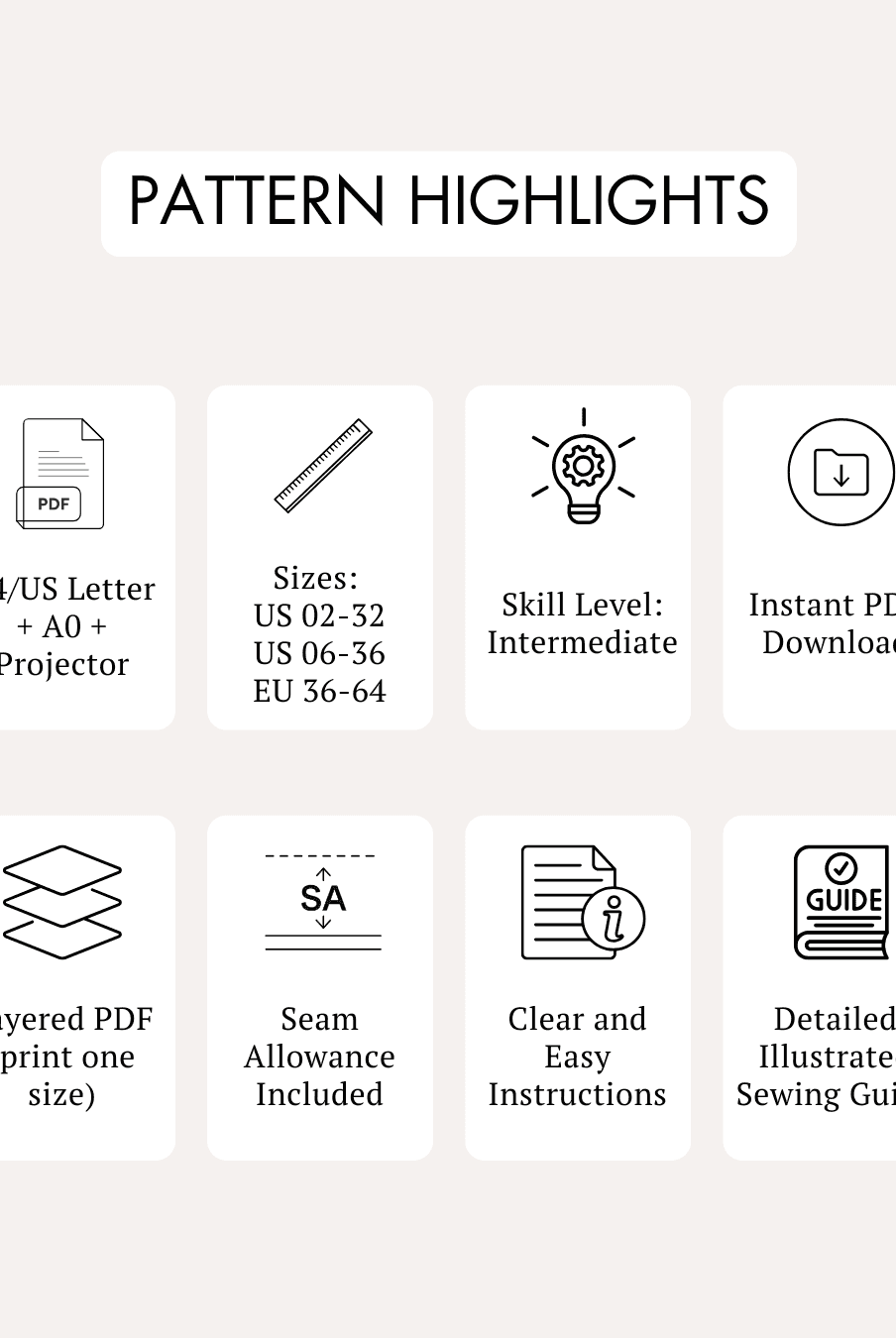
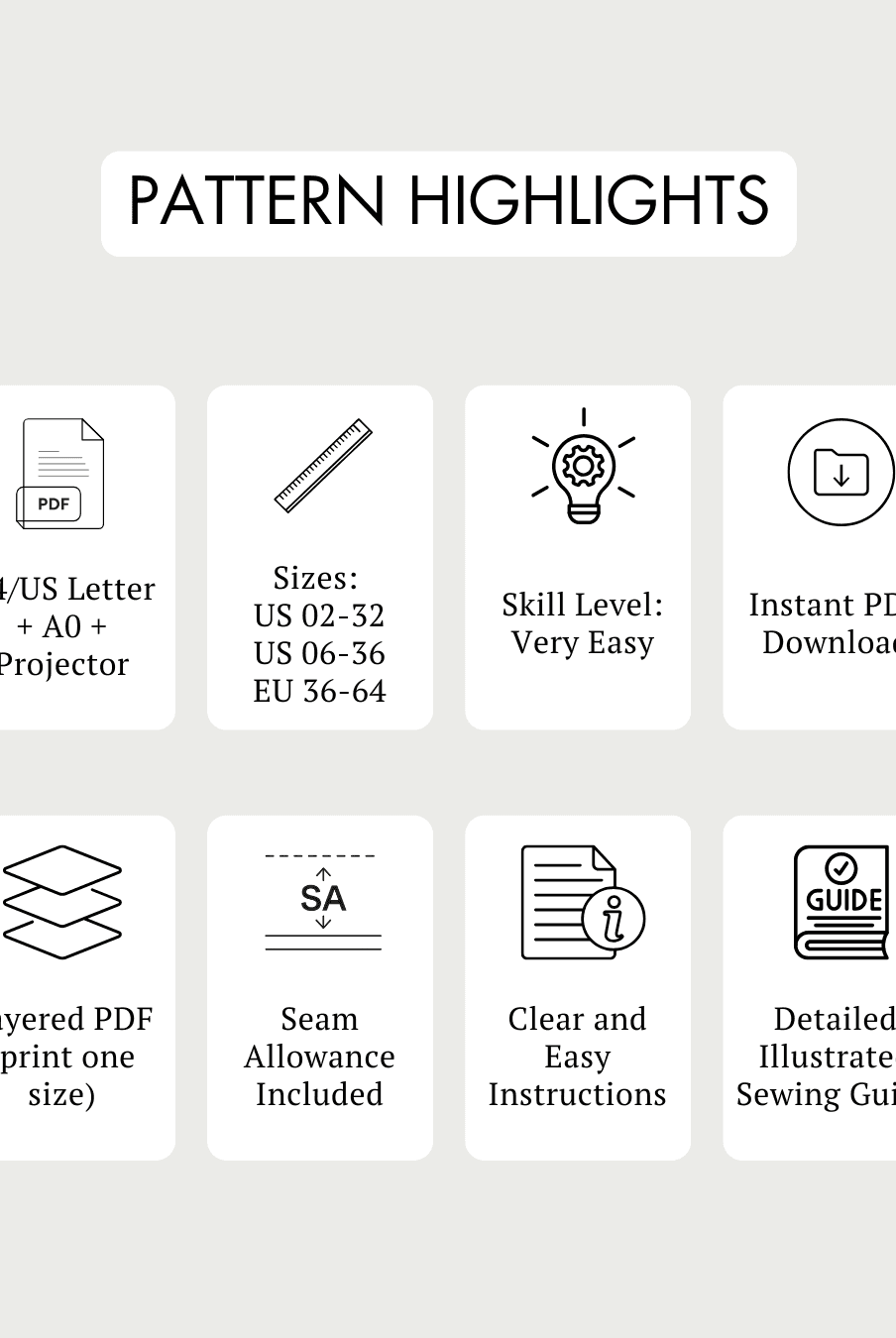
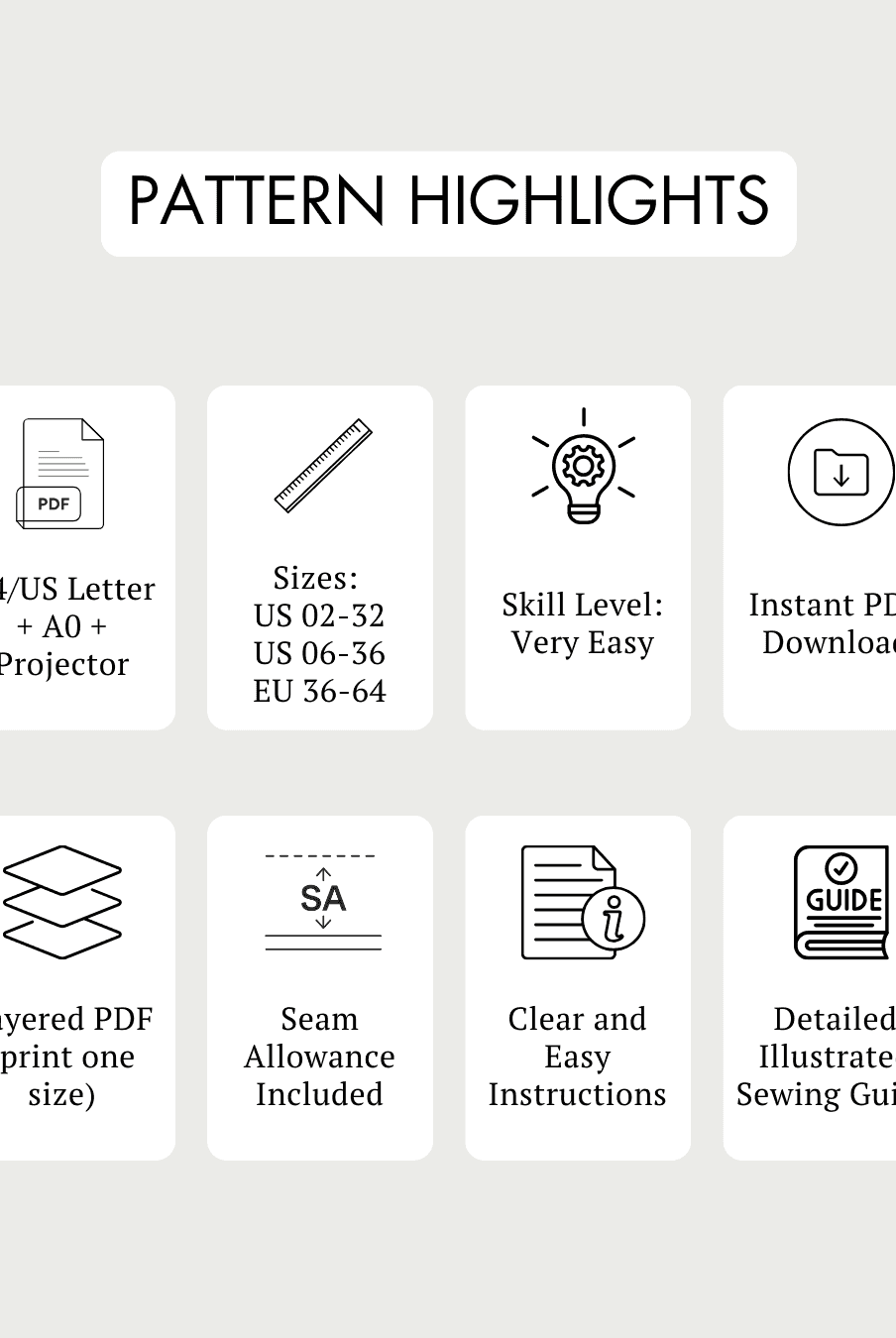
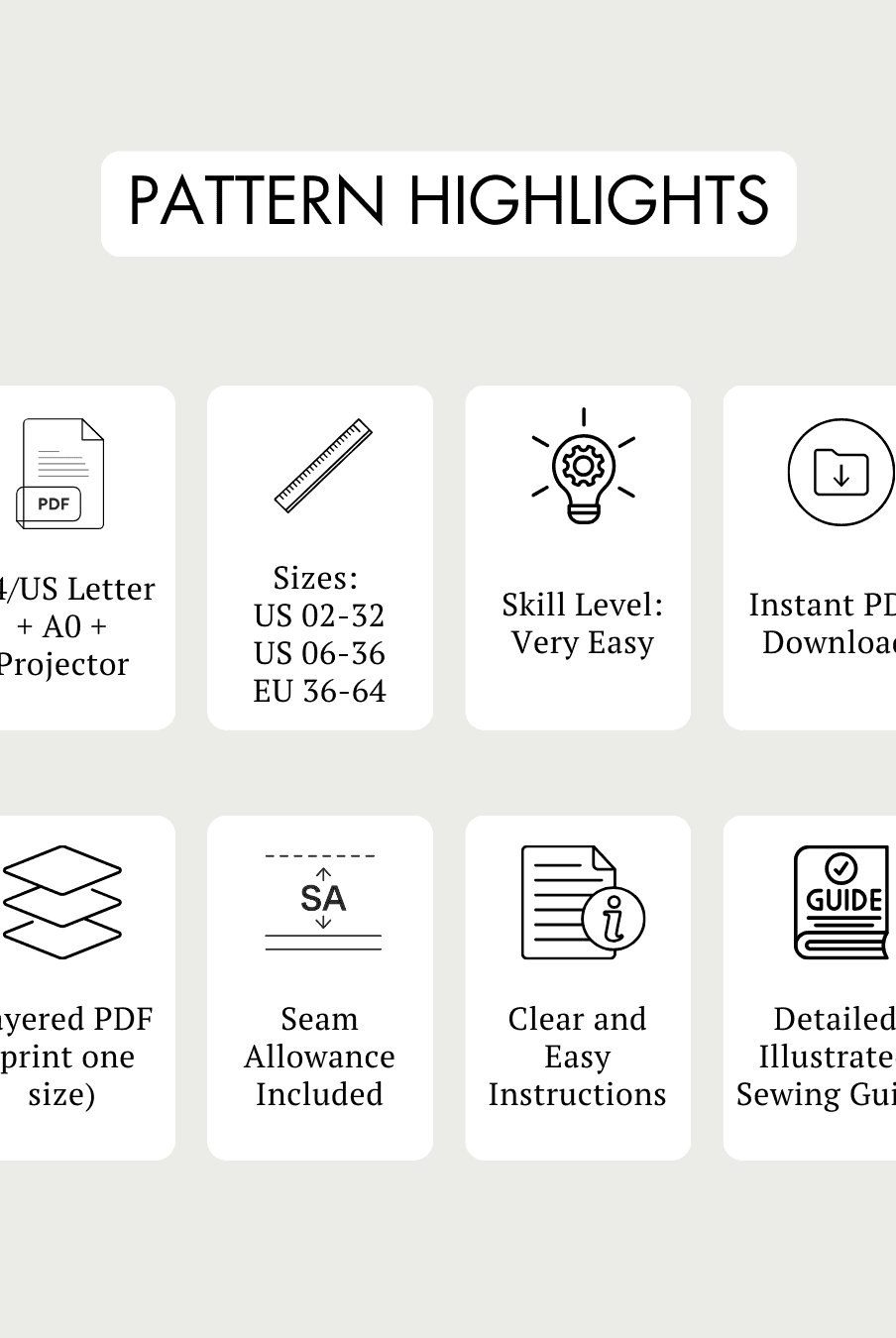
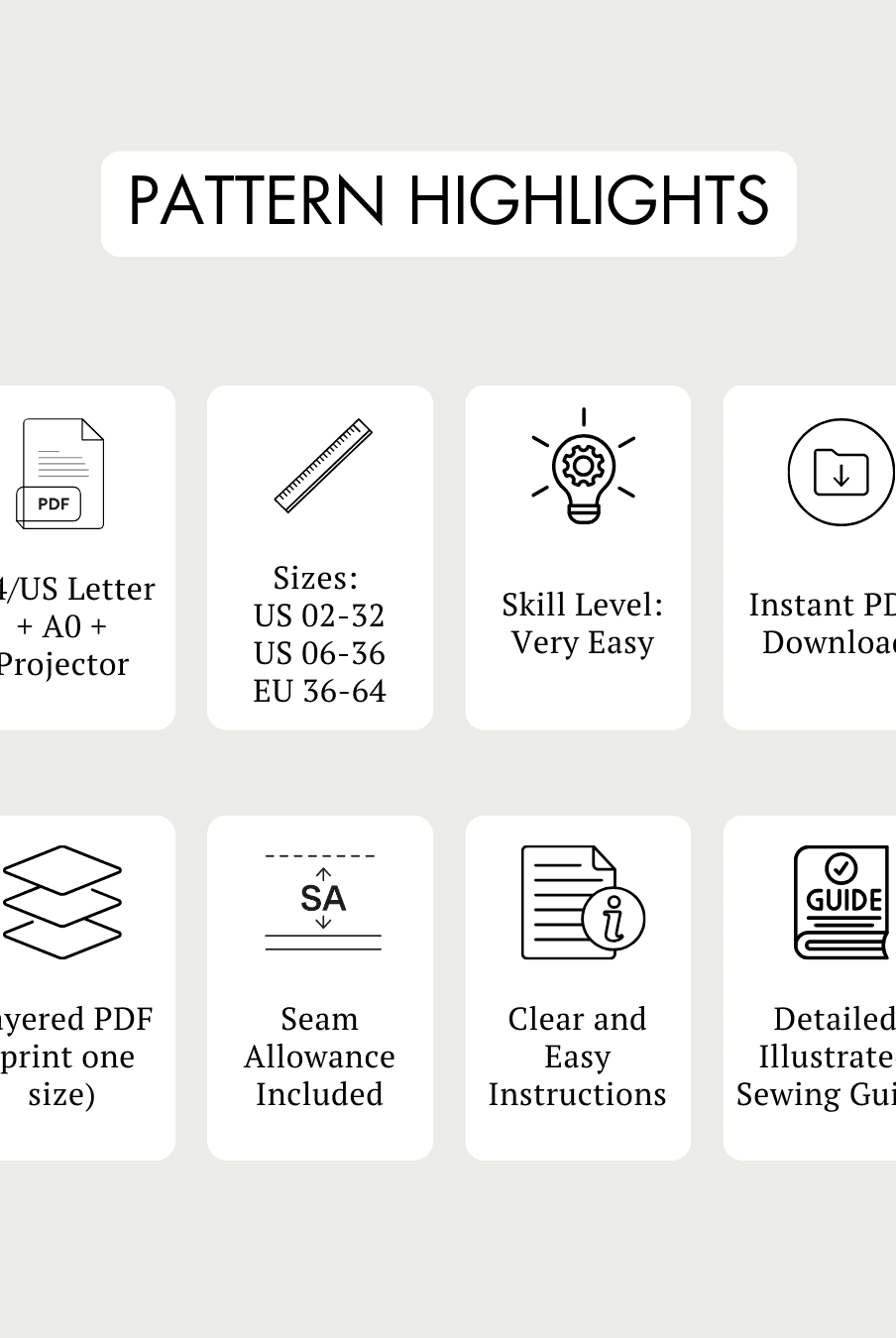
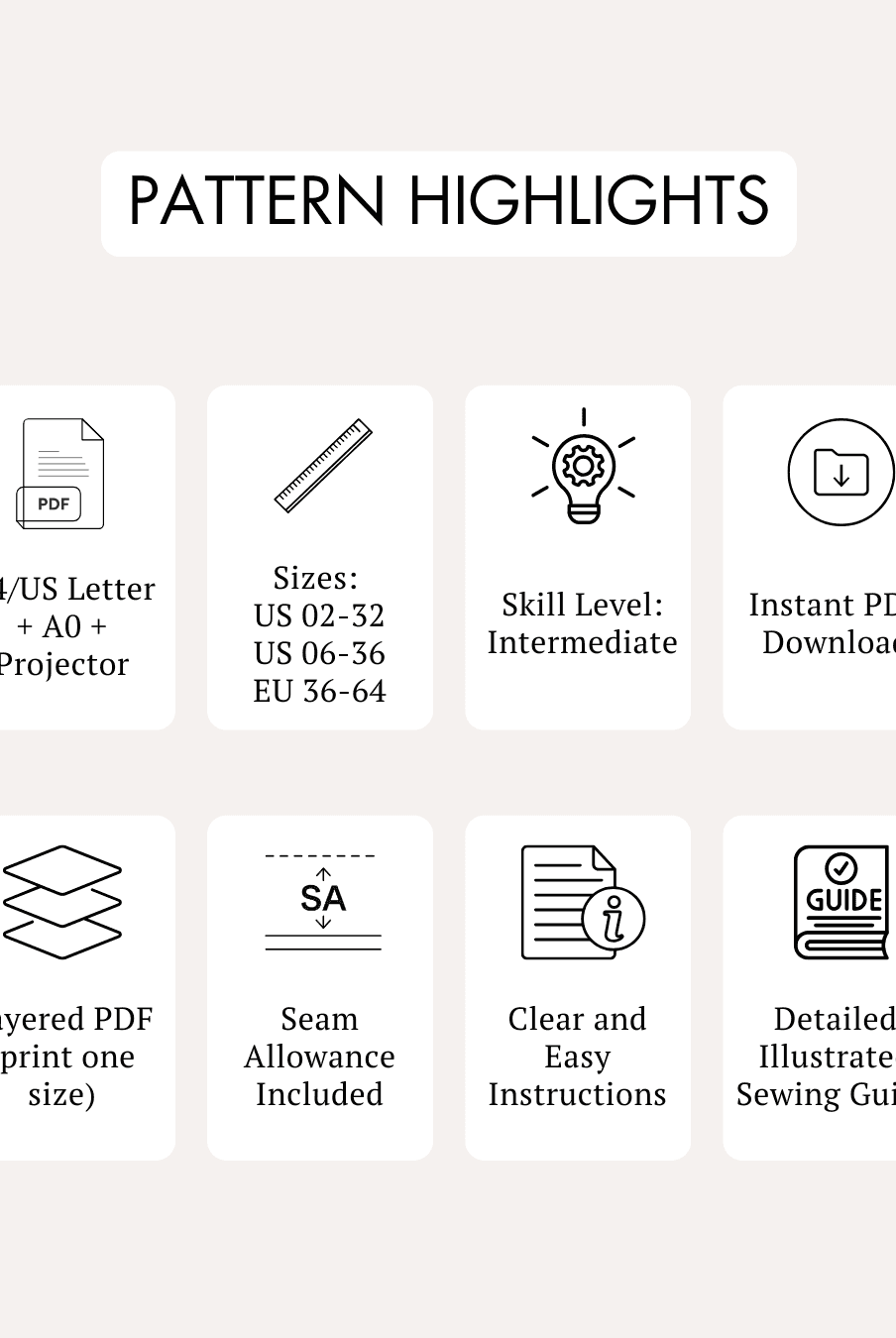
Skill Level: Intermediate
Key Features:
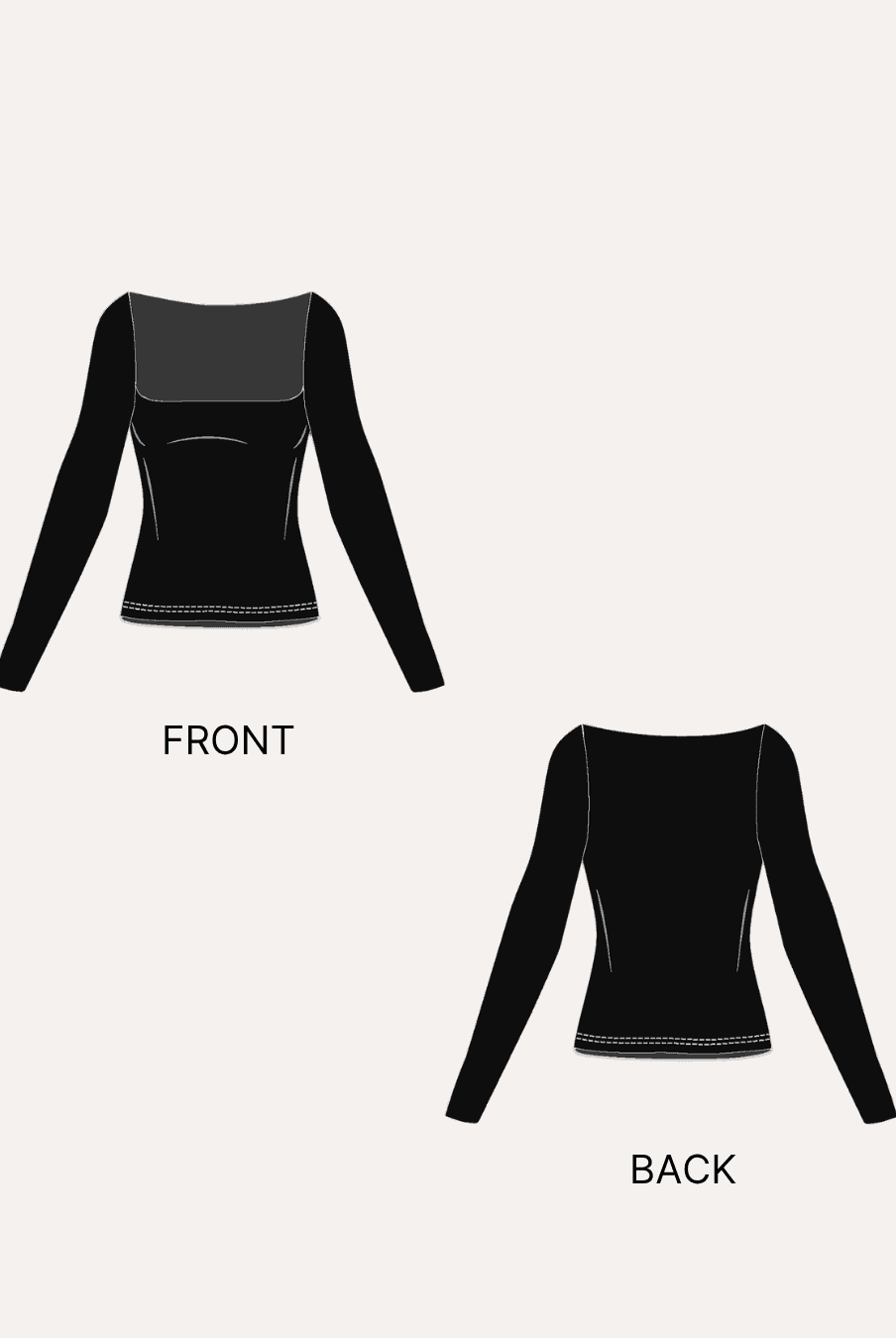
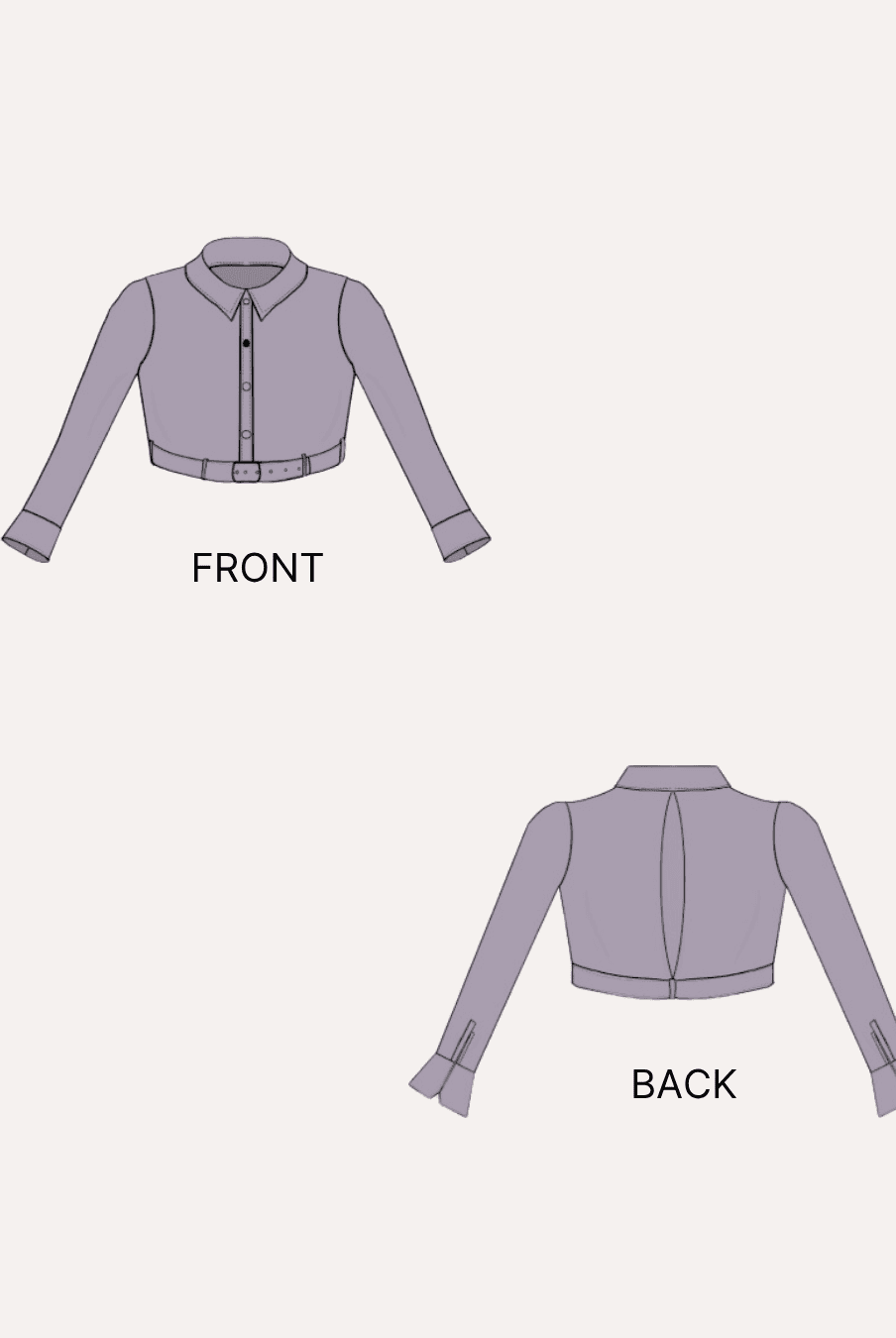
- Long sleeves
- Regular-length shirt
- Front button closure
- Shirt collar and collar band
- Back yoke construction
- Sleeve plackets and cuffs
- Curved hem
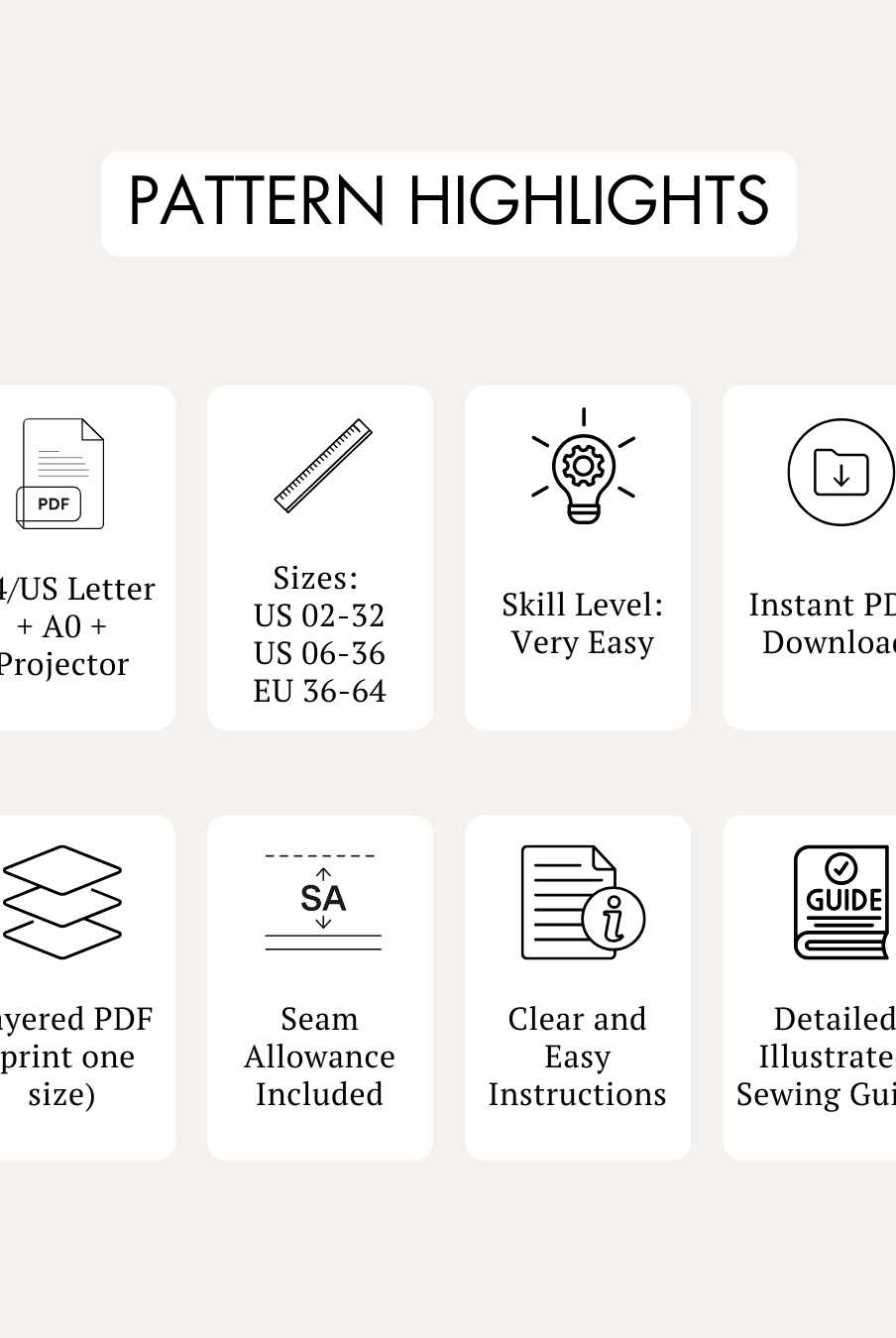
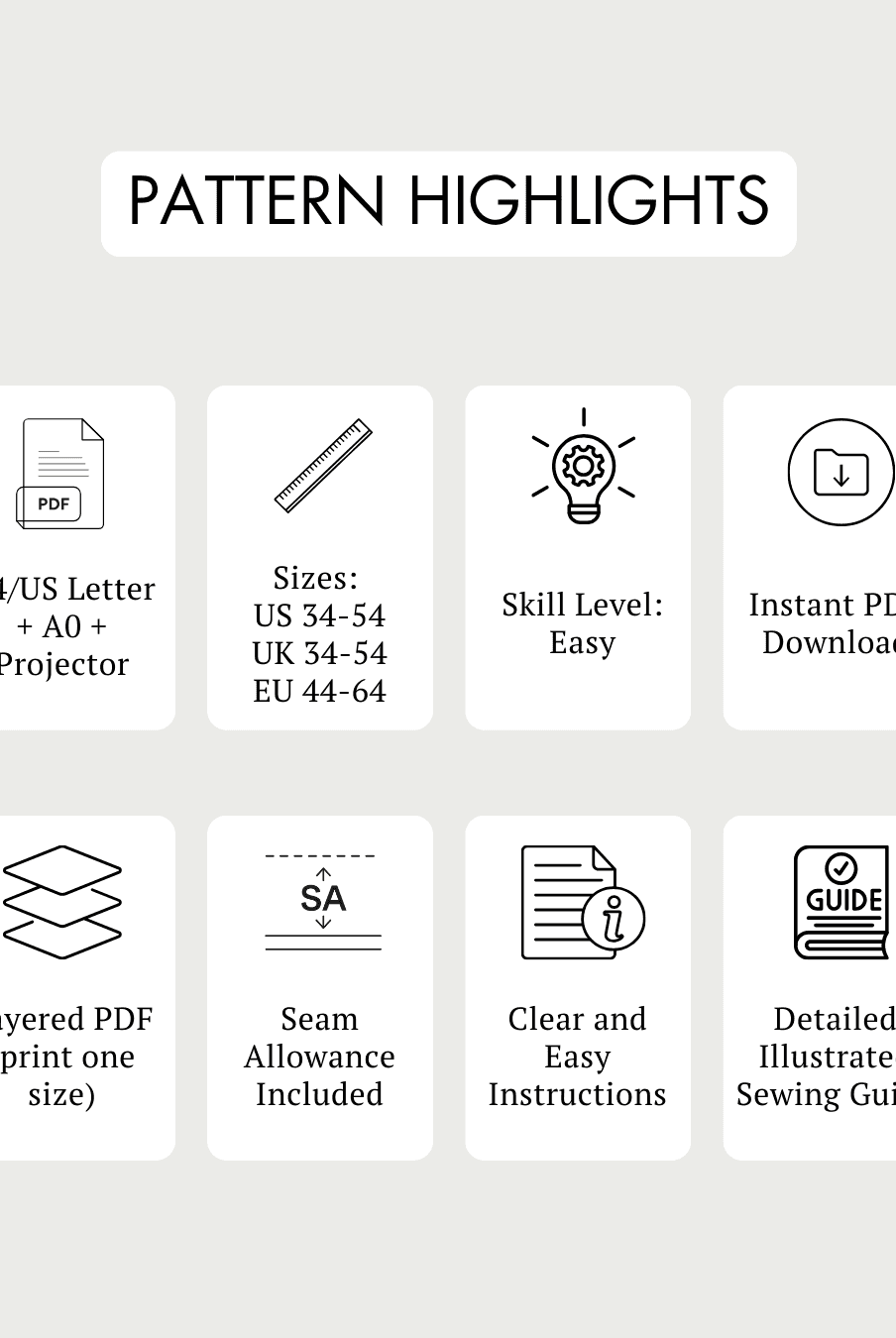
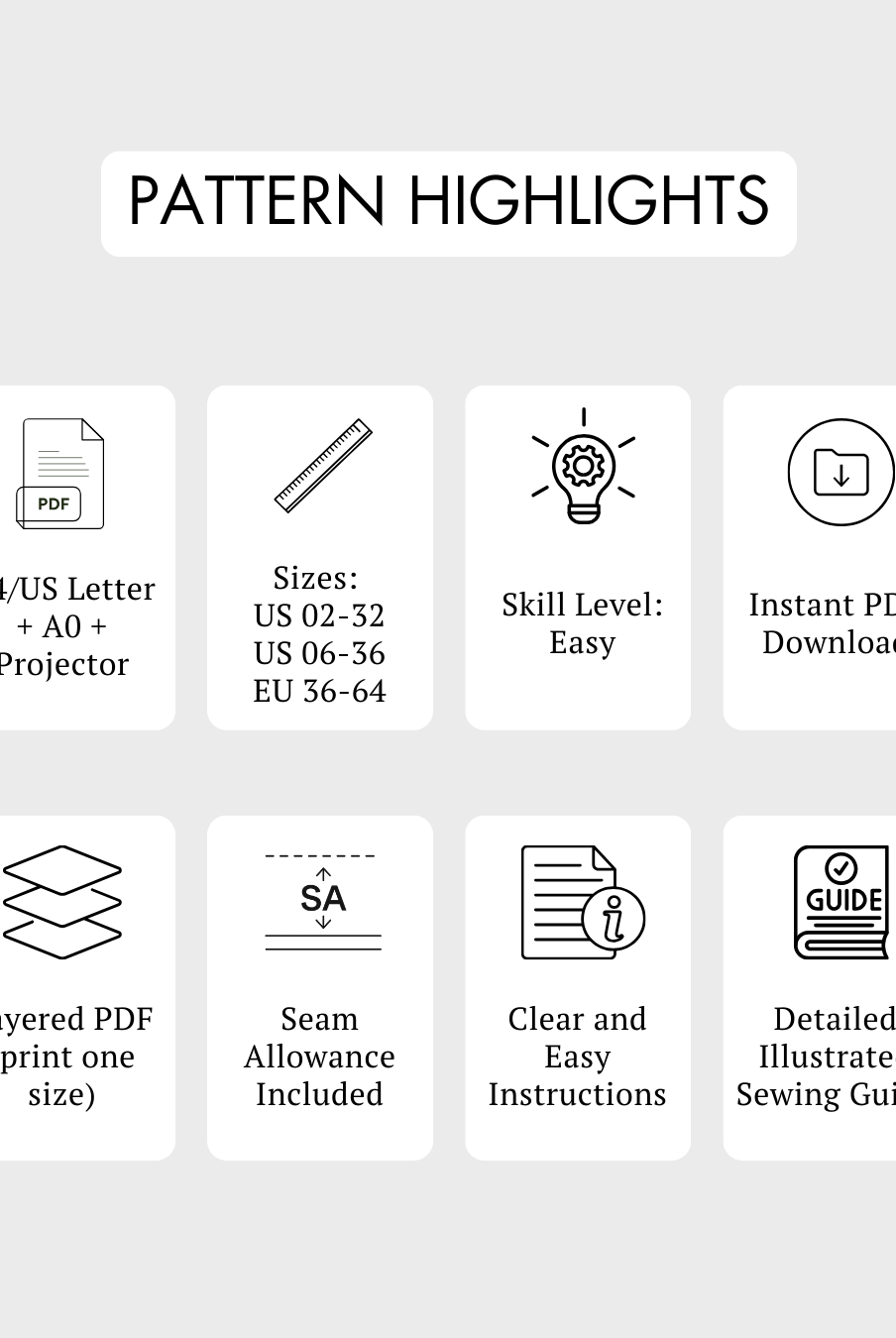
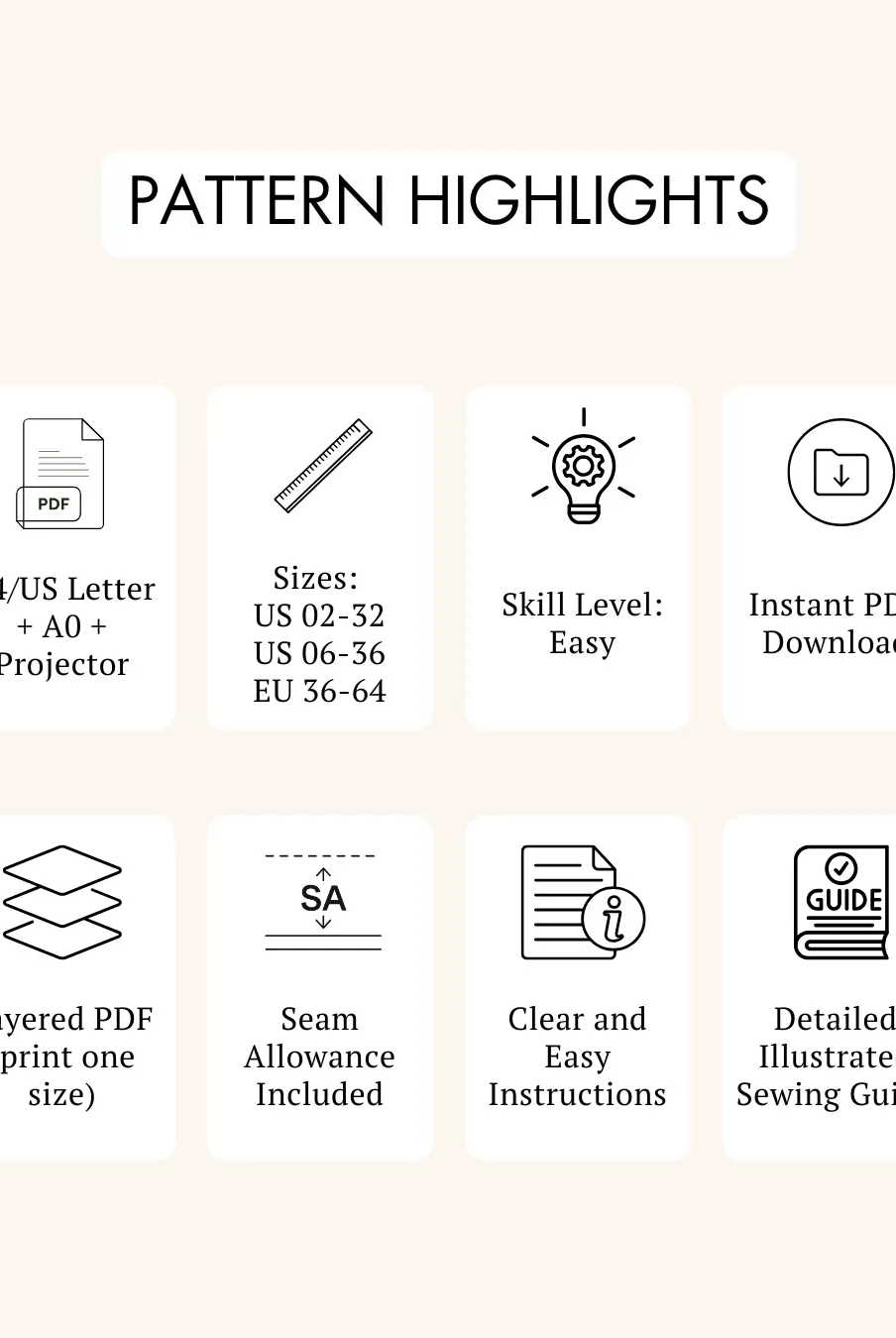
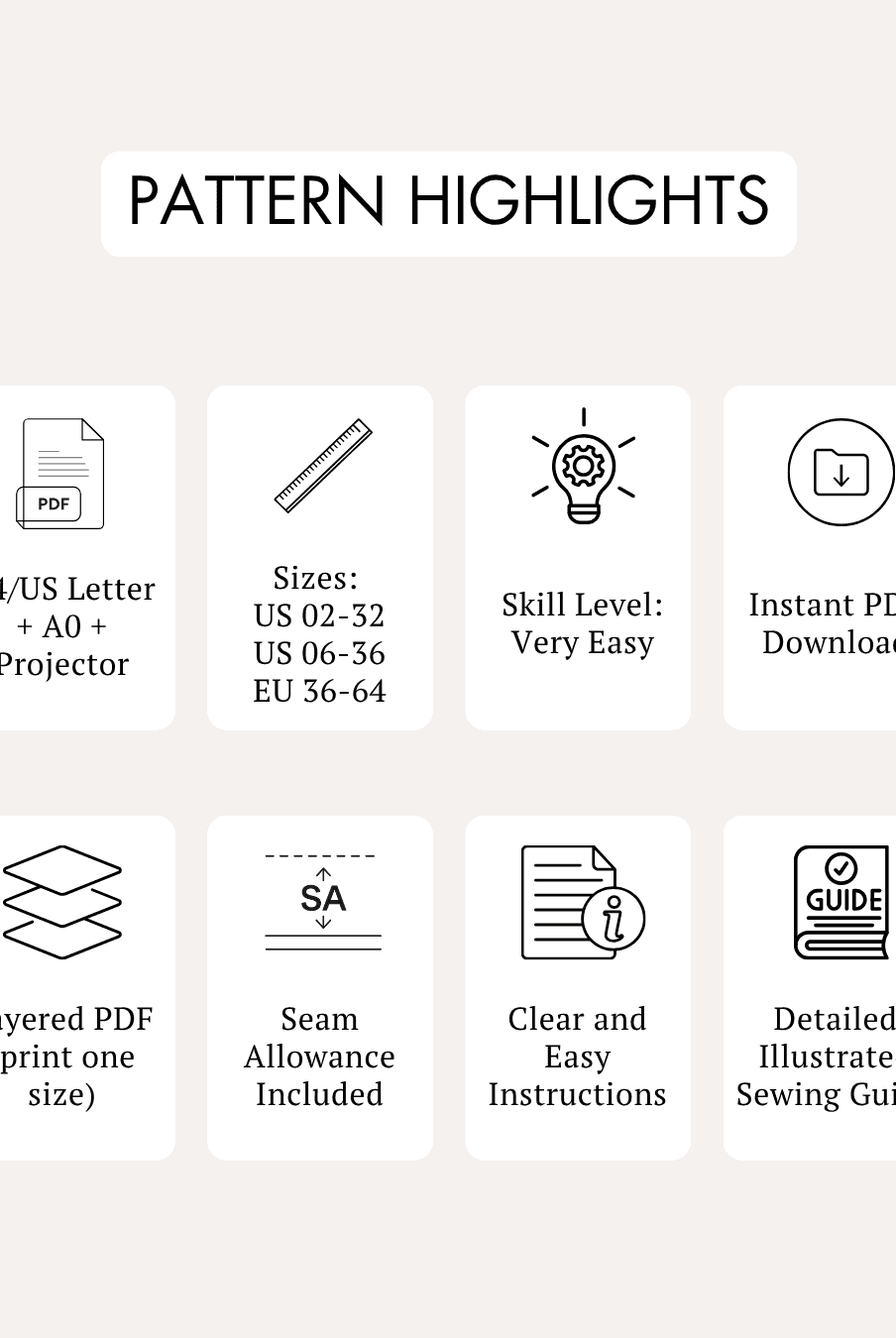
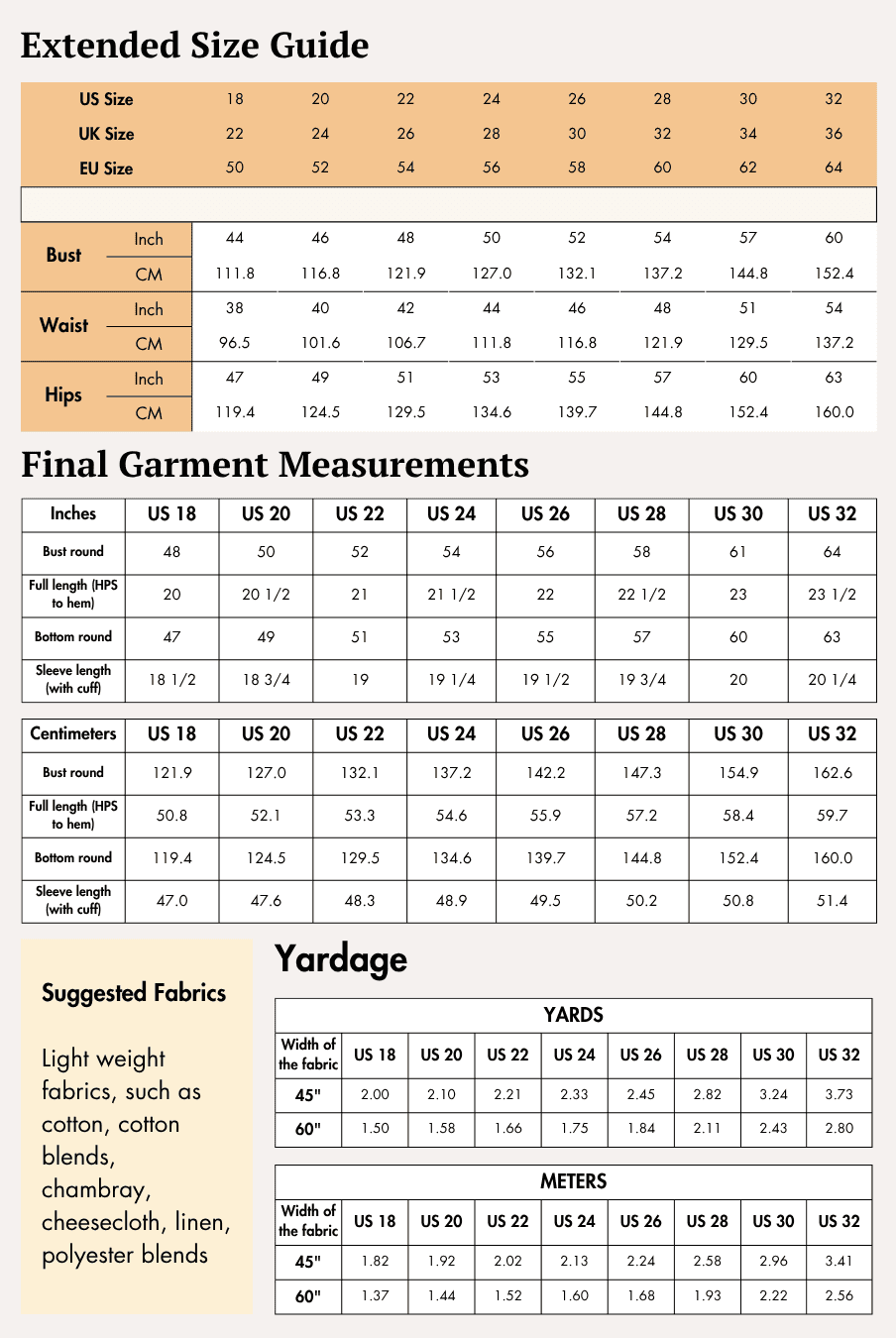
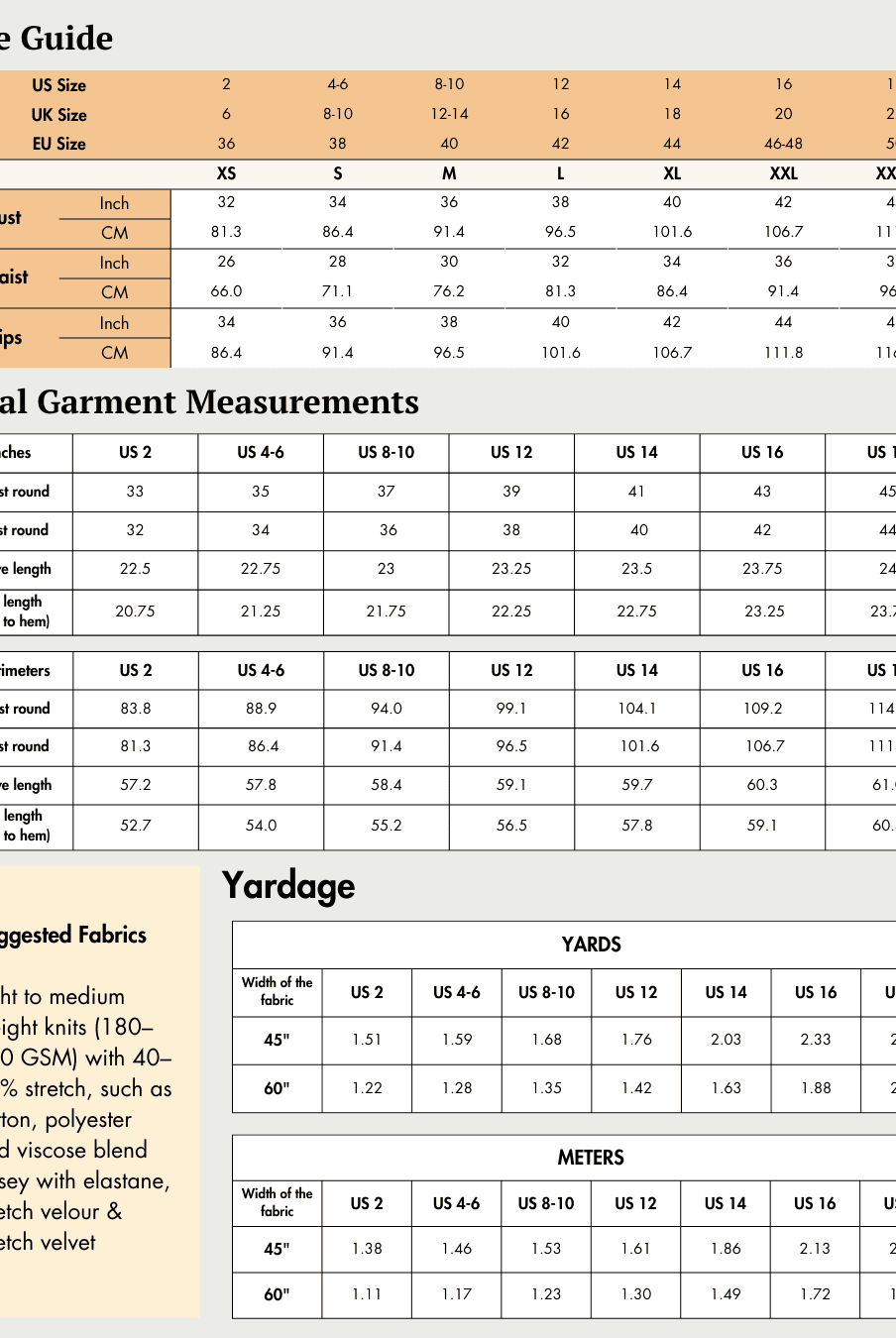
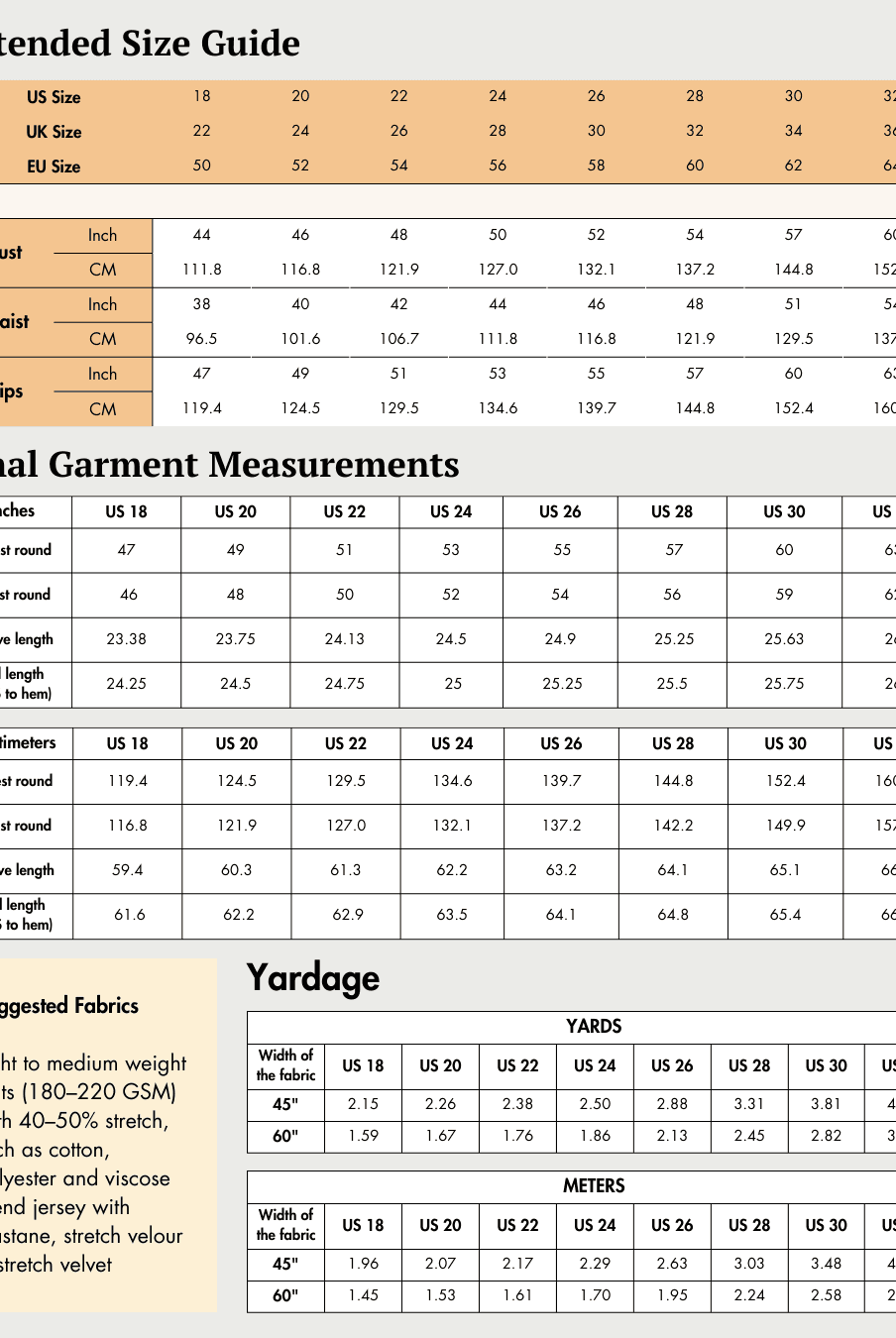
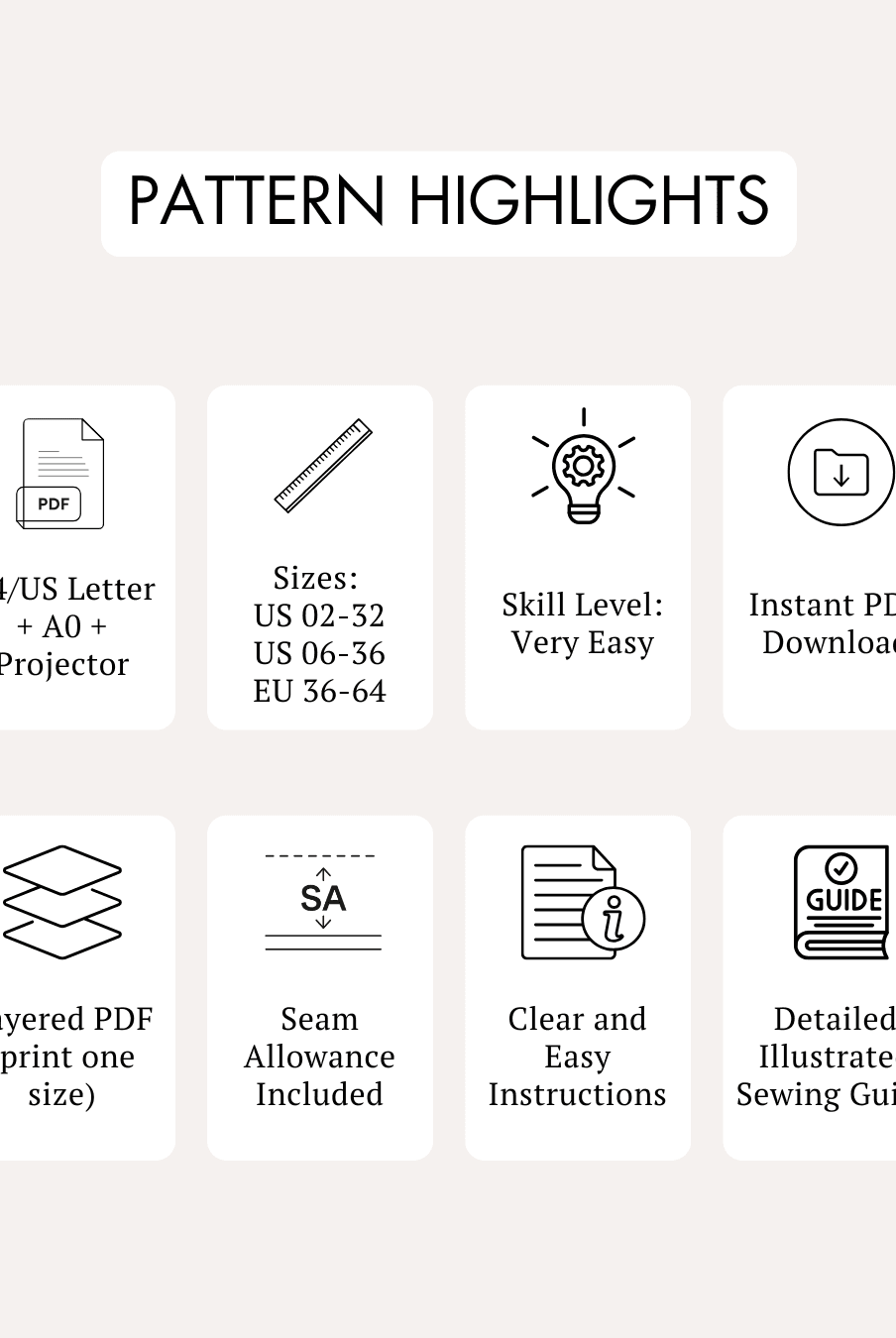
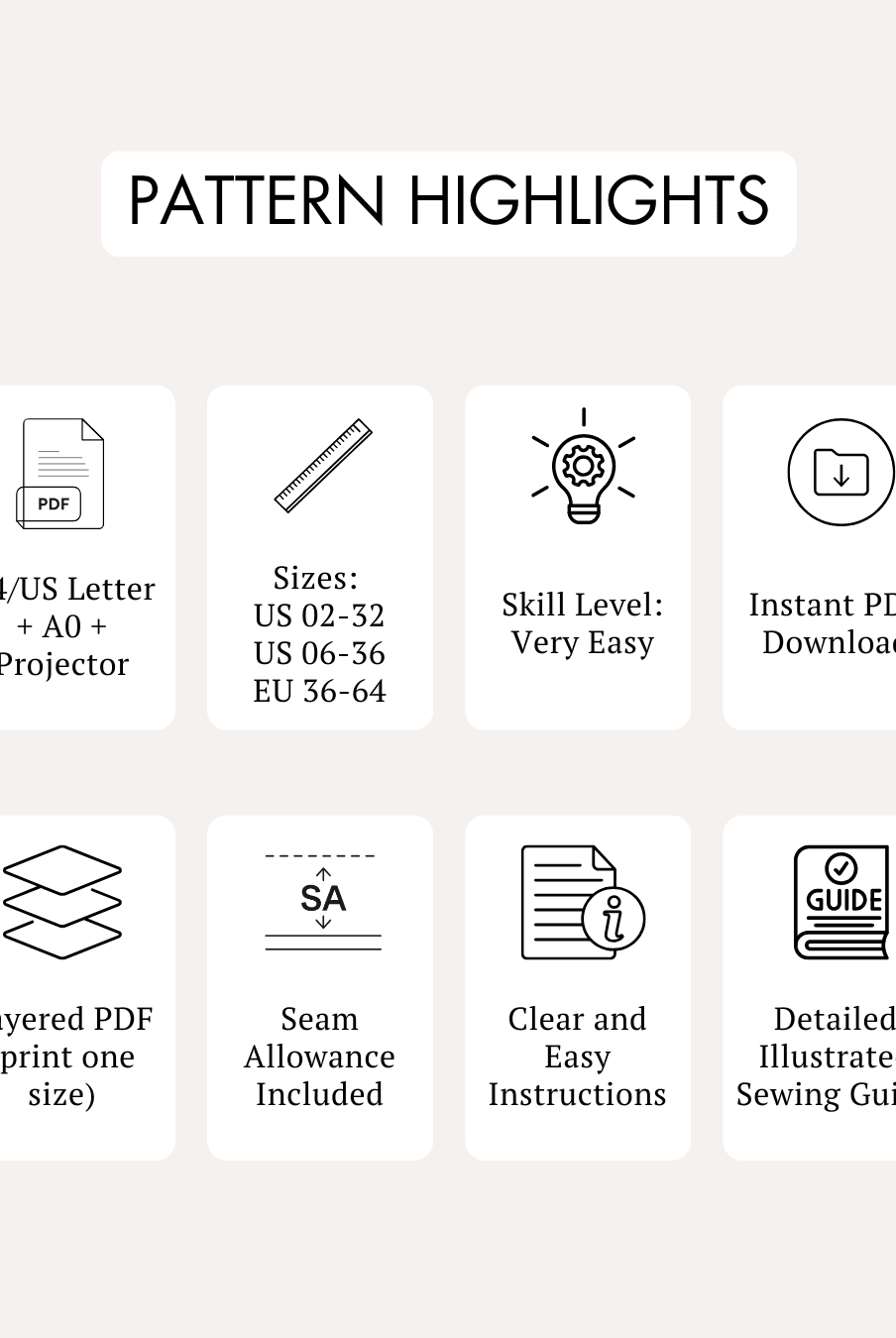
Available Sizes: US 02 - US 32 | UK 06 - UK 36 | EU 36 - EU 64
Supplies & Notions
You will need:
- Tape measure
- Fabric shears
- Iron
- Chalk
- Thread cutter
- Pins
- Sewing machine
- Sewing needles
- 3-ply polyester thread
- Fusible interfacing
- Buttons
- Buttonhole attachment
Fabric Recommendations
Consider using:
- Jersey fabrics
- Light to medium-weight cotton blends
- Viscose fabrics
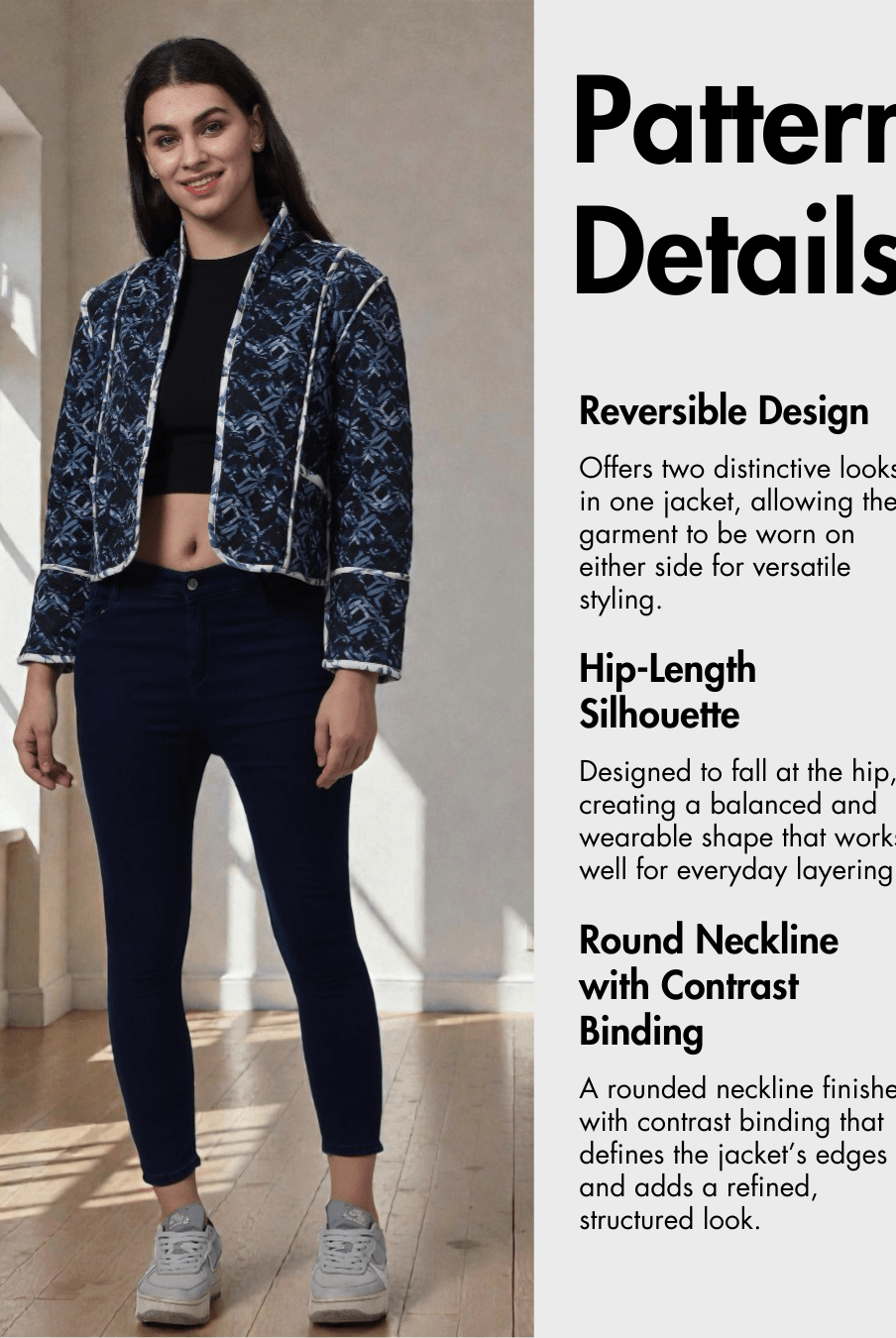
The model in the photograph is wearing a shirt made from nylon cotton lace fabric.
Size Charts
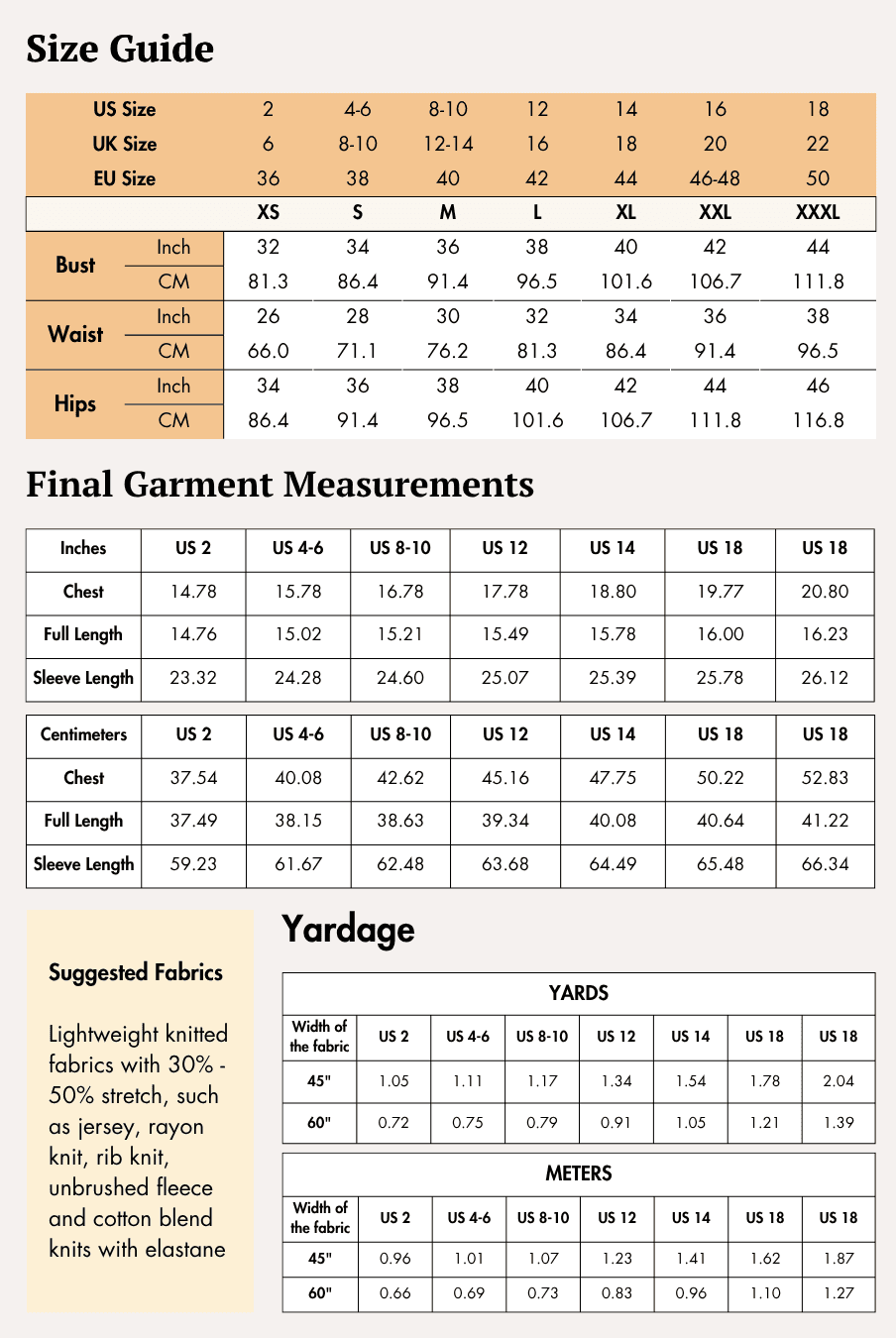
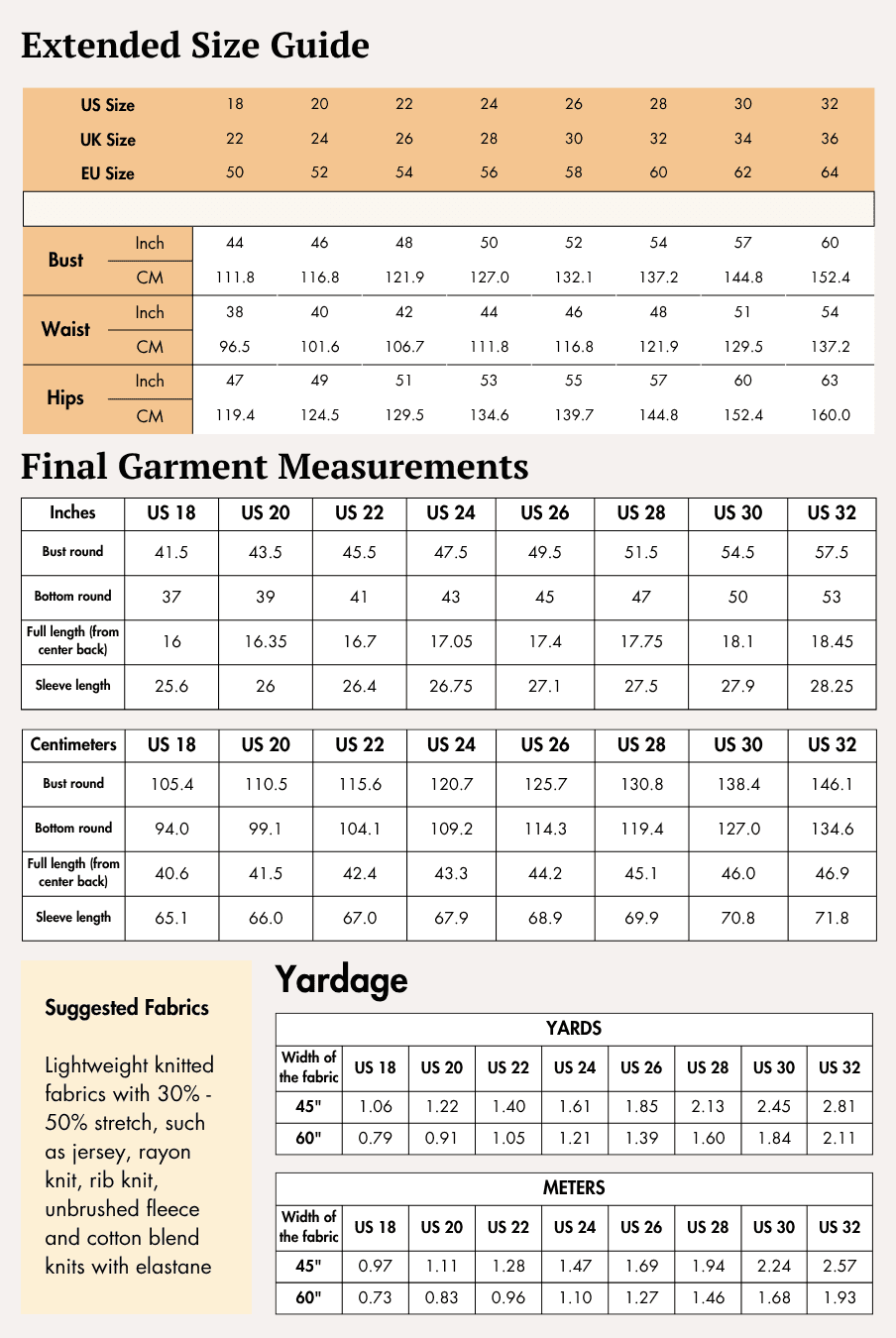
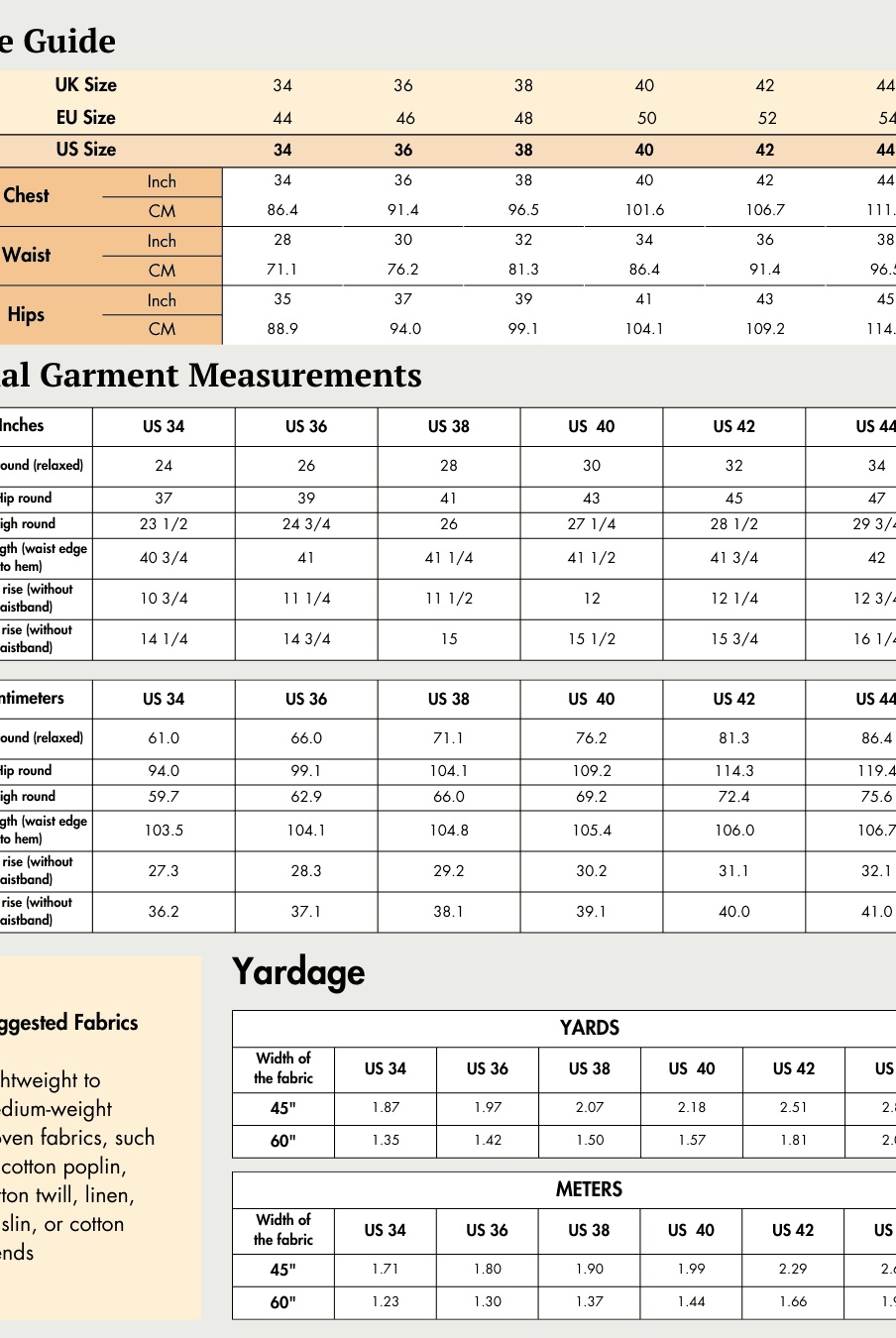
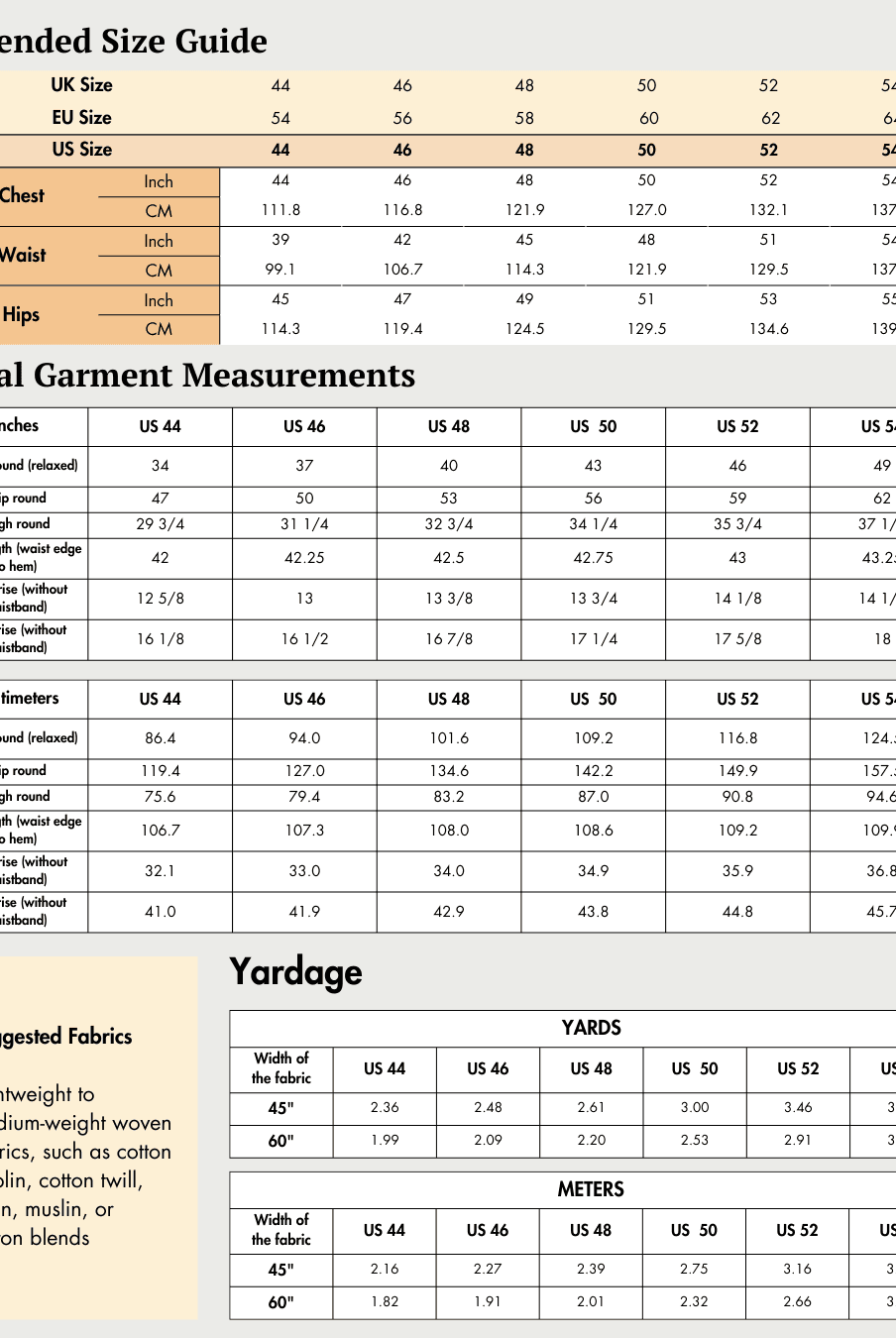
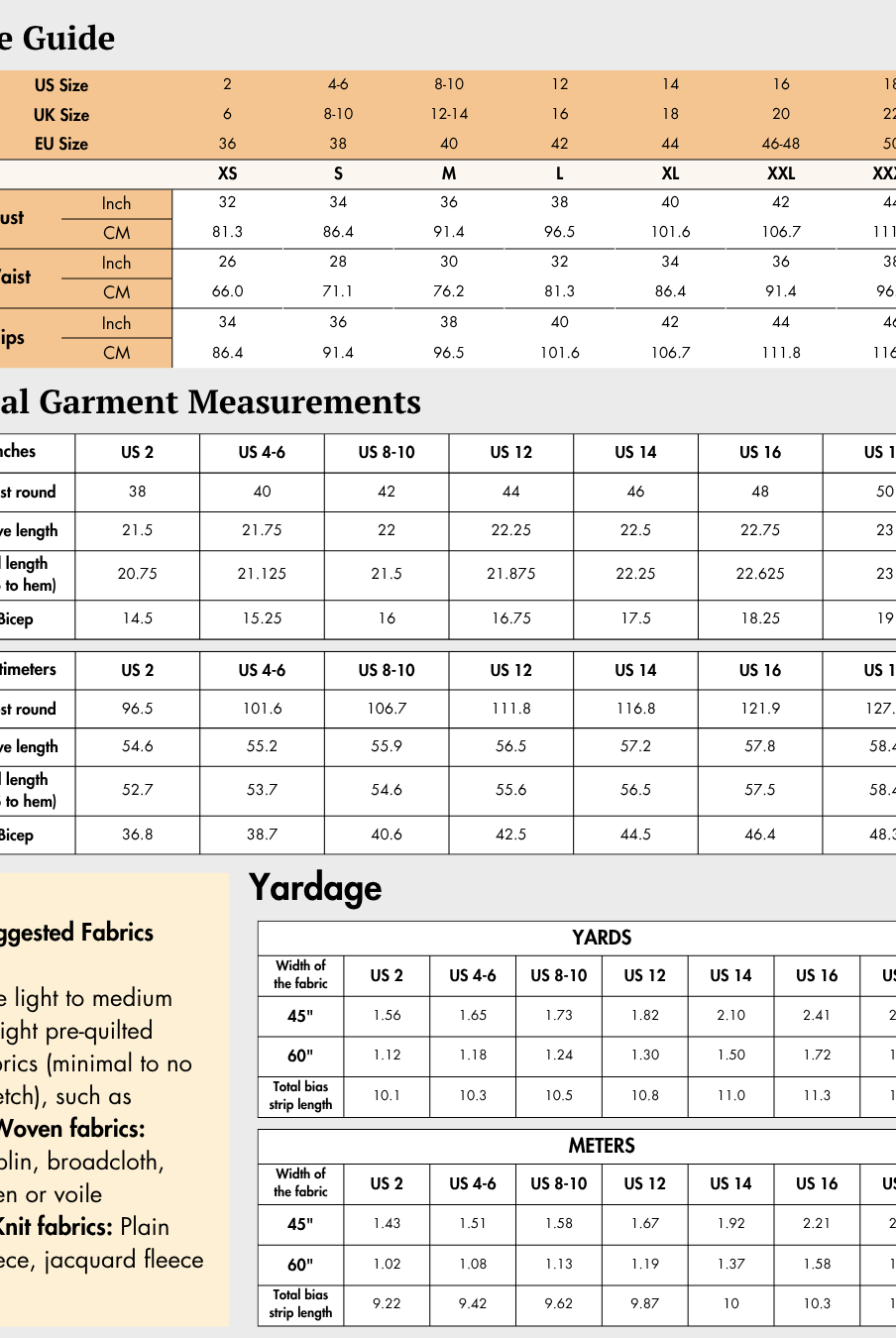
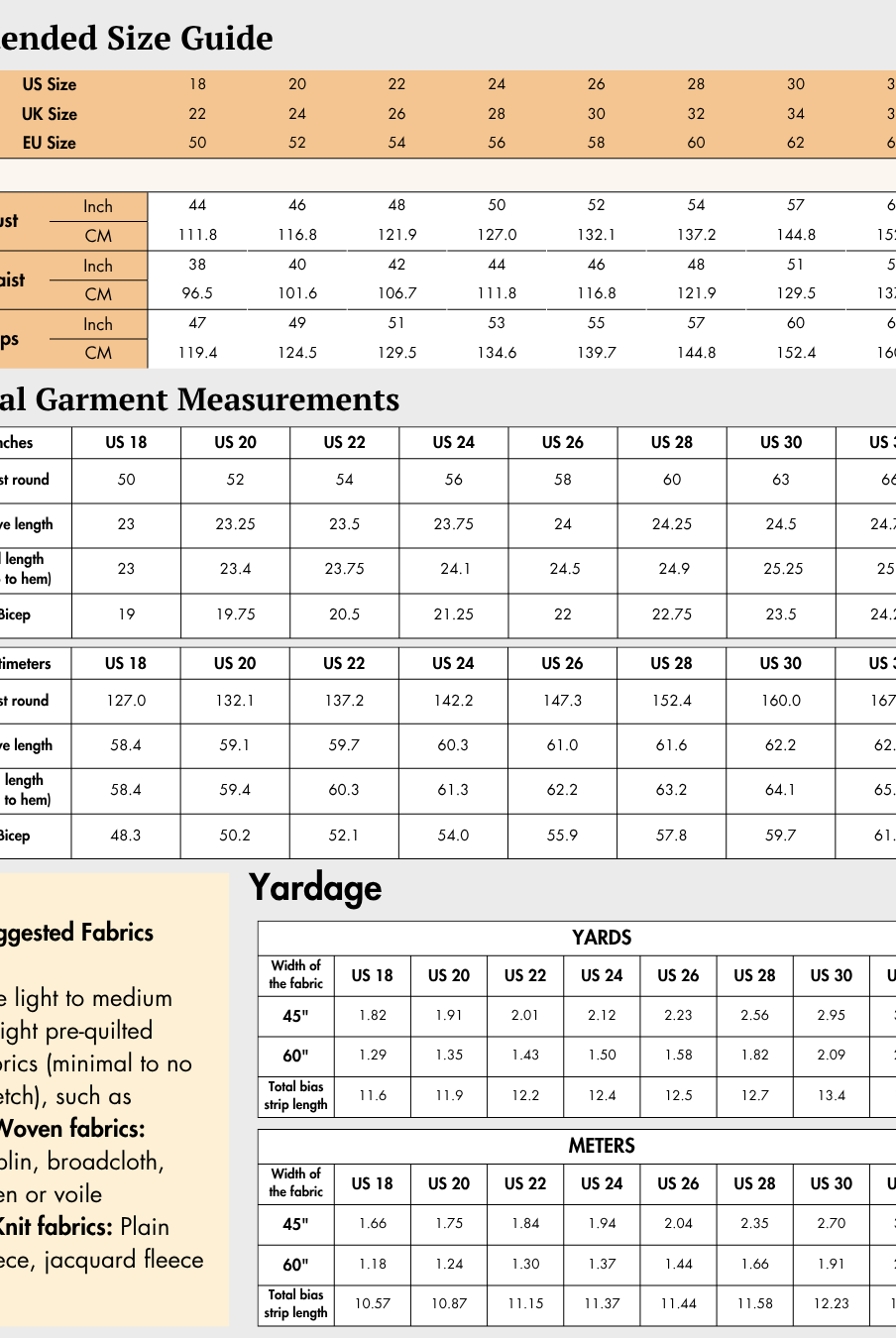
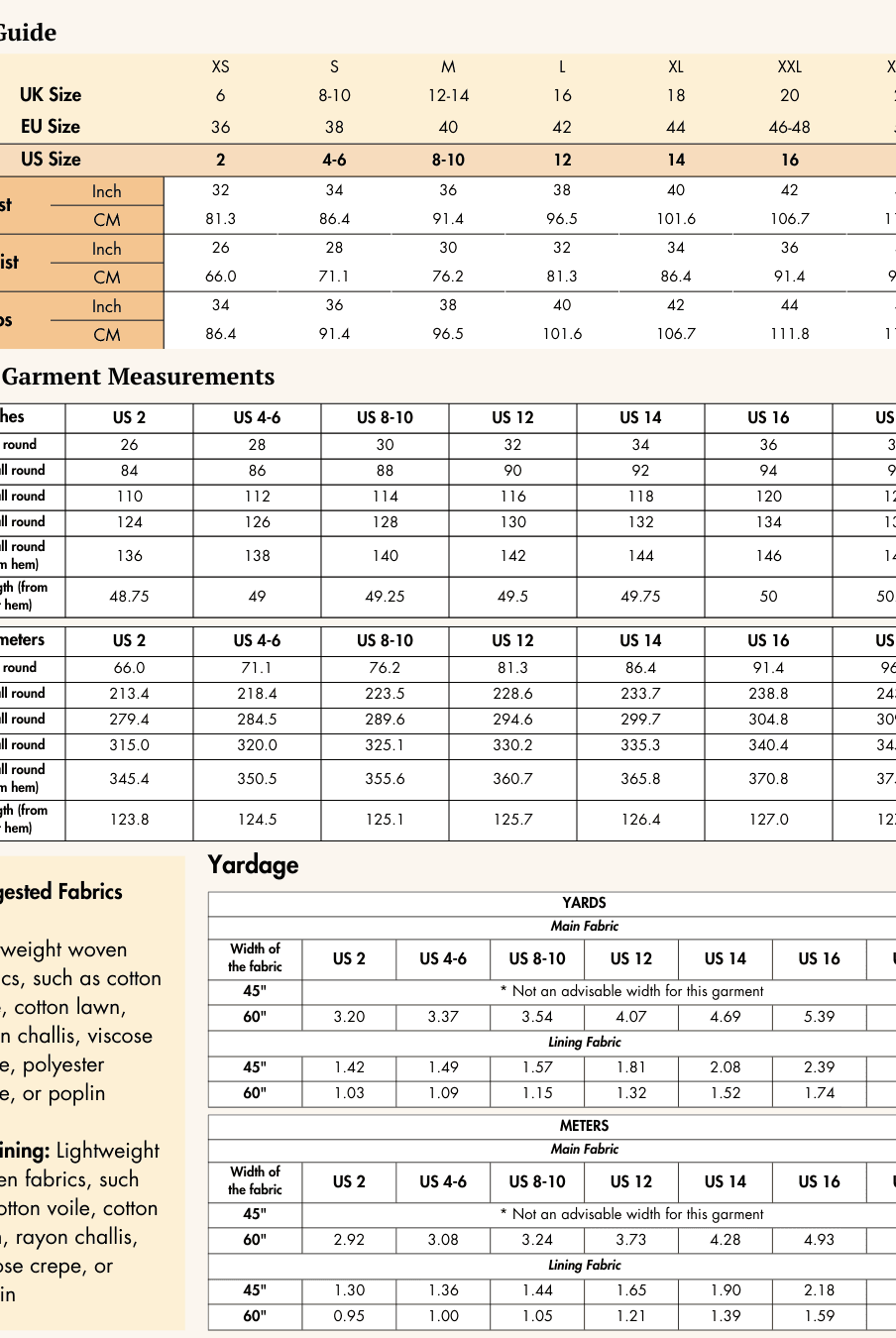
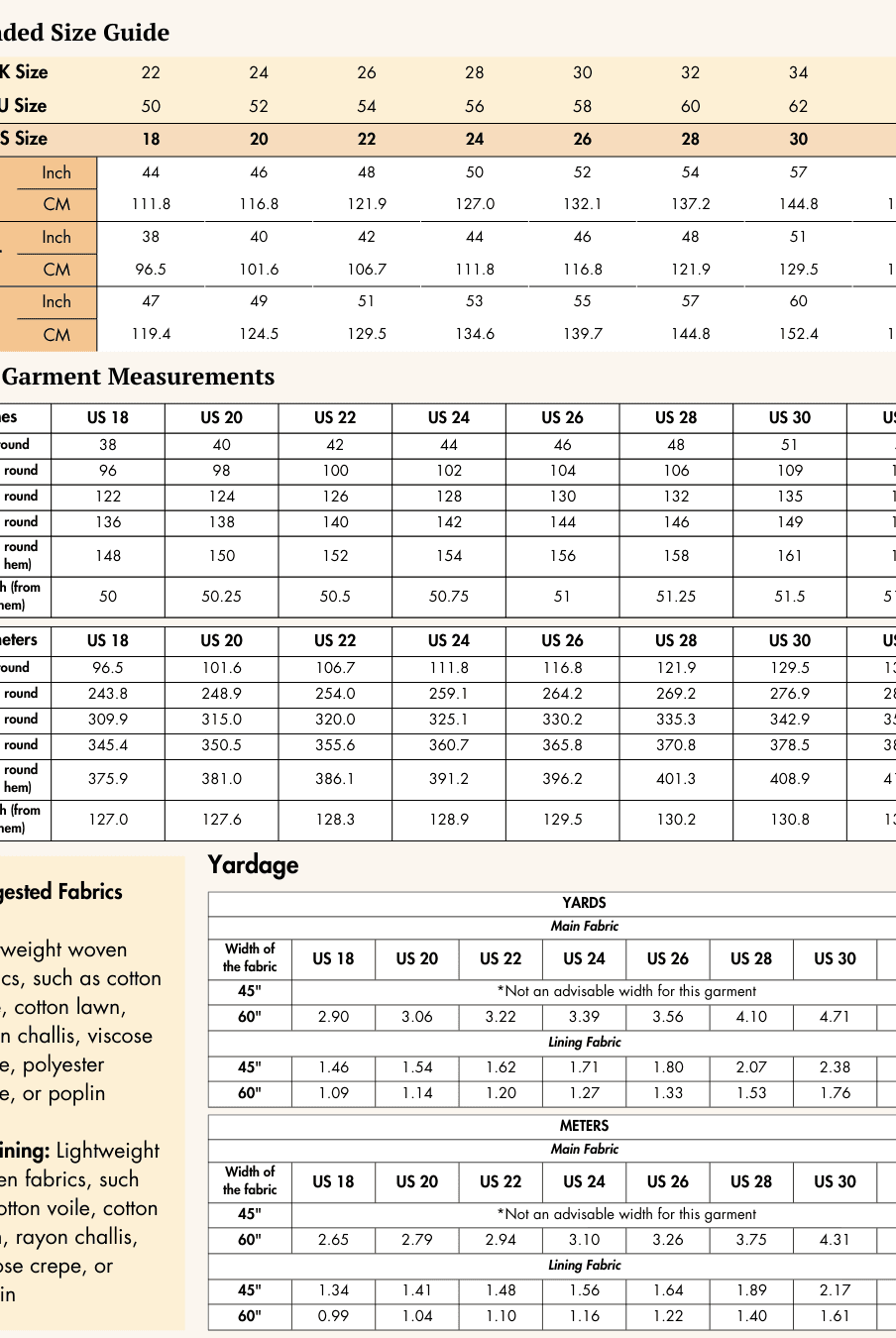
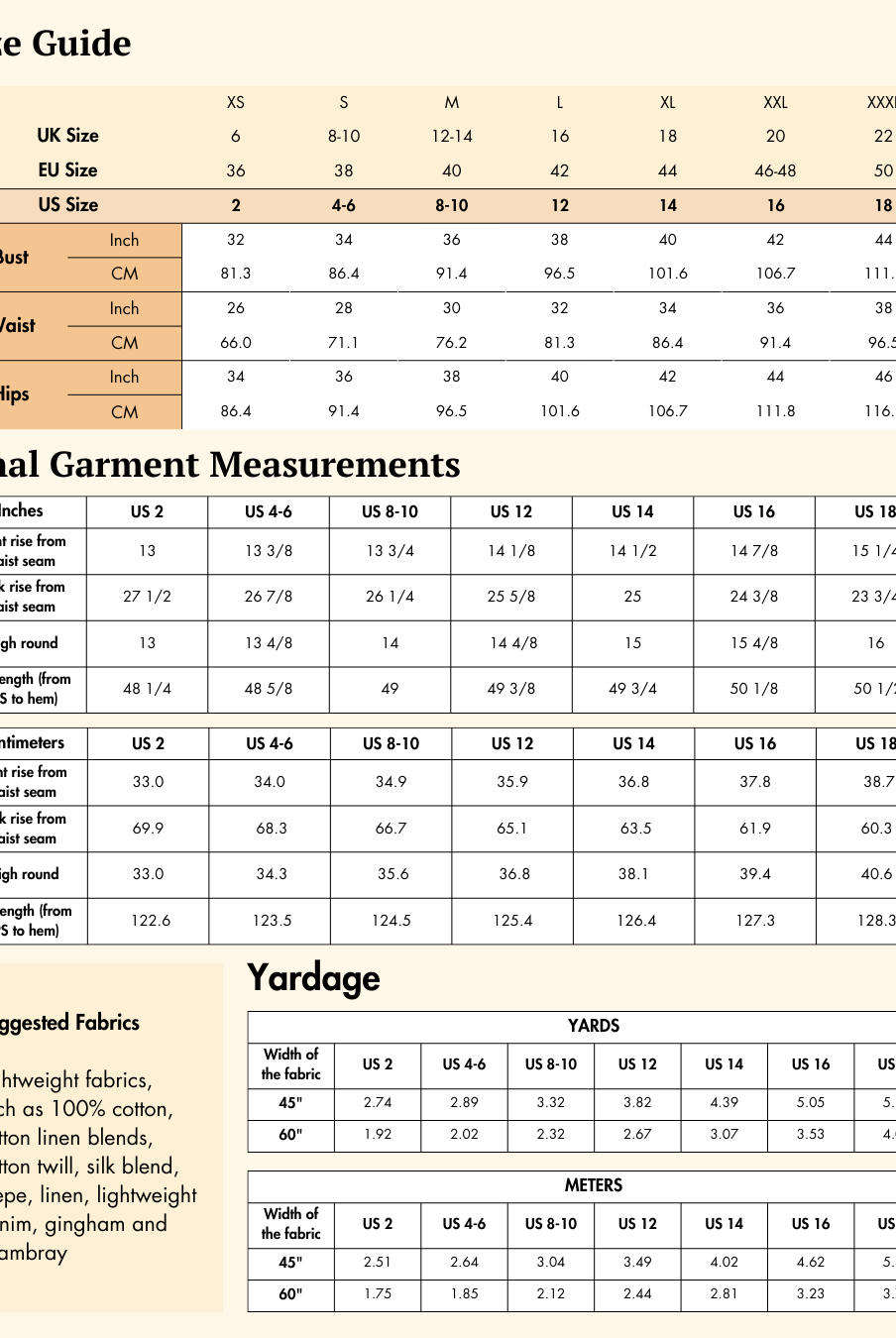
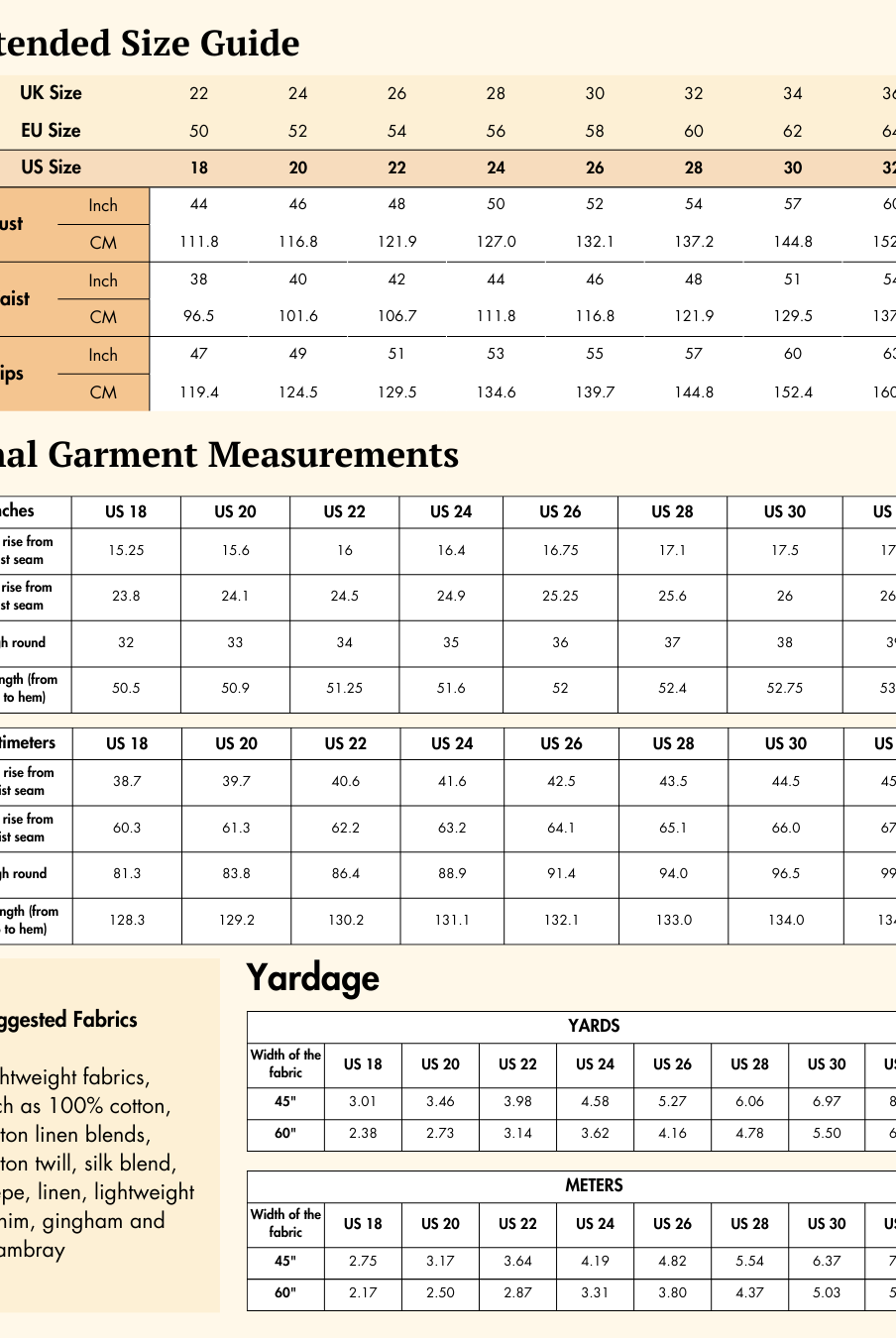
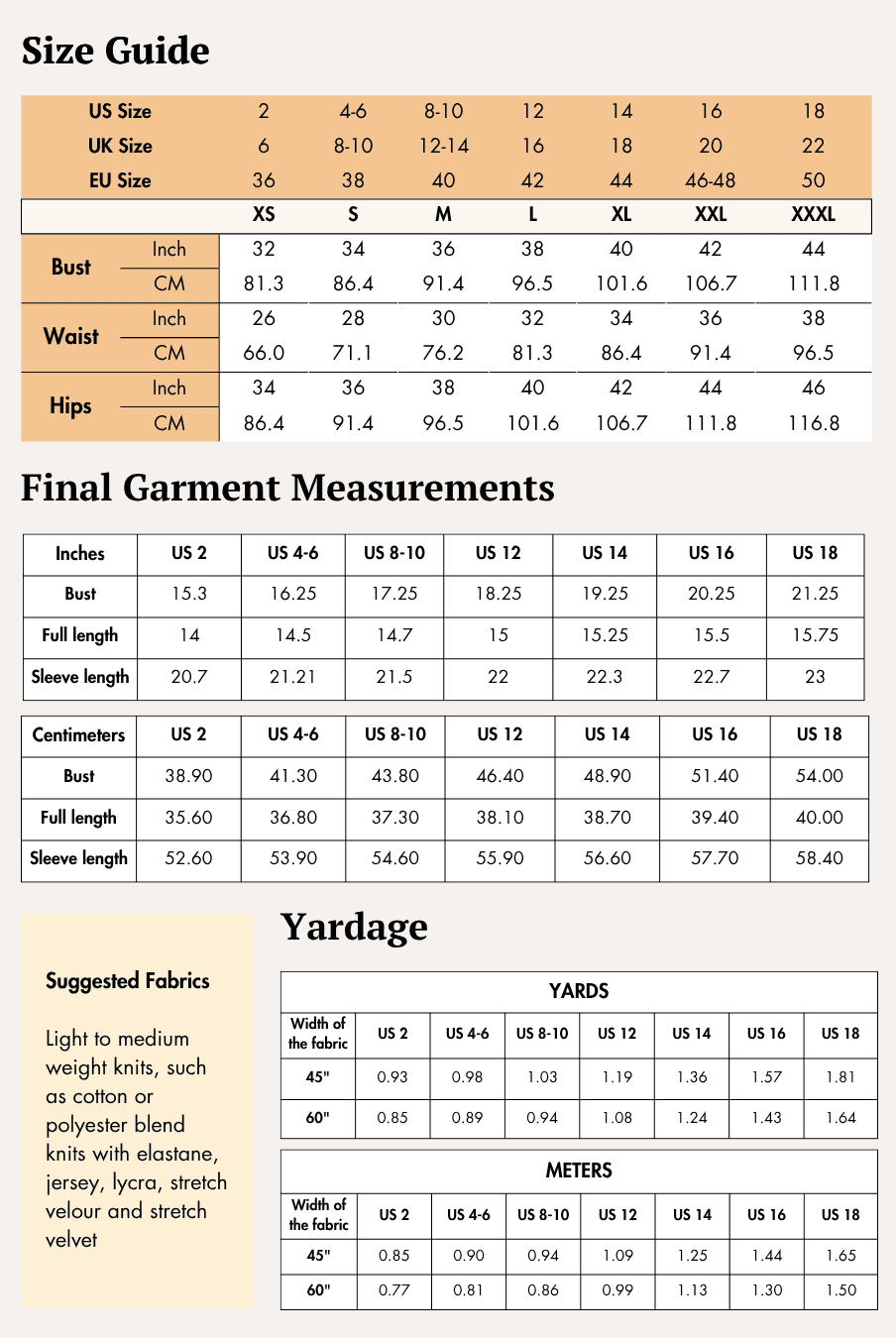
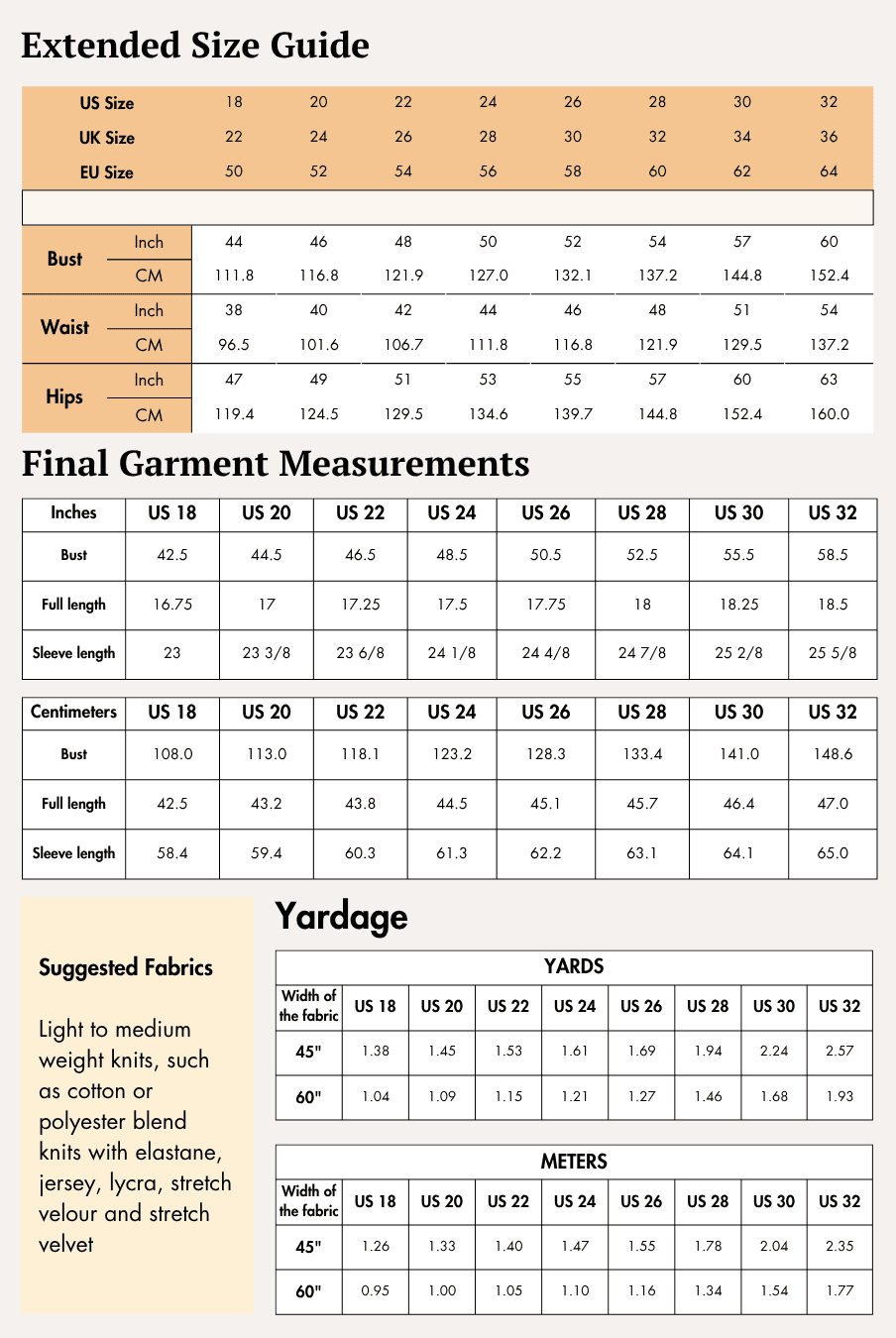
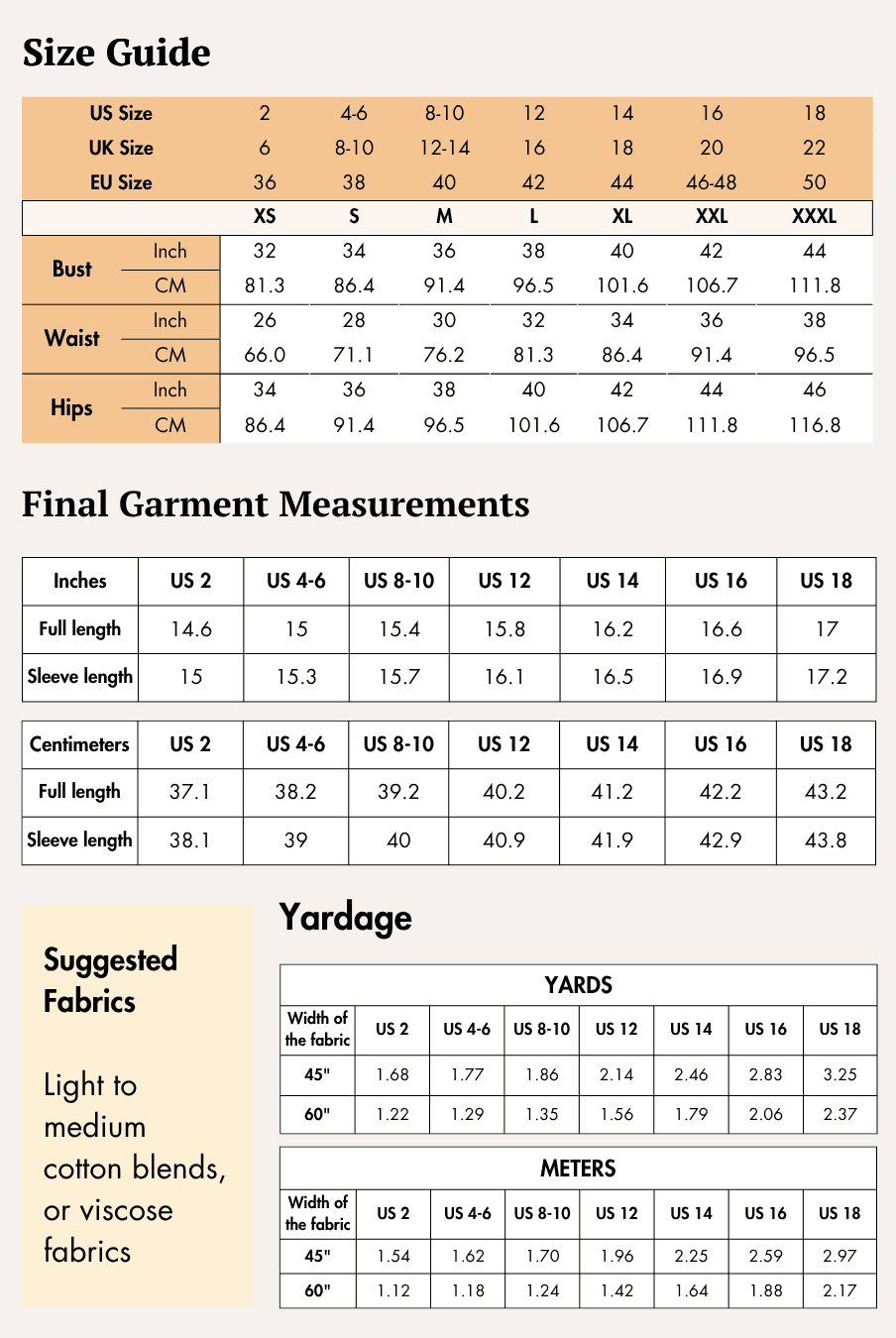
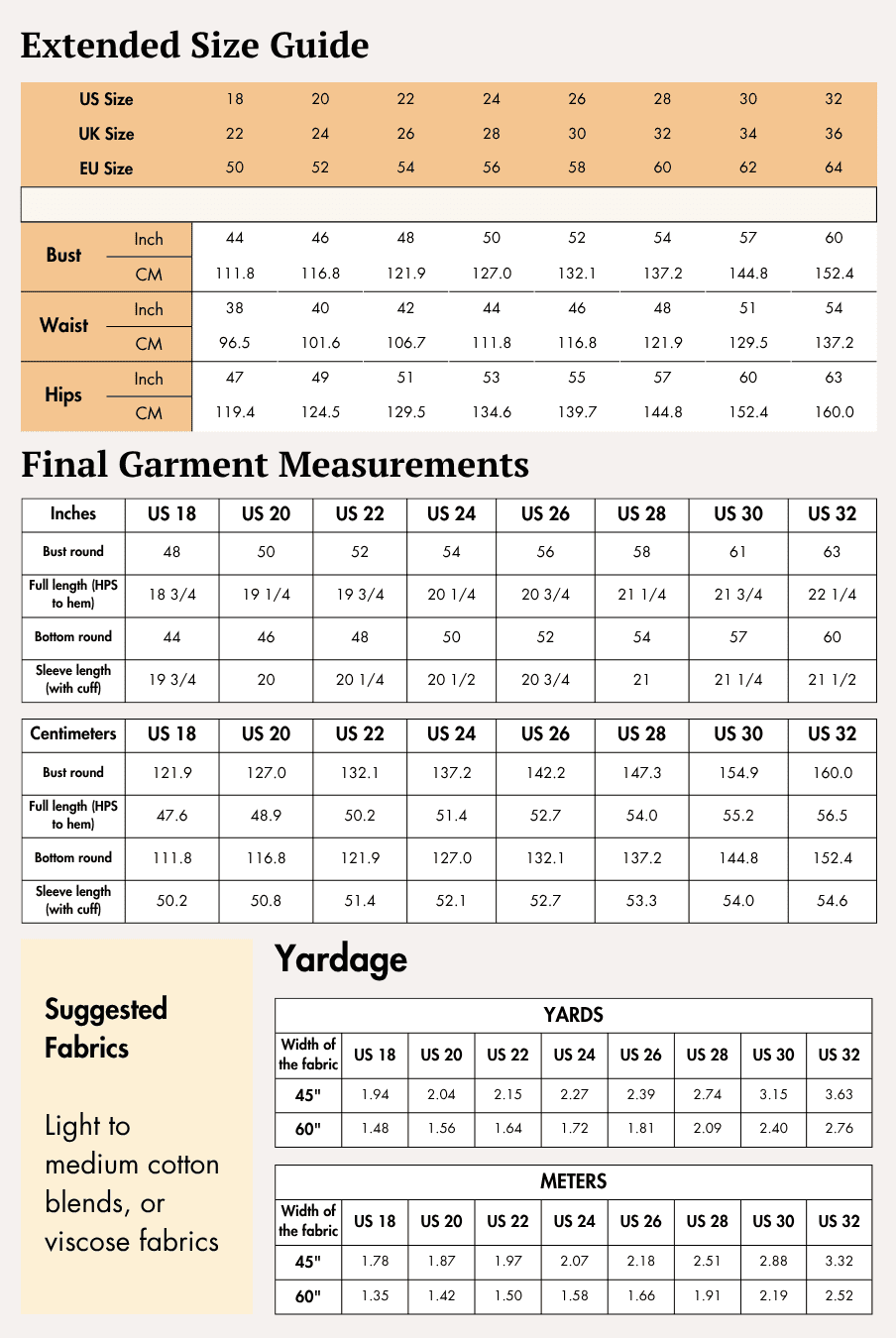
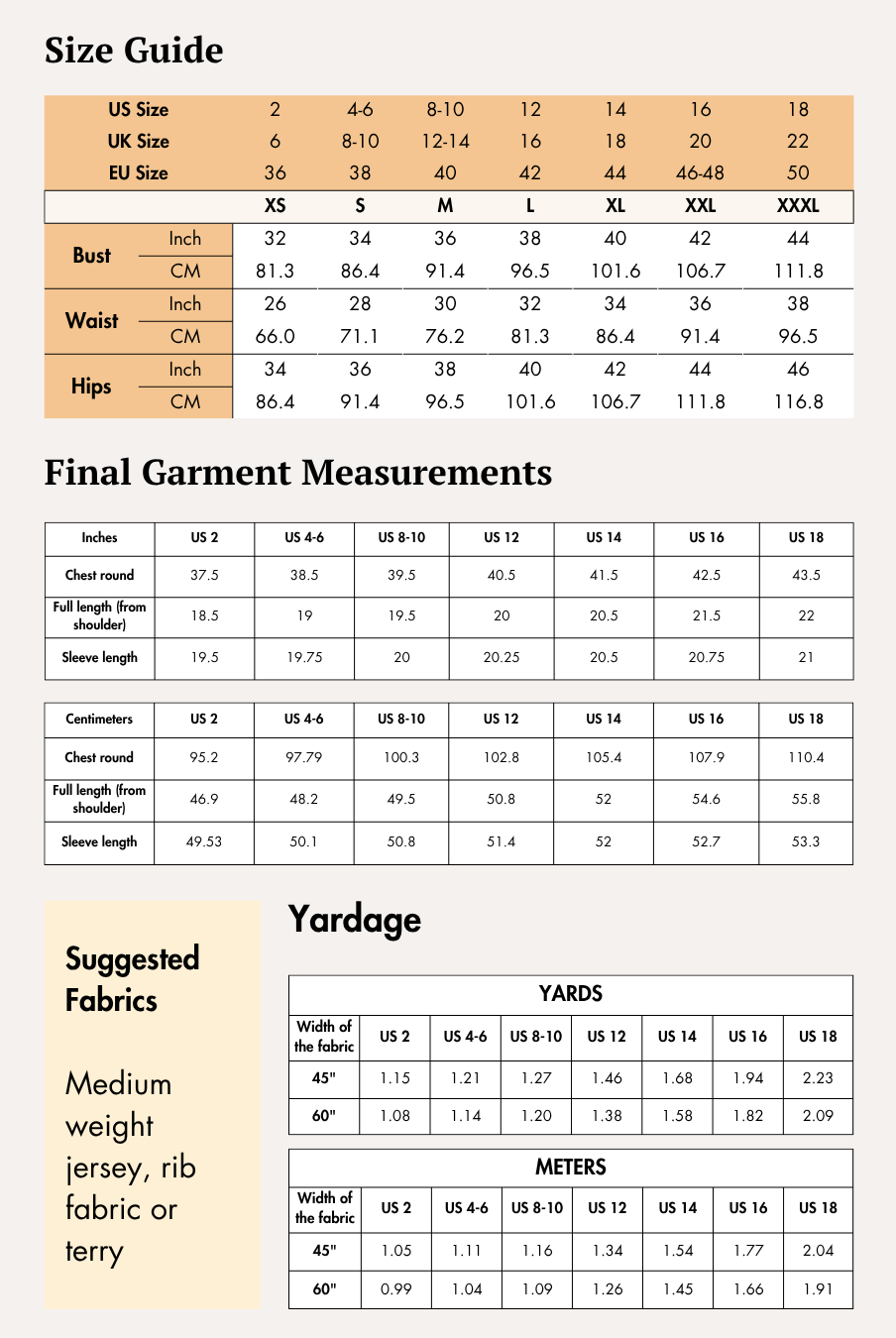
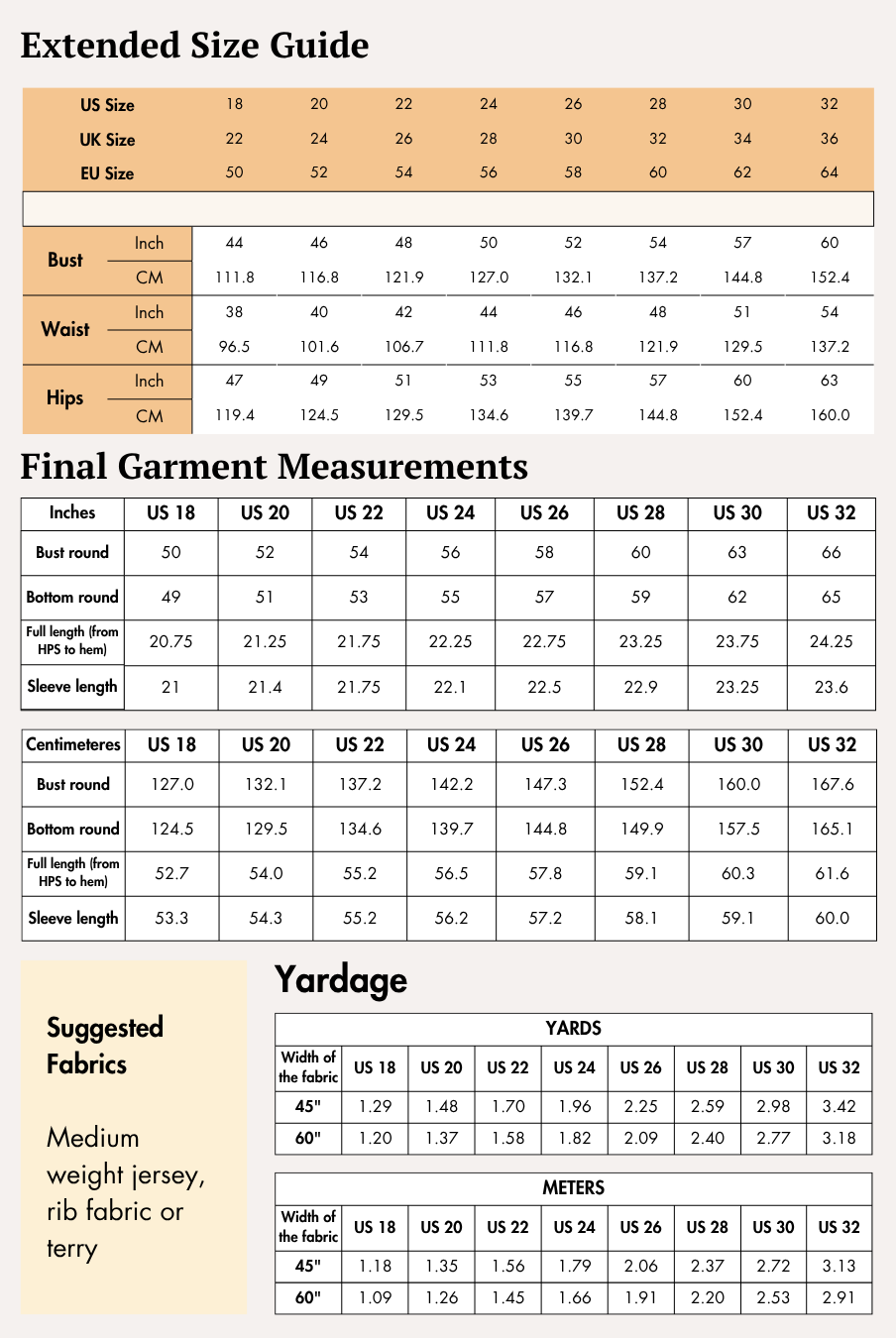
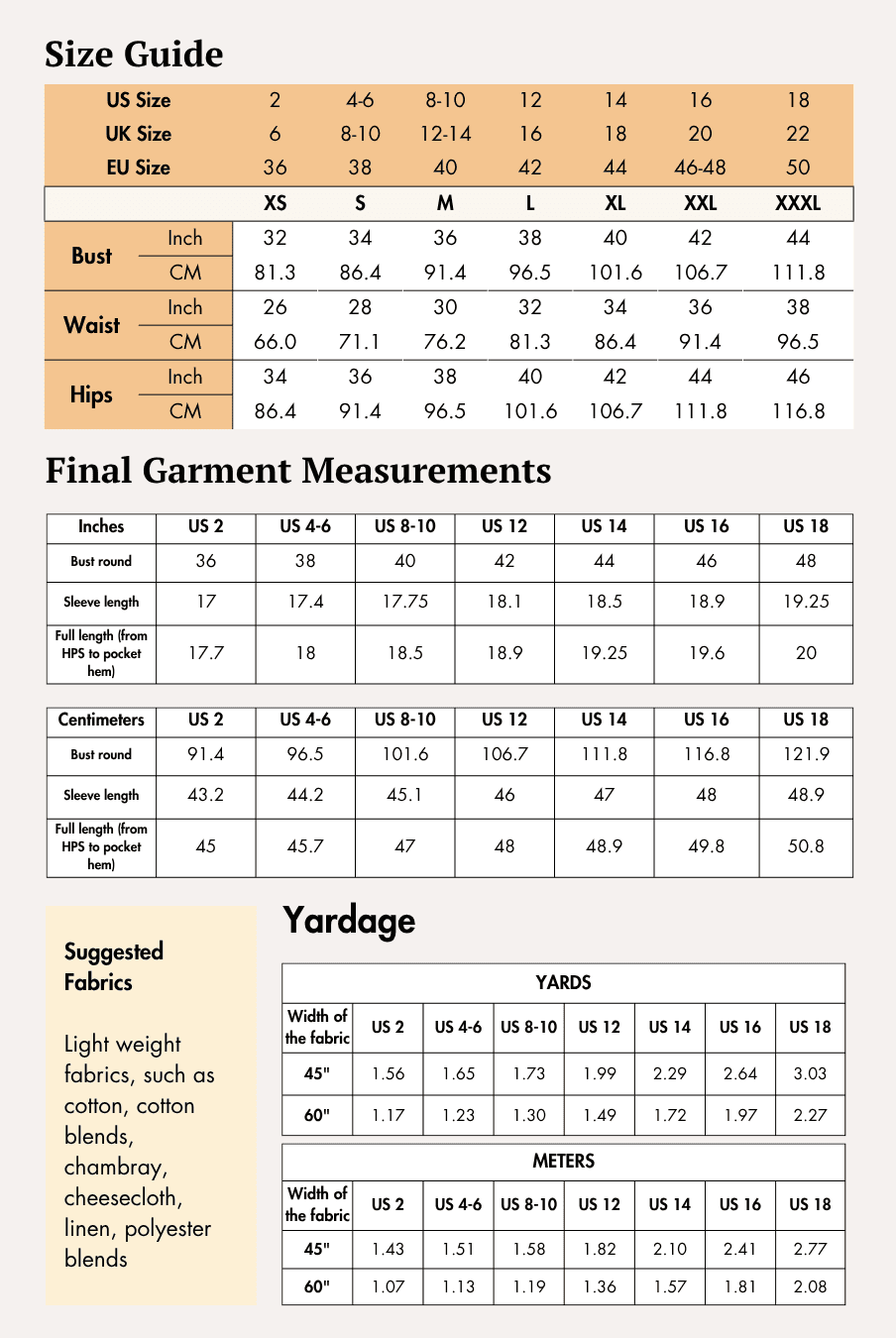
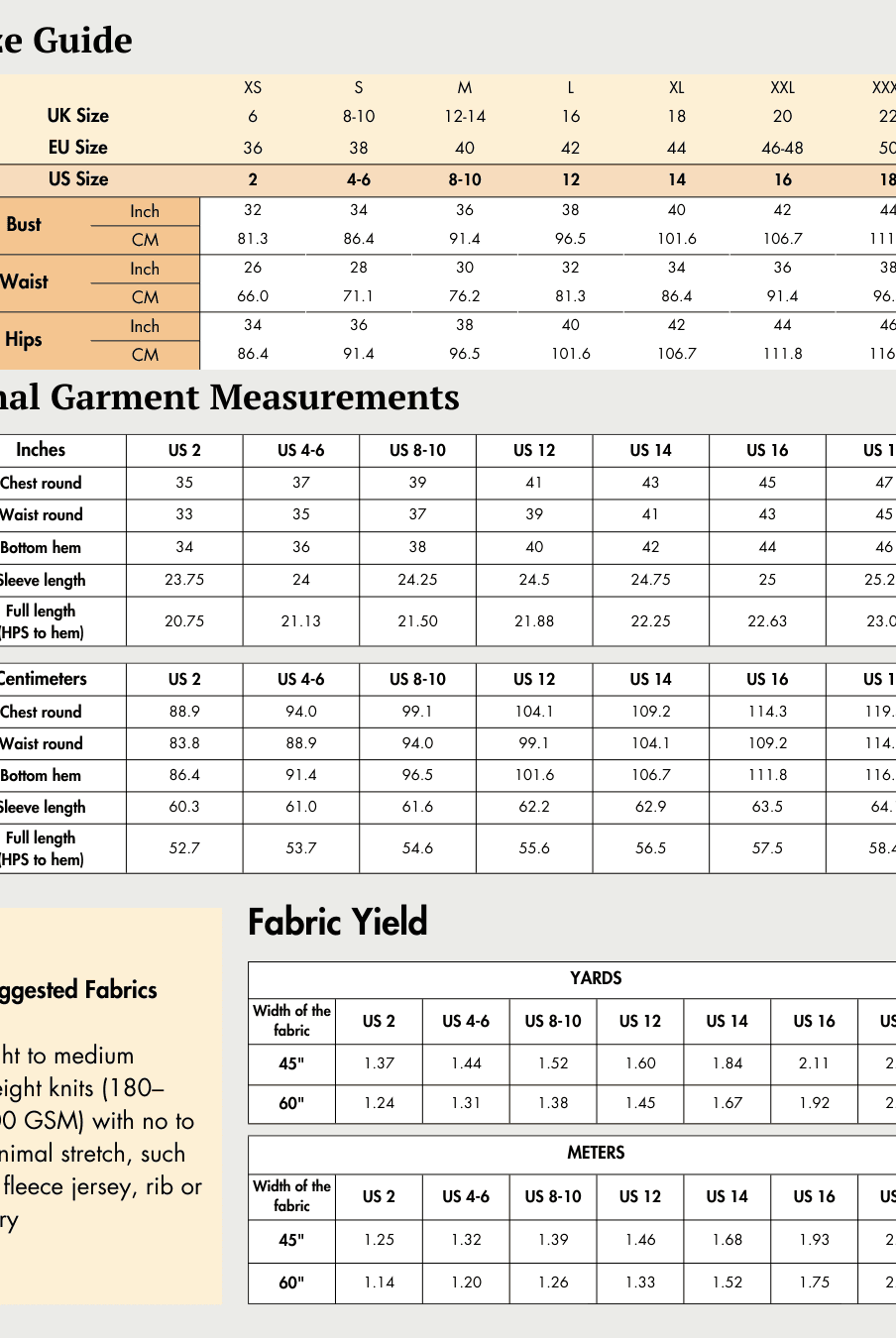
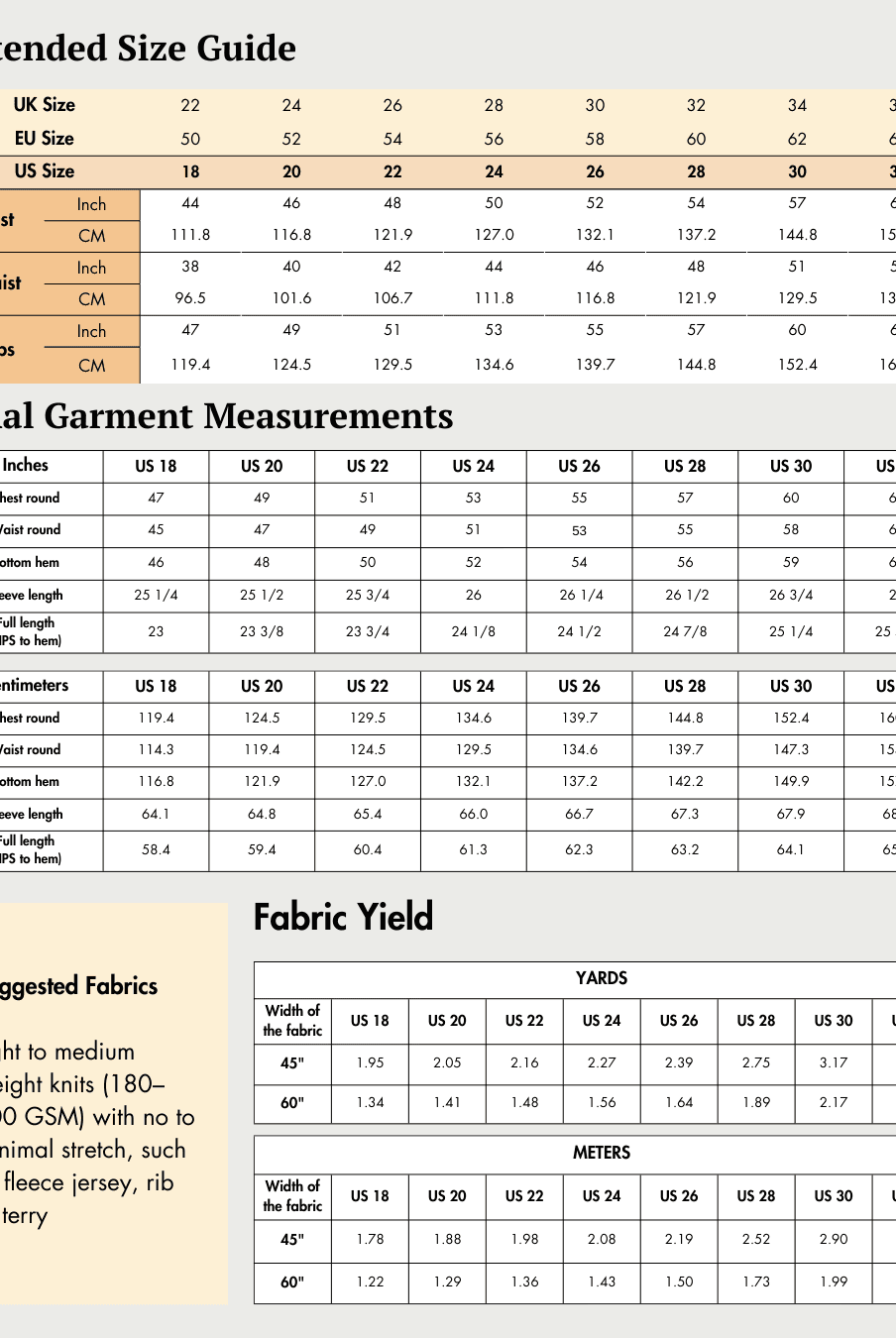
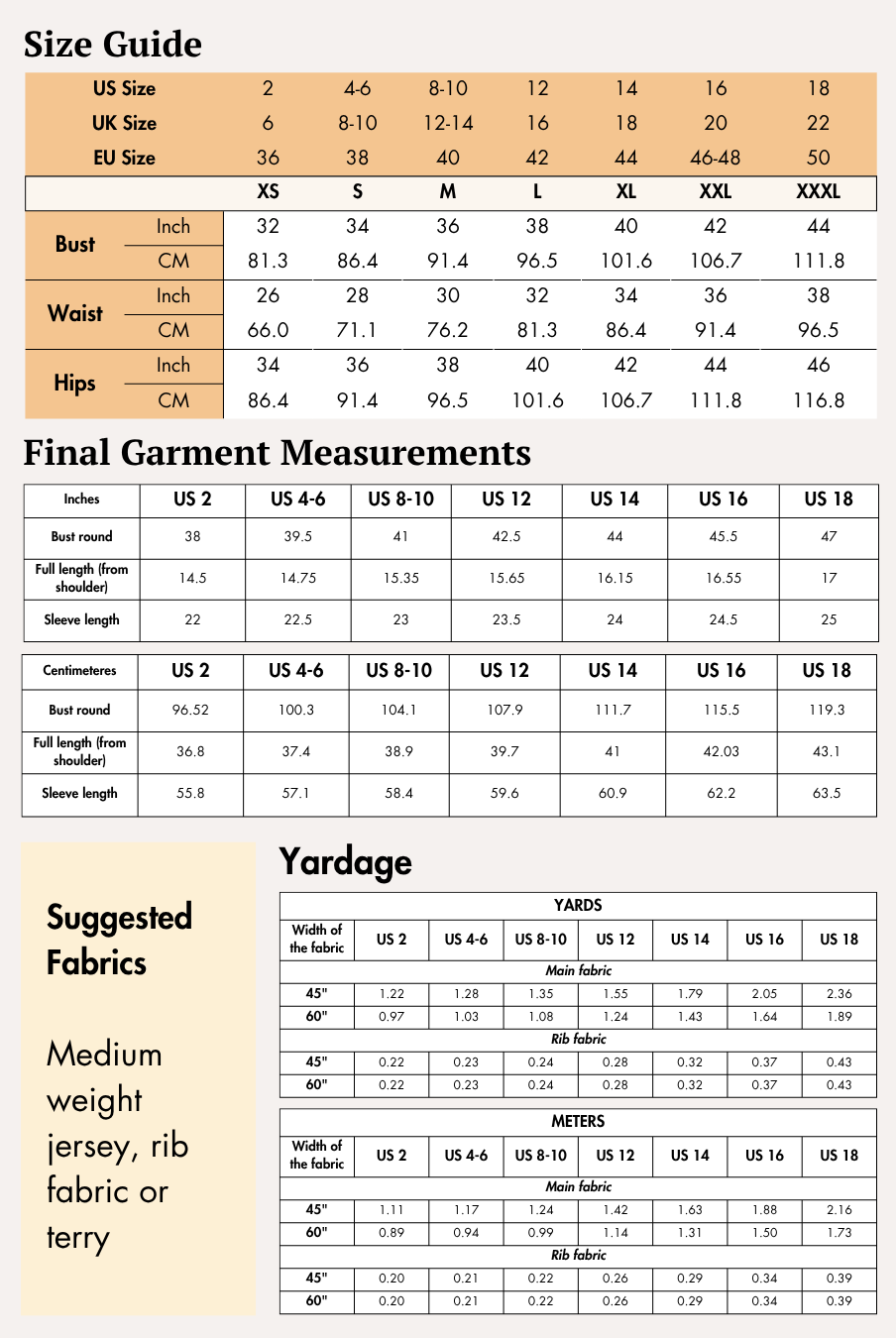
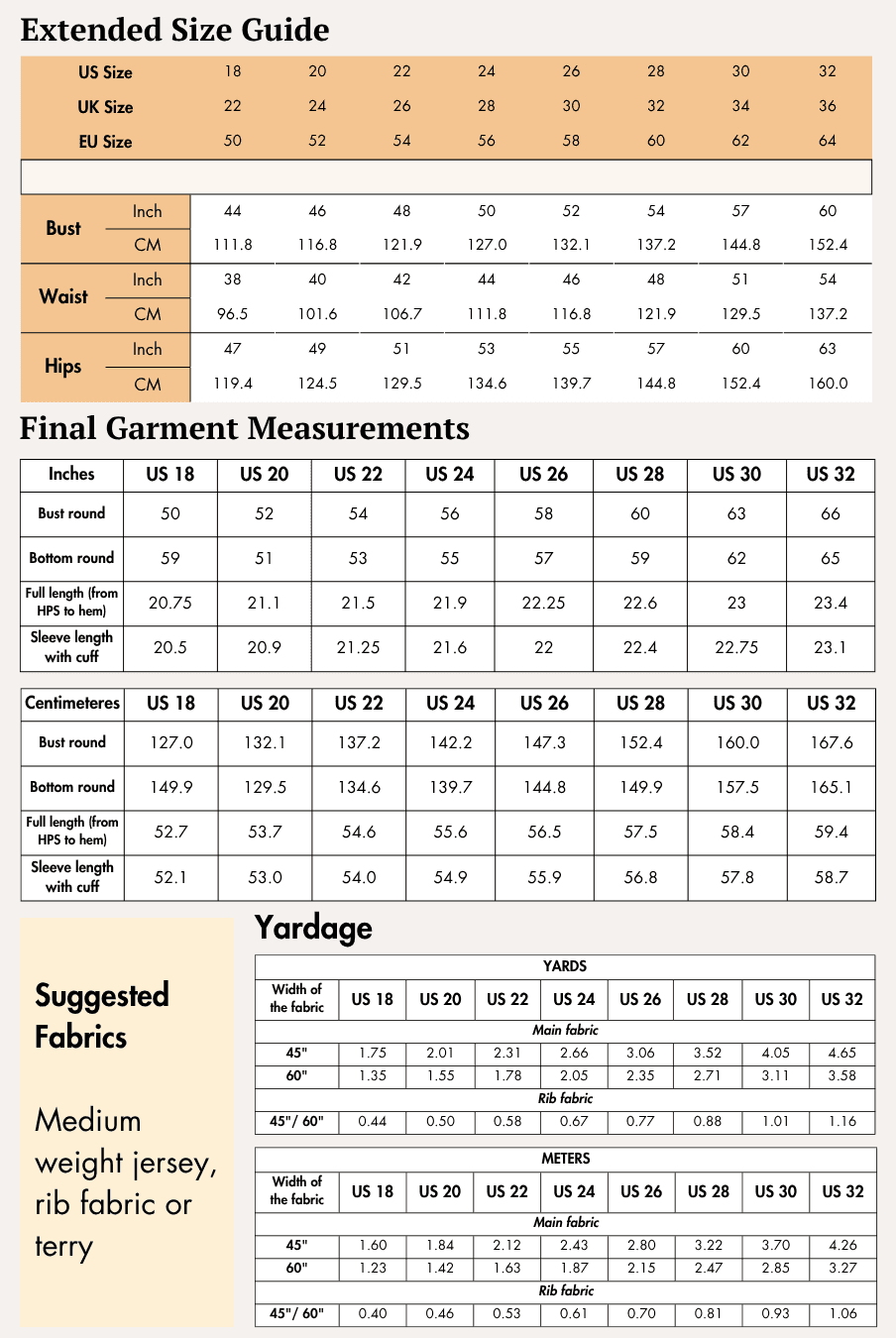
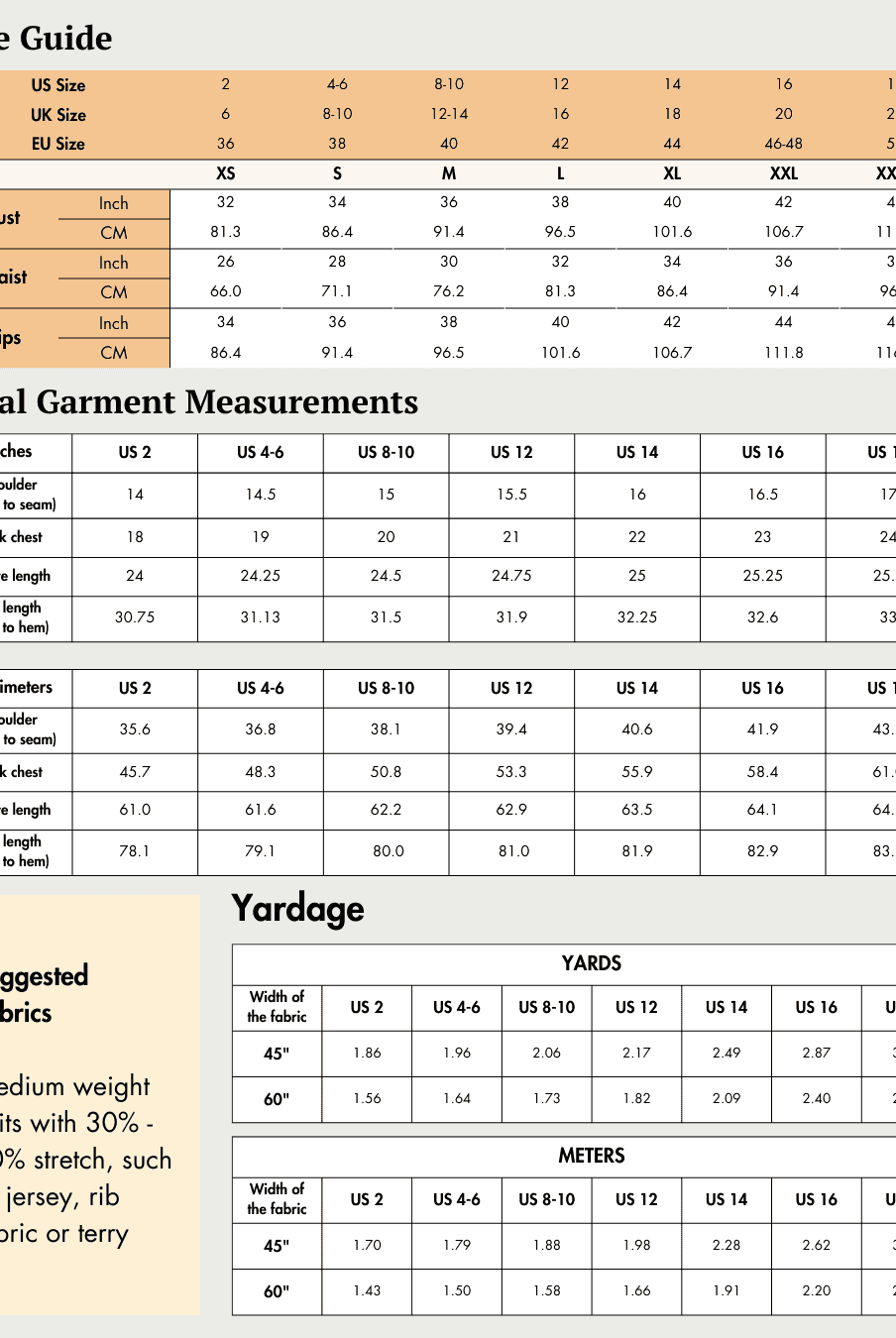
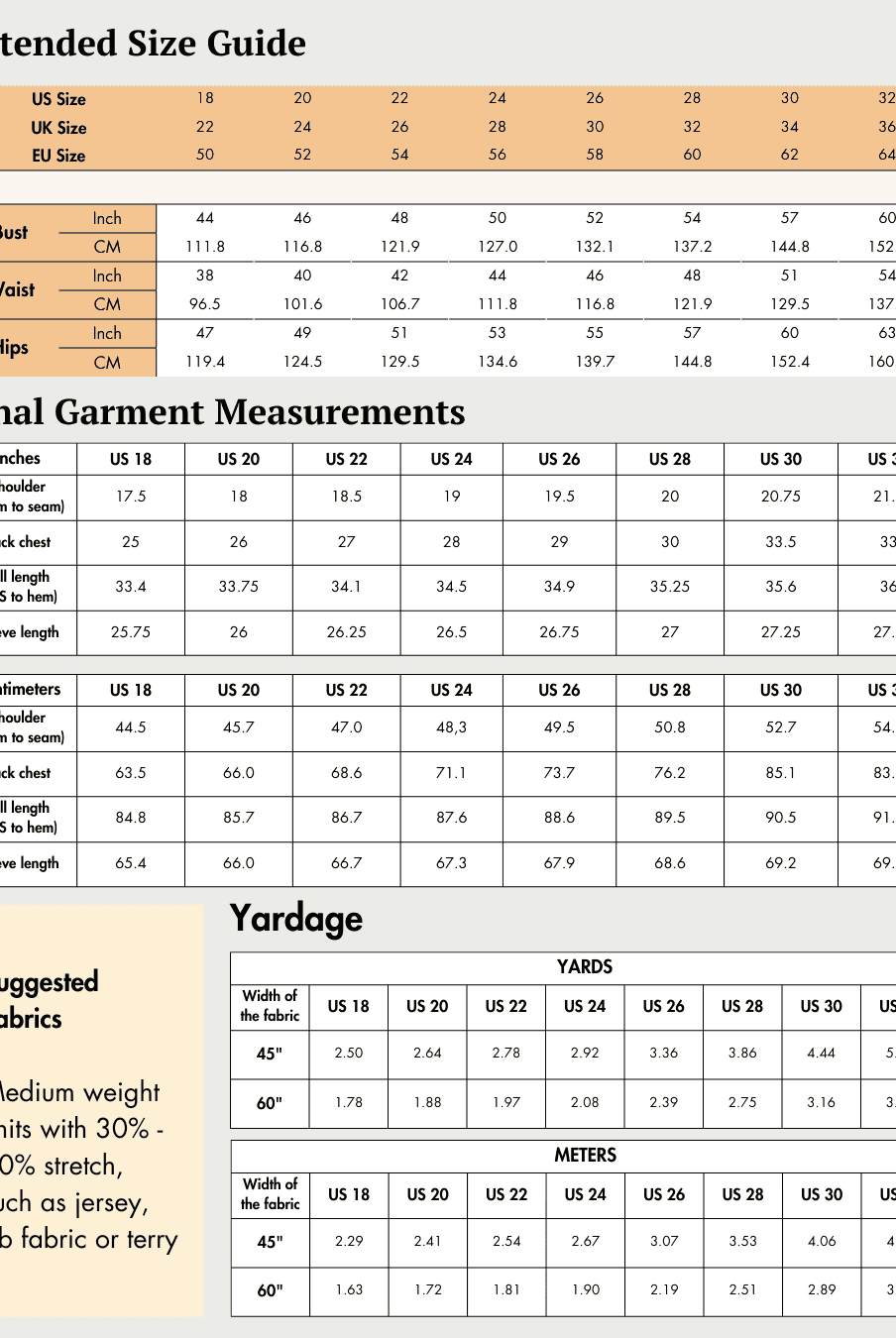
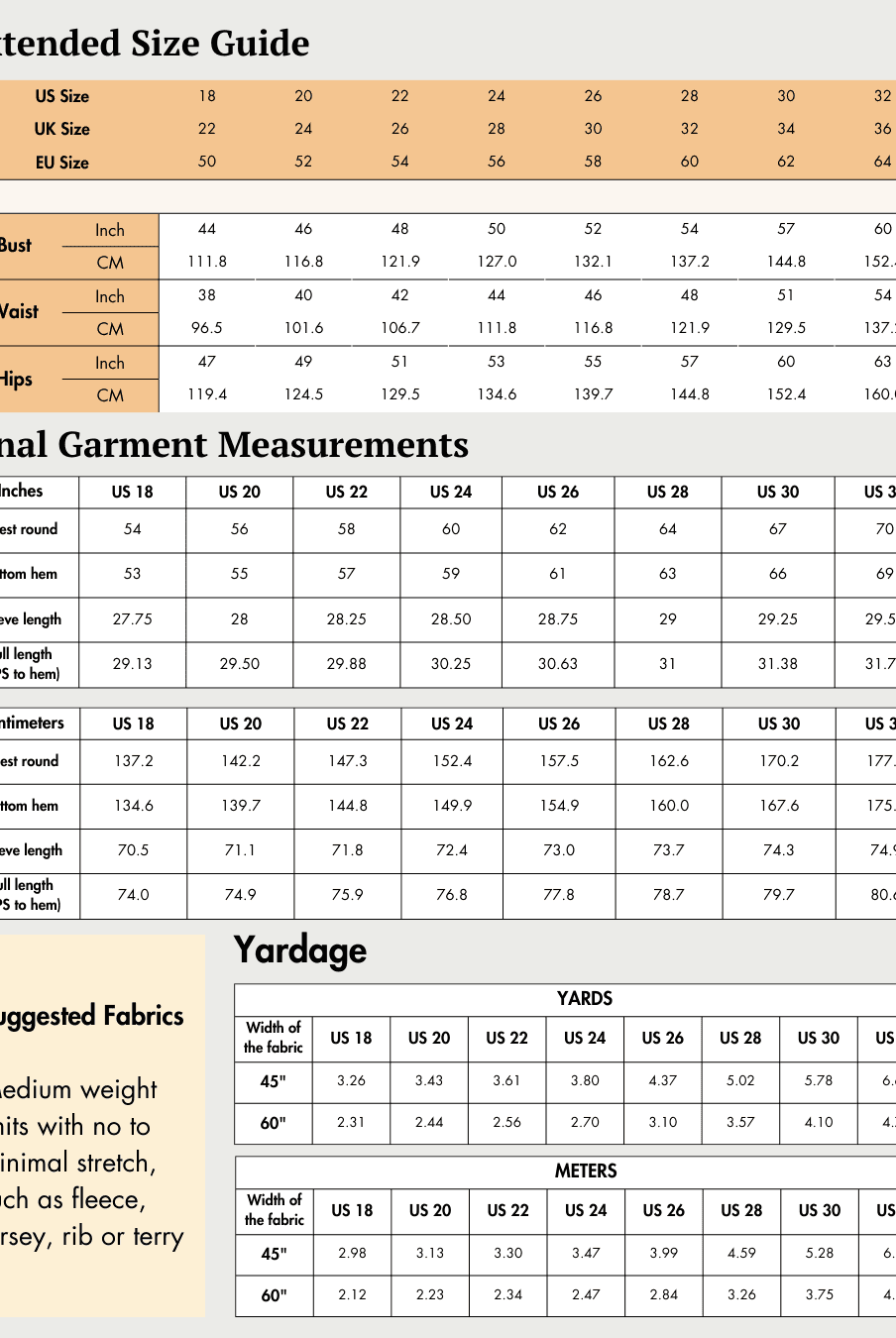
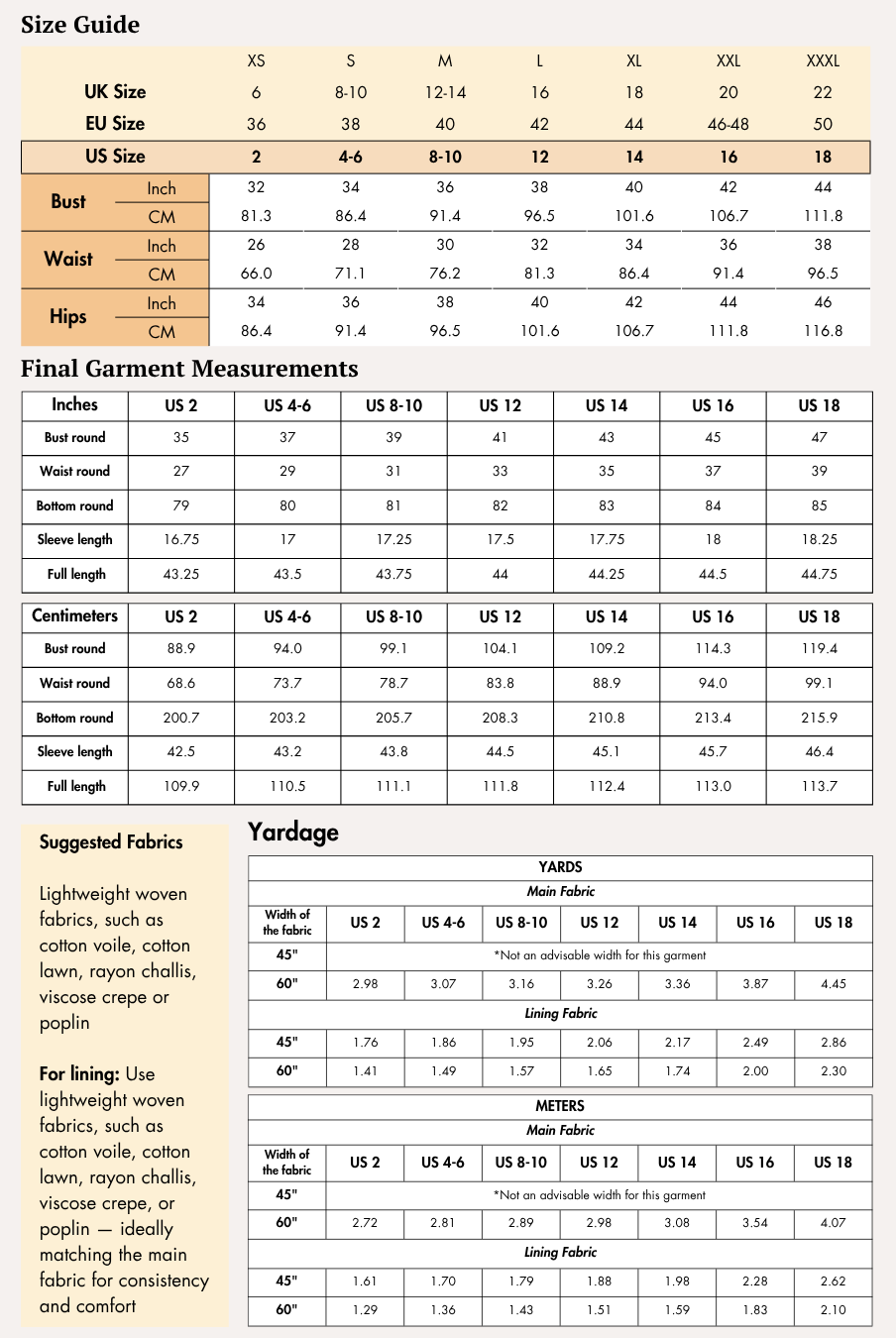
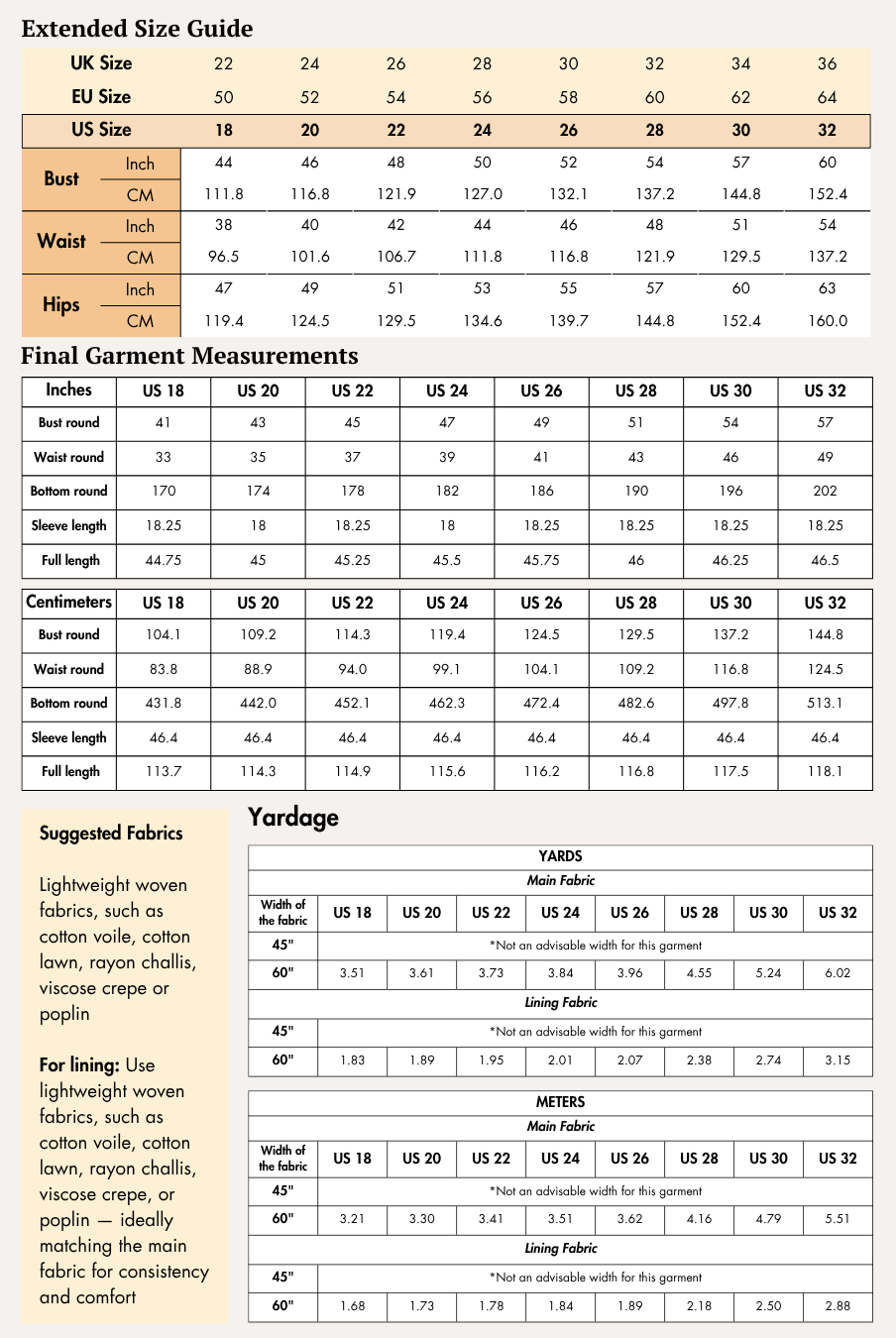
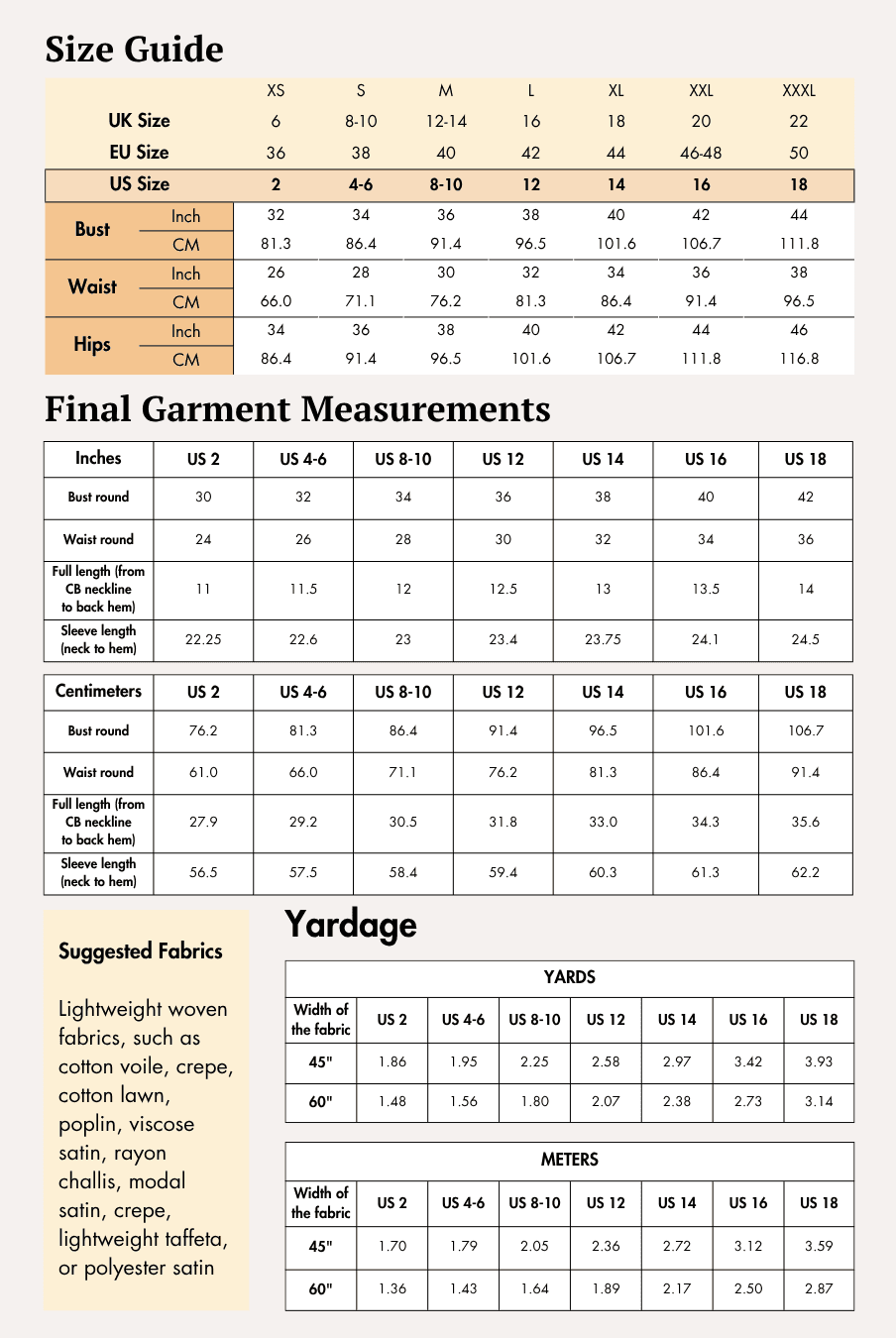
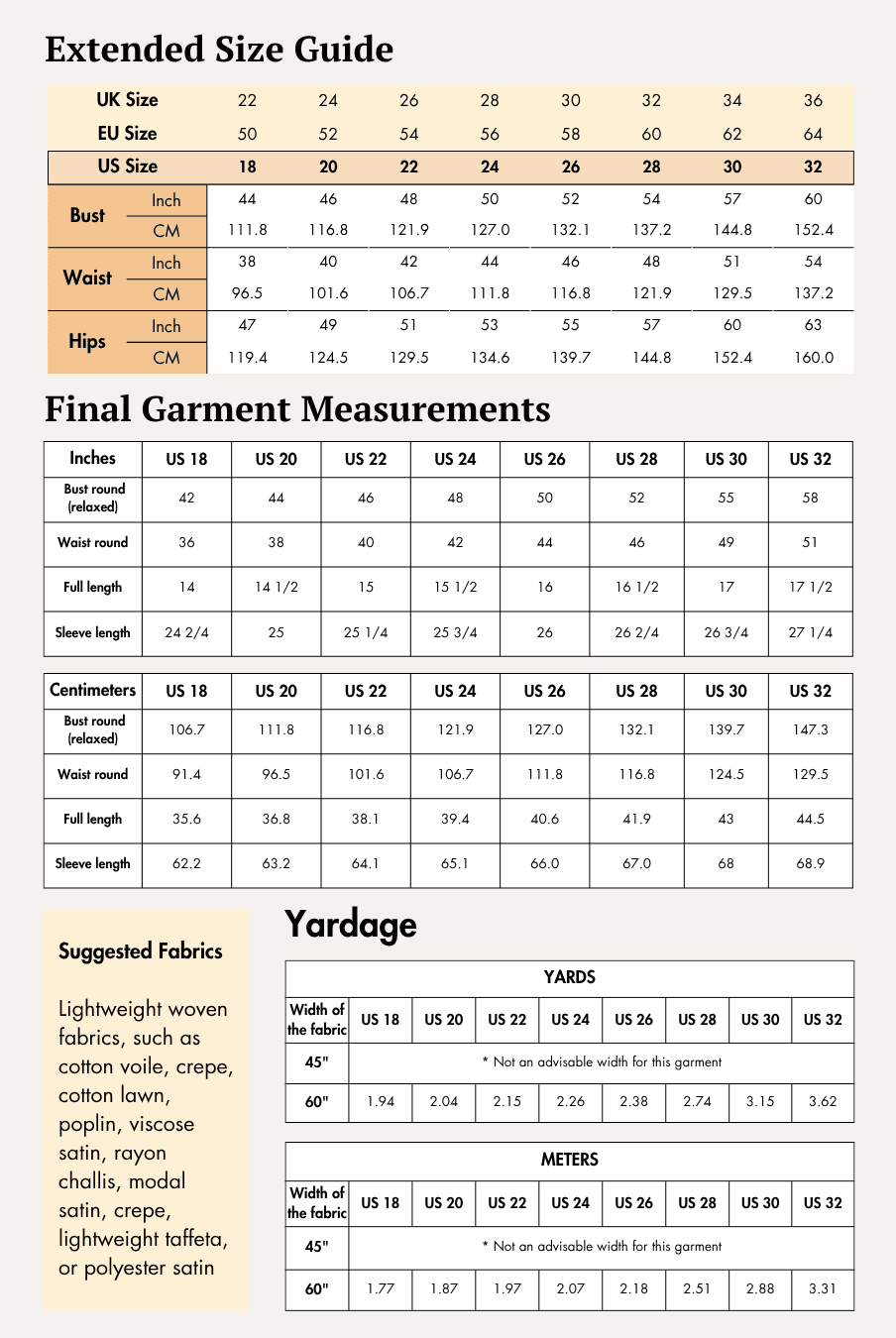
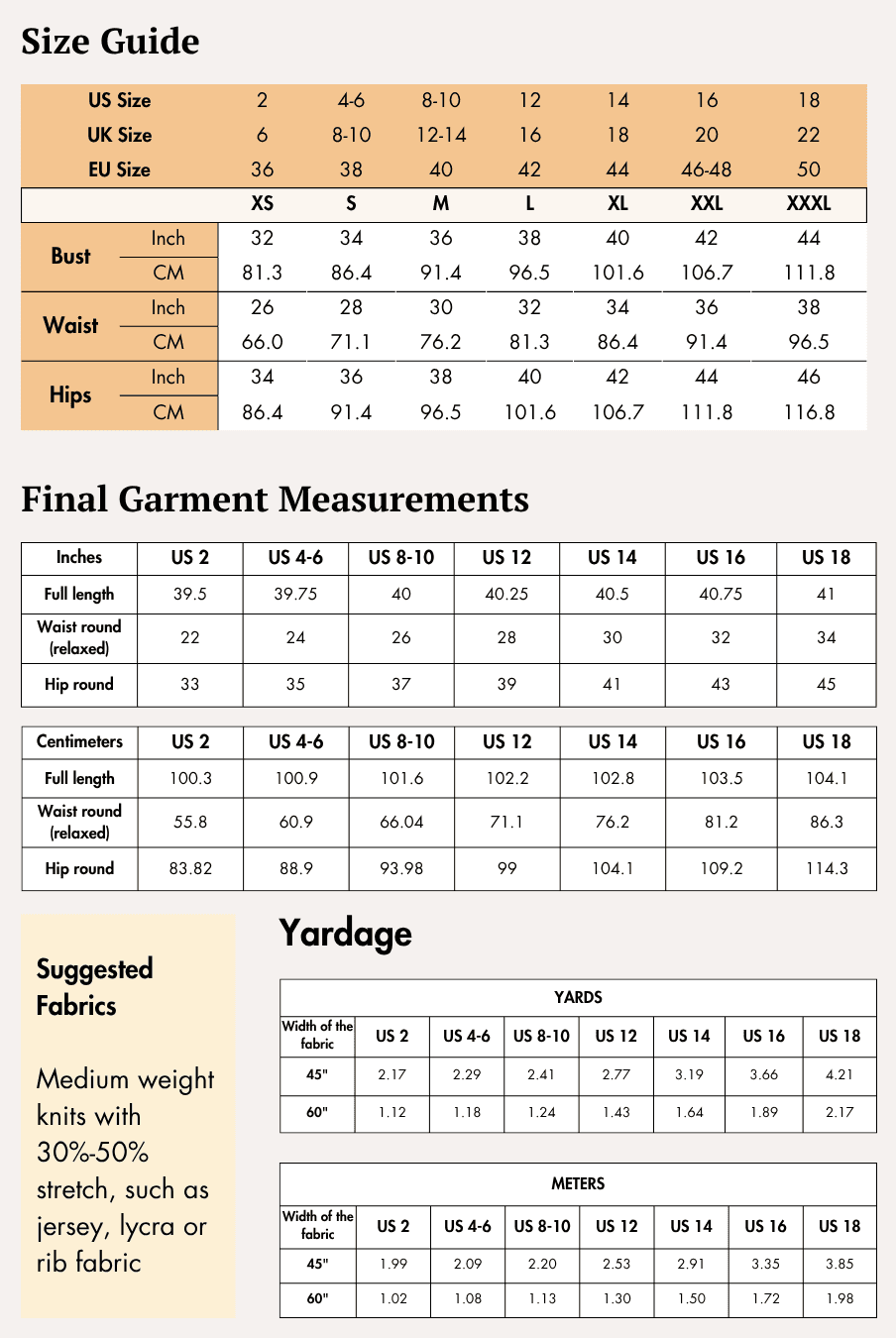
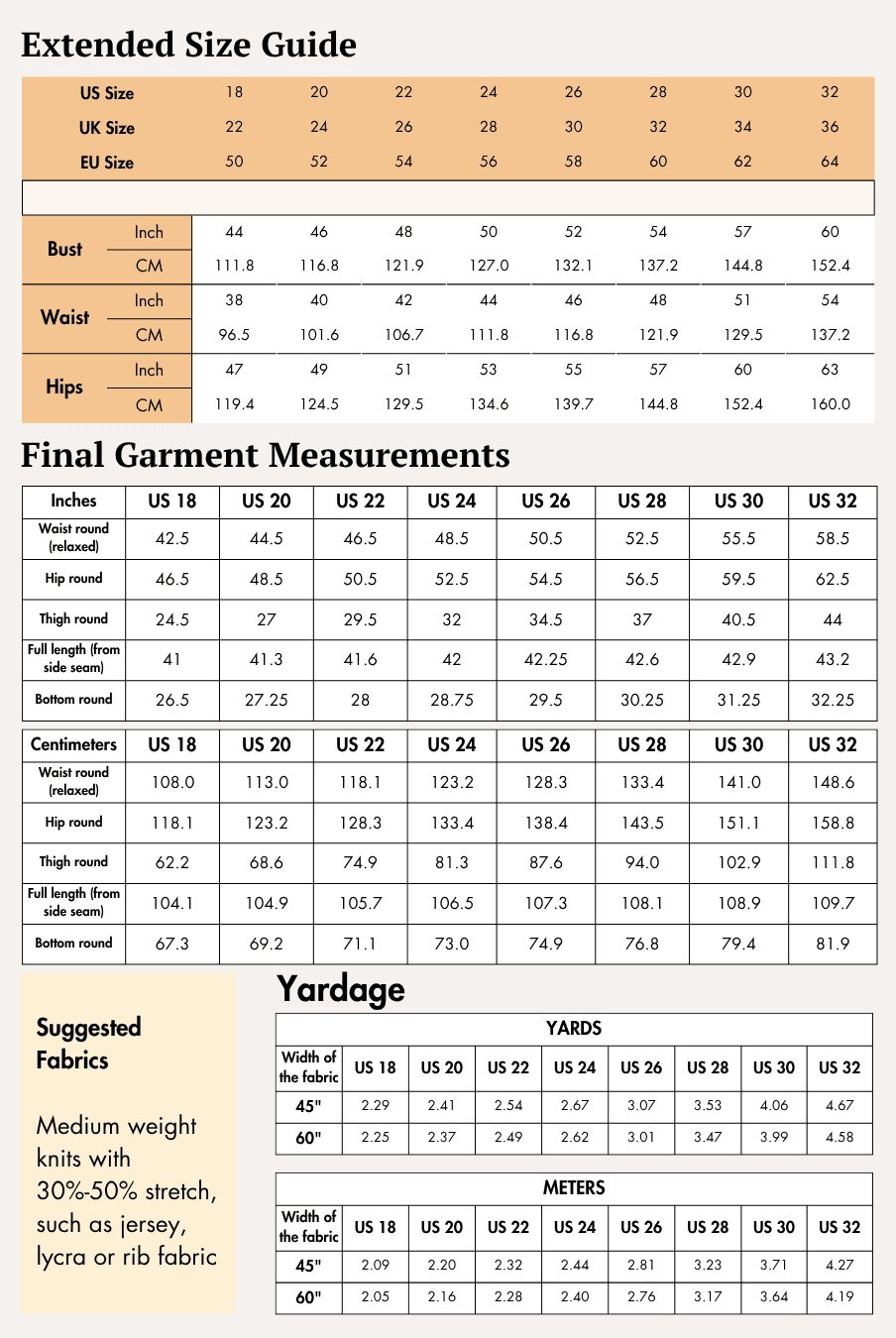
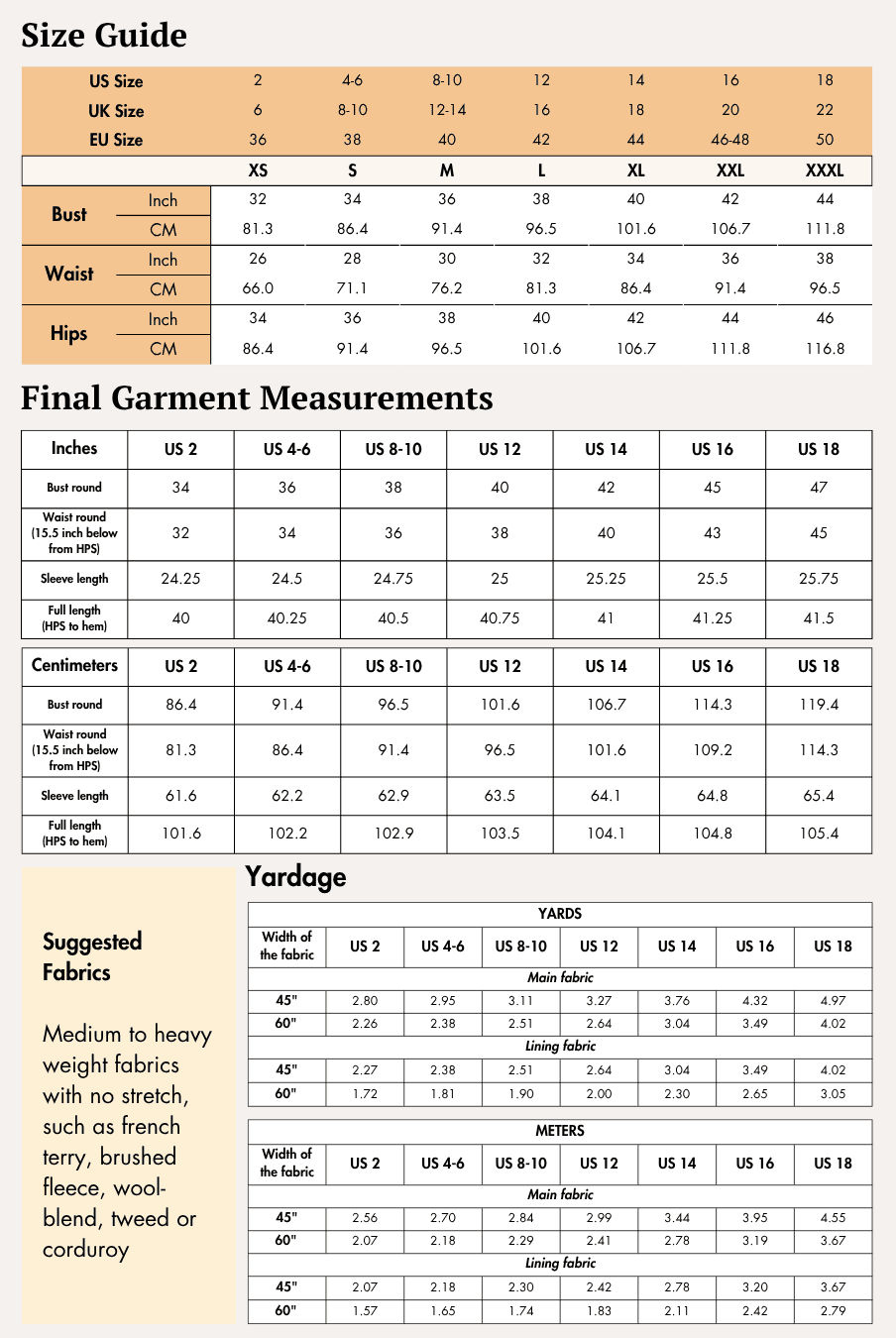
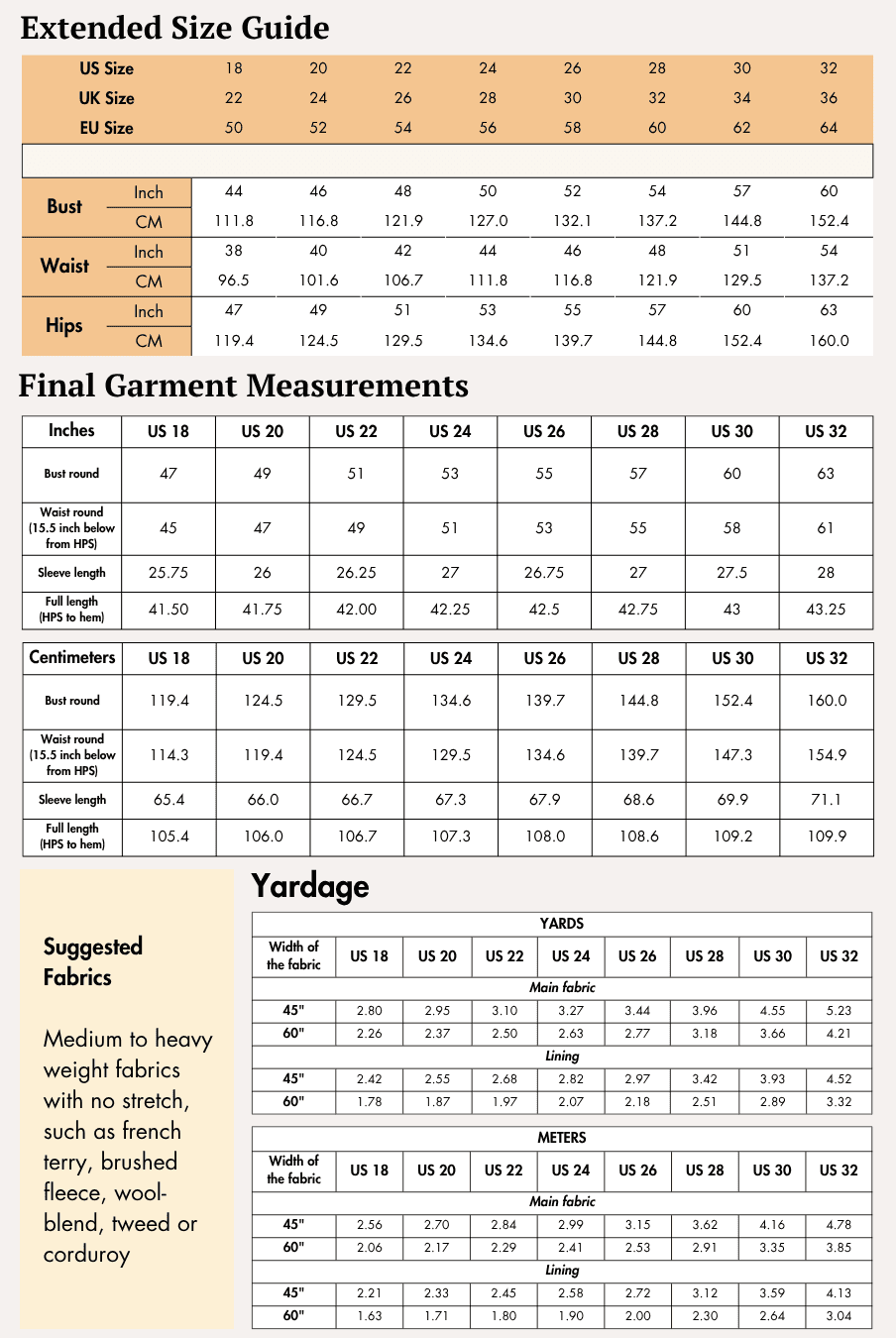
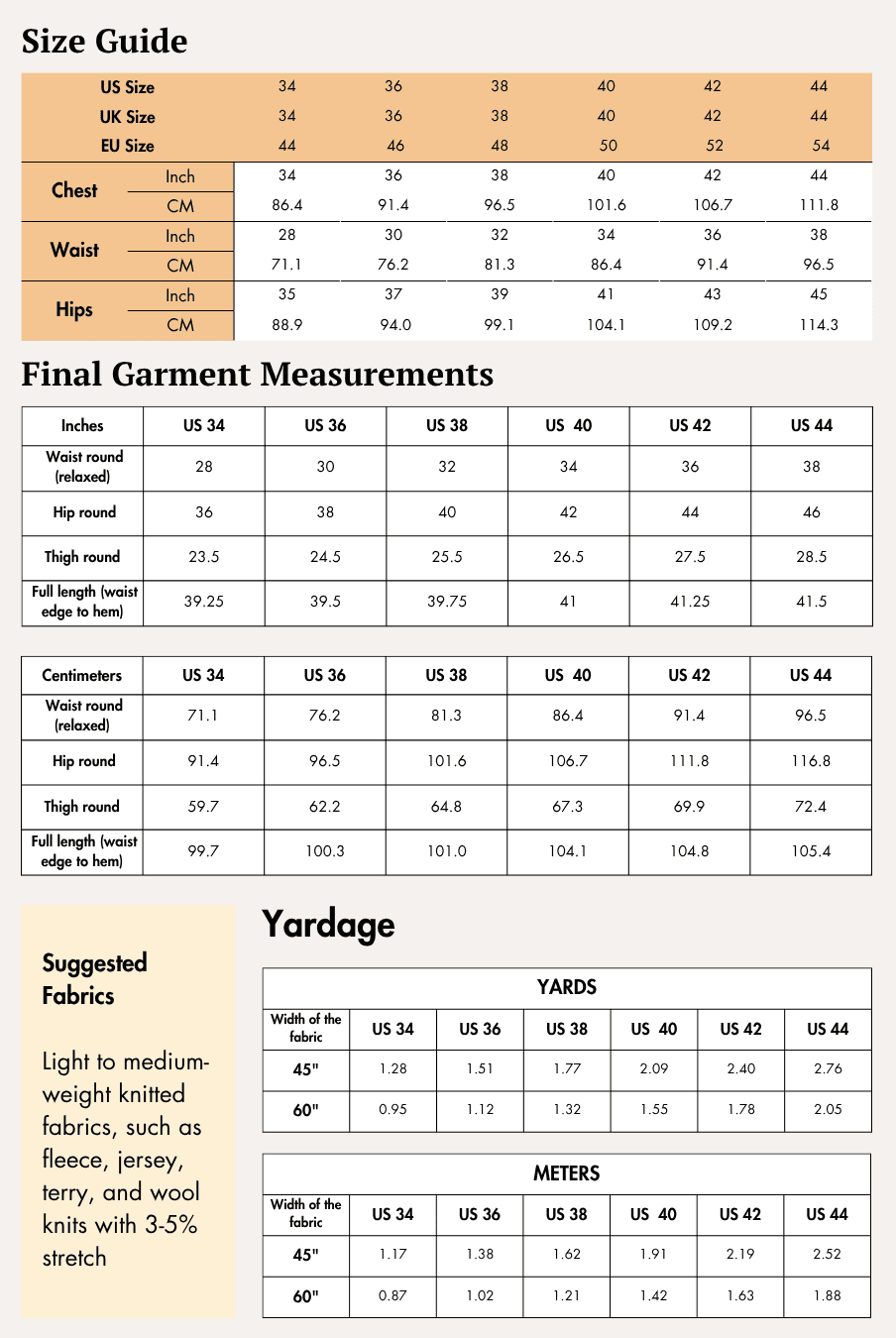
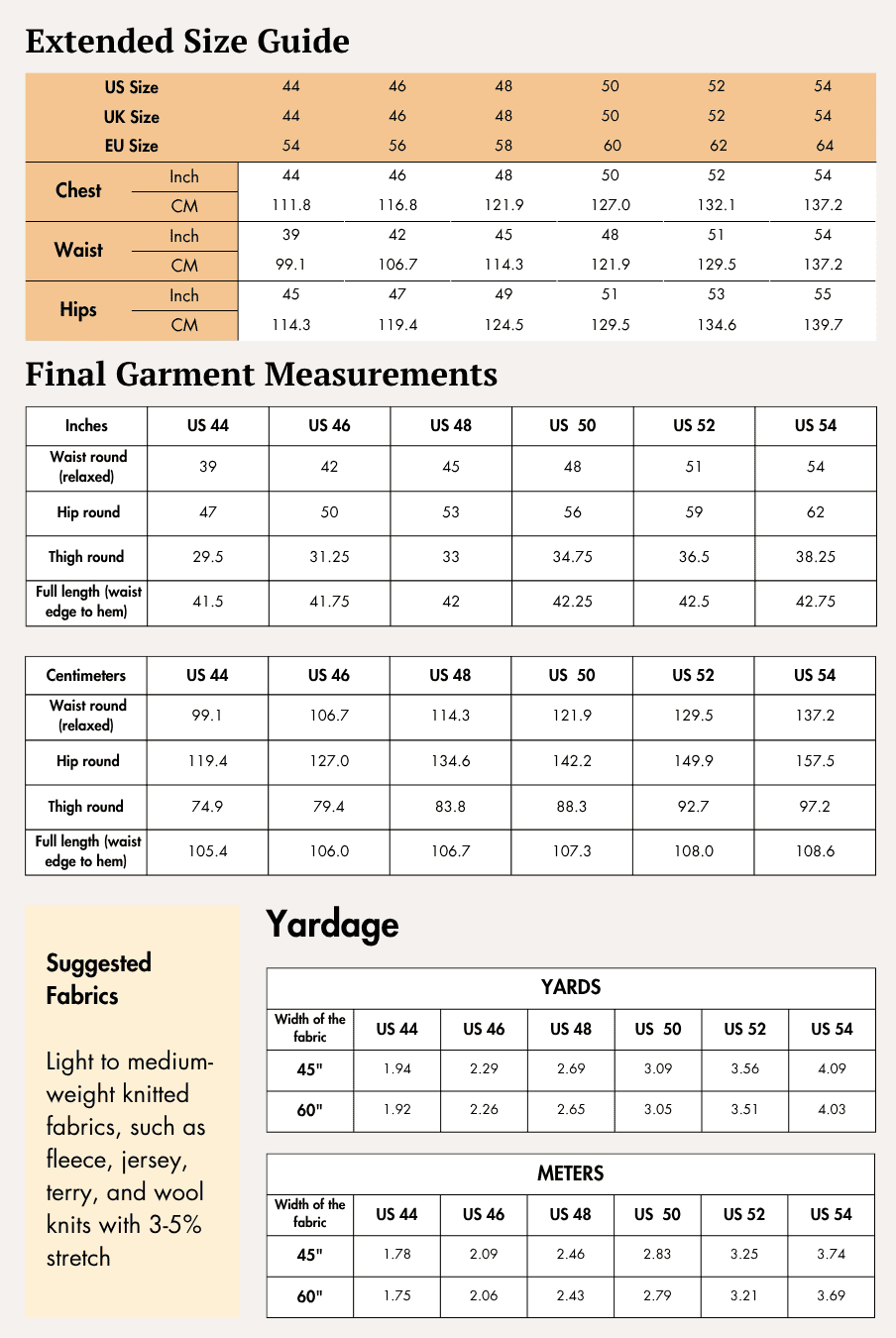
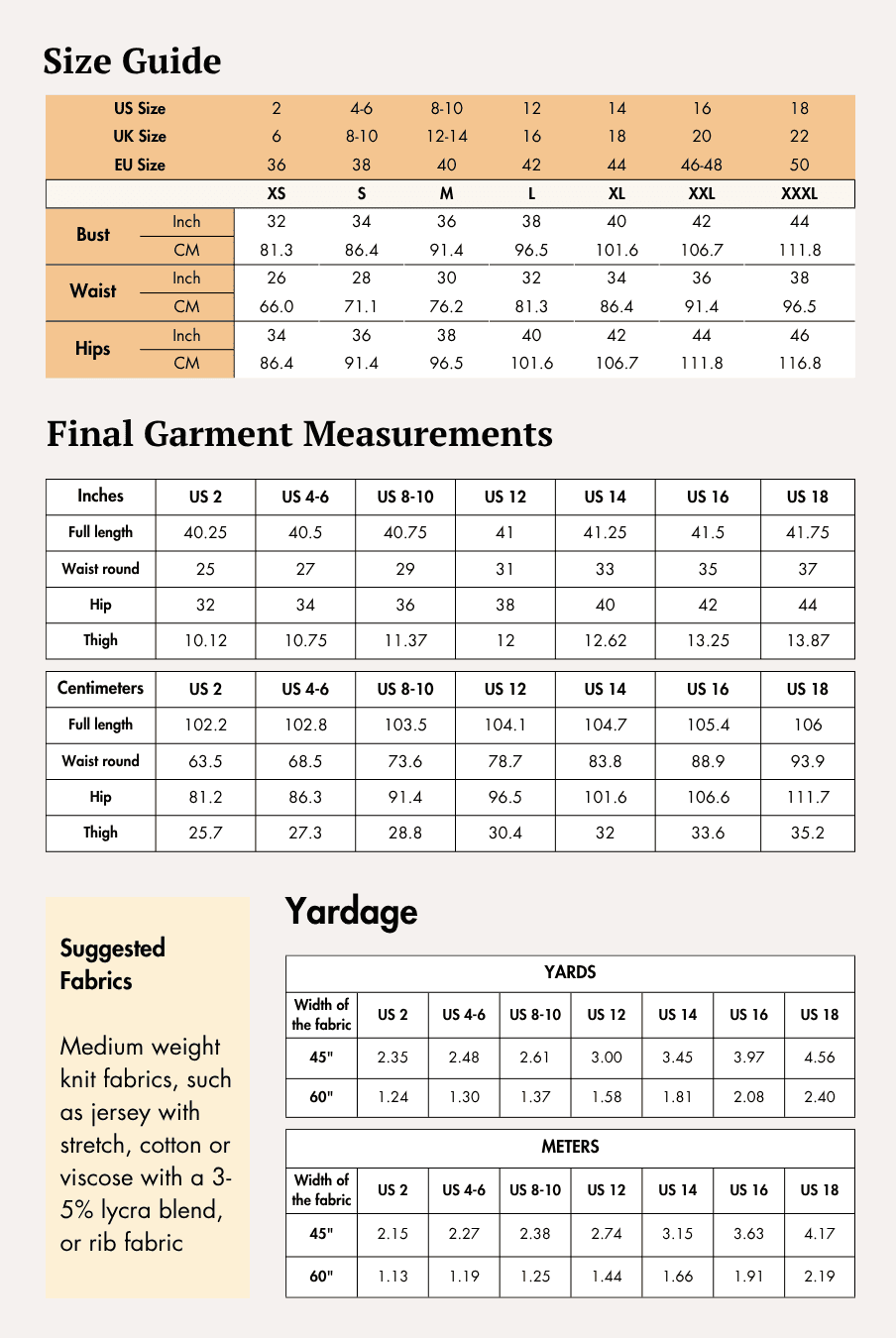
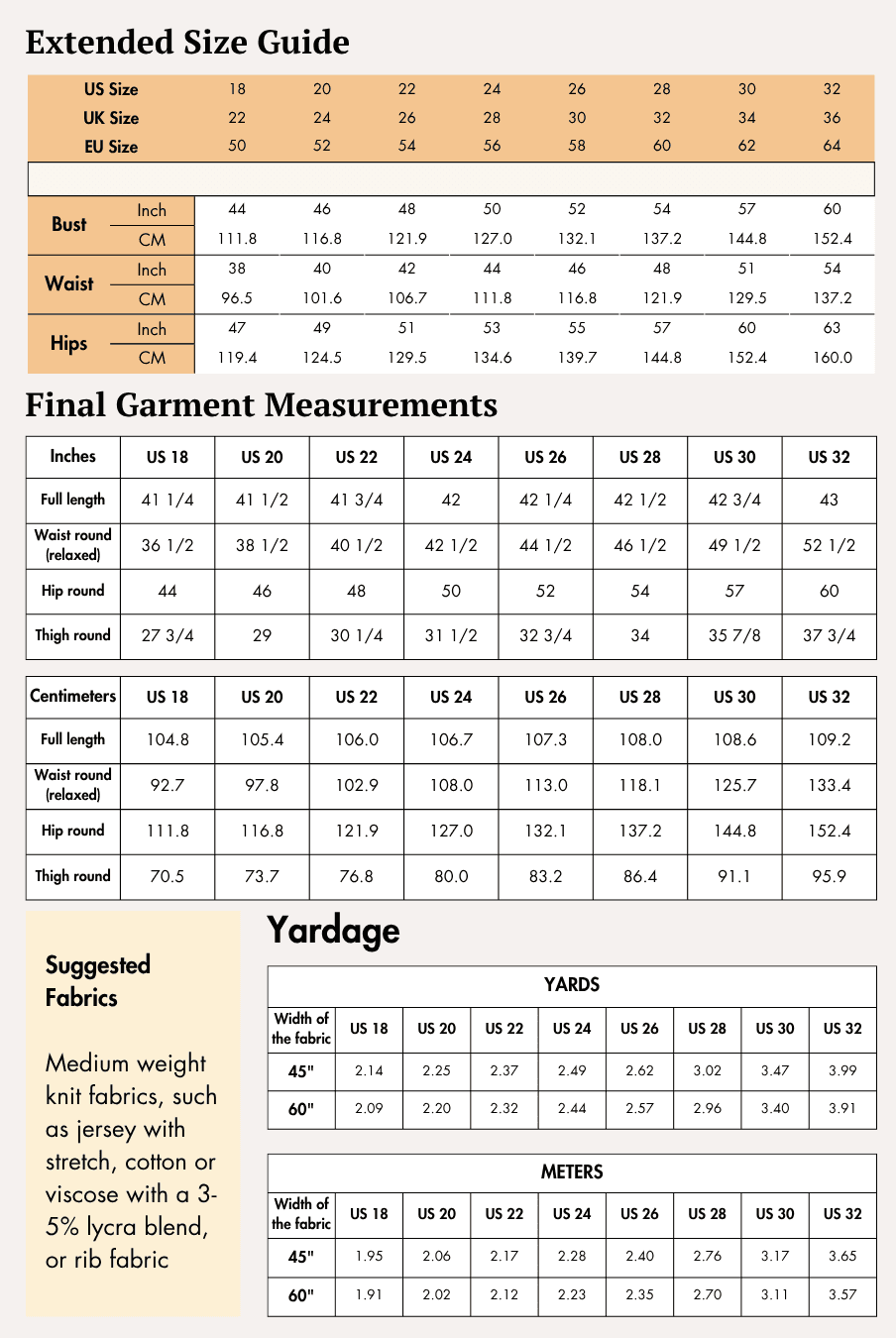
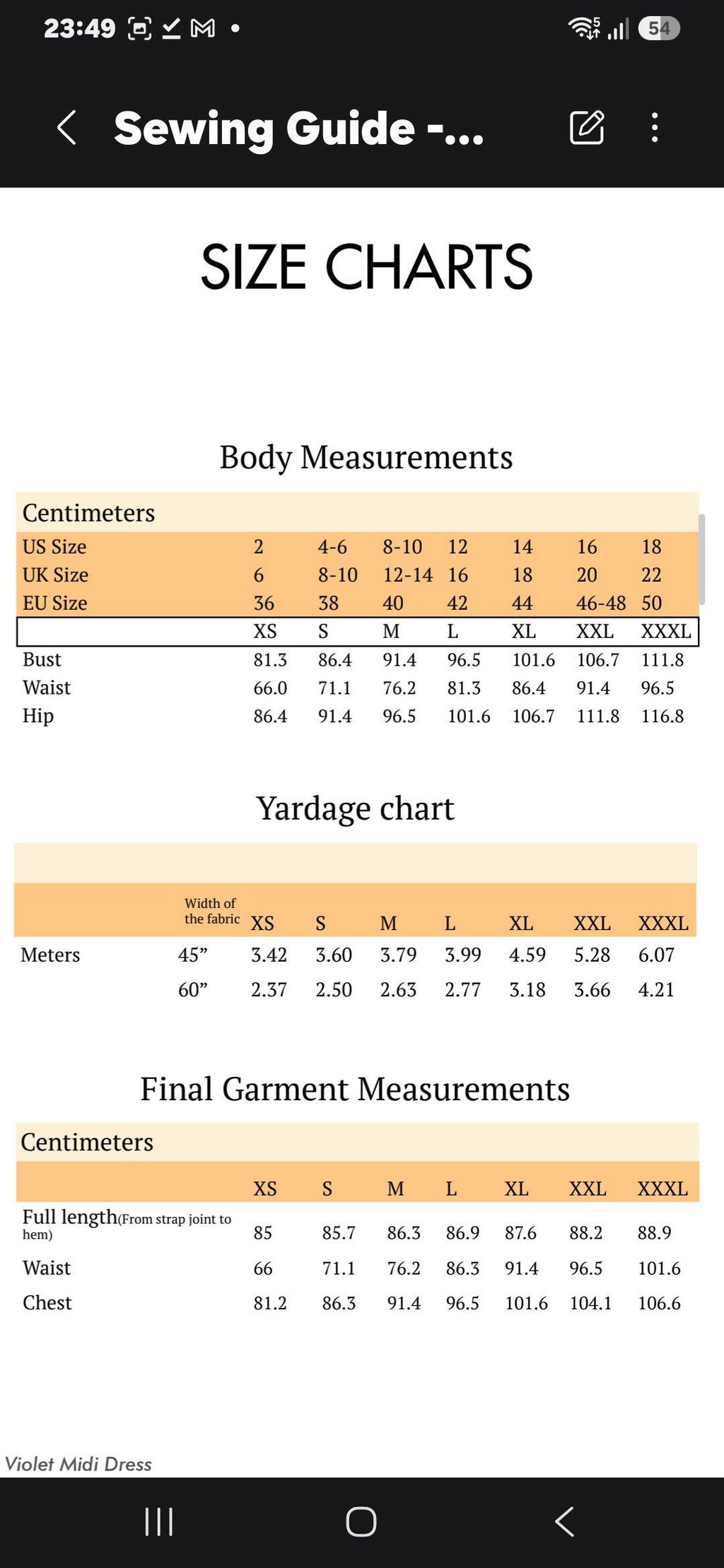
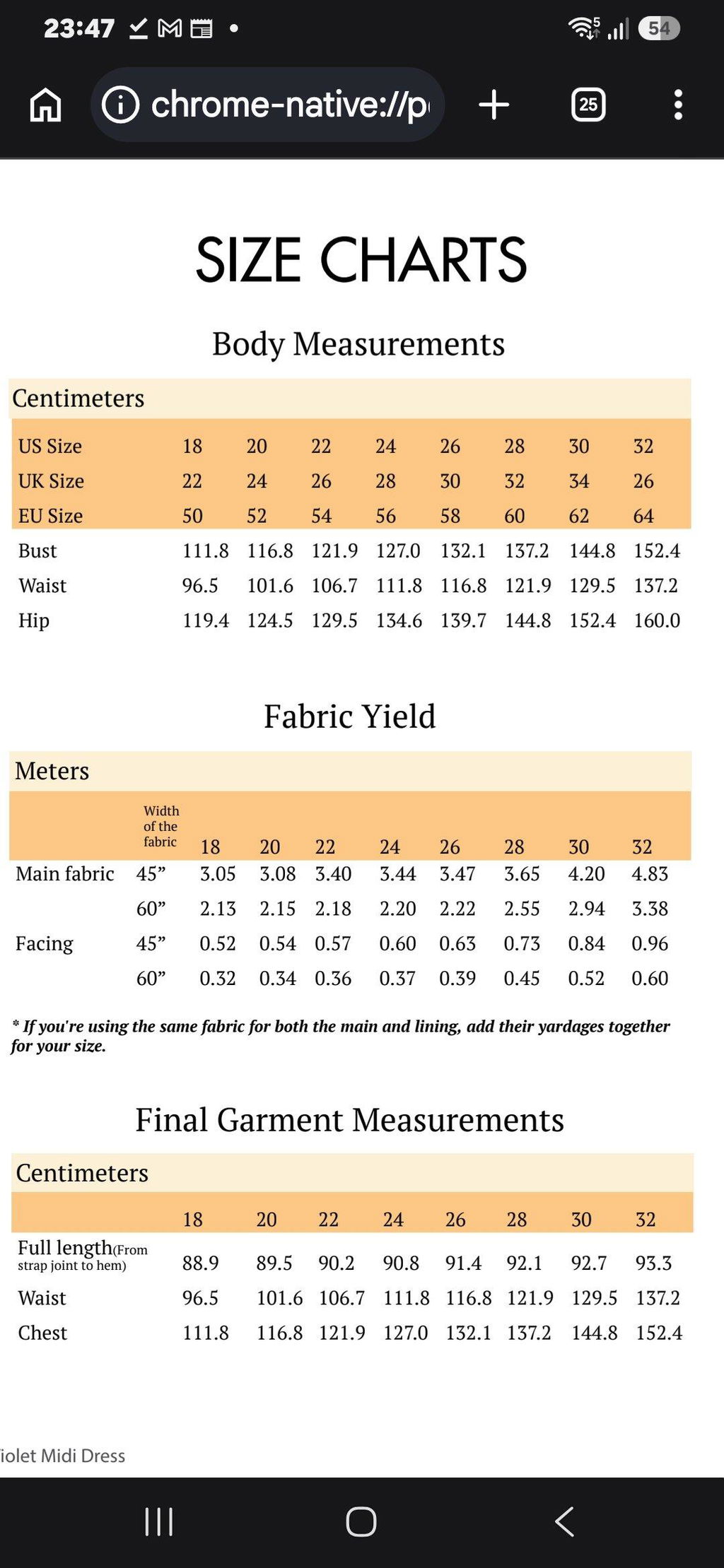
Check the size charts and measure yourself to select the correct size, using the garment and body measurement tables in the guide.
Verify how much fabric you need by referencing the fabric yield table in the guide.
Pattern Inventory: What Pieces to Prepare

Prepare the following pattern pieces:
- Front – Cut 2 Fabric
- Bottom Back Panel – Cut 1 Fabric
- Back Yoke – Cut 2 Fabric
- Sleeve – Cut 2 Fabric
- Collar – Cut 2 Fabric
- Collar Band – Cut 2 Fabric
- Cuff – Cut 2 Fabric
- Binding Strip – Cut 2 Fabric
Interfacing pieces:
- Collar – Cut 1 Fusible Interfacing
- Collar Band – Cut 1 Fusible Interfacing
Pattern Marking

The pattern includes the following markings:
- Grainline
- Shoulder
- Neckline
- Armhole
- Side seam
- Front armhole notch
- Back armhole notch
- Center back notch
- Placket
- Slit guideline
- Hemline
Transfer all markings before sewing to ensure accurate construction.
Cutting Layout


The cutting layout helps ensure your garment is cut accurately on grain.
- Align all grainline arrows parallel to the fabric selvage.
- Pin pattern pieces securely before cutting.
- The layouts provided are nondirectional.
- Purchase additional fabric when working with directional prints or fabrics with nap.
- Separate layouts are provided for both 45-inch and 60-inch fabric widths.
- The illustrated layouts use a Medium size for demonstration.
Fabric Cutting and Preparation
Arrange the pattern pieces according to the cutting layout diagrams. Begin by positioning the pieces on the fabric, ensuring that the grainline arrow runs parallel to the selvage.
If you are using fabric shears, trace the pattern pieces and then cut them out, cutting away any pen, pencil, or chalk lines. Remember to cut out any notches that appear on the edges. These markings help line up the pieces when you assemble the garment.
Use your marking pen, pencil, or chalk to transfer the markings (such as circles, buttonholes, and fold lines) to the wrong side of the fabric. Mark the center front of pieces cut on the fold, as this will help you align pieces accurately.
Seam Allowance
Please follow the seam allowances as indicated on the pattern file layers. These are provided specifically for each piece to ensure accurate construction.
This pattern uses a 0.9 cm (or 0.38 inch) seam allowance all around and 1.5 cm (or 0.6 inch) at the hem.
Step-by-Step Sewing Instructions
1. Prepare the Plackets
1a. Use fusible interfacing to cut a front placket without seam allowance. Iron the adhesive side to the wrong side of both front pieces, placing the interfacing as shown in the guide.
1b. Fold the placket seam allowance and then the placket folding line toward the wrong side of the front piece. Stitch along the edge.
1c. Fold the created placket once more toward the wrong side and stitch along the inside edge.
1d. Open the placket fold.
2. Prepare the Back Shirt Panel
2a. Sandwich the Bottom Back Panel between the Back Yoke pieces with wrong sides facing out. Align the center back notch and stitch along the seamline.
2b. Open the yoke pieces and topstitch along the edge of the joined seam.
3. Join the Front and Back
-
Place the front panels on the prepared back panel with right sides together, aligning the shoulders.
-
Stitch along the seamline.
4. Prepare and Attach the Collar
4a. Sew both collar pieces right sides together, starting from one corner of the collar band seam allowance to the opposite corner.
4b. Clip the corners of the collar. Turn it right side out and use a pointed tool to shape the collar corners neatly.
4c. Take one collar band piece and fold and press the neckline edge to the wrong side. Use basting stitches to keep it in place.
4d. Place both collar band pieces right sides together with the collar positioned between them. Sew the collar band pieces together, enclosing the collar.
4e. Turn the collar band right side out and press along the stitch line to create a stable collar shape.
4f. Place the longer collar band on the neckline of the bodice with right sides together. Pin in place and sew along the seamline, leaving the other collar band piece free.
4g. Carefully fold the seam allowances inside, enclosing the neckline seam within the collar band. Pin if needed and stitch to create a clean finish. Remove the basting stitches after securing the seam allowances.
5. Attach the Sleeves
-
Turn the bodice right side out.
-
Place the sleeve on the bodice with right sides together, aligning the front and back armhole notches.
-
Attach the sleeve by stitching along the armhole seamline.
-
Repeat for the second sleeve.
6. Create the Sleeve Slits
6a. Cut the sleeve slit according to the marked slit guideline.
6b. Prepare the binding strip. Fold the edges of the binding strip toward the center and press.
Bind the slit by enclosing the sleeve fabric within the binding strip and stitching it in place.
7. Sew the Side Seams
-
Turn the bodice and sleeves wrong side out with right sides together.
-
Align the front and back sleeve seams and the bodice side seams.
-
Stitch the side seams.
-
Repeat for the opposite side.
8. Prepare and Attach the Cuffs
8a. Fold the cuff in half widthwise with right sides together and stitch along the side edge seamline.
8b. Open the cuff to form a cylinder. Fold it in half lengthwise with wrong sides together.
Repeat for the second cuff.
8c. Place the cuff onto the sleeve, starting from the sleeve slit edge, with right sides together. Sew the inner edge of the cuff to the sleeve along the seamline.
8d. Turn the shirt wrong side out. Fold the cuff down and sew the remaining edge of the cuff to the sleeve by enclosing the seam allowance inside the cuff.
Repeat for the second sleeve.
9. Attach Buttons and Create Buttonholes
9a. Attach buttons to the cuff at intervals of 1 inch.
9b. Create buttonholes to match the button size using a zigzag stitch in a rectangular shape.
Cut the center of each buttonhole carefully using a thread cutter.
10. Hem the Shirt
-
Fold the hem seam allowance twice at an equal width.
-
Press and pin the hem in place.
-
Sew around the entire hem from the right side of the garment.


Ready to Sew Your Own Collared Shirt?


The Aspen Collared Shirt Sewing Pattern combines timeless tailoring details with a versatile silhouette that works beautifully in a variety of fabrics. With its structured collar, cuffs, front placket, and back yoke, it offers an excellent introduction to traditional shirt construction while creating a polished garment you'll be proud to wear.
If you're ready to create your own version, grab the Aspen Collared Shirt Sewing Pattern and start sewing today.
Join the Community & Get Support
Share your finished Aspen Collared Shirt on social media with #MadeWithWinslets. If you have questions, feedback, or customization requests, contact the Winslet's team at support@winslets.com.