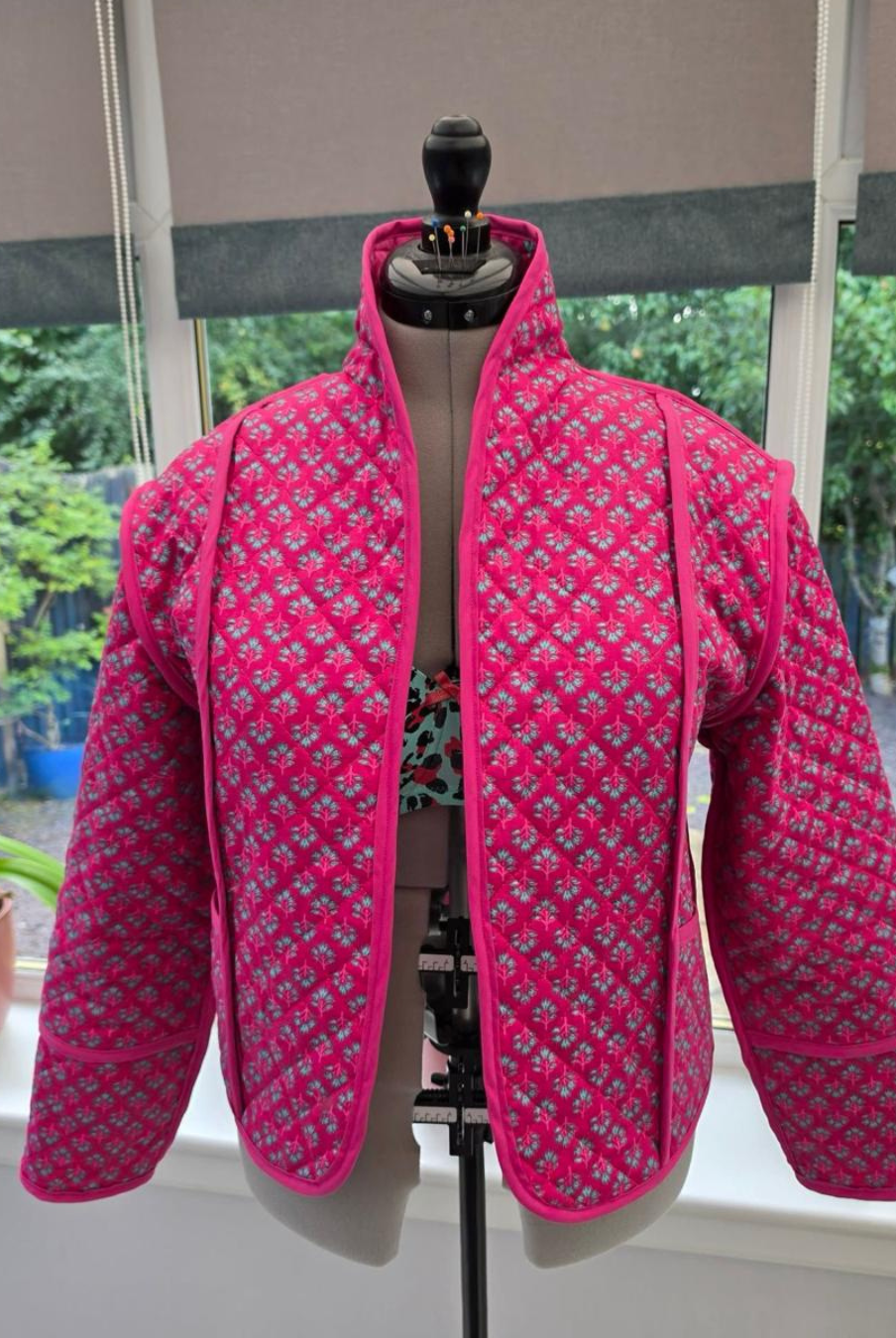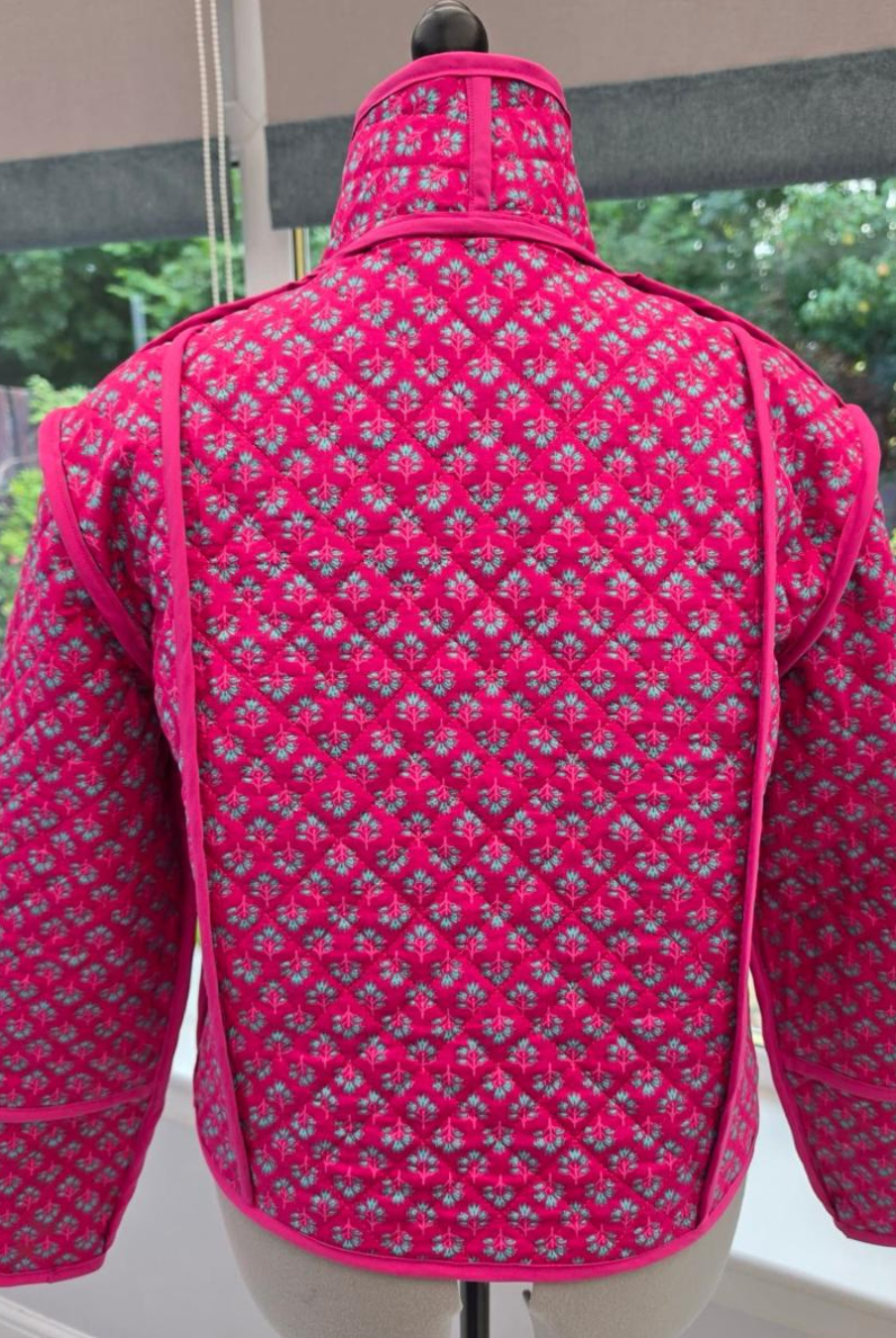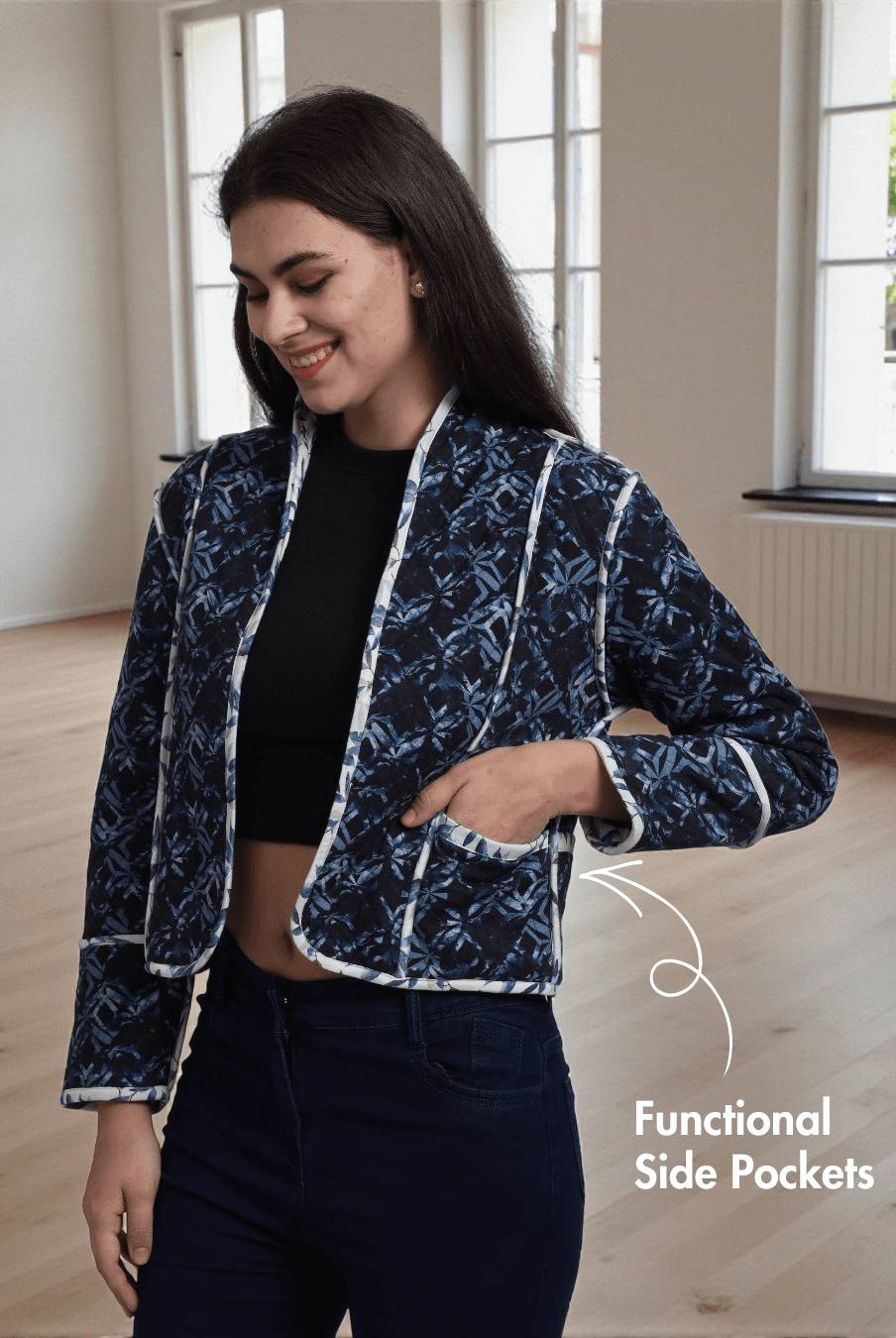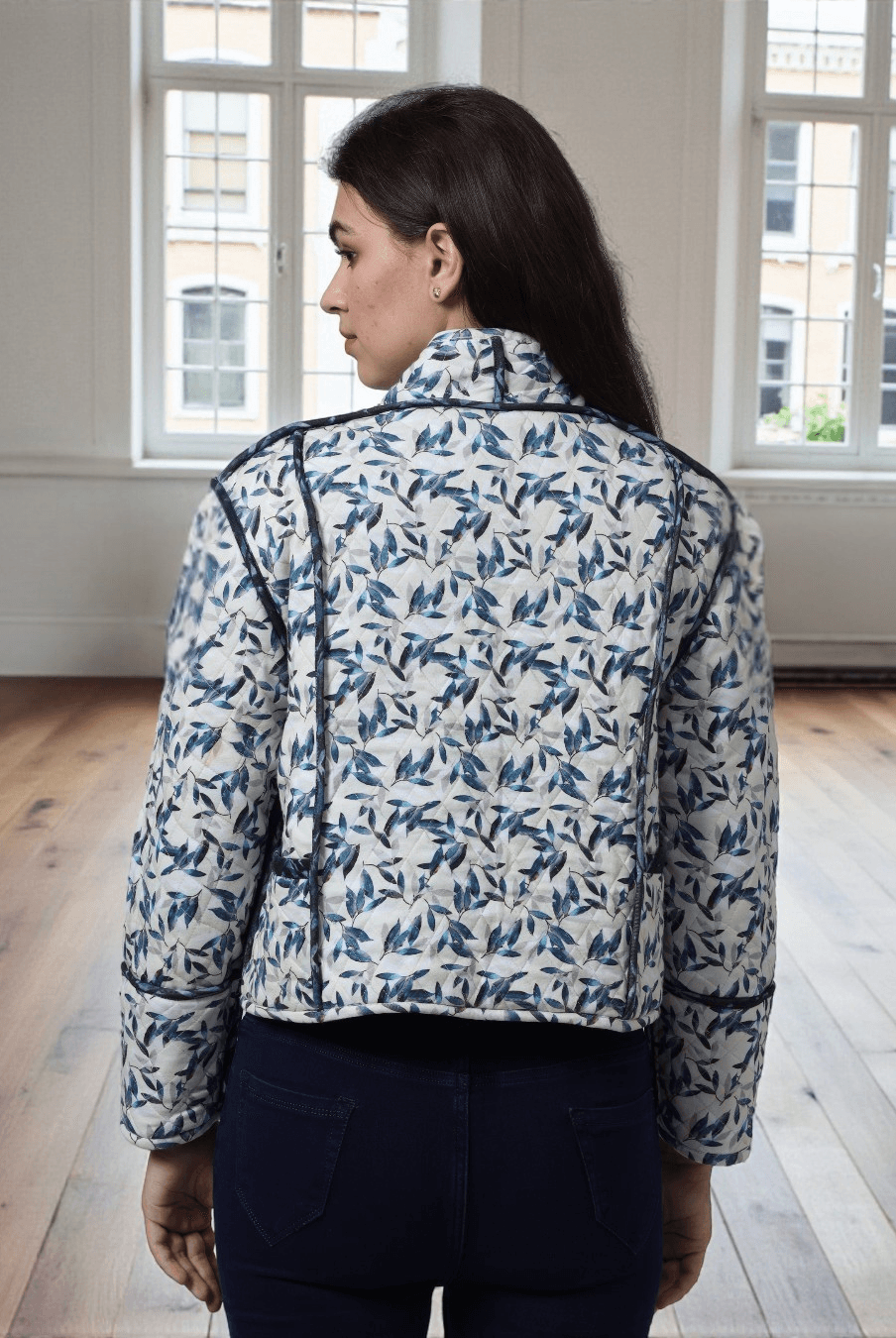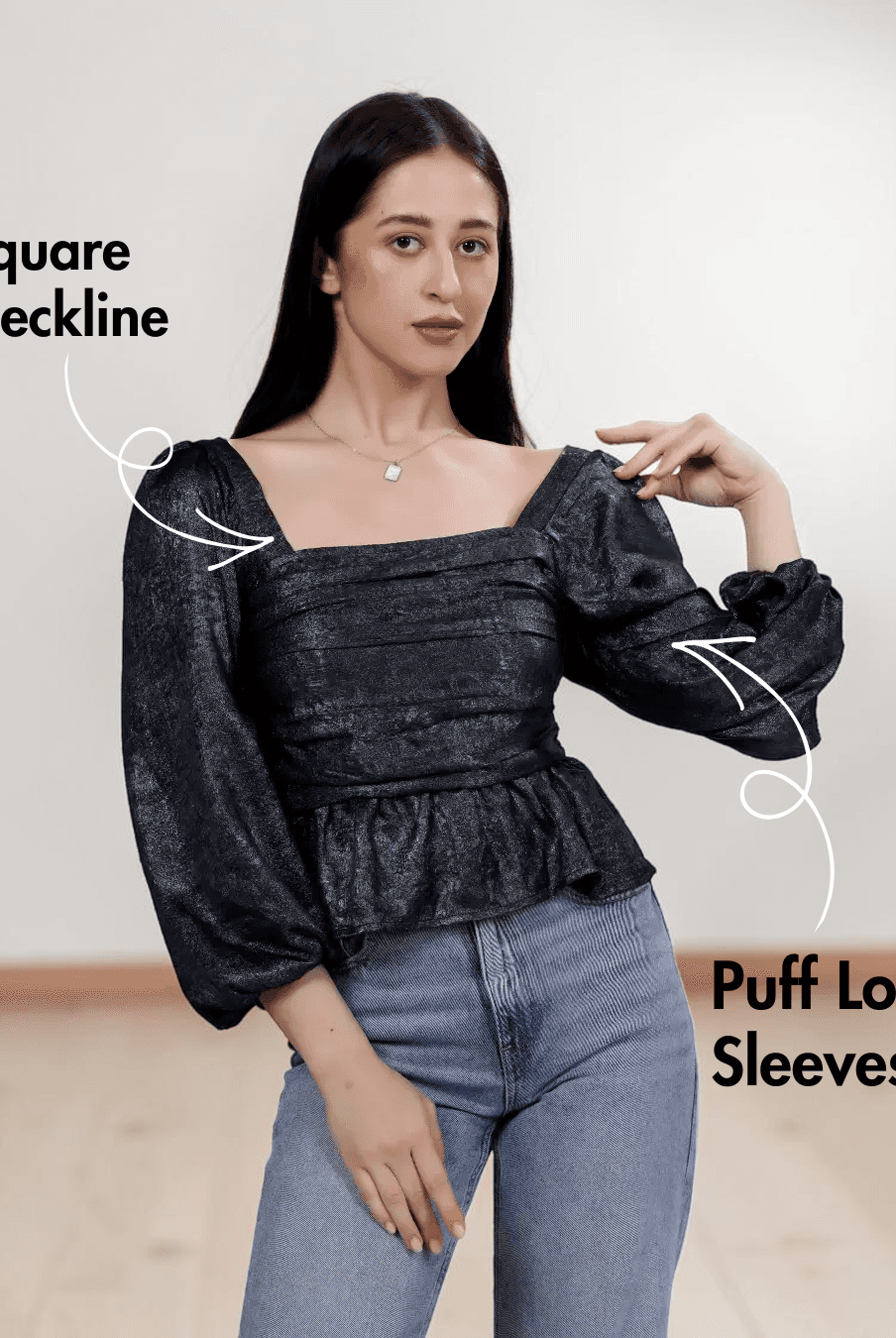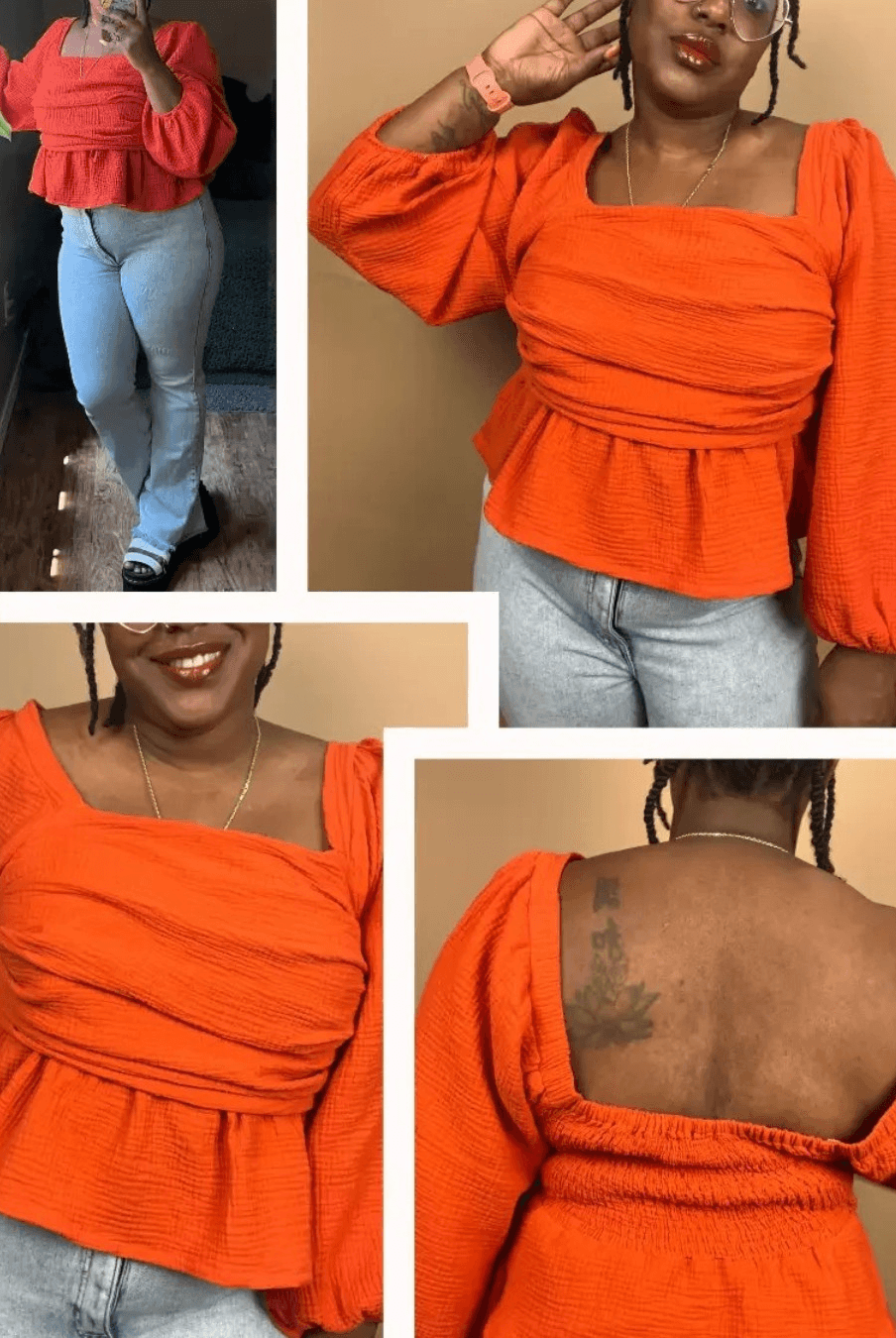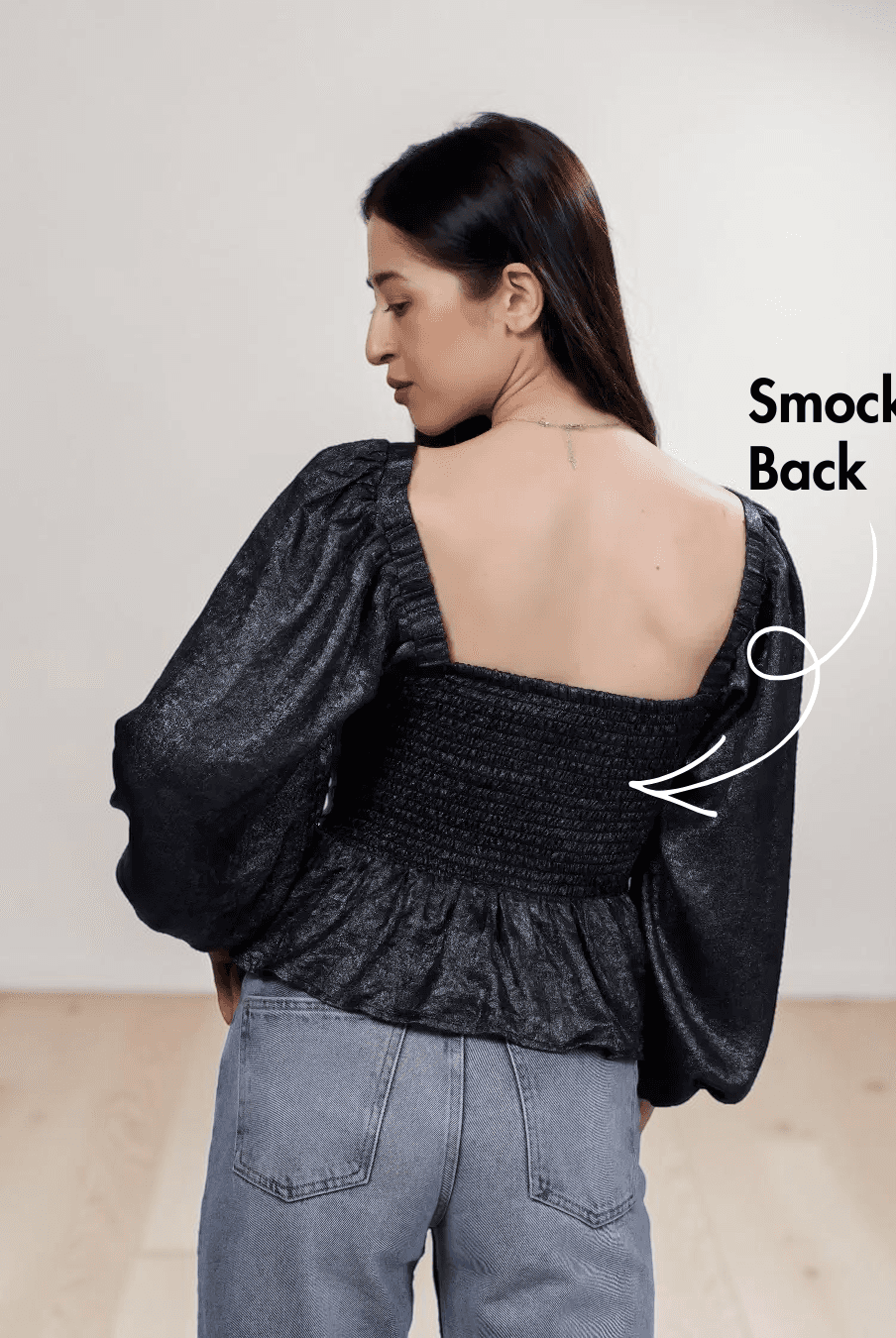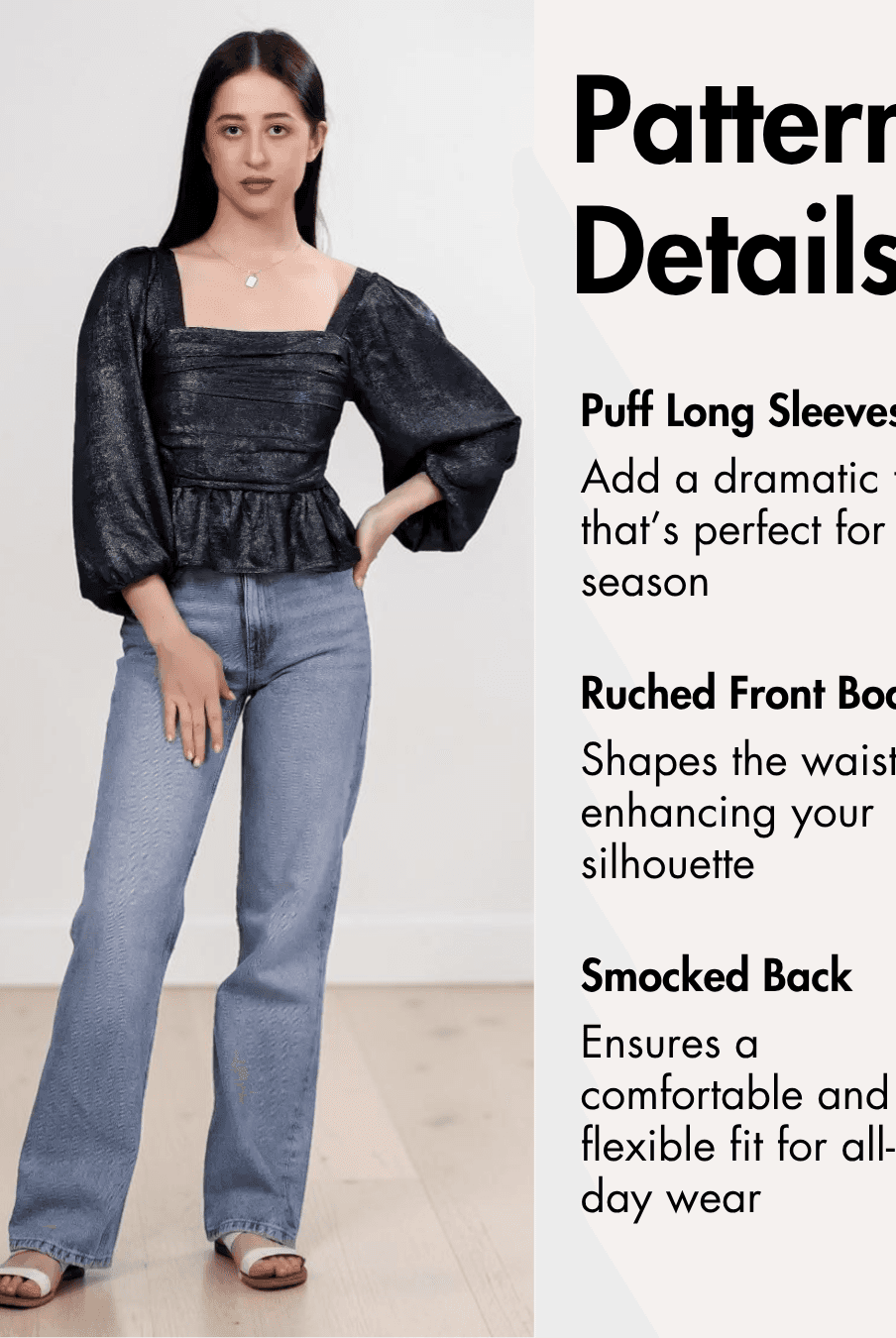
If you're new to sewing, you've probably come across the term "PDF sewing pattern" and wondered what exactly it means.
Can you really sew clothes from a digital file? How do you print it? Is it difficult to assemble? And won't it cost a fortune to print?
These are some of the most common questions we receive from customers at Winslet's Patterns.
Having designed more than 175 sewing patterns and sold over 50,000 PDF sewing patterns worldwide, I've helped thousands of sewists use PDF patterns for the very first time. In my experience, most beginners are pleasantly surprised by how simple the process actually is.
In this guide, I'll explain what PDF sewing patterns are, how they work, and why they've become the preferred choice for many modern sewists.
What Is a PDF Sewing Pattern?
A PDF sewing pattern is a digital sewing pattern that you download immediately after purchase.
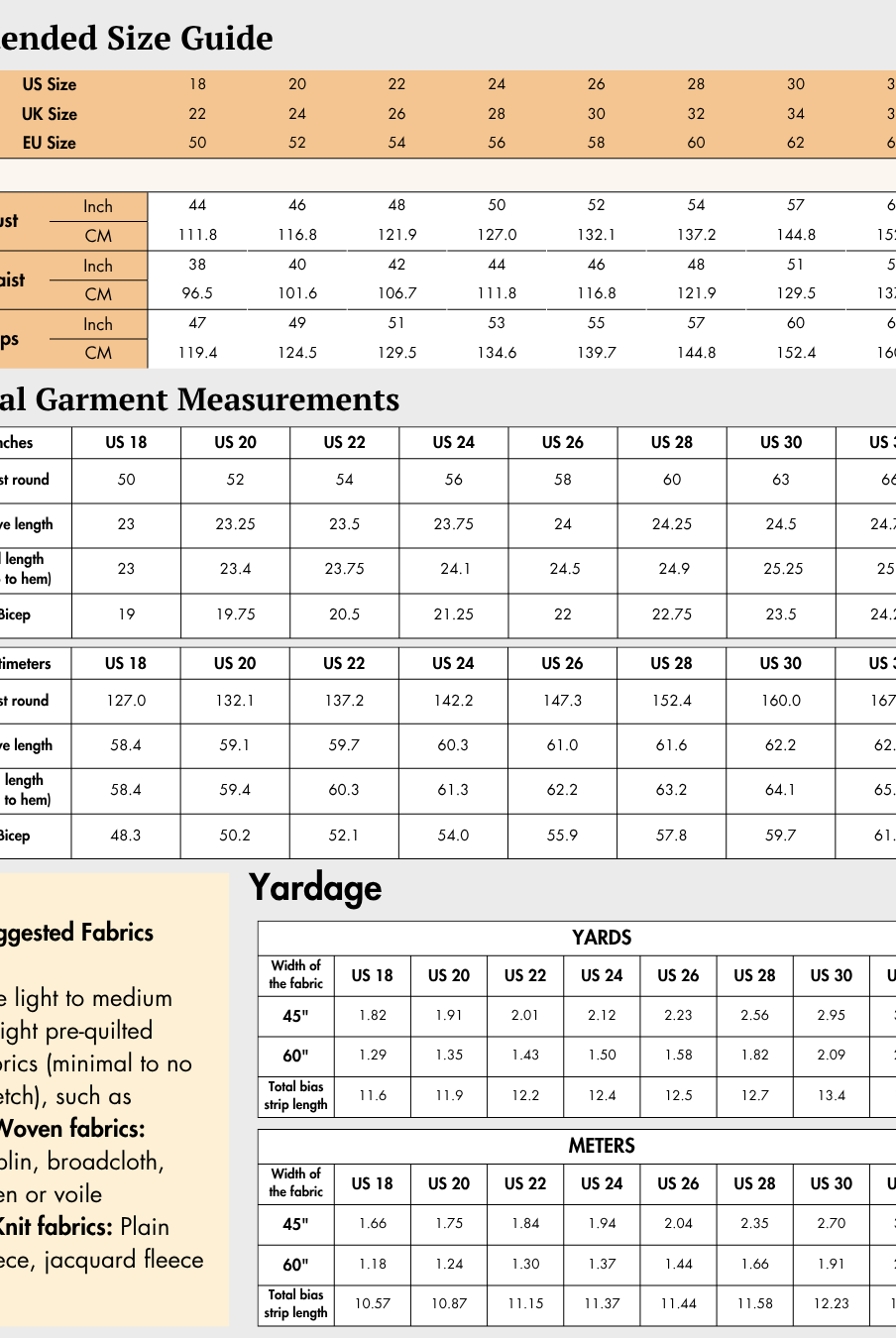
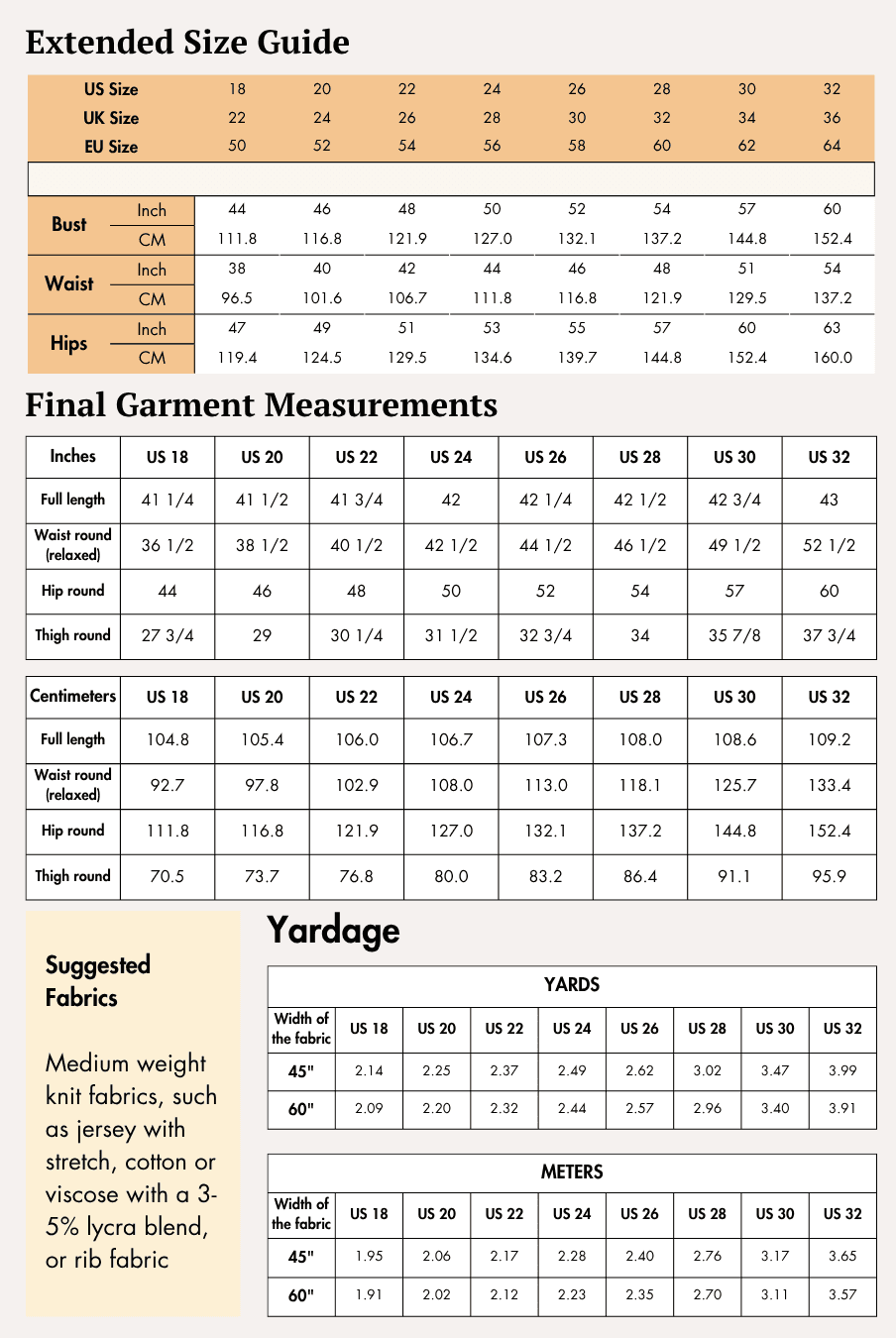
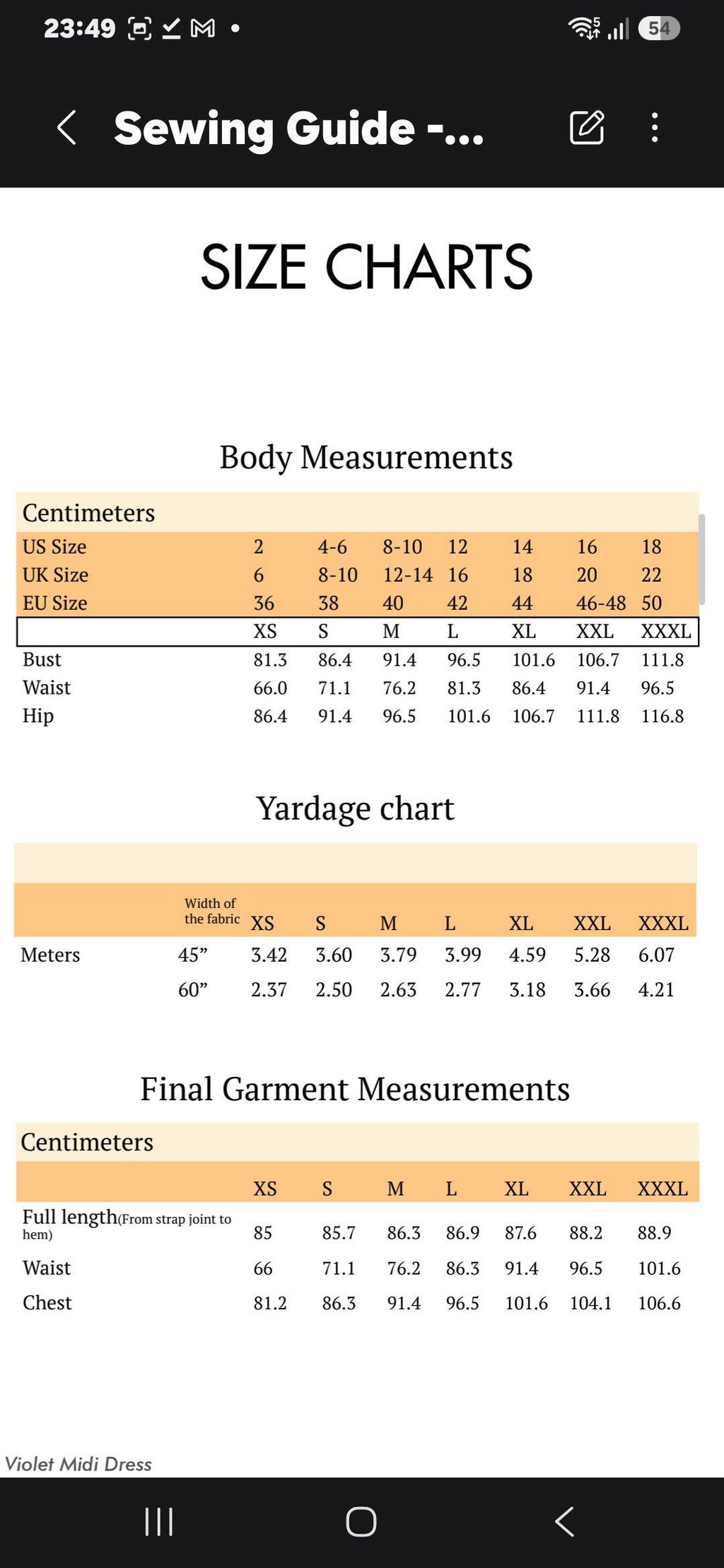
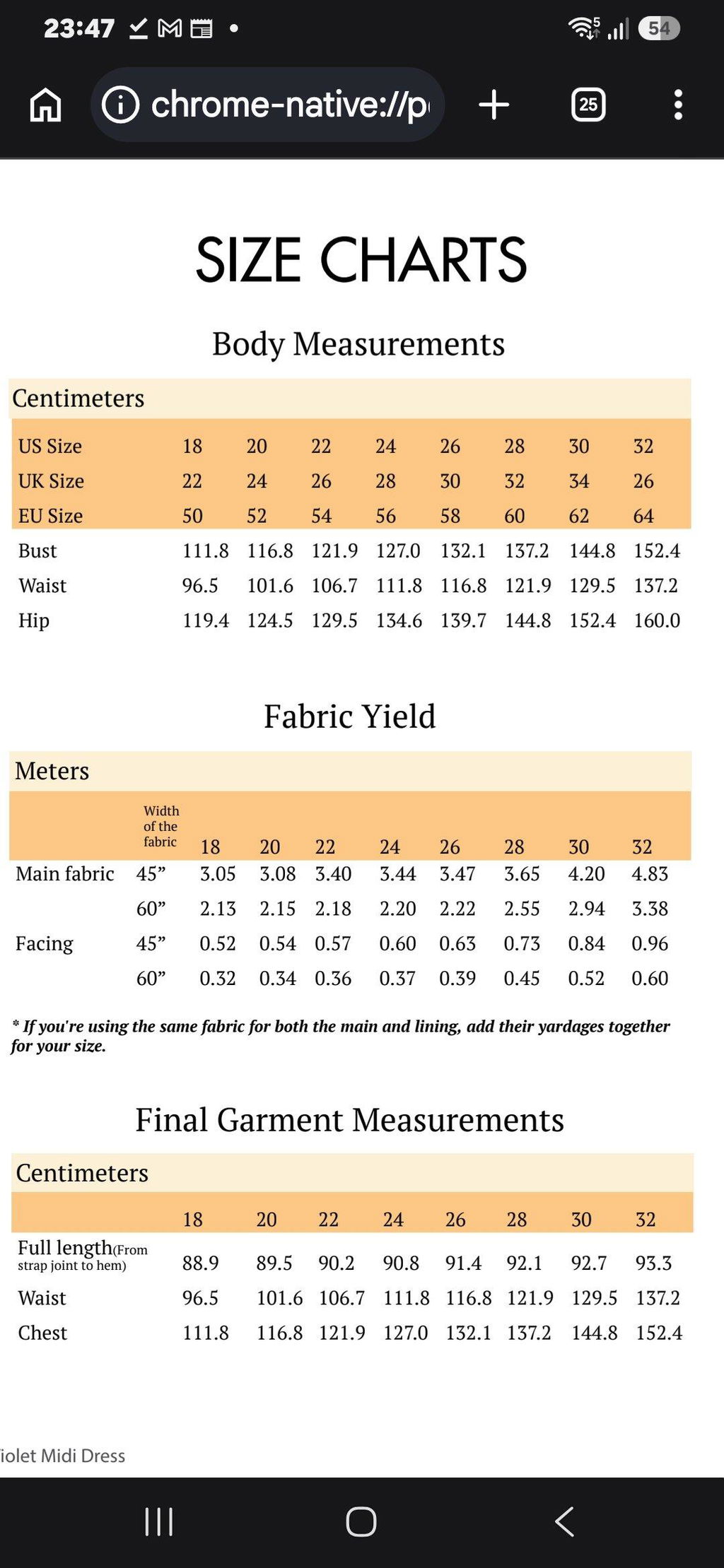
Instead of receiving a printed paper pattern in the mail, you receive one or more PDF files that can be opened on your computer, tablet, or phone. These files contain the pattern pieces, markings, size information, and sewing instructions needed to create your garment.
Once downloaded, the files are yours to keep. You can save them on your device, access them whenever you need them, and reprint them as many times as you'd like.
This is one of the biggest advantages of PDF patterns. Unlike traditional tissue-paper patterns that can tear, wrinkle, or wear out over time, PDF patterns can be reused indefinitely.
How Do PDF Sewing Patterns Work?
The process is straightforward:
-
Purchase and download the pattern
-
Open the PDF files
-
Print the pattern using your preferred format
-
Assemble the pages if required
-
Cut your size and start sewing
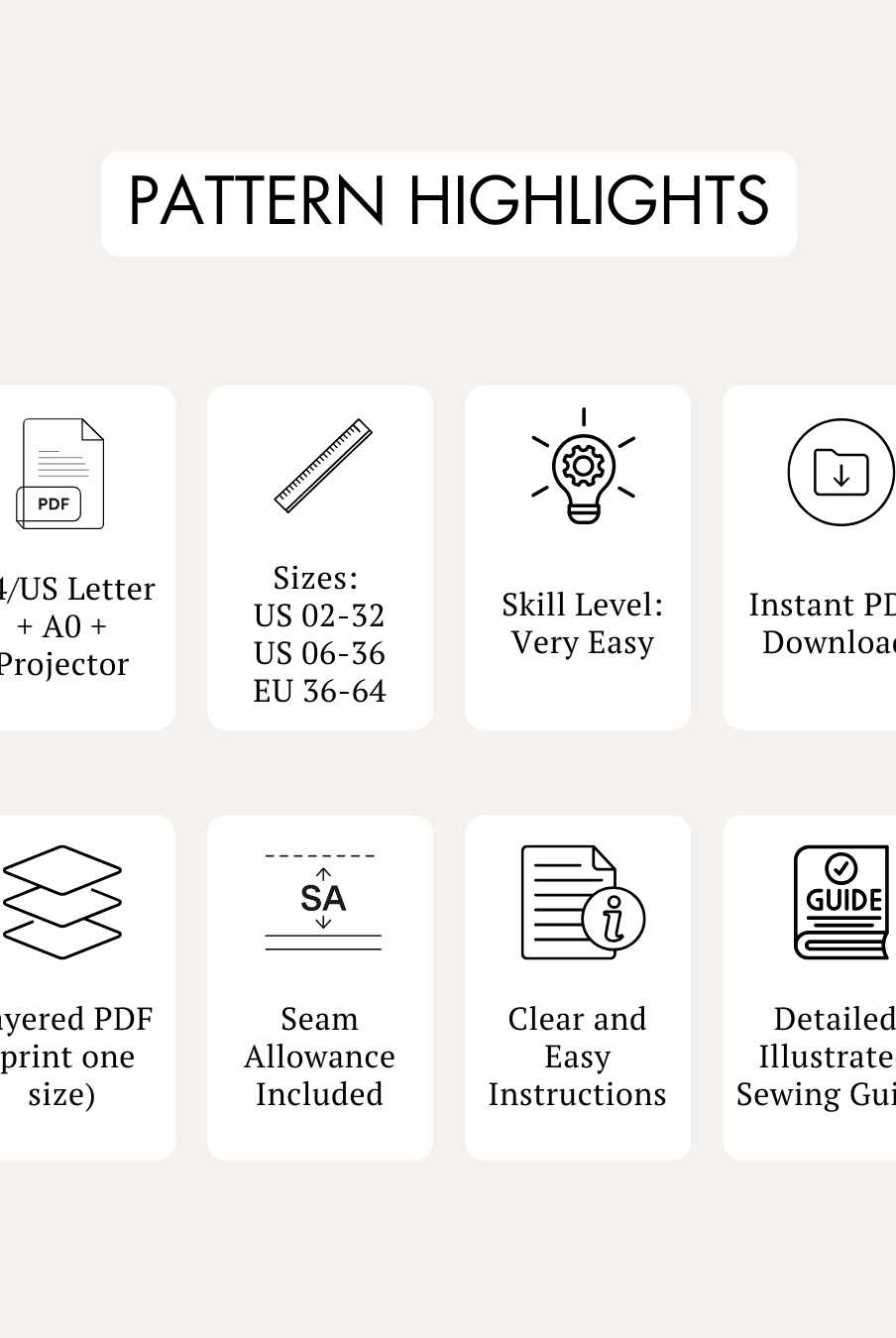
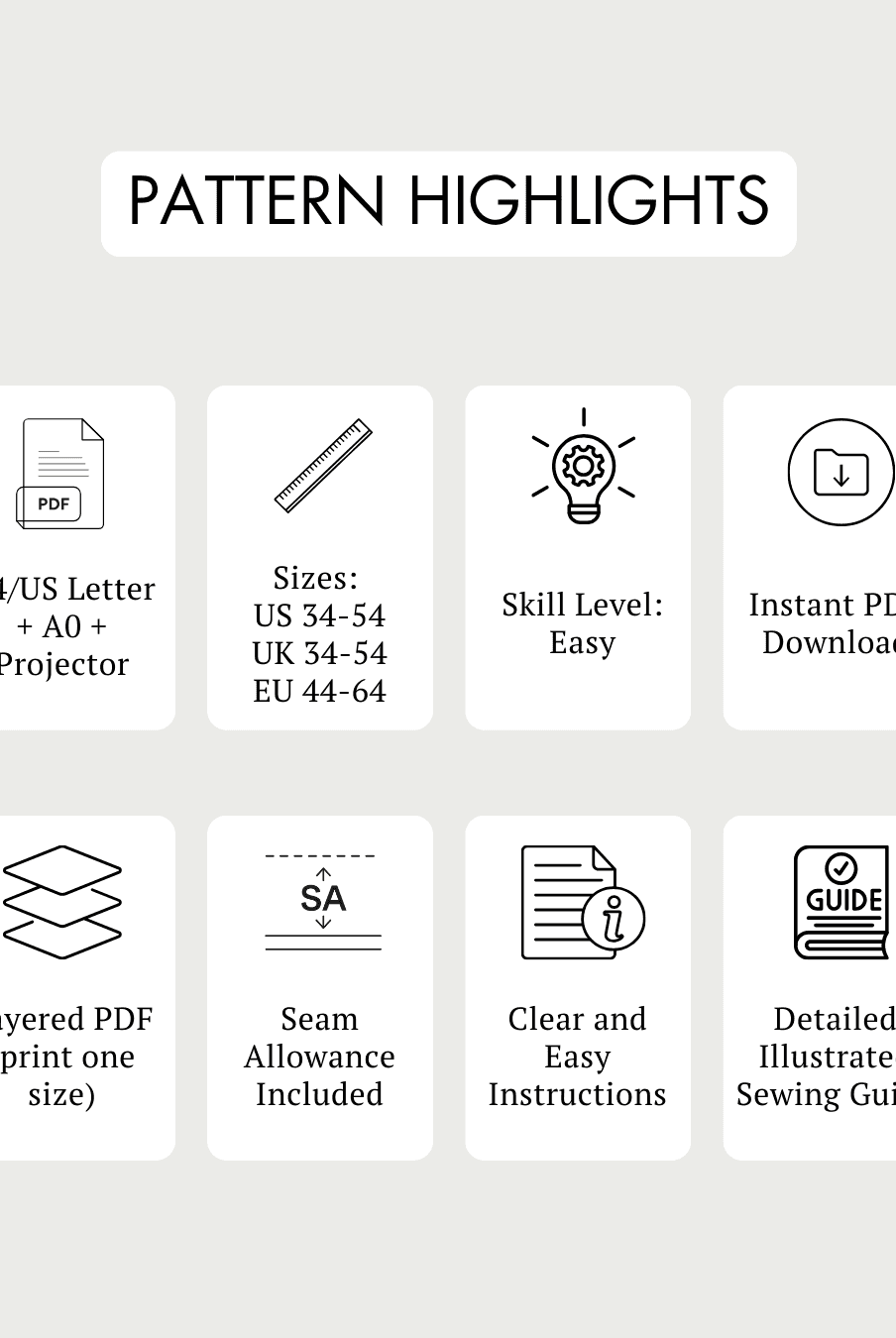
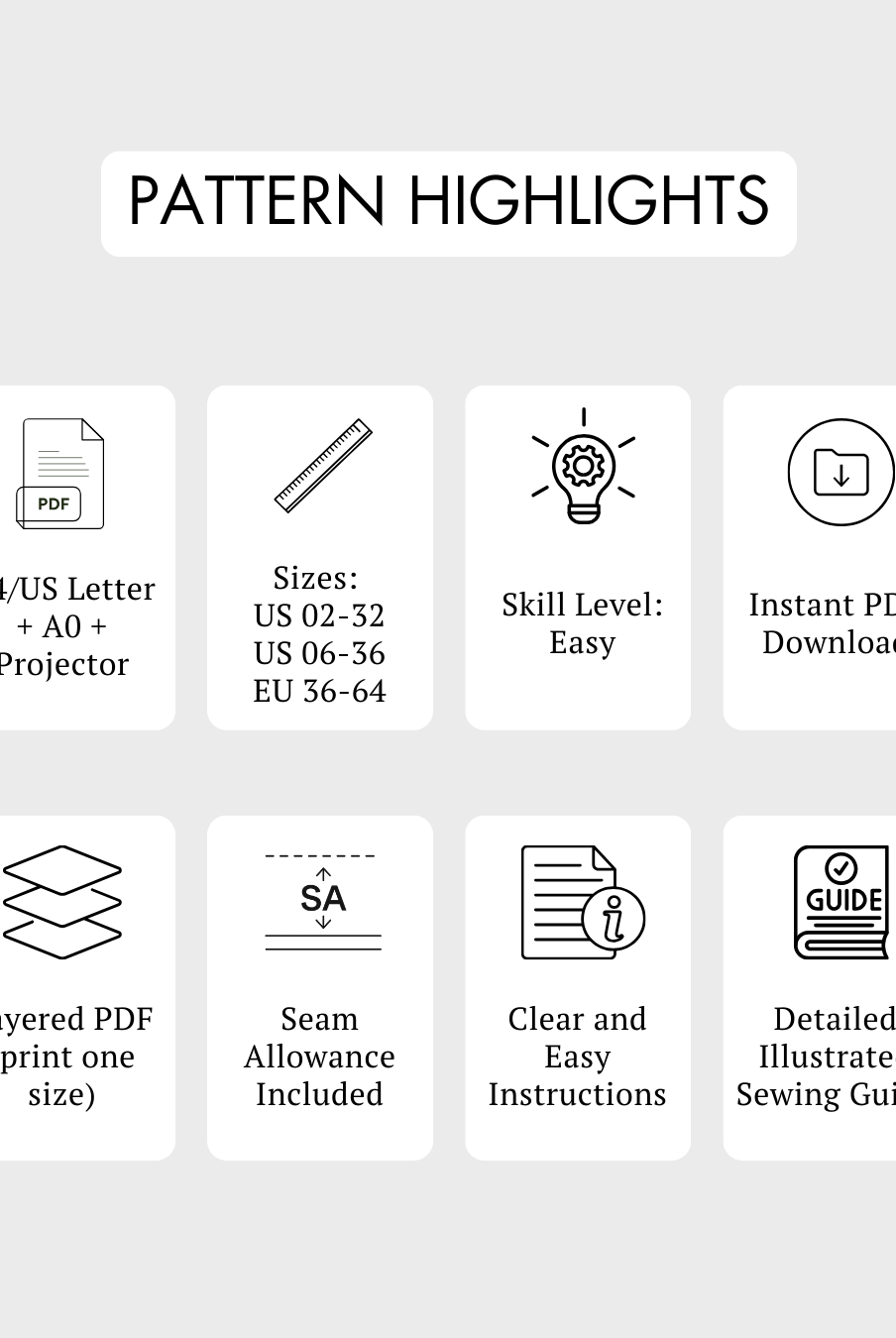
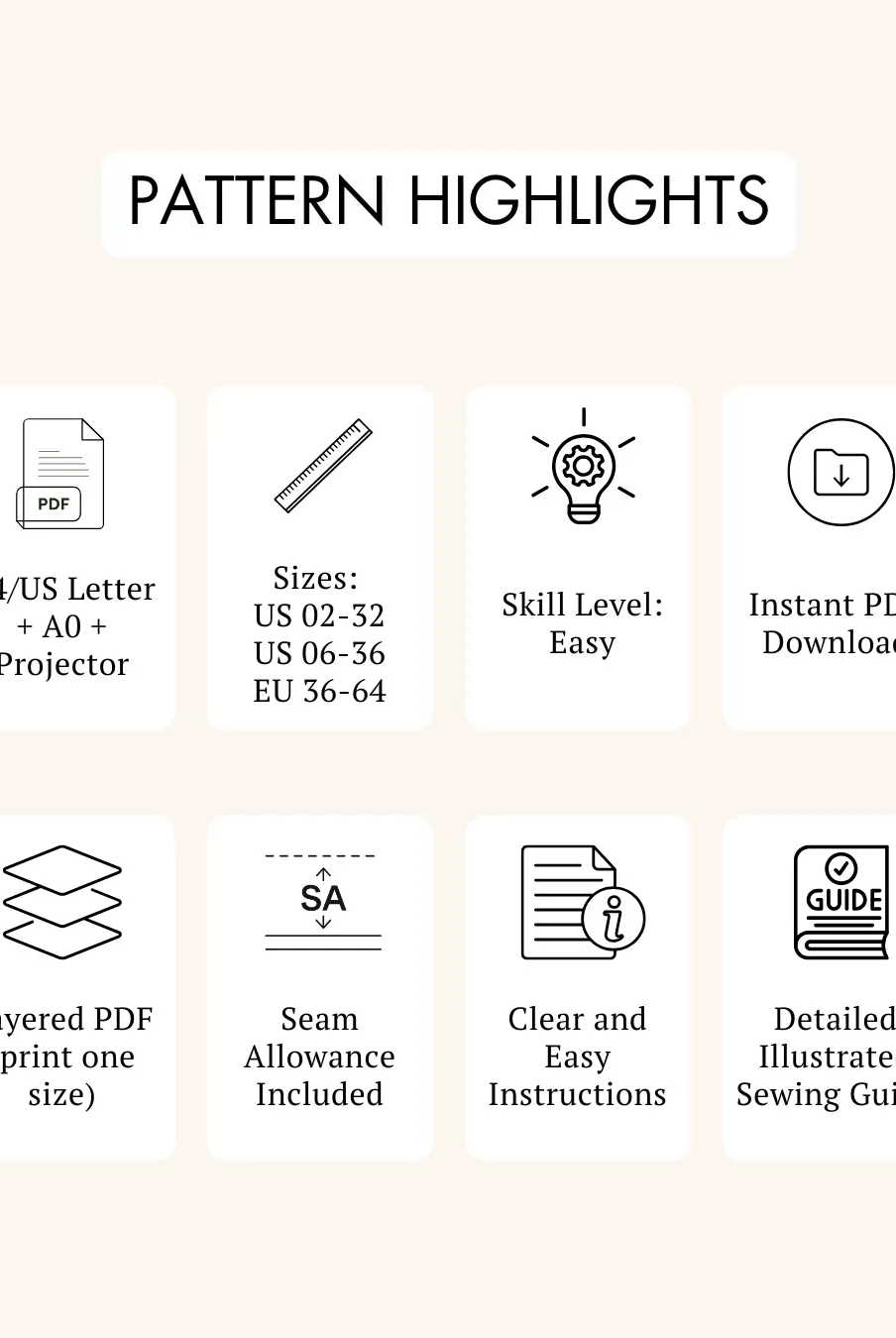
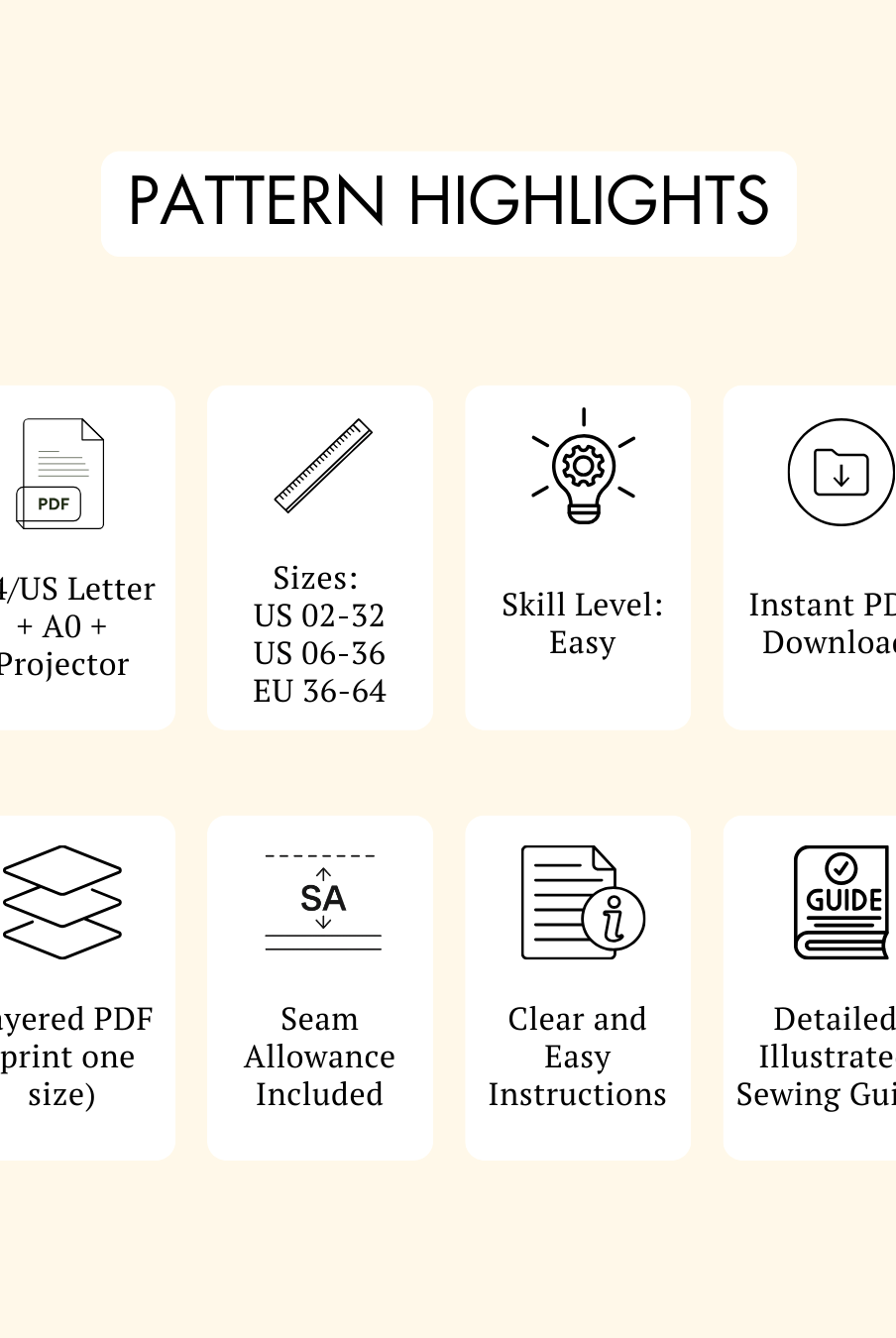
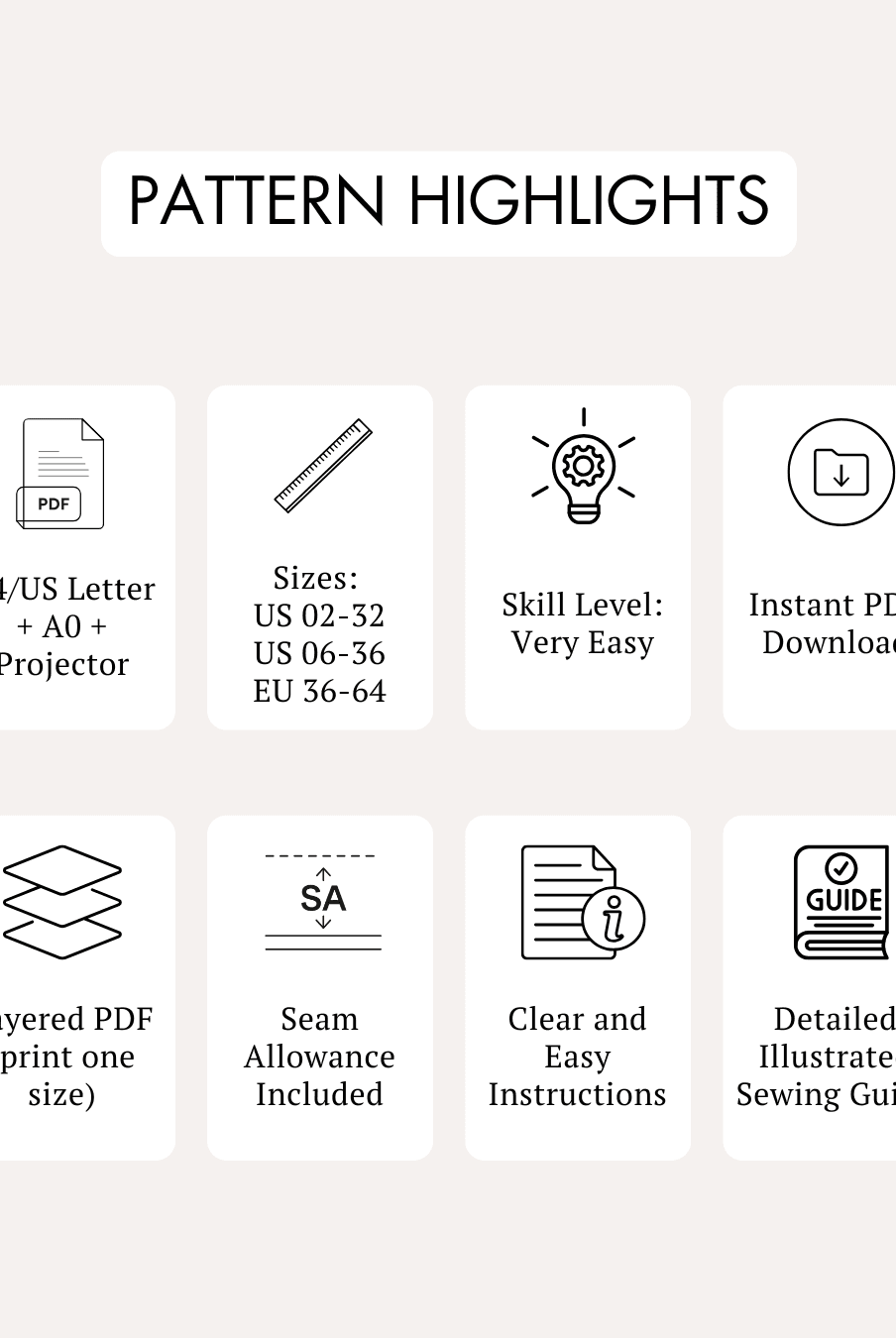
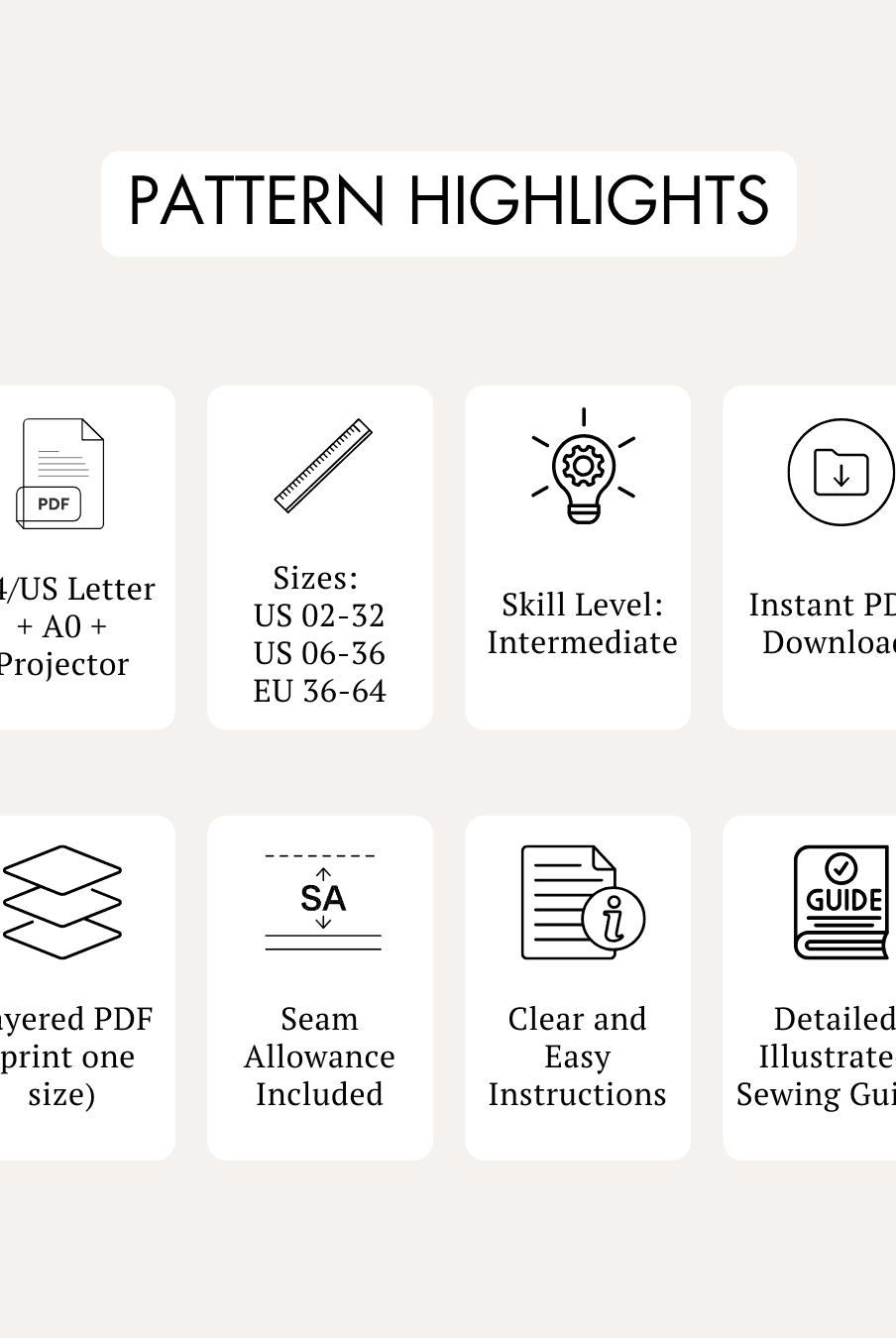
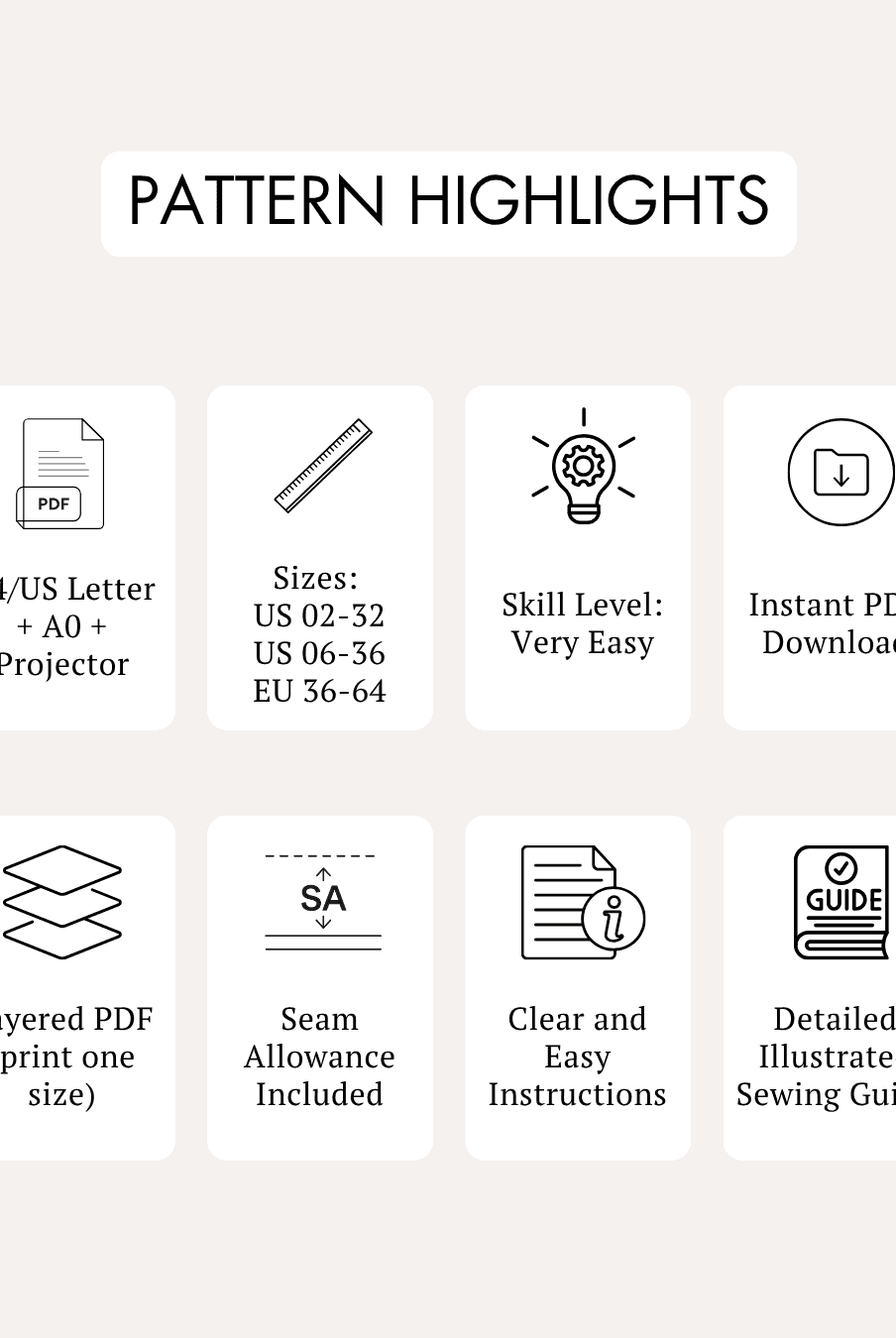
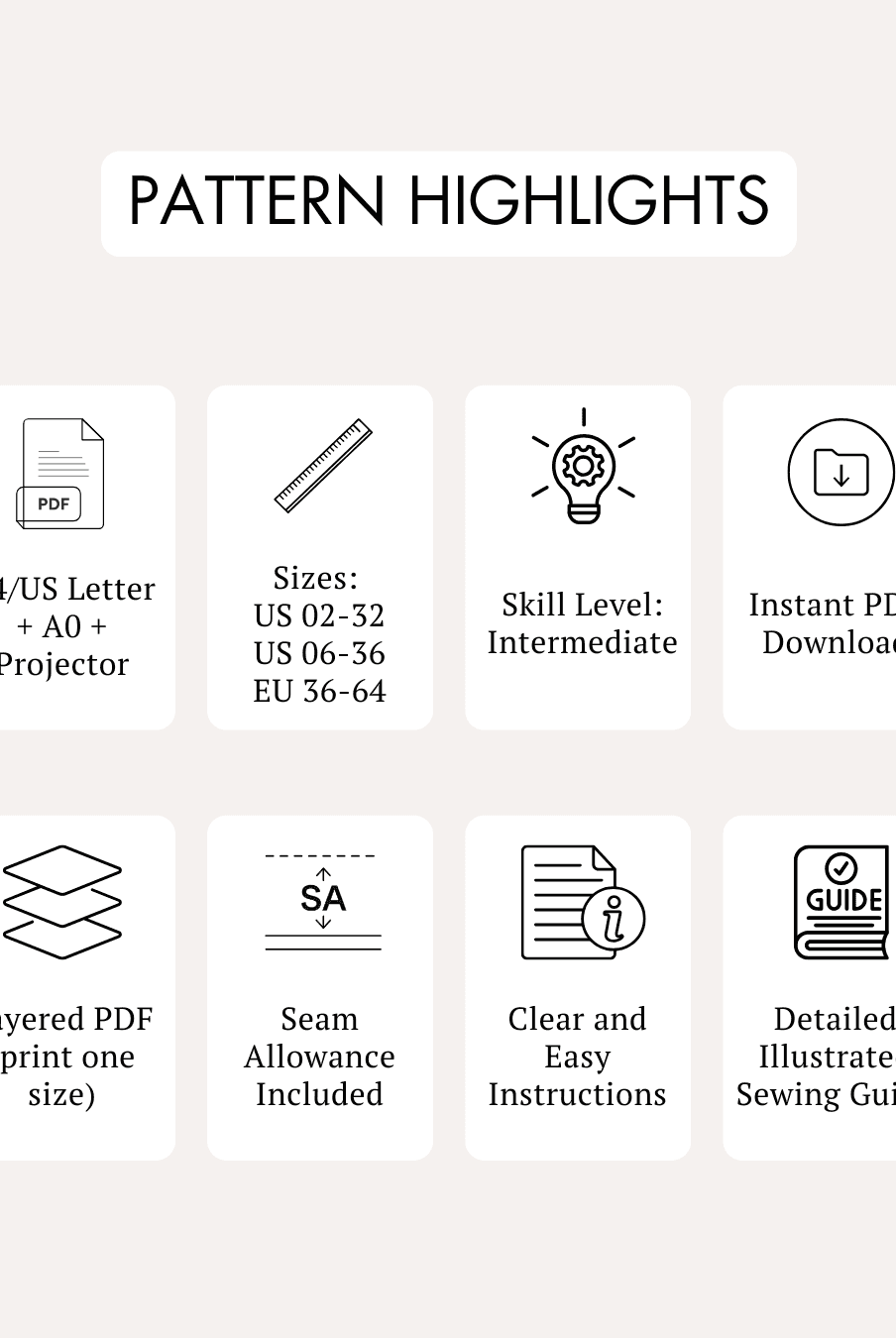
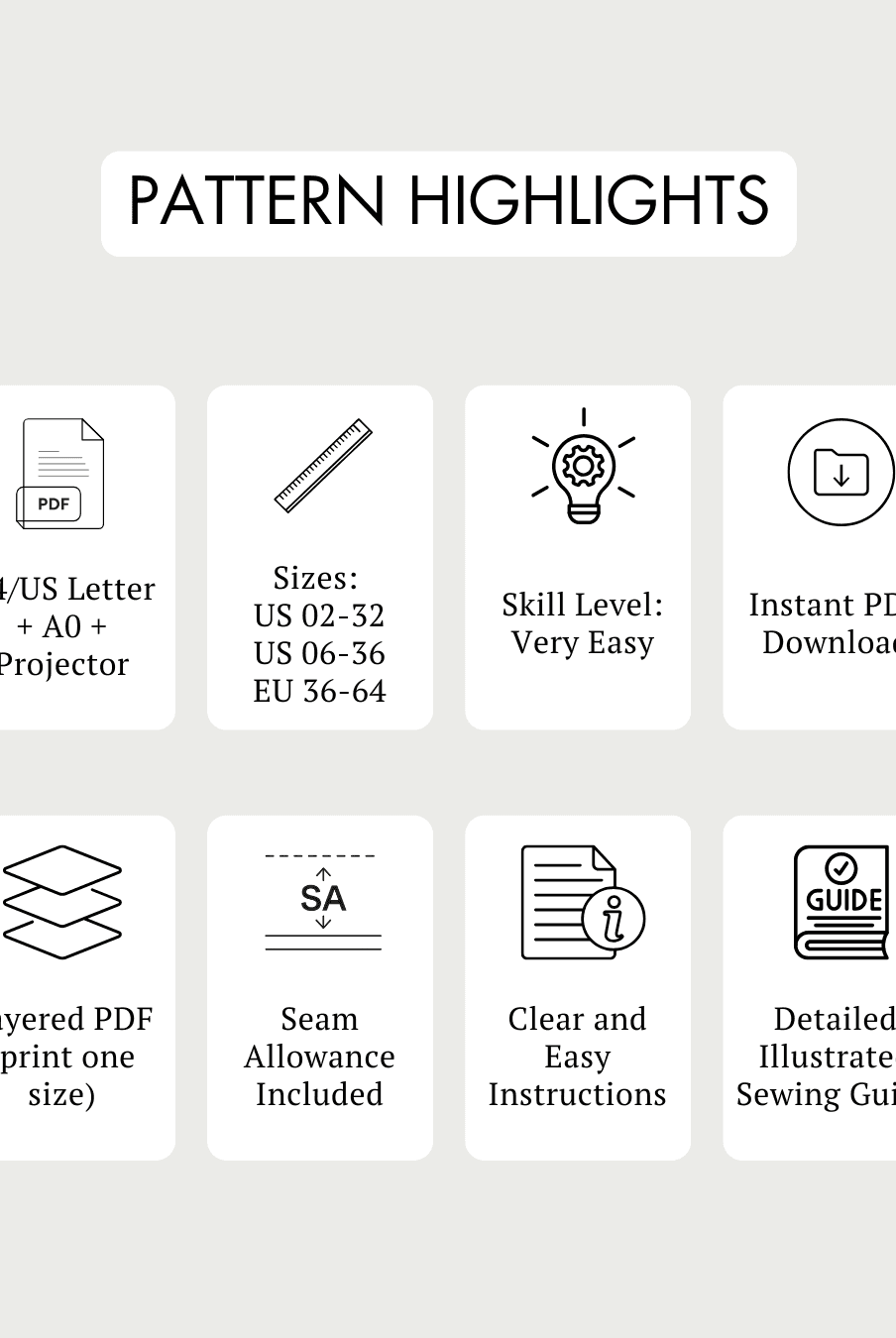
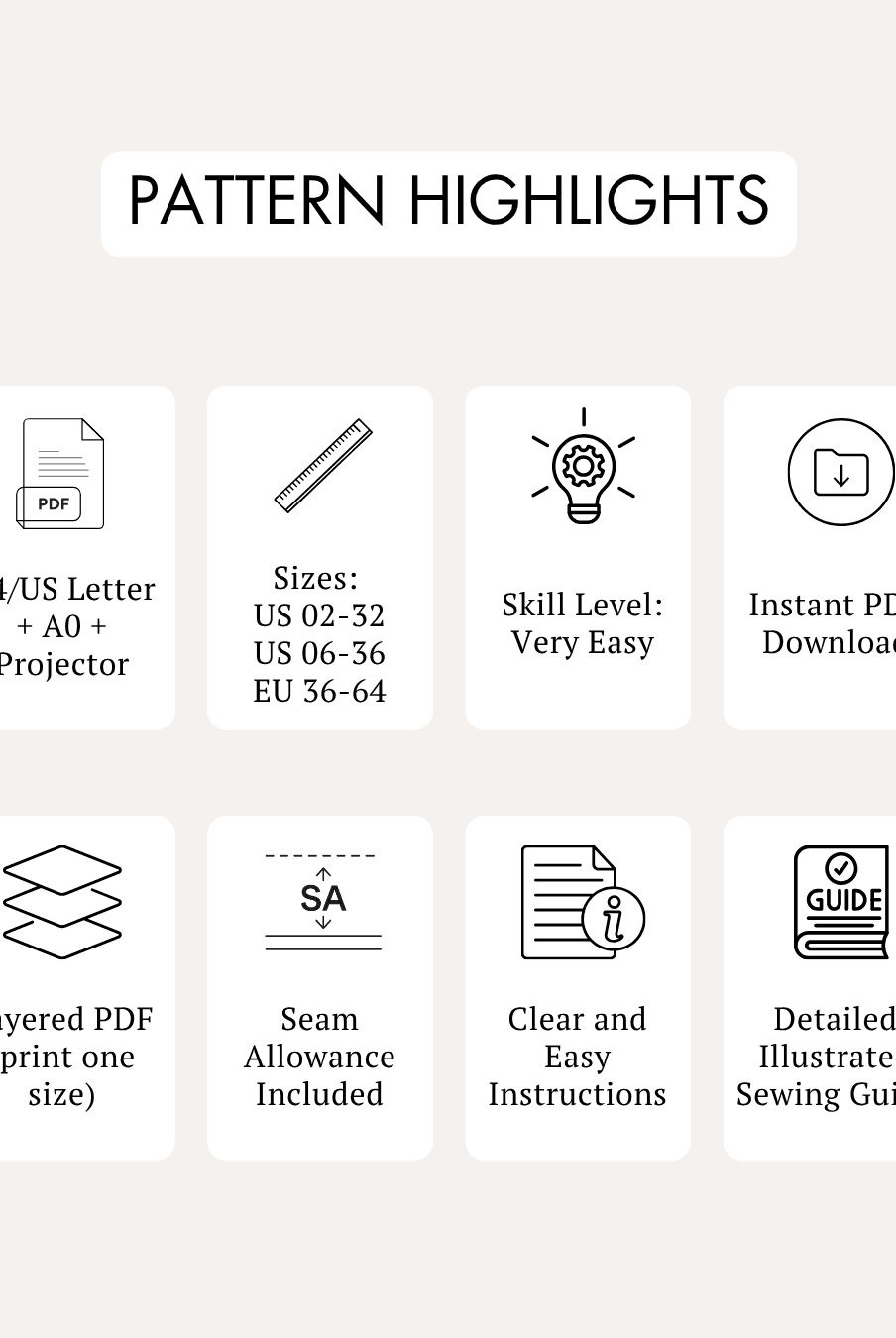
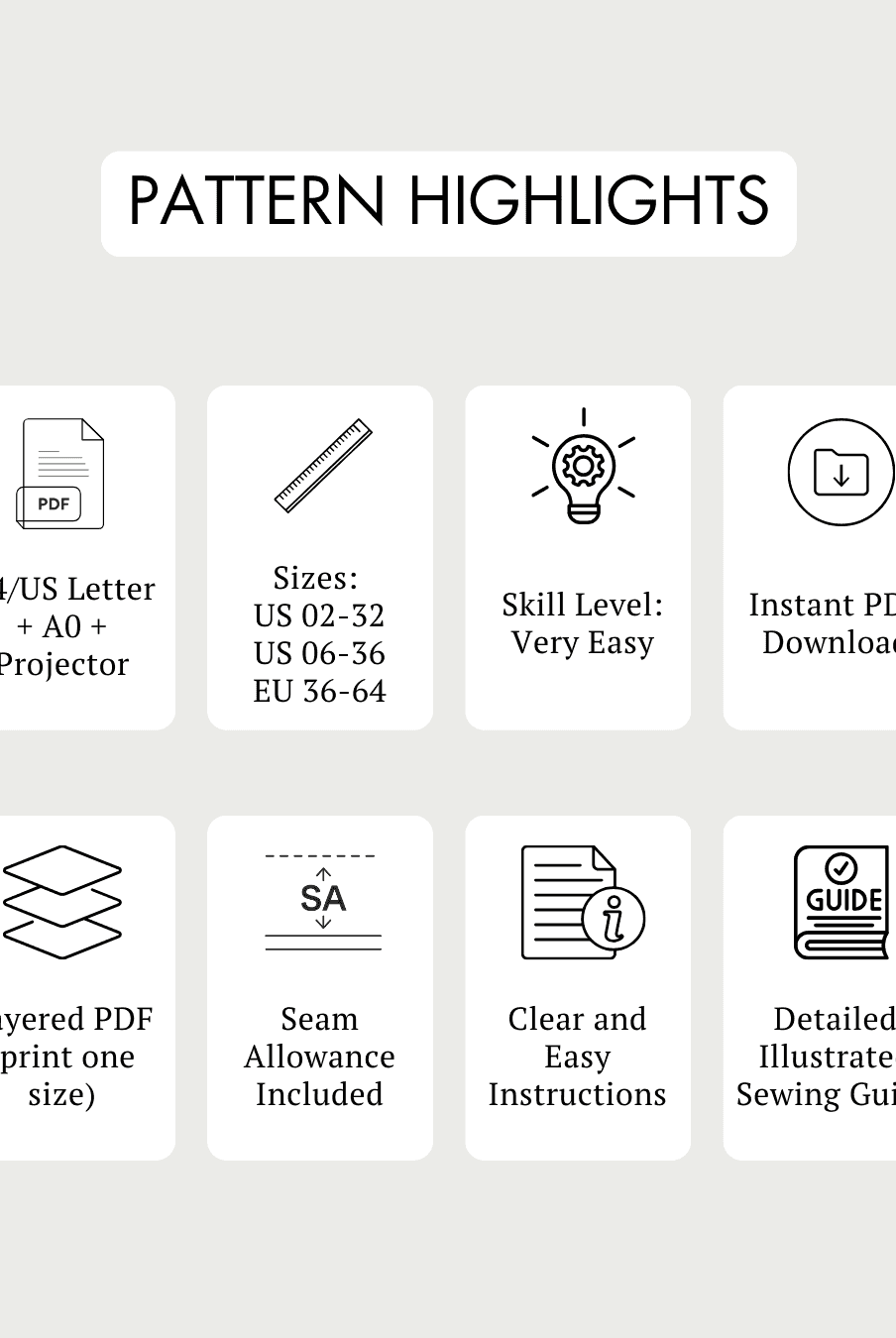
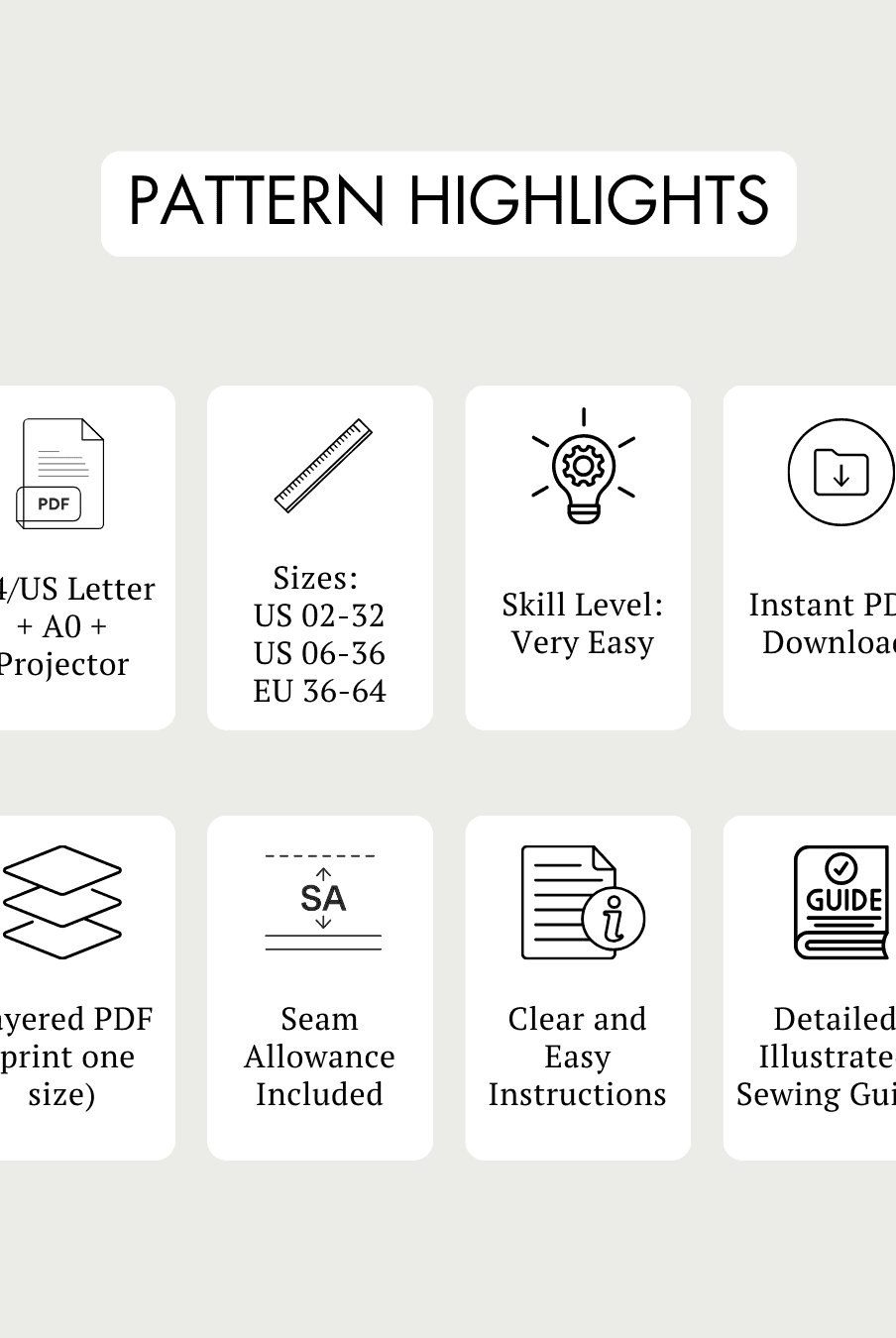
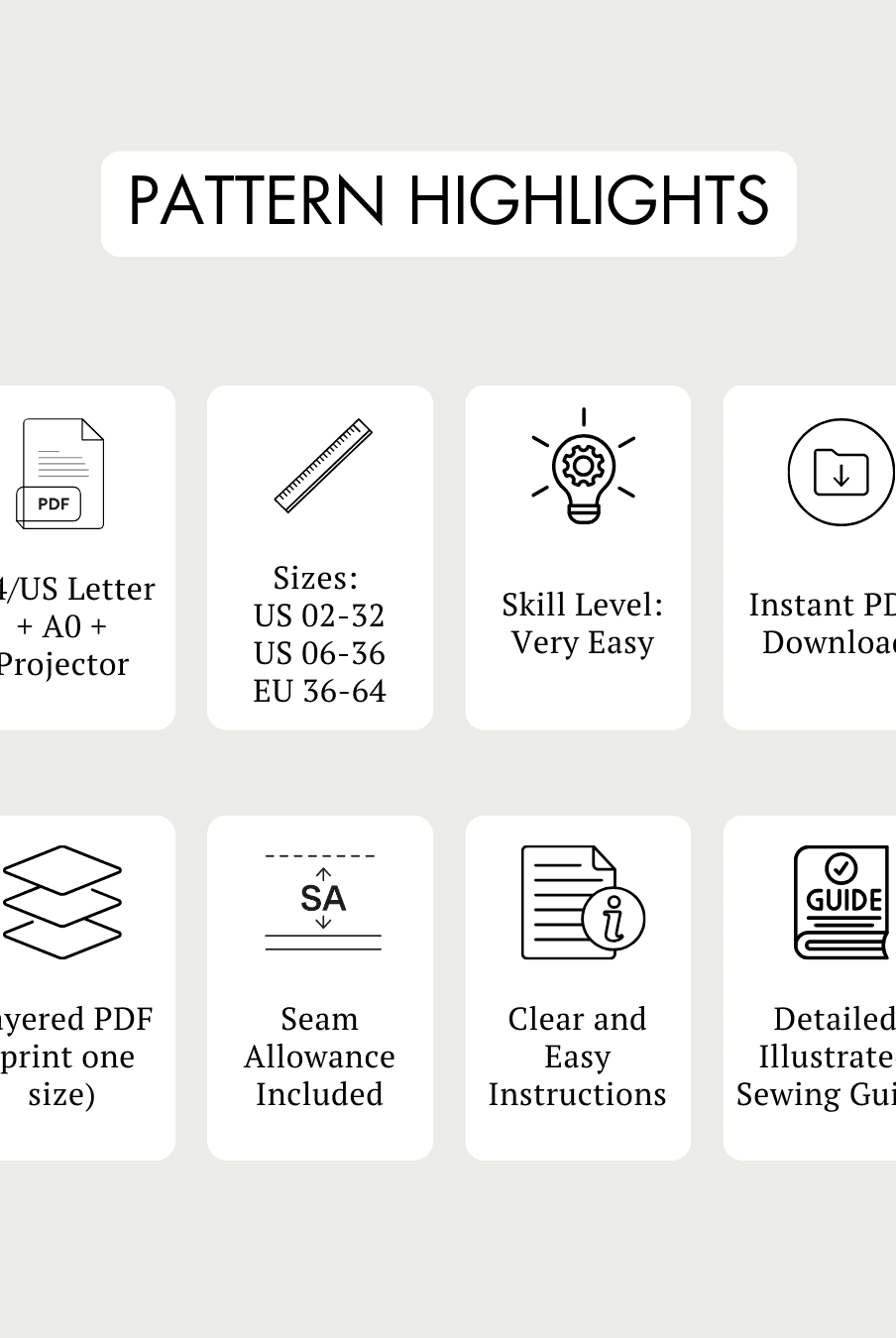
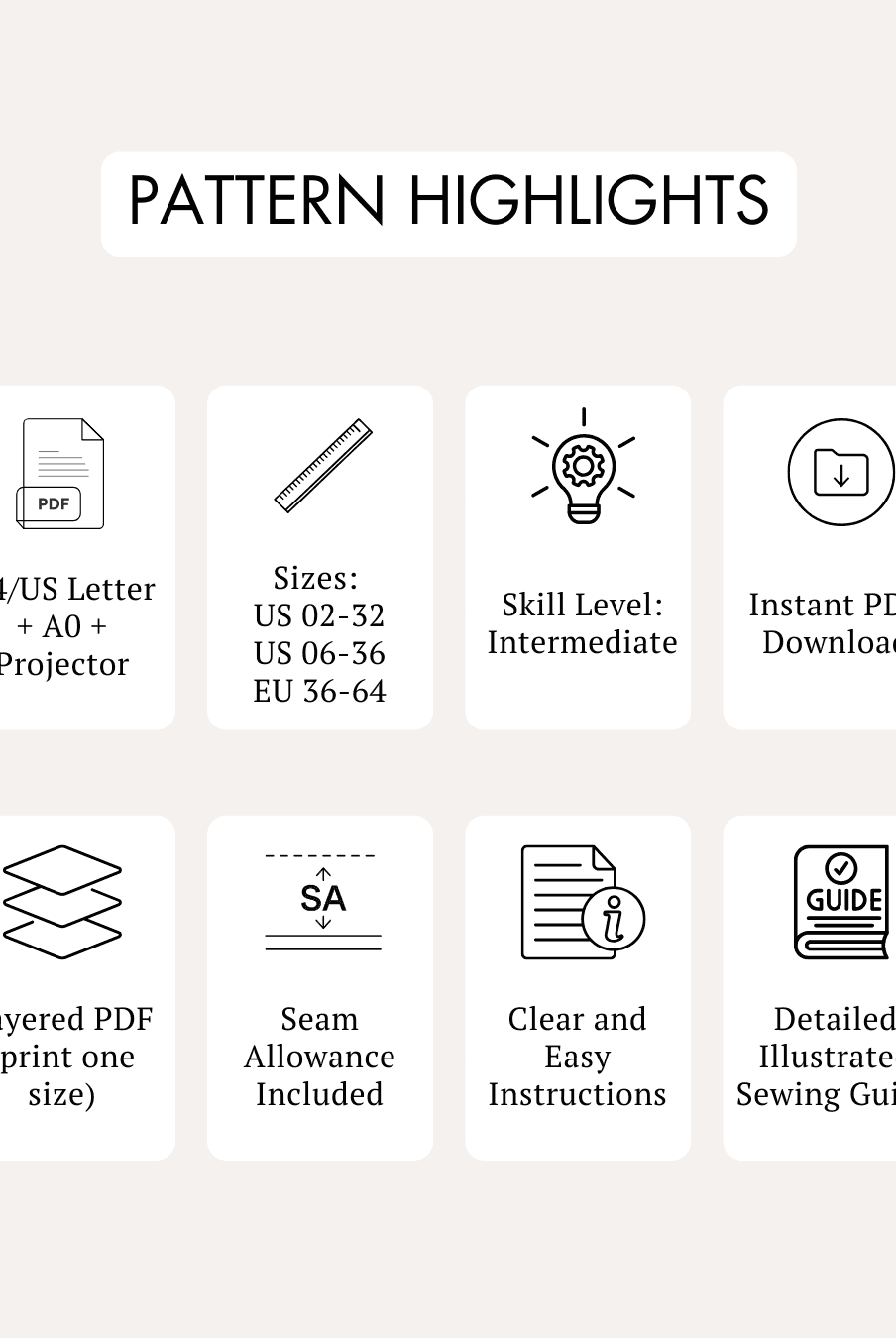
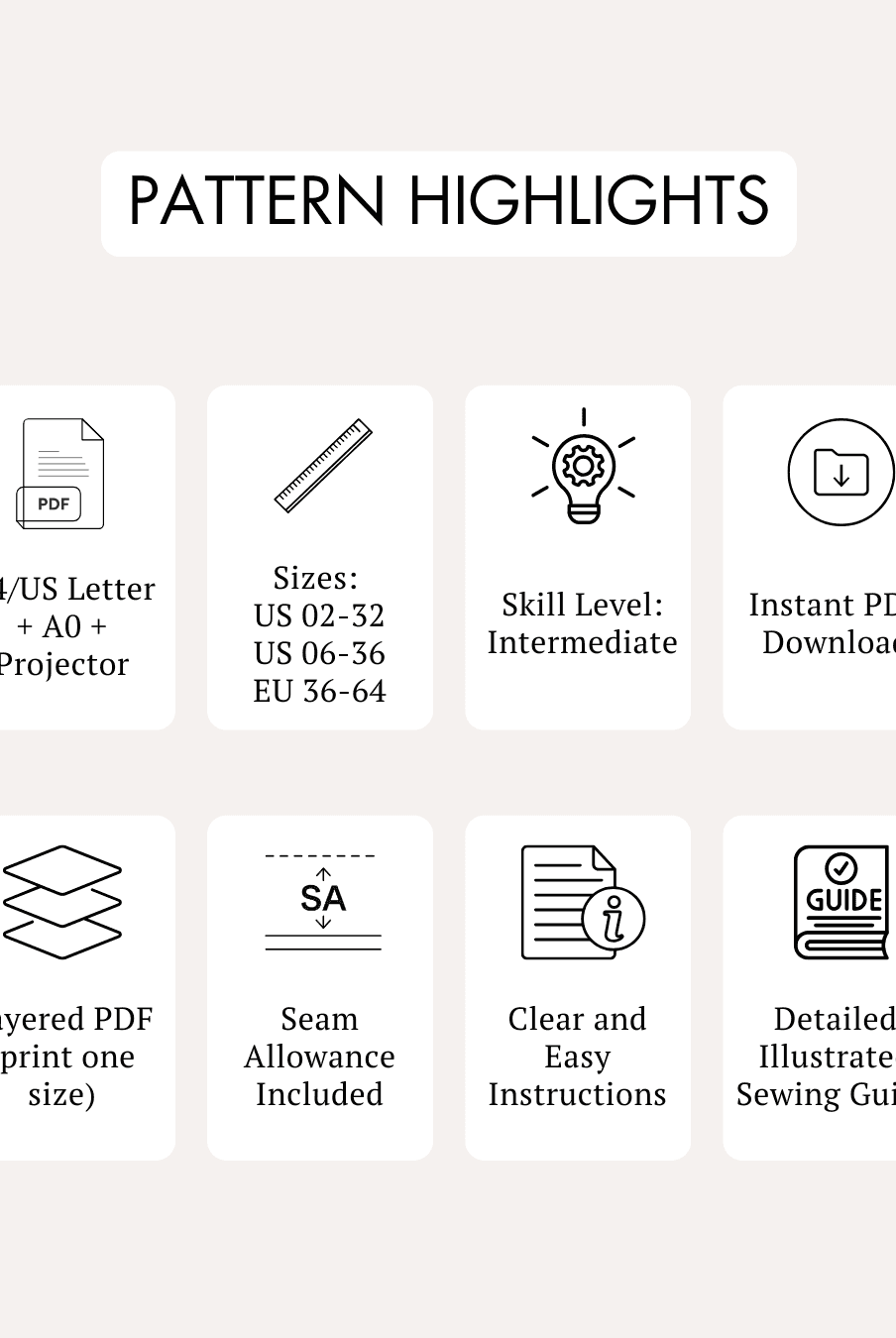
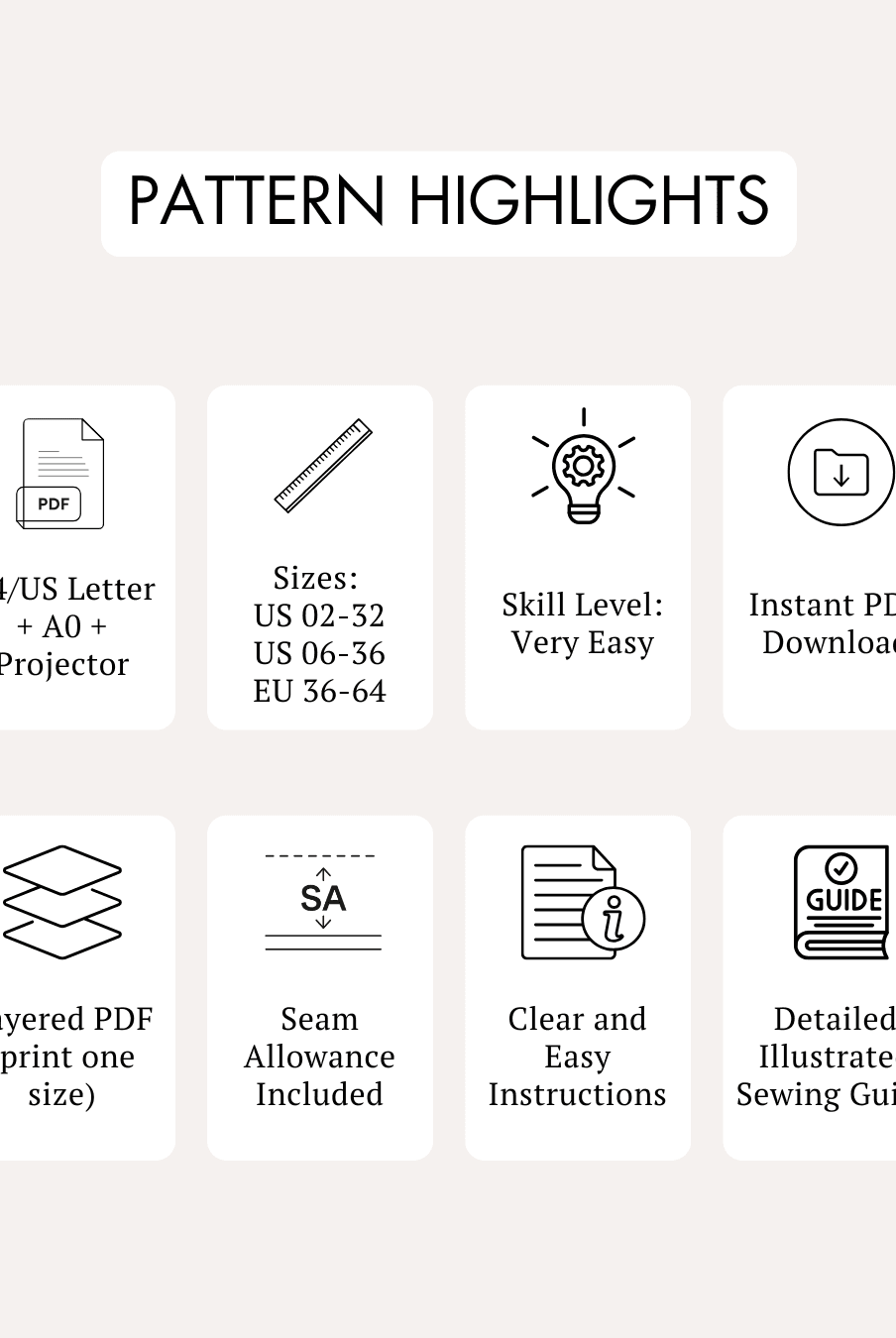
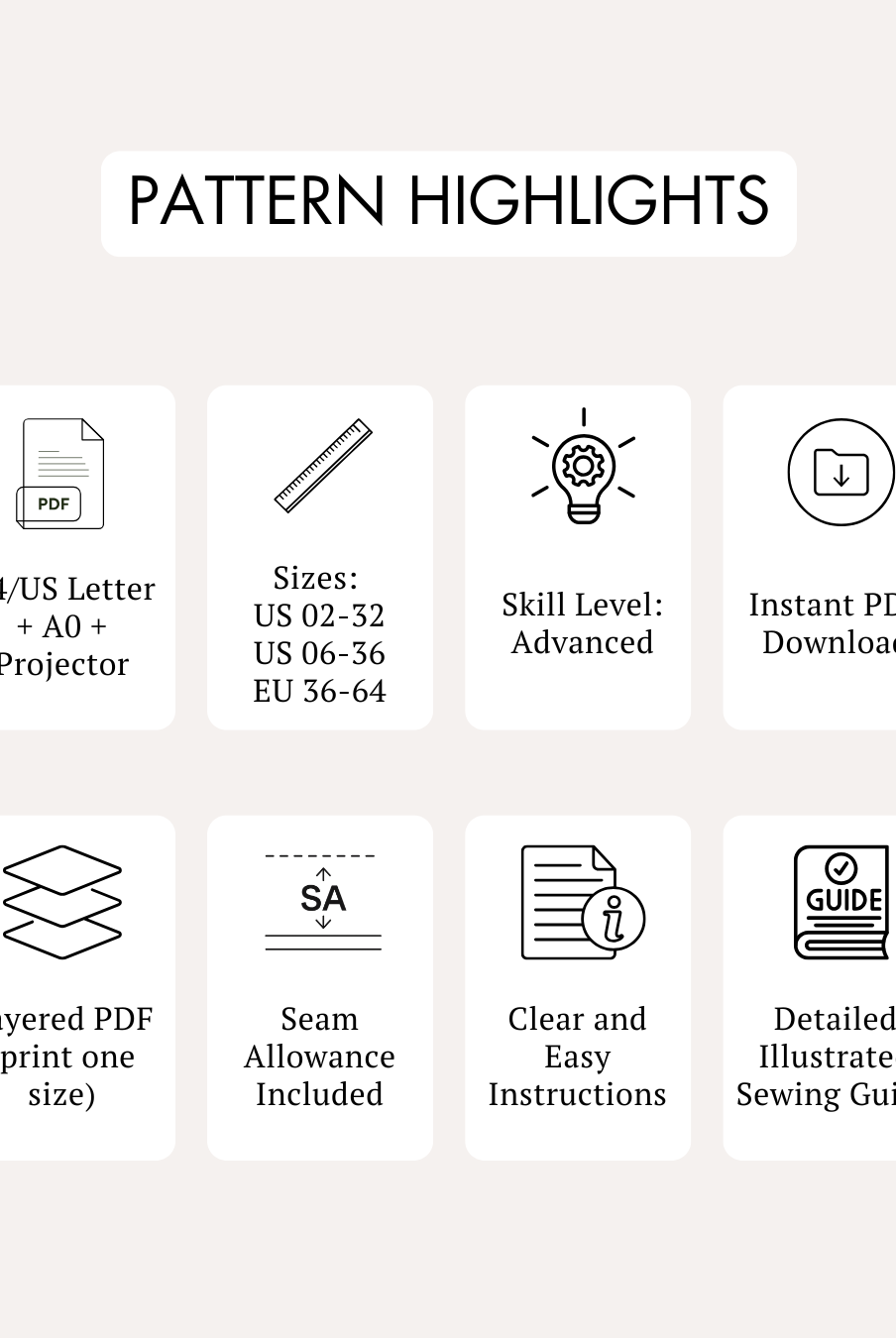
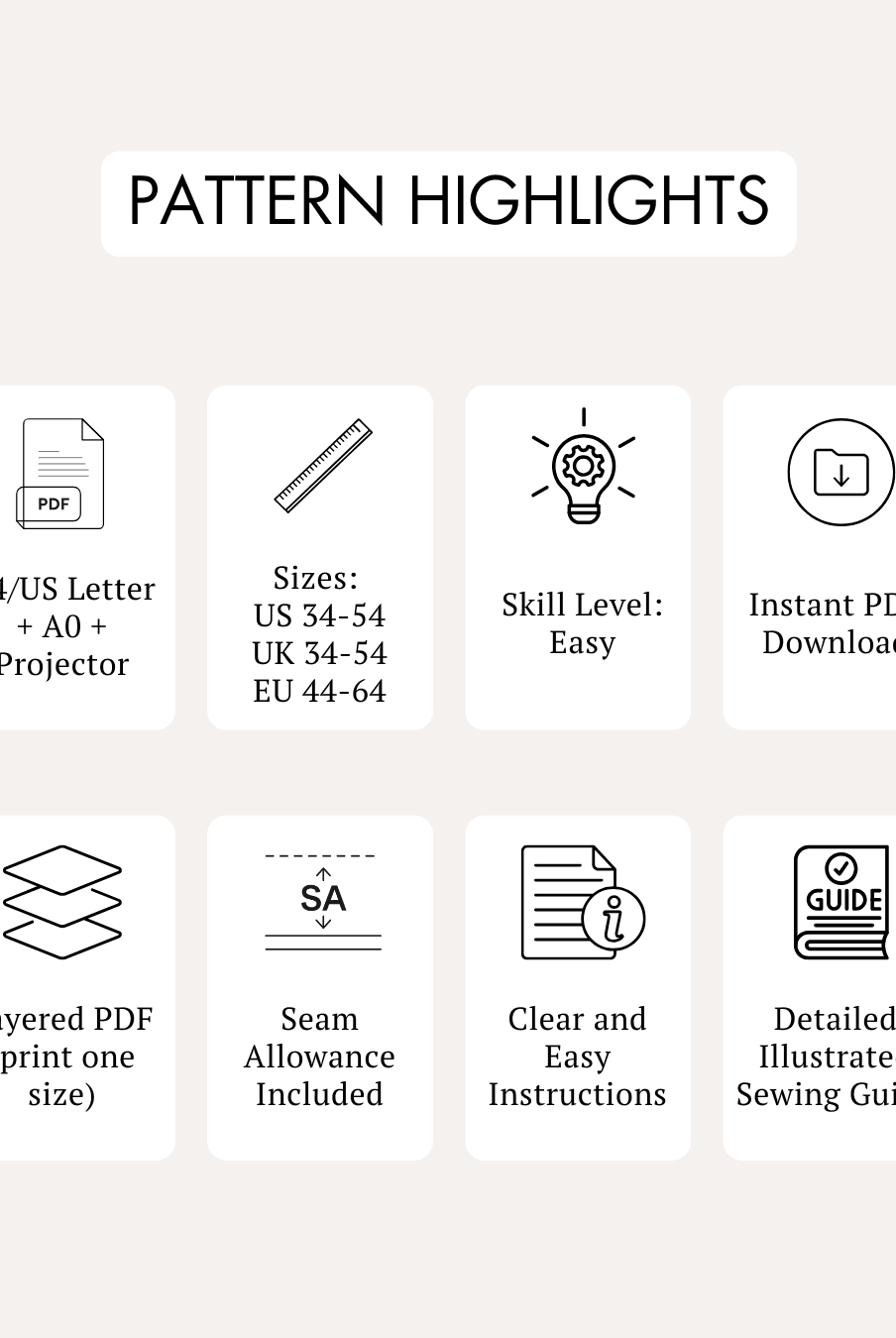
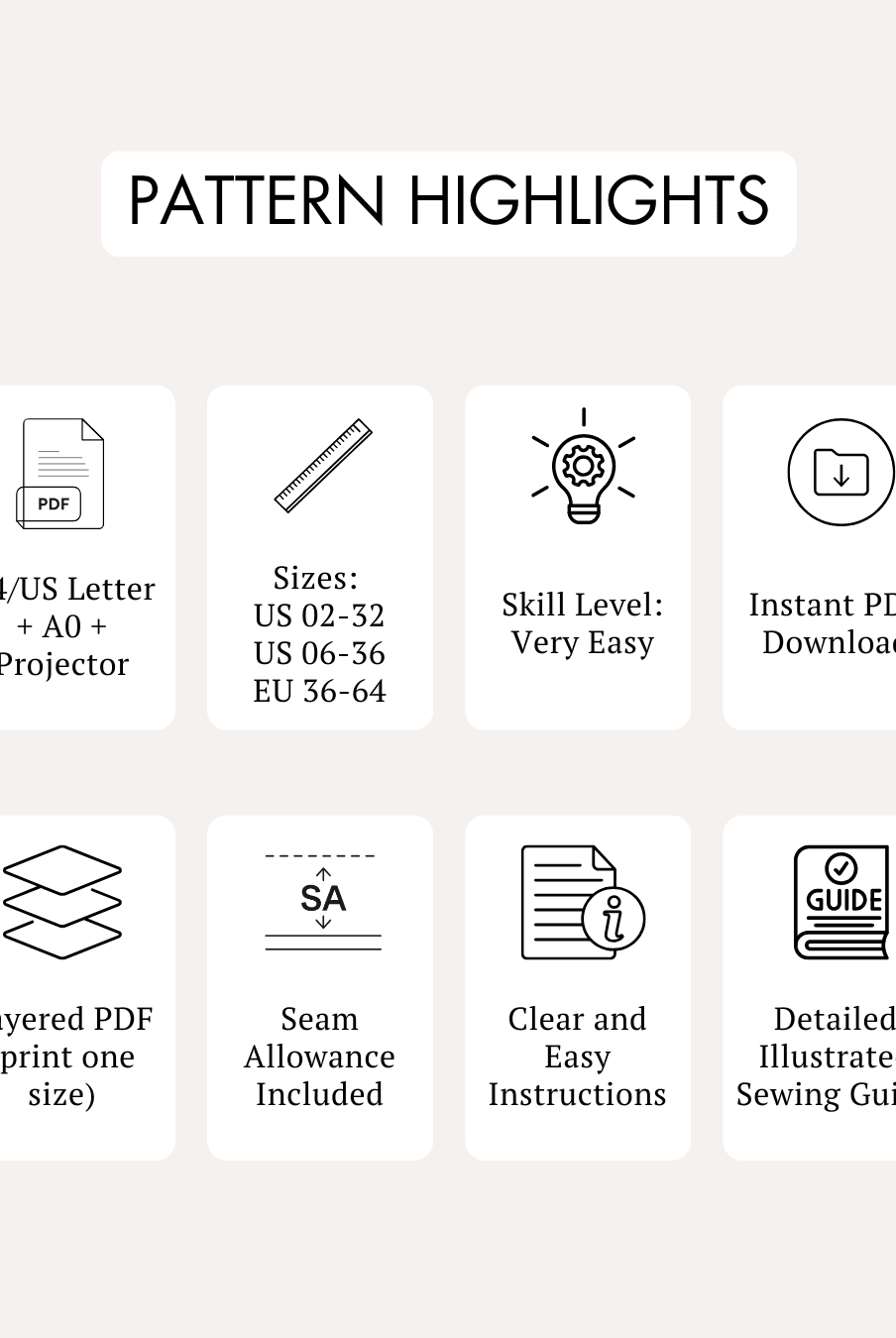
Most modern PDF sewing patterns include multiple file formats so sewists can choose the method that works best for them.
These commonly include:
-
A4 files for international home printers
-
US Letter files for North American home printers
-
A0 copy-shop files for large-format printing
-
Projector files for projector sewing
This flexibility is one of the reasons PDF patterns have become so popular. Whether you're sewing at home, using a copy shop, or working with a projector setup, there's usually a file format designed for your workflow.
Why PDF Sewing Patterns Have Become So Popular
Over the last decade, the sewing industry has changed dramatically.
When I first started creating sewing patterns, printed patterns were still the default option for many sewists. Today, most independent pattern designers primarily offer PDF sewing patterns.
There are several reasons for this shift.
For designers, PDF patterns eliminate the significant costs associated with printing, packaging, storing, and shipping physical products.
For customers, this often means more affordable patterns, instant access after purchase, and a wider variety of designs to choose from.
Perhaps most importantly, PDF patterns allow independent designers to invest more time into creating better sewing experiences through detailed instructions, tutorials, and customer support.
Common Misconceptions About PDF Sewing Patterns
"PDF Sewing Patterns Are Difficult to Use"
This is by far the most common misconception I encounter.
Interestingly, most beginners aren't worried about sewing the garment itself. They're worried about printing and assembling the pattern.
Customers frequently ask:
-
What paper size should I use?
-
Where can I print the pattern?
-
Should I print at 100% scale?
-
How do I assemble the pages together?
These are perfectly reasonable questions, but they're also easy to answer.
Most sewists become comfortable with PDF patterns after their very first project.
"Printing PDF Patterns Is Expensive"
Many beginners assume that printing costs will make PDF patterns impractical.
In reality, most customers find the costs much lower than expected.
Many sewists print patterns at:
-
Local libraries
-
Schools
-
Offices
-
Churches
-
Local copy shops
One customer told us they were initially concerned about where to print their patterns. After some research, they discovered both their local library and church offered affordable large-format printing services and were able to print their A0 patterns without any issues.
"Assembling Pages Is Frustrating"
While some sewists prefer A0 printing or projector sewing, many find home assembly surprisingly manageable.
I've seen customers develop creative assembly methods that work well for them.
One customer switched from tape to glue and found it much faster and easier.
Another experienced sewist assembled an entire pattern on a wall rather than spreading pages across the floor.
The reality is that there isn't one correct way to assemble a PDF pattern. Most sewists quickly develop a method that fits their space and preferences.
How to Print PDF Sewing Patterns Correctly
If there's one piece of advice I would give every beginner, it's this:
Always print your pattern at 100% scale or Actual Size.
Avoid settings such as:
-
Fit to Page
-
Shrink to Fit
-
Scale to Printable Area
These settings can alter the dimensions of the pattern and affect garment fit.
Most PDF sewing patterns include a test square on the first page. Before printing the entire document, print the test page and measure the square.
If the square measures correctly, your pattern is printing at the intended size.
Features Most Sewists Don't Know About
Layers Make Patterns Easier to Read
One of my favorite features of modern PDF patterns is pattern layering.
Traditional printed patterns often contain multiple overlapping sizes on a single sheet. For beginners, this can be overwhelming.
Layered PDF patterns allow you to turn individual sizes on or off before printing.
Instead of trying to follow dozens of overlapping lines, you can often print only the size you need.
This creates a cleaner, easier-to-read pattern and reduces confusion during cutting.
Multiple Printing Formats
Most modern PDF sewing patterns include several file formats.
This means you can choose the option that best suits your situation:
-
Print at home using A4 or Letter paper
-
Print large-format A0 files at a copy shop
-
Use projector files without printing at all
This level of flexibility simply wasn't available with traditional paper patterns.
Unlimited Reprinting
Unlike physical patterns, PDF patterns never wear out.
If you lose a page, spill coffee on your pattern pieces, or want to sew a different size in the future, you can simply print the files again.
For garments you plan to make repeatedly, this is an incredibly valuable benefit.
The Rise of Projector Sewing
One trend I've noticed recently is the growing popularity of projector sewing.
Instead of printing and assembling pages, sewists use a projector to display the pattern directly onto their fabric.
Many customers who sew frequently are making the switch because it saves both time and printing costs.
Entry-level projector setups have become much more affordable in recent years, often costing between $50 and $100.
While projector sewing isn't necessary, it's becoming an increasingly popular option for sewists who make garments regularly.
PDF Sewing Patterns vs Printed Sewing Patterns
Both options have their place.
Printed patterns can be helpful if you're learning alongside a teacher who already has physical patterns available and can guide you through tracing and pattern preparation.
However, for many independent sewists, PDF patterns offer significant advantages.
You receive instant access, multiple printing formats, reusable files, size layers, and often far more detailed instructions than traditional paper patterns provide.
This last point is something I believe is often overlooked.
Many traditional paper patterns assume the sewist already understands common sewing terminology and construction techniques.
In contrast, many independent PDF pattern designers—including Winslet's Patterns—provide detailed sewing guides designed to walk sewists through each step of the process.
For beginners, these instructions can make a tremendous difference.
Are PDF Sewing Patterns Beginner Friendly?
Absolutely.
In fact, I would argue that many modern PDF sewing patterns are more beginner-friendly than traditional paper patterns.
Today's independent designers often include:
-
Detailed sewing instructions
-
Step-by-step illustrations
-
Printing guides
-
Assembly diagrams
-
Video tutorials
-
Customer support
While there is a small learning curve when using a PDF pattern for the first time, most beginners quickly discover that the process is much easier than they expected.
Final Thoughts
After designing more than 175 sewing patterns and selling over 50,000 PDF patterns, I've seen firsthand how quickly sewists adapt to digital patterns.
The biggest hurdle is usually not sewing the garment—it's simply understanding how PDF patterns work.
Once sewists learn how to print and assemble their first pattern, most discover that PDF patterns offer convenience, flexibility, and value that traditional paper patterns simply can't match.
If you've been hesitant to try a PDF sewing pattern, my advice is simple: start with a beginner-friendly design, follow the printing instructions carefully, and give it a try.
You may find that using PDF sewing patterns is much easier than you imagined.