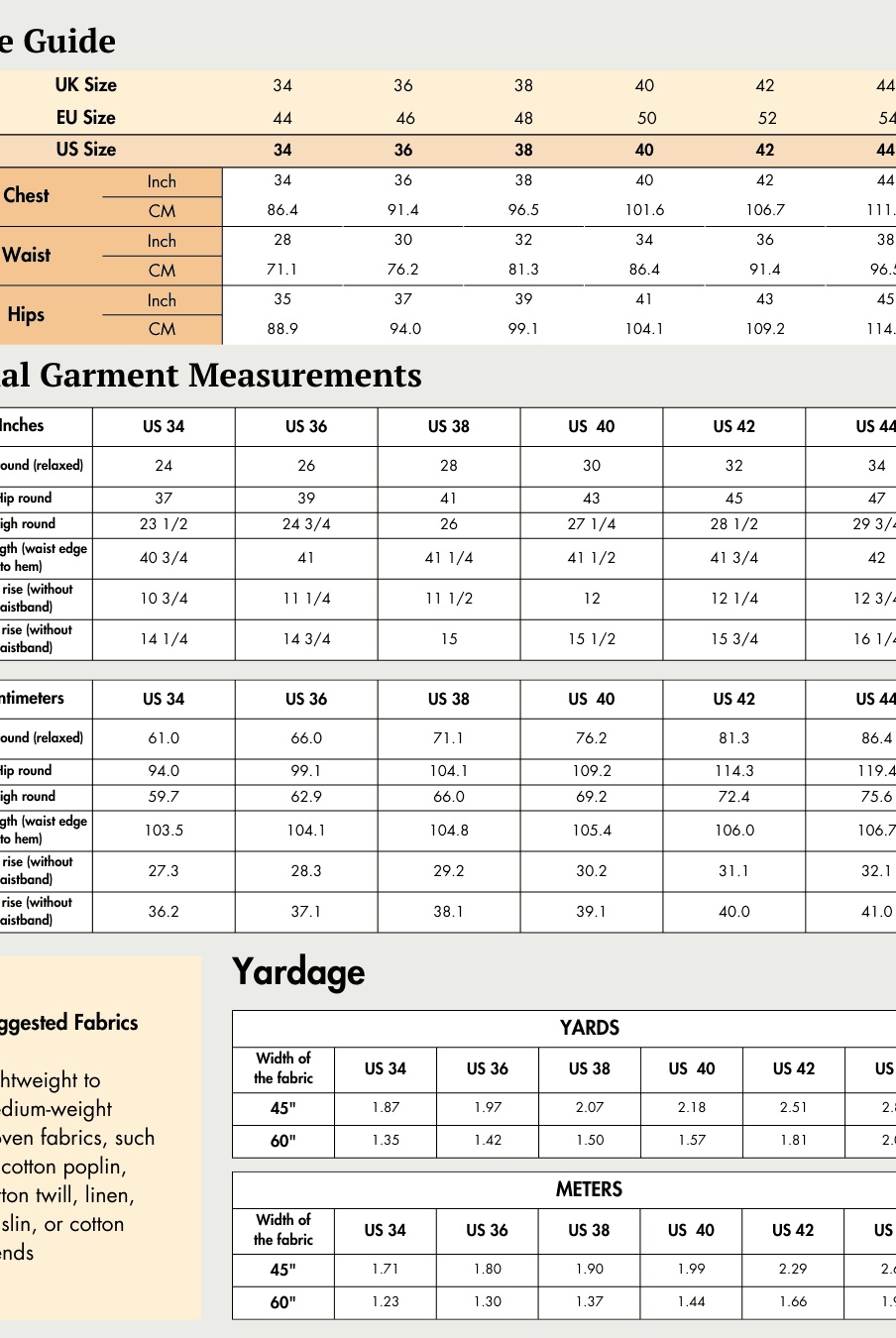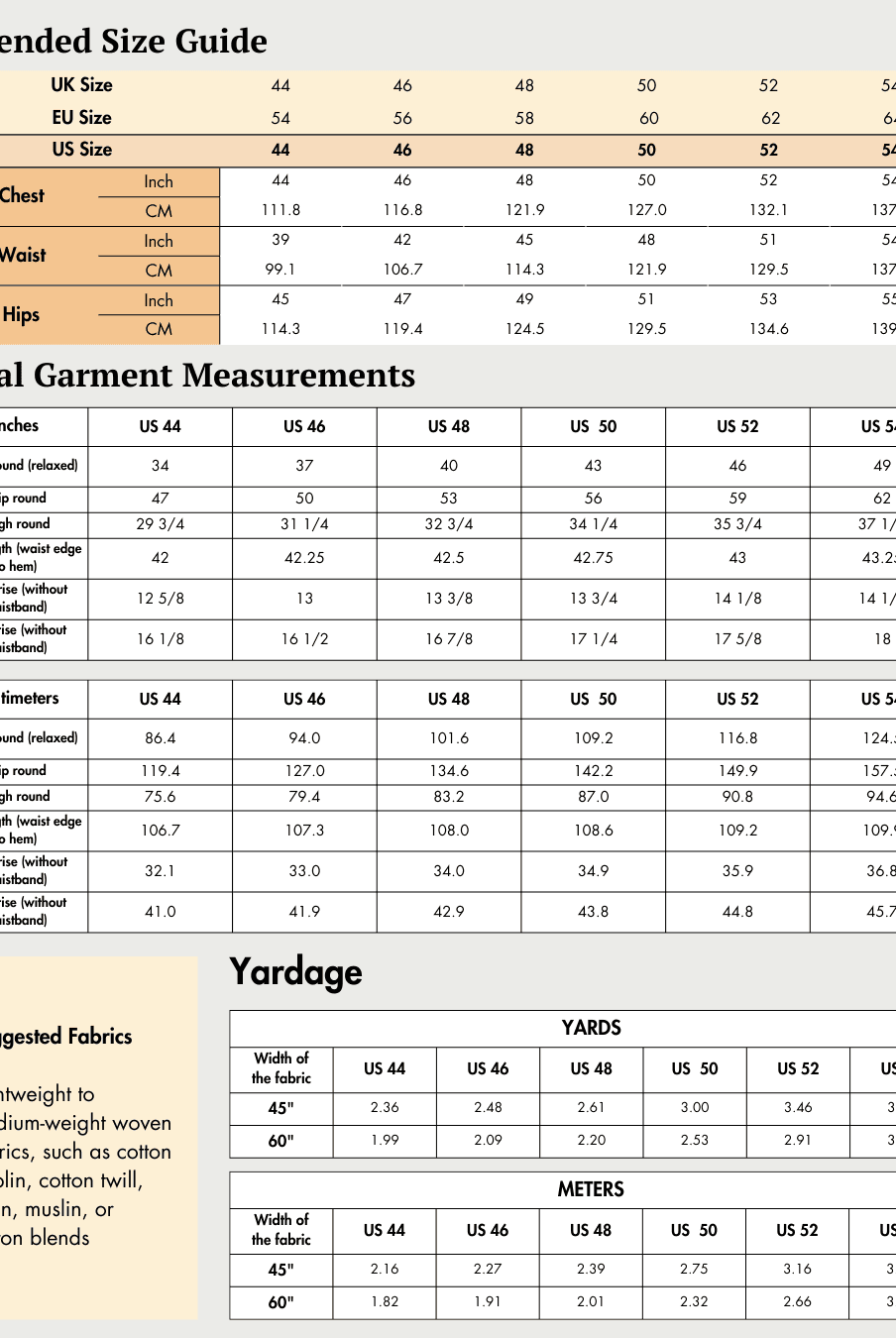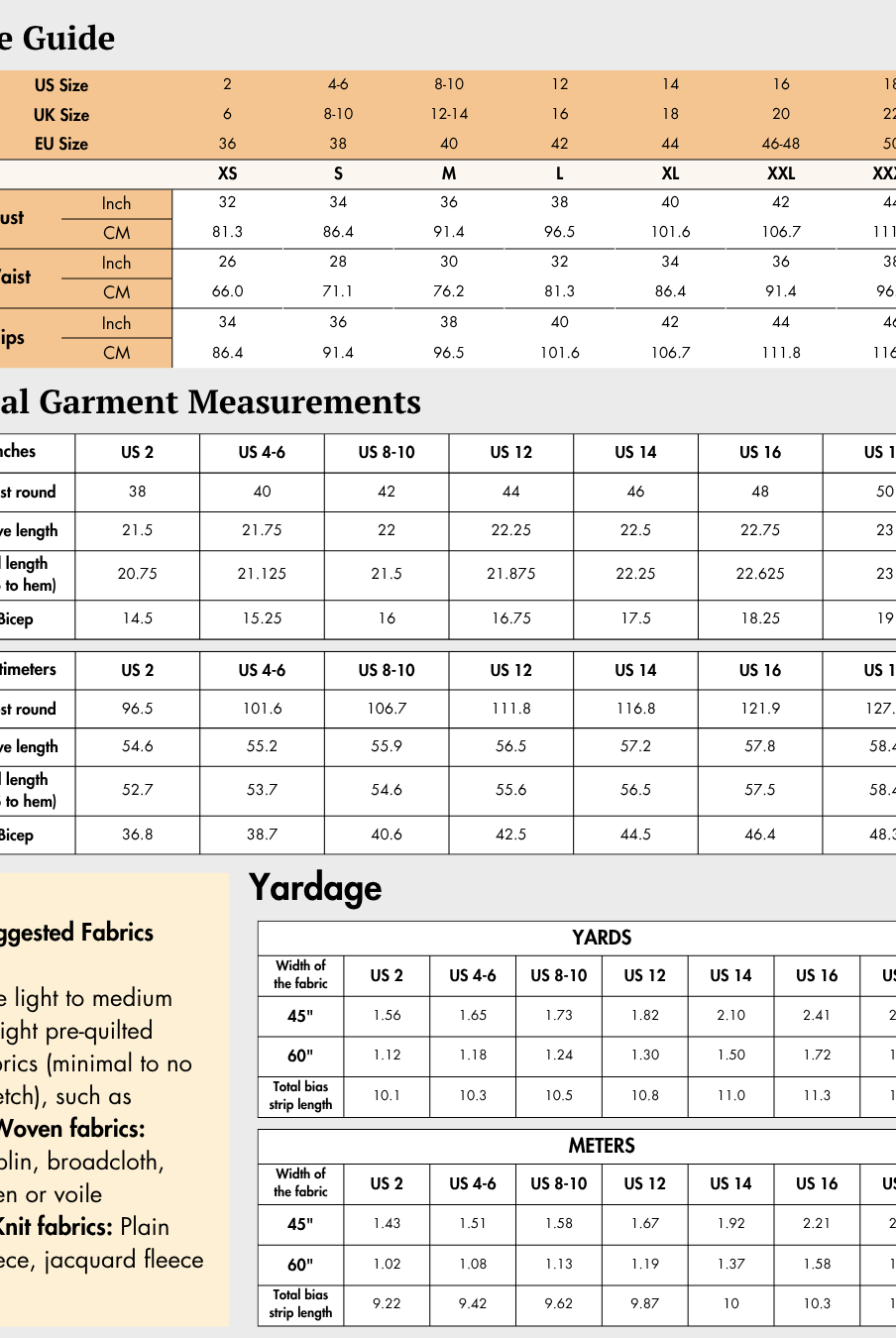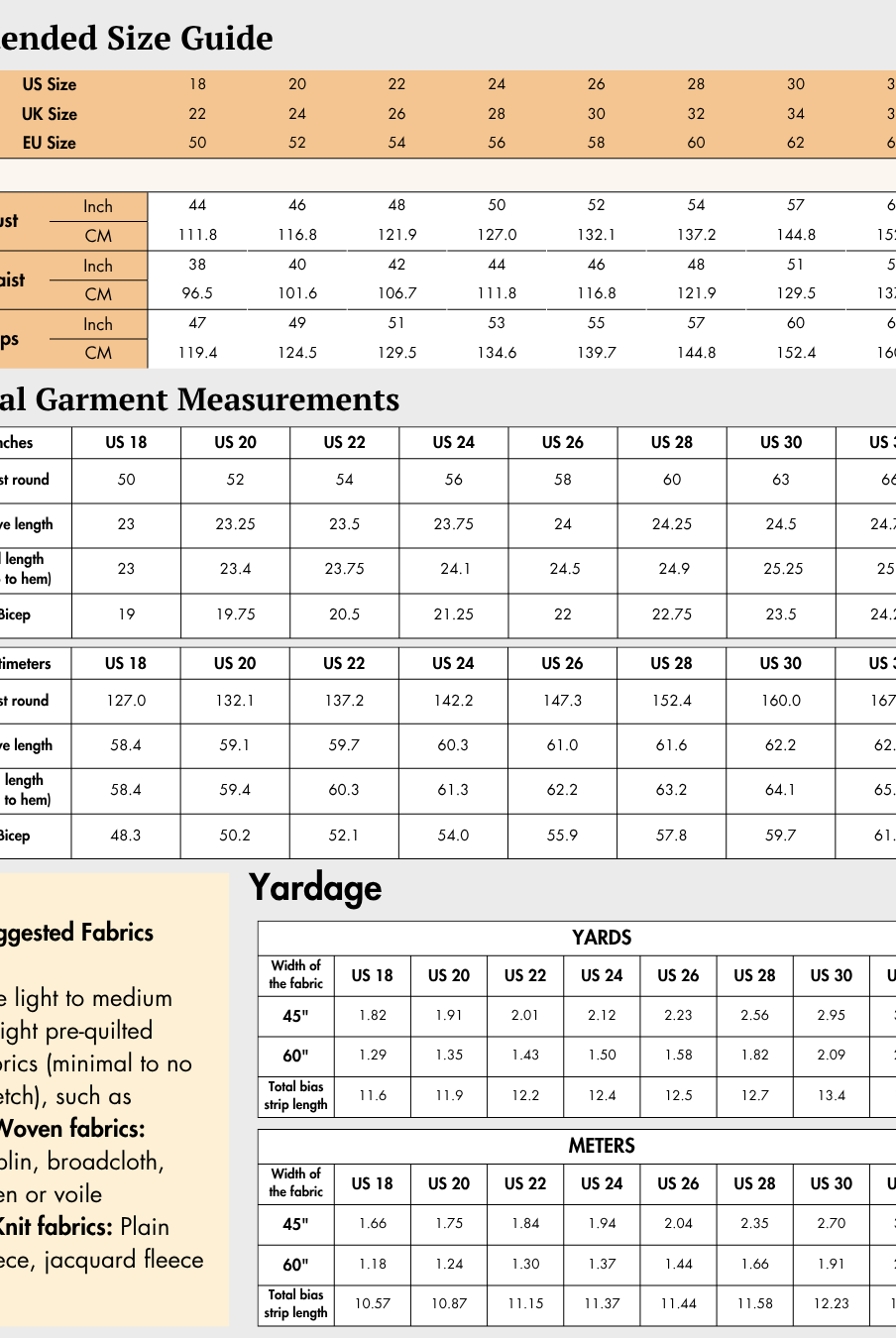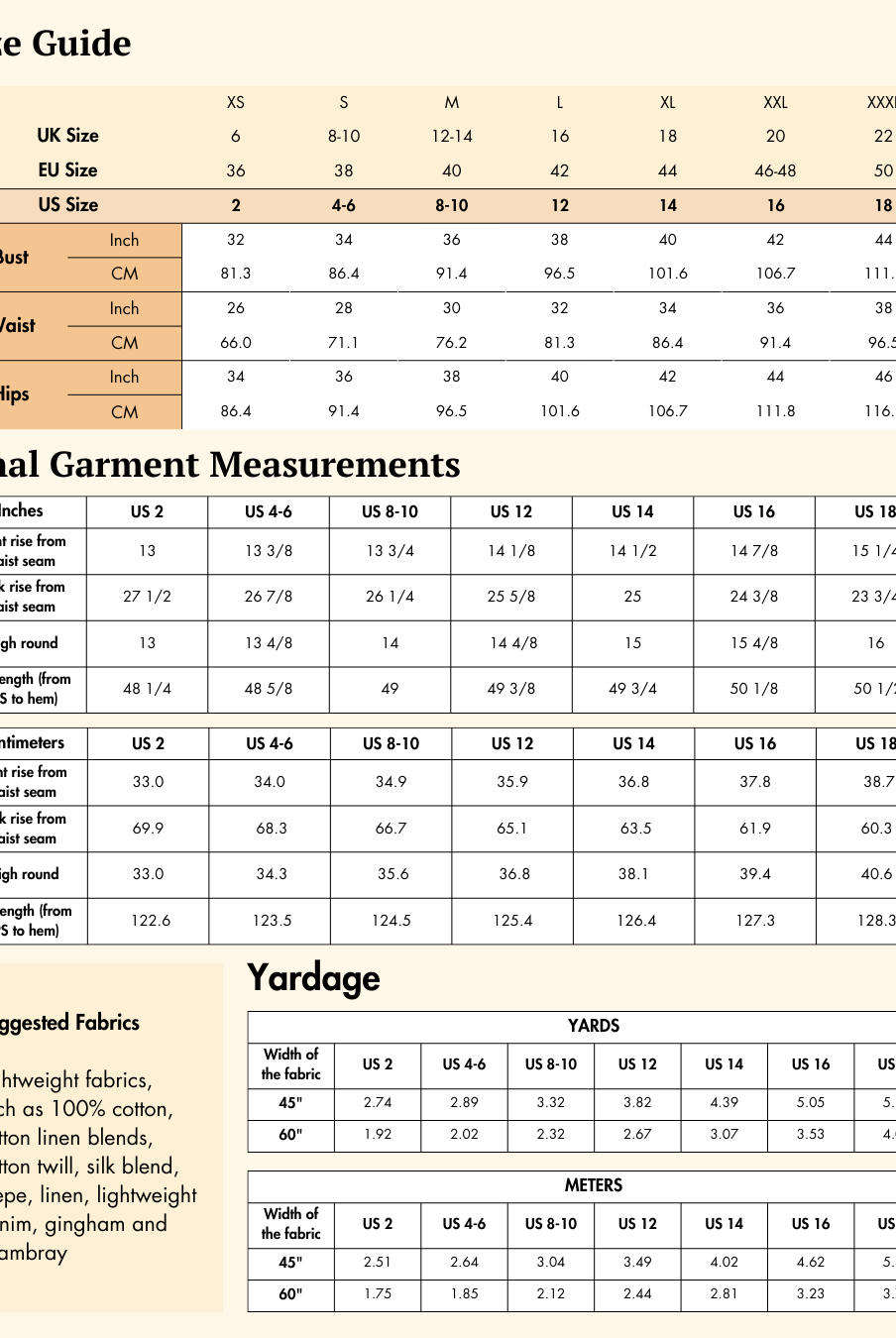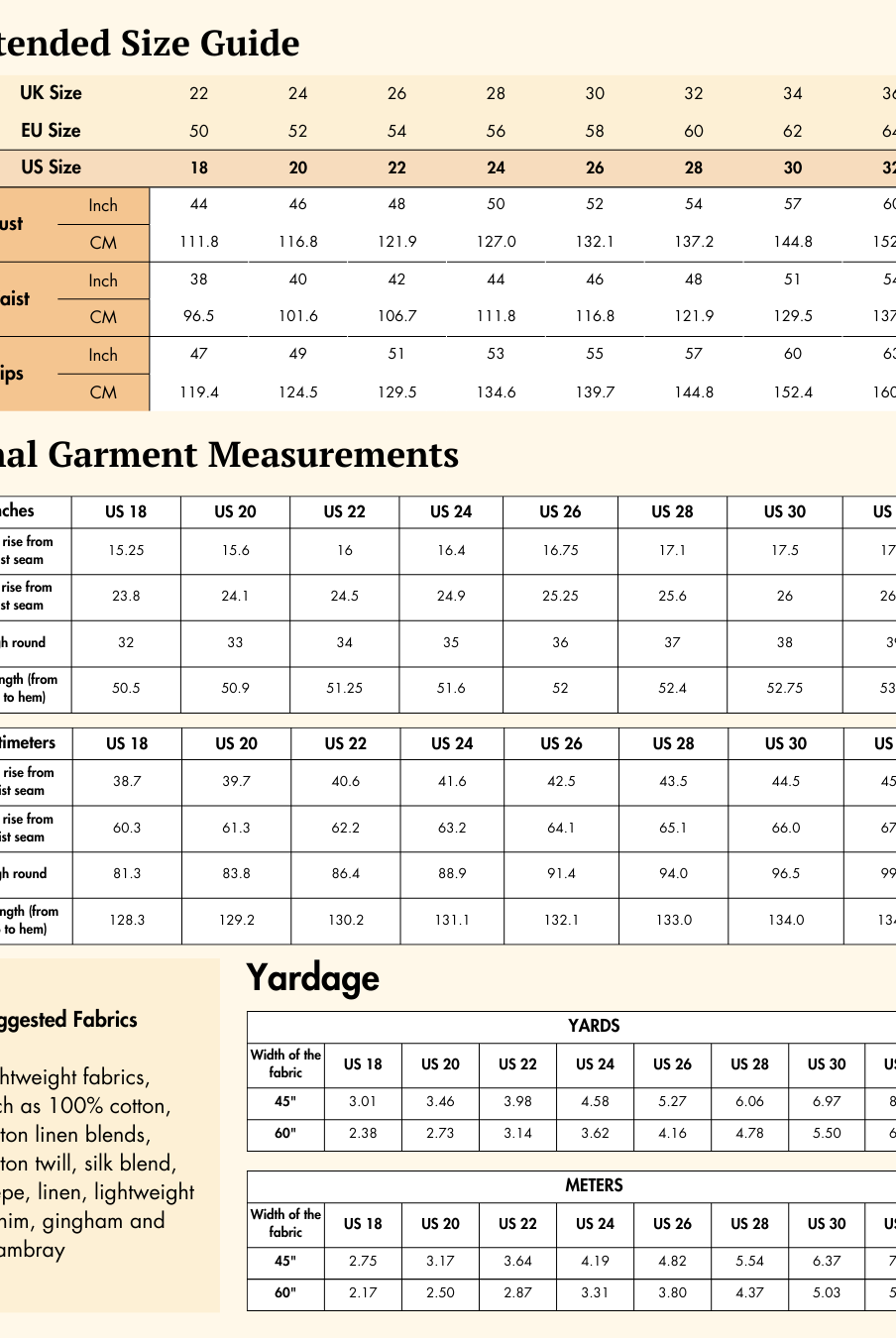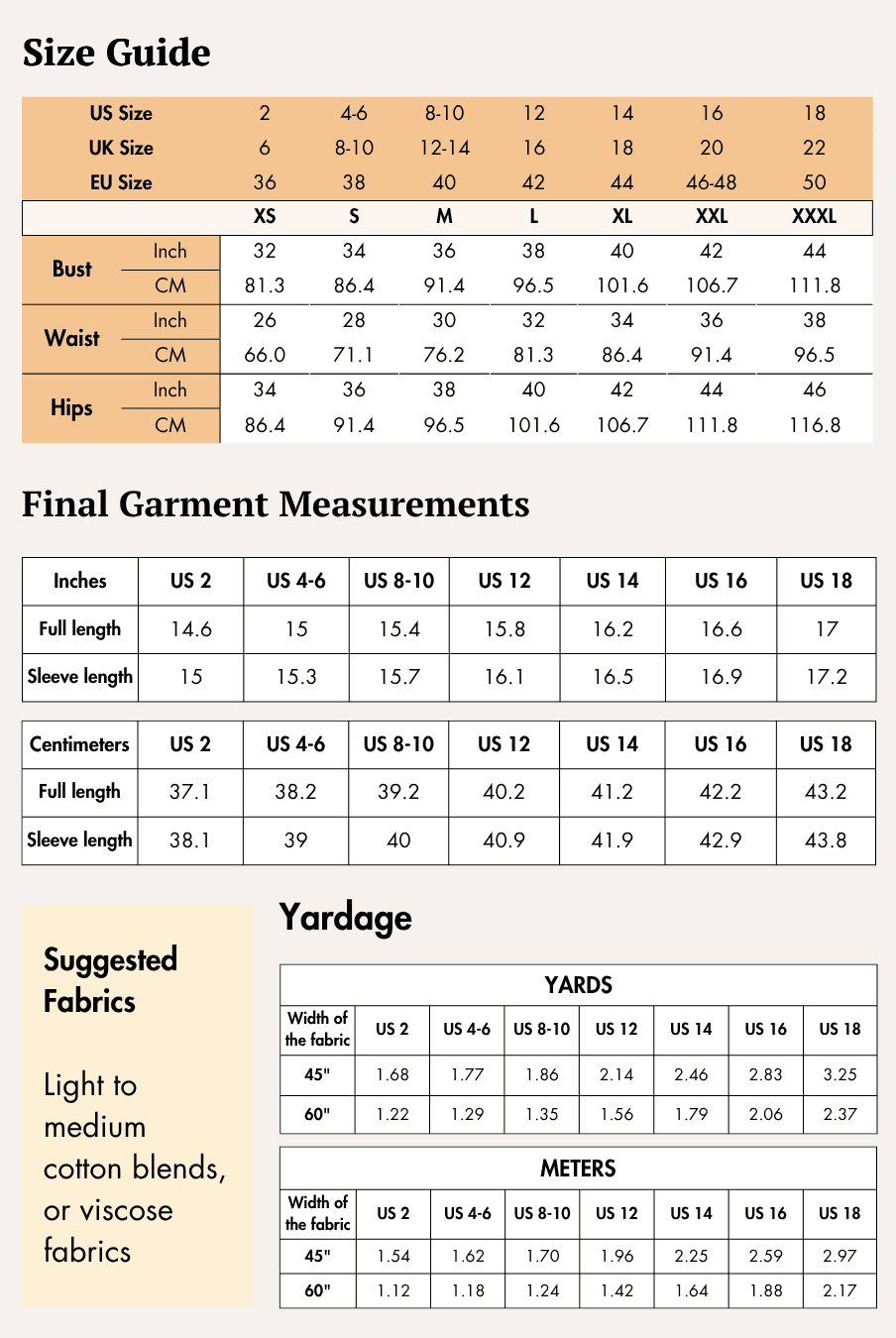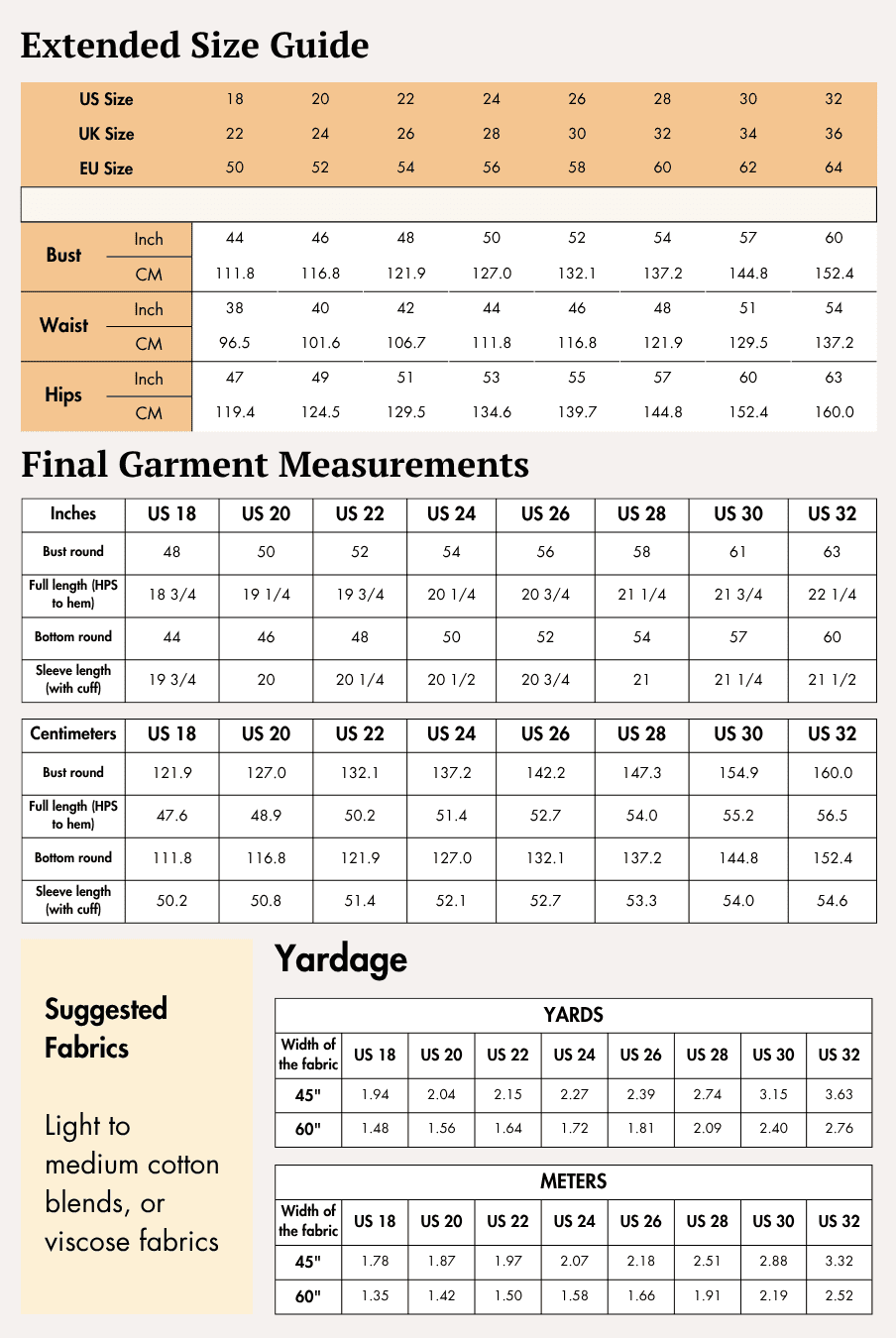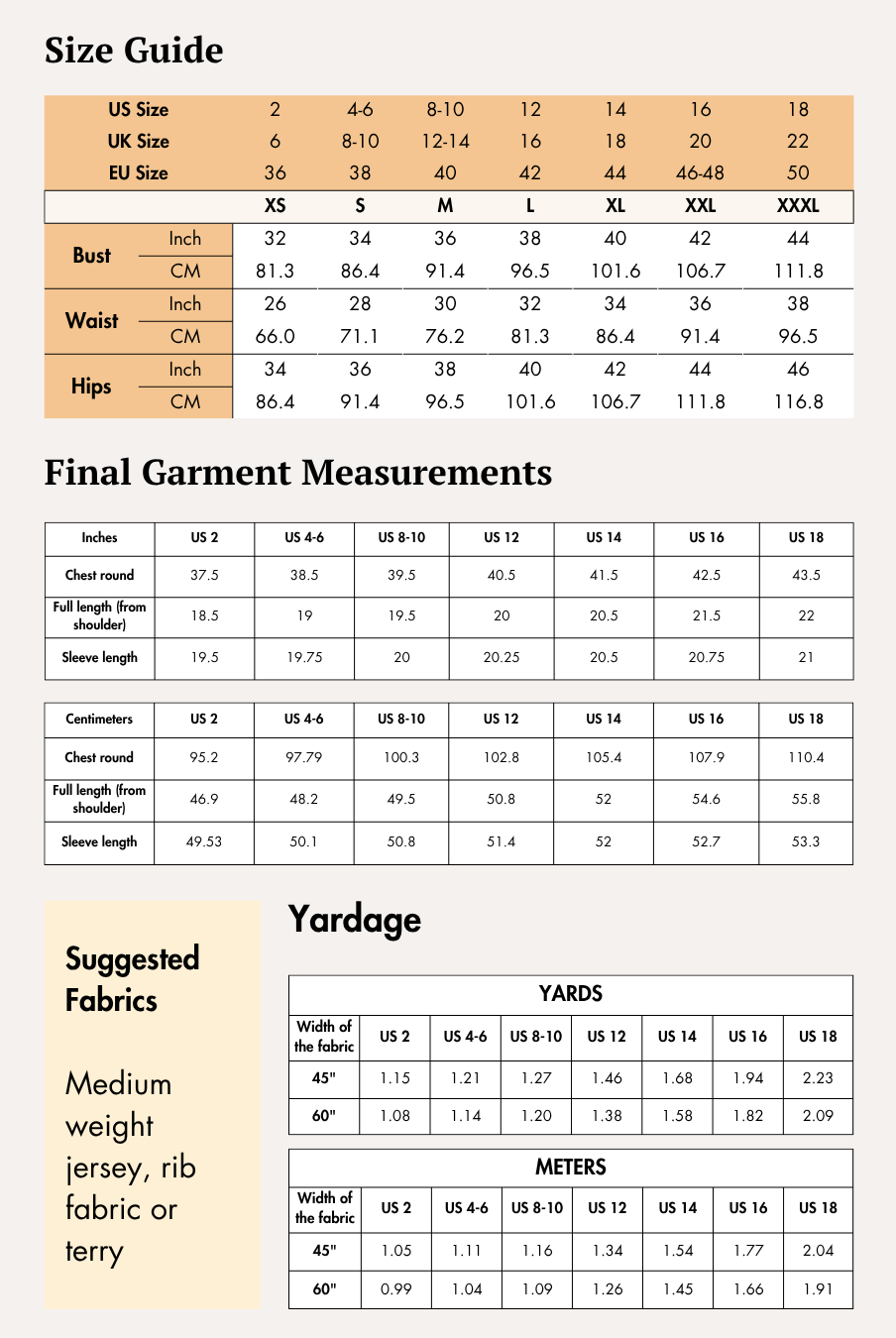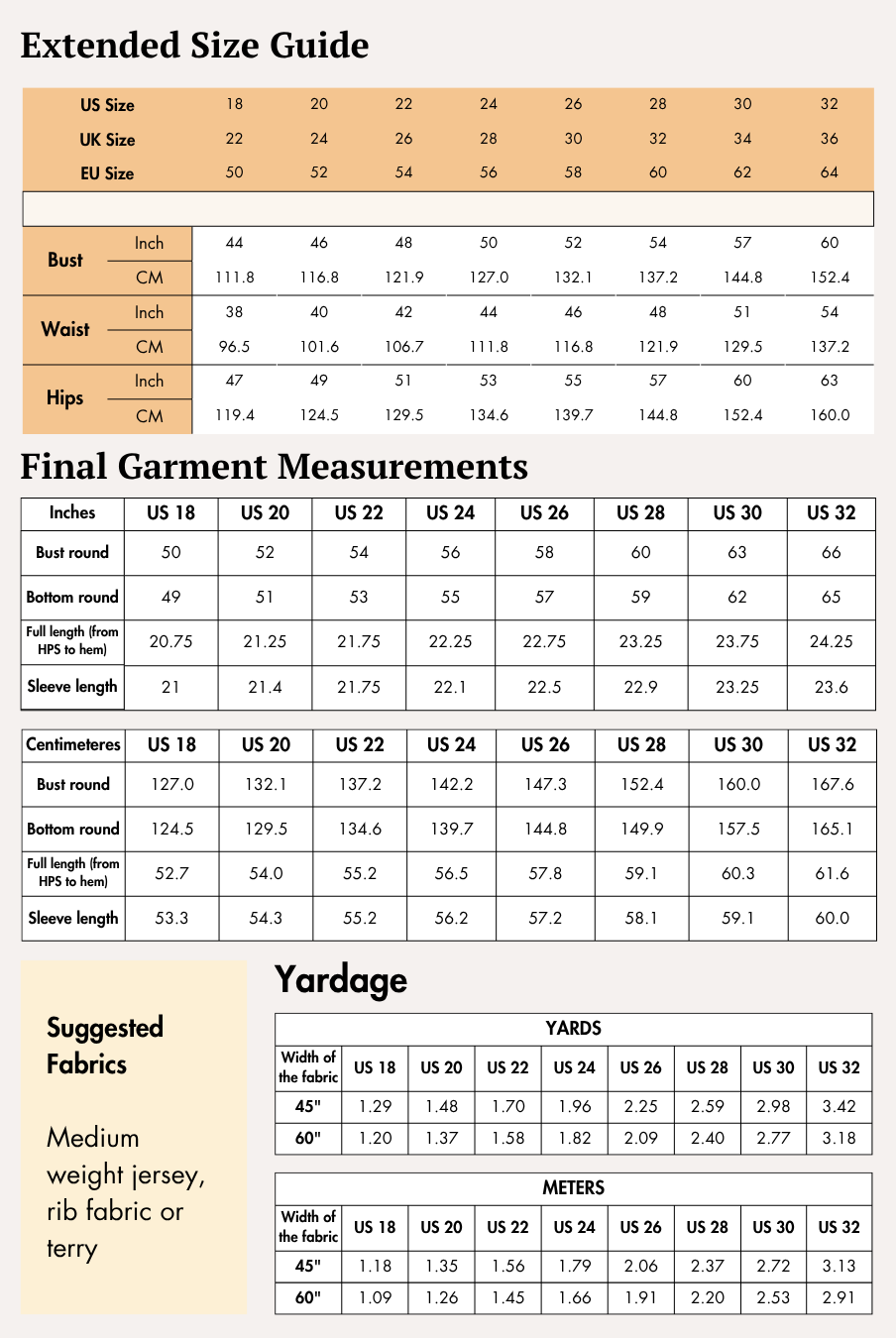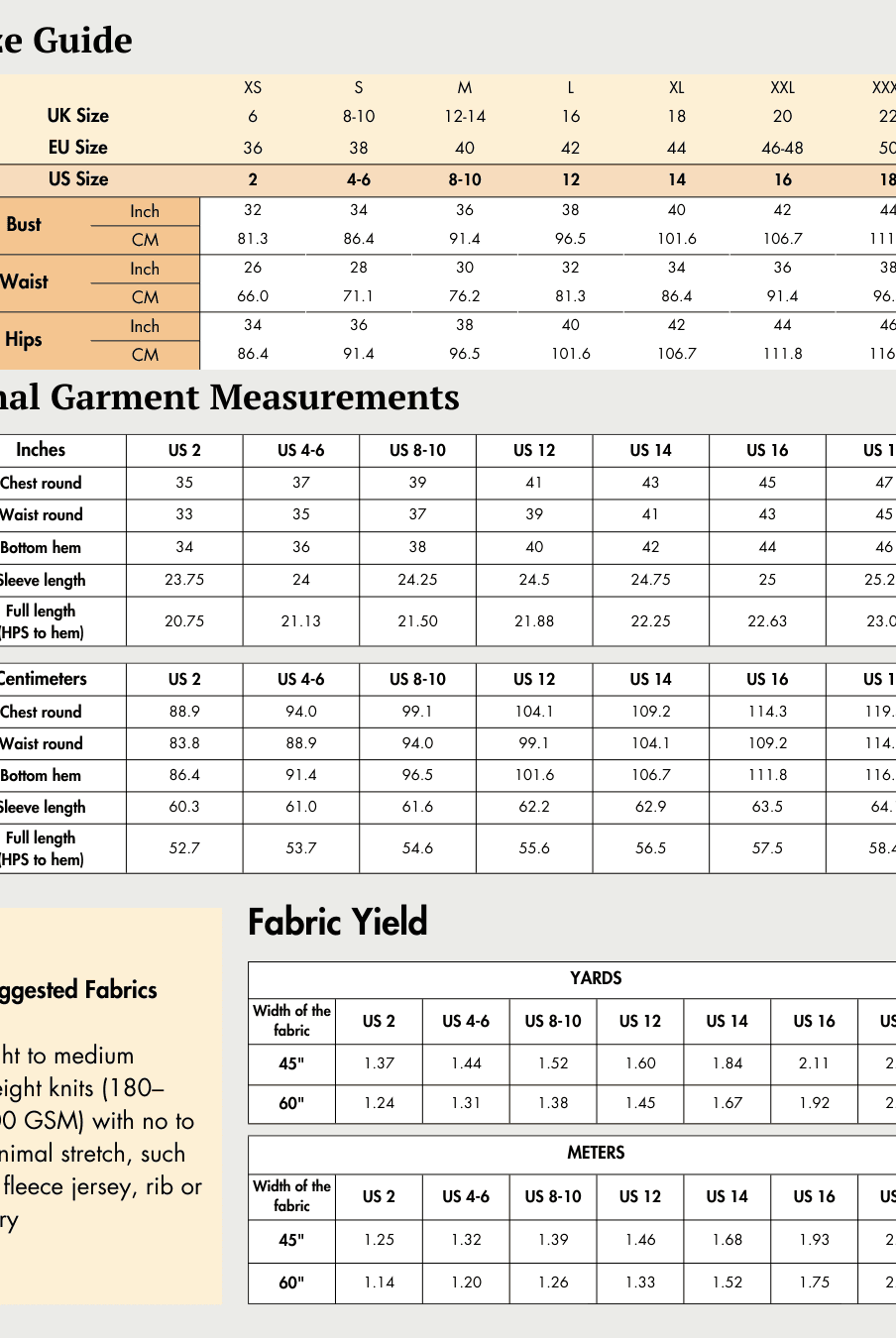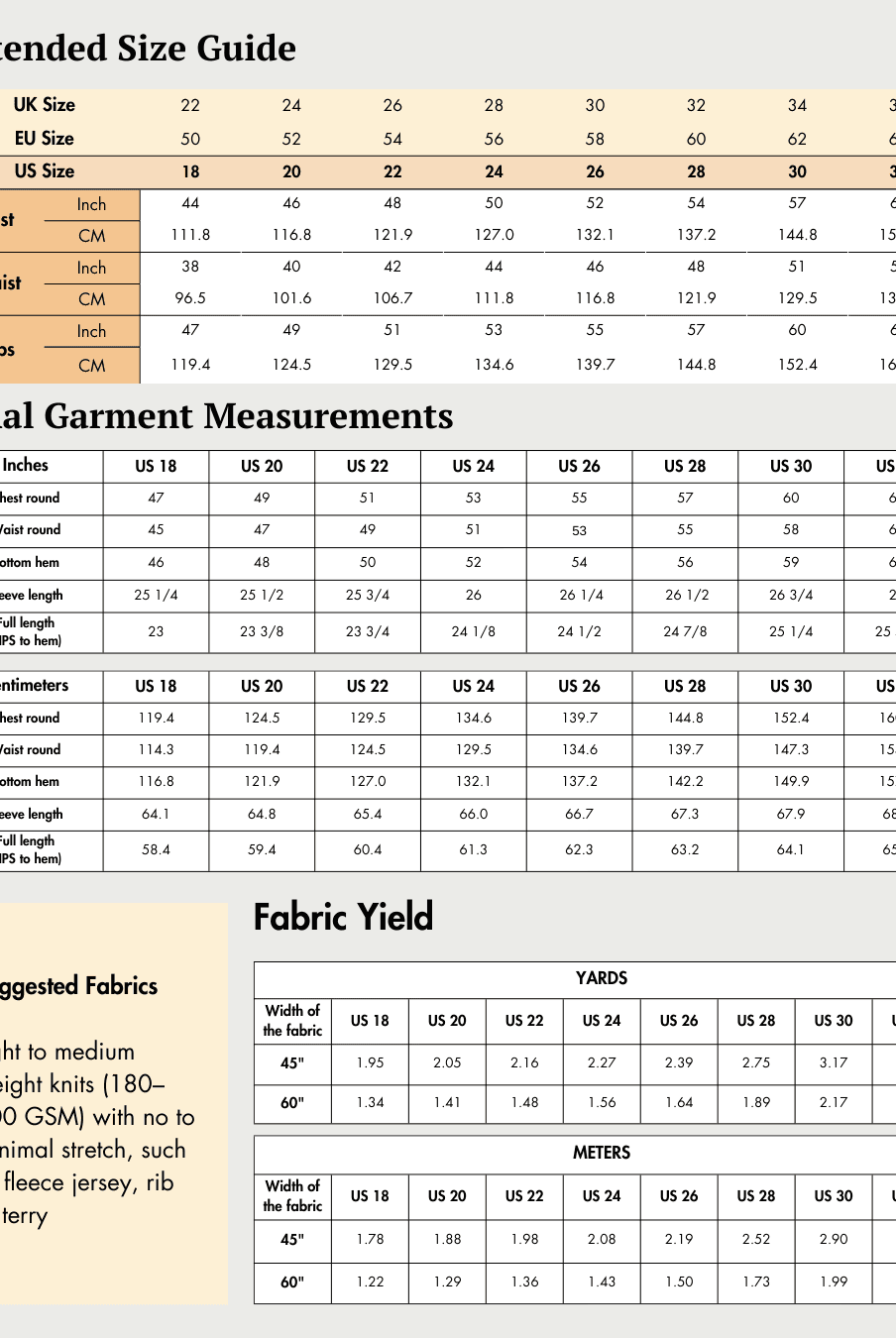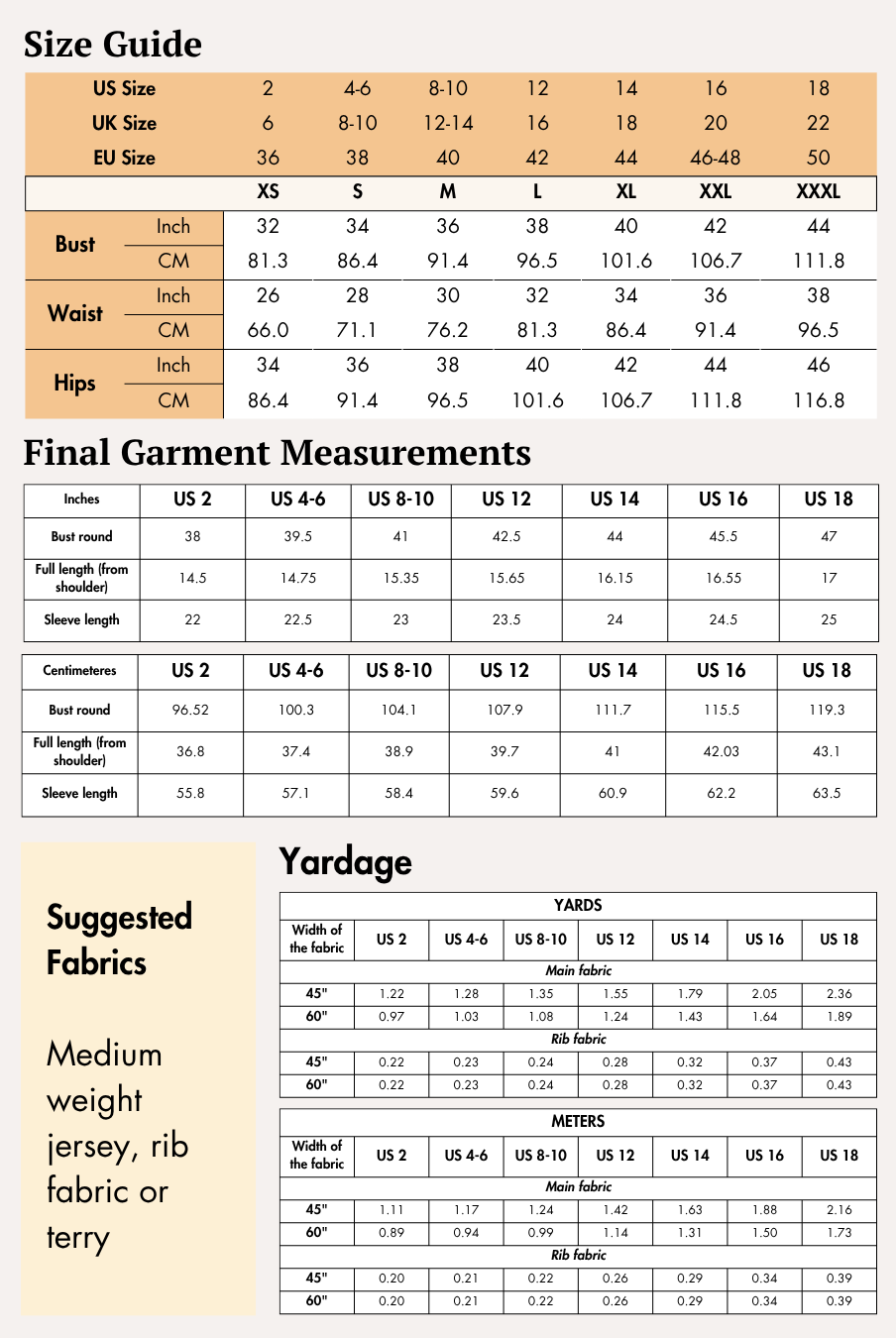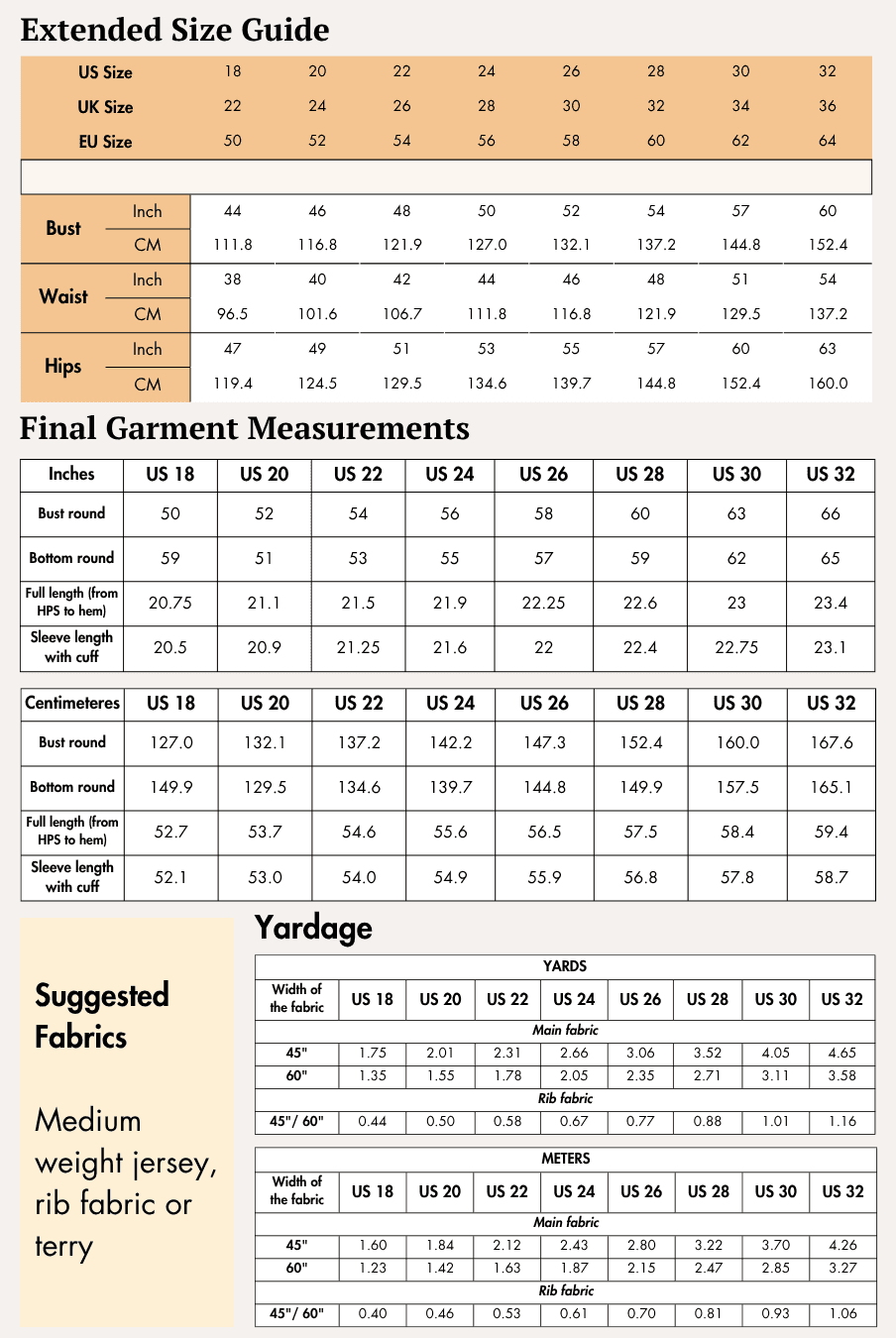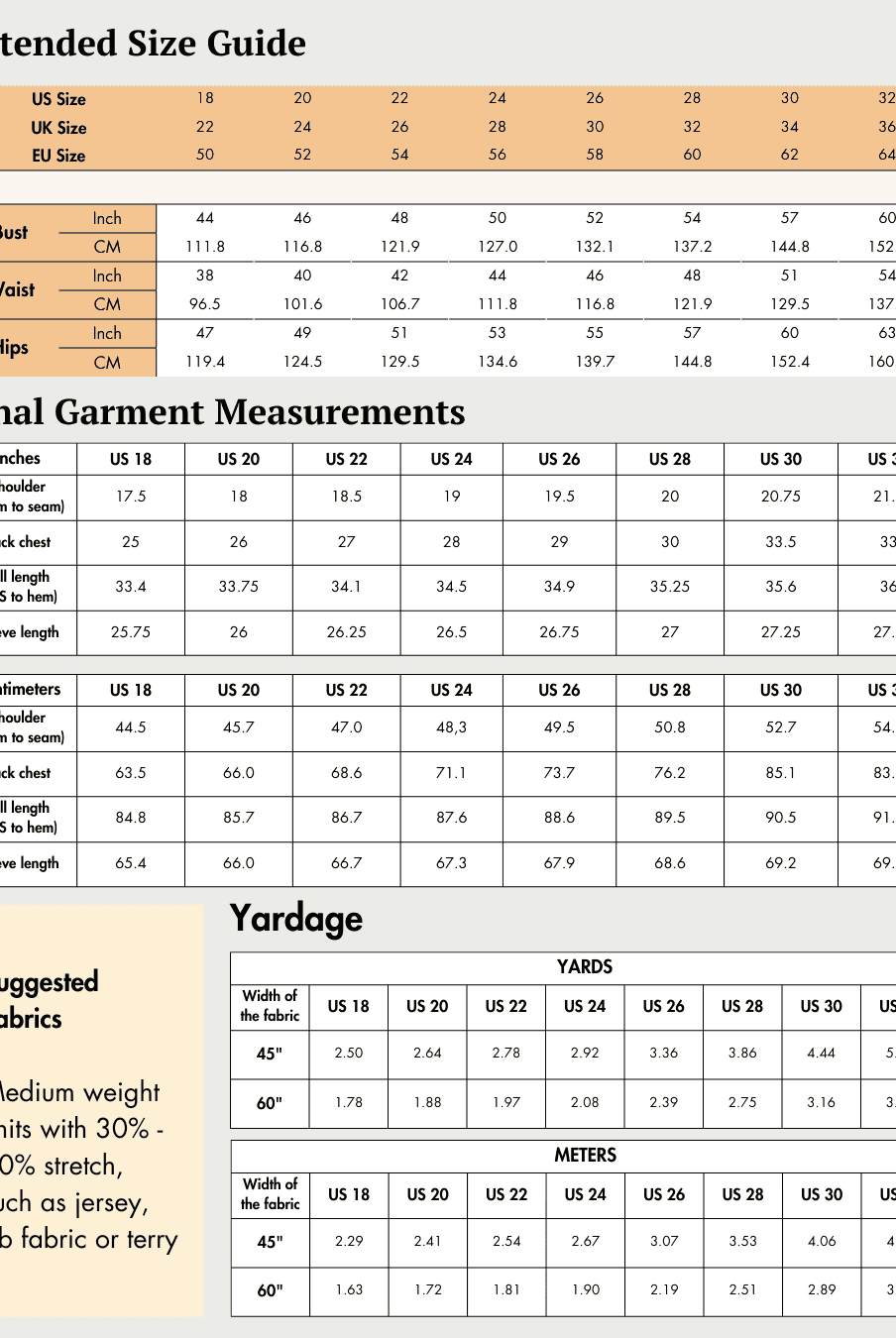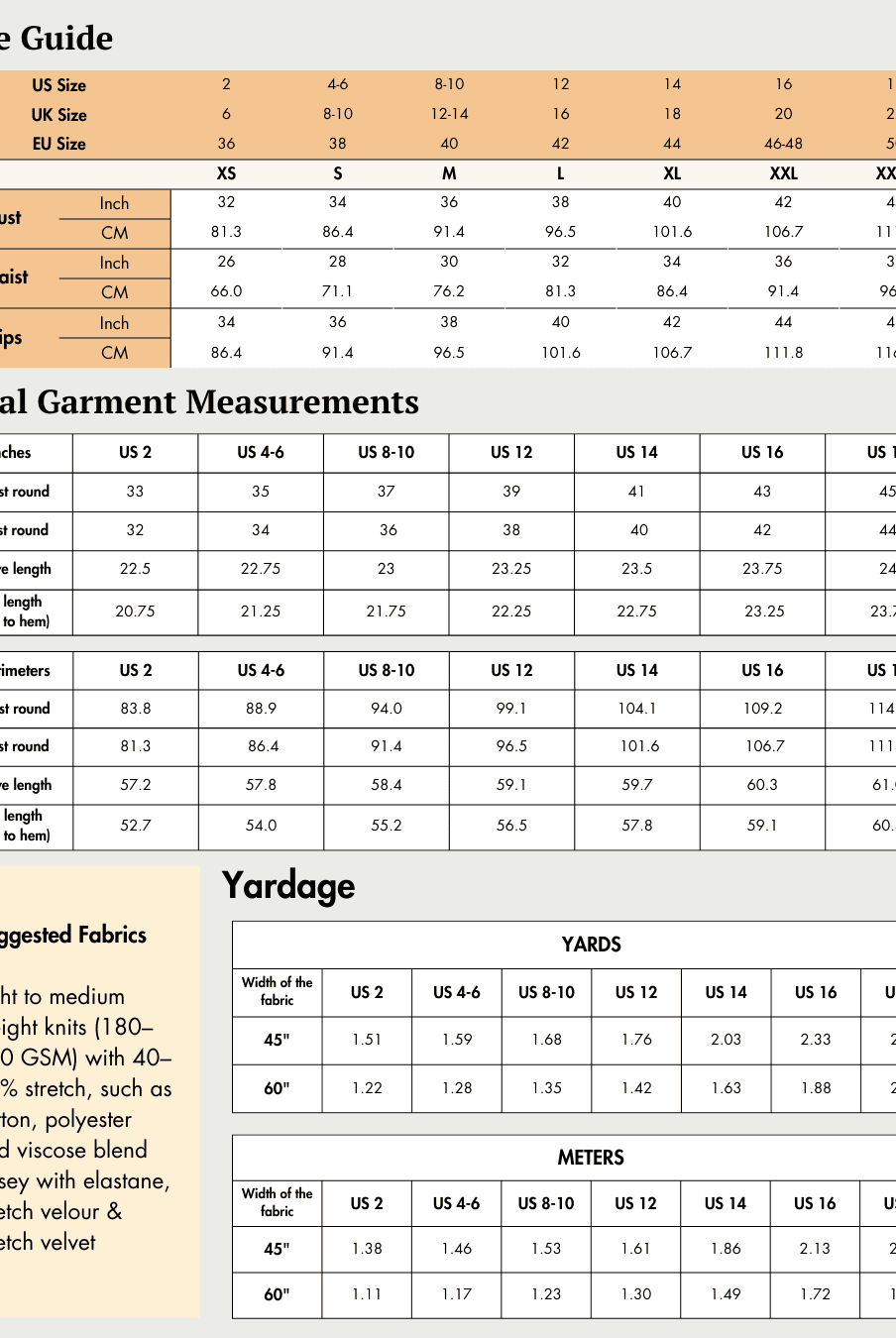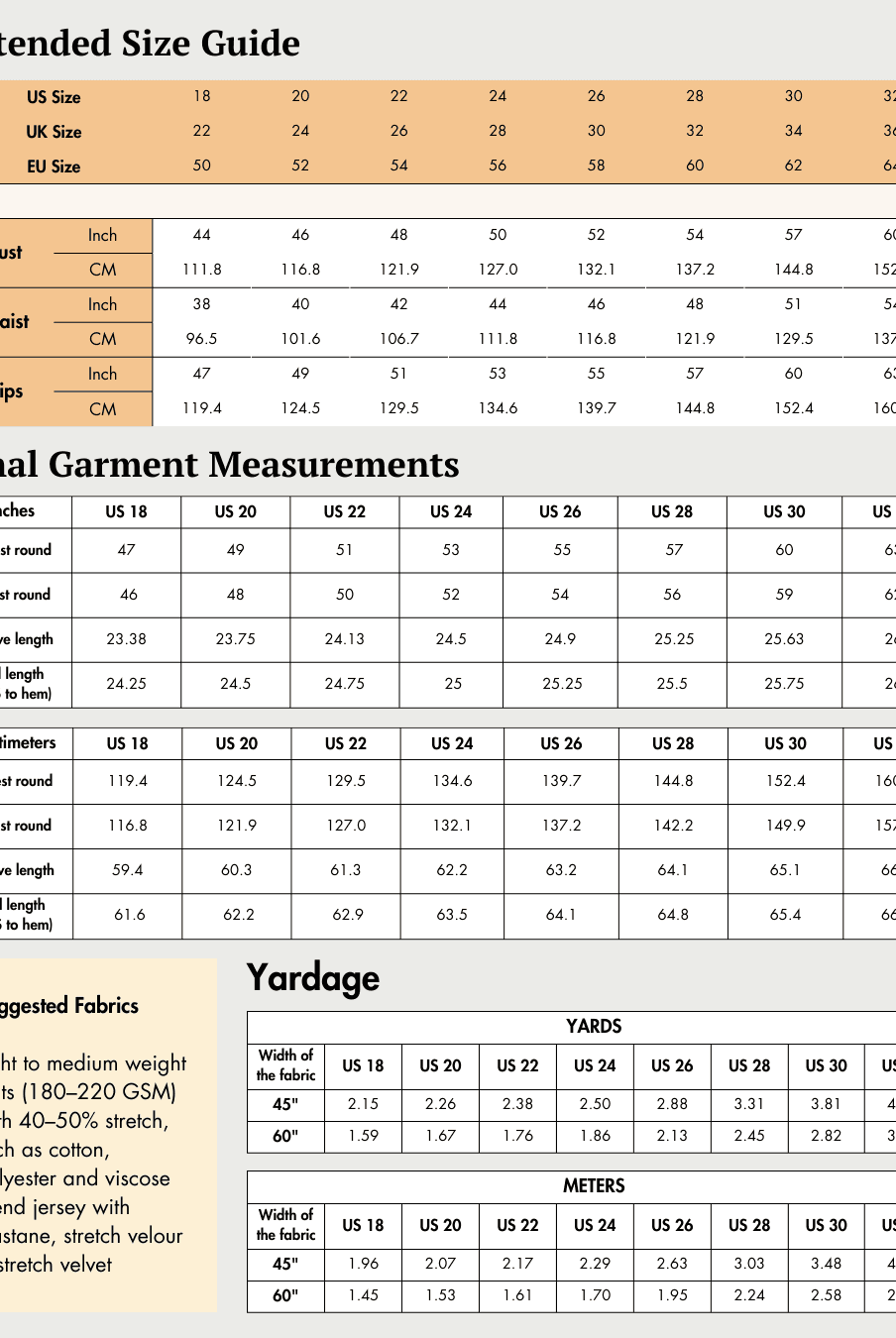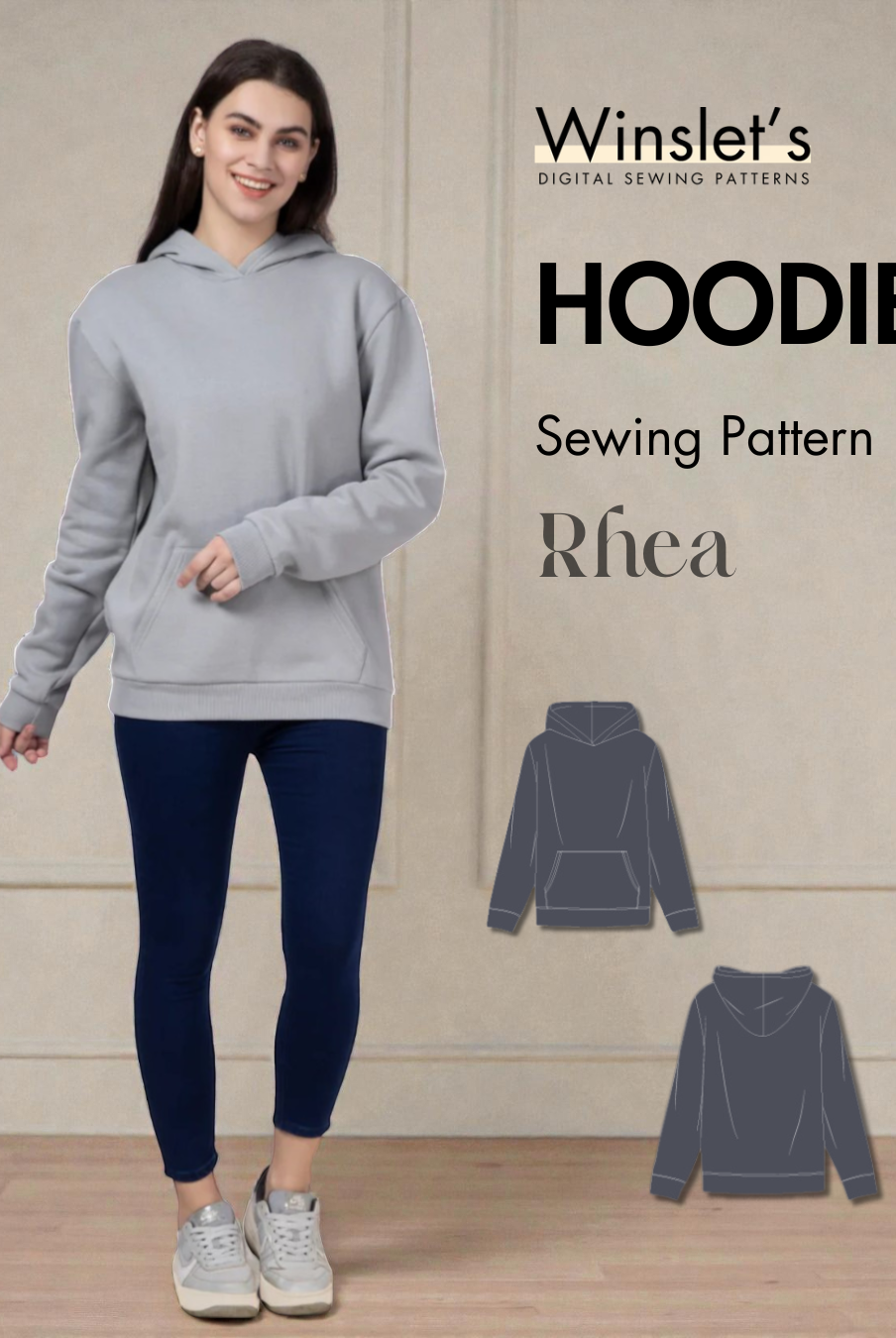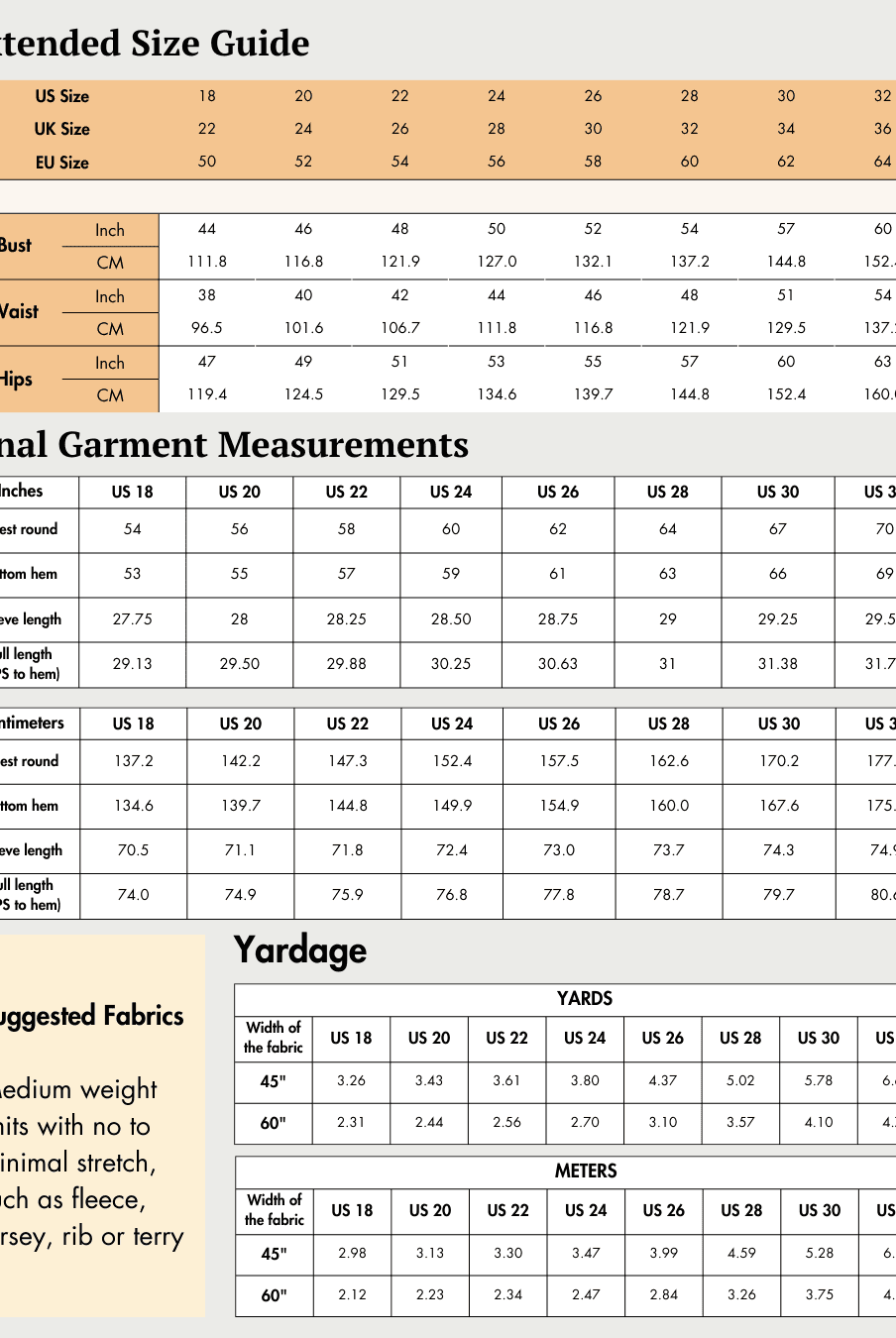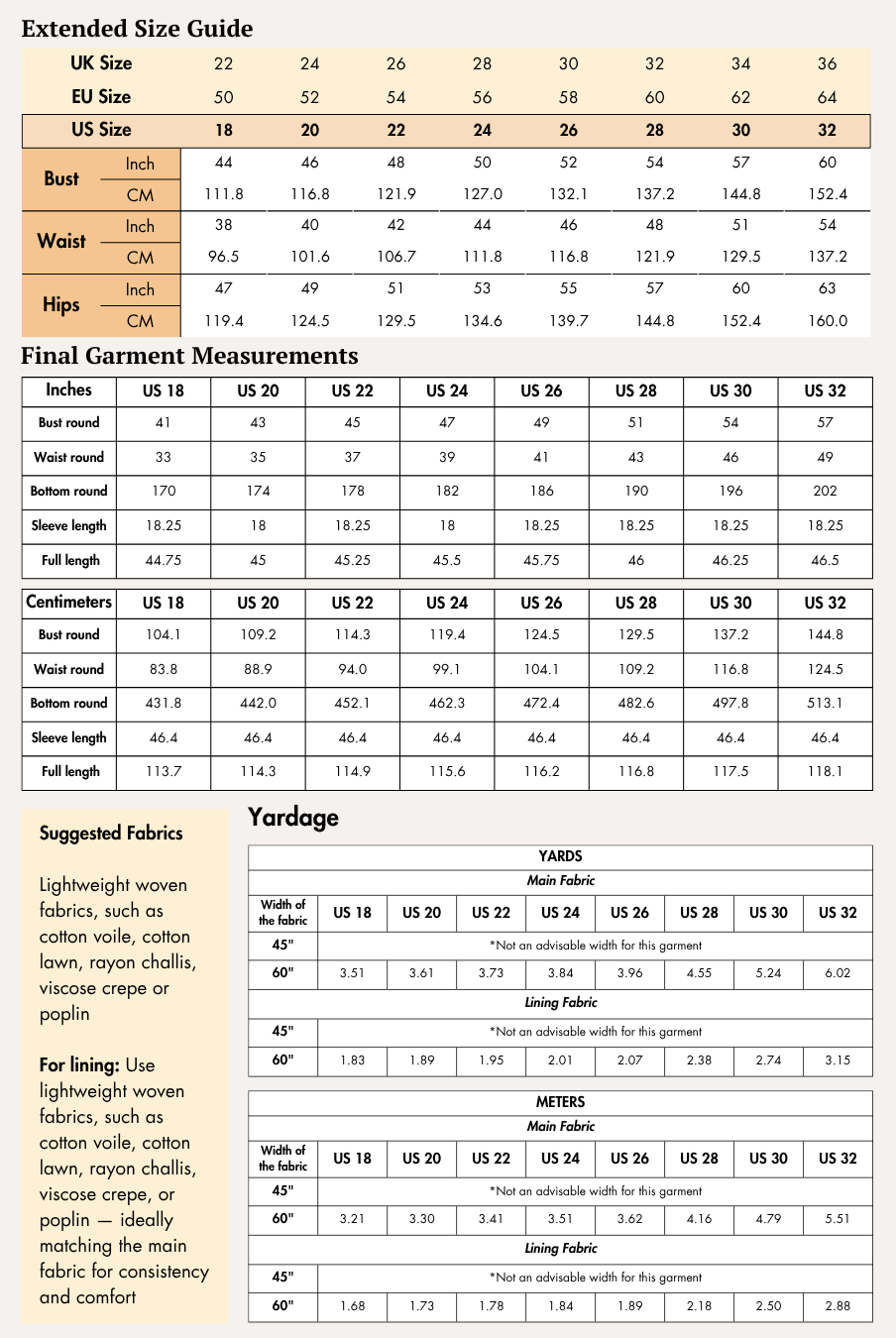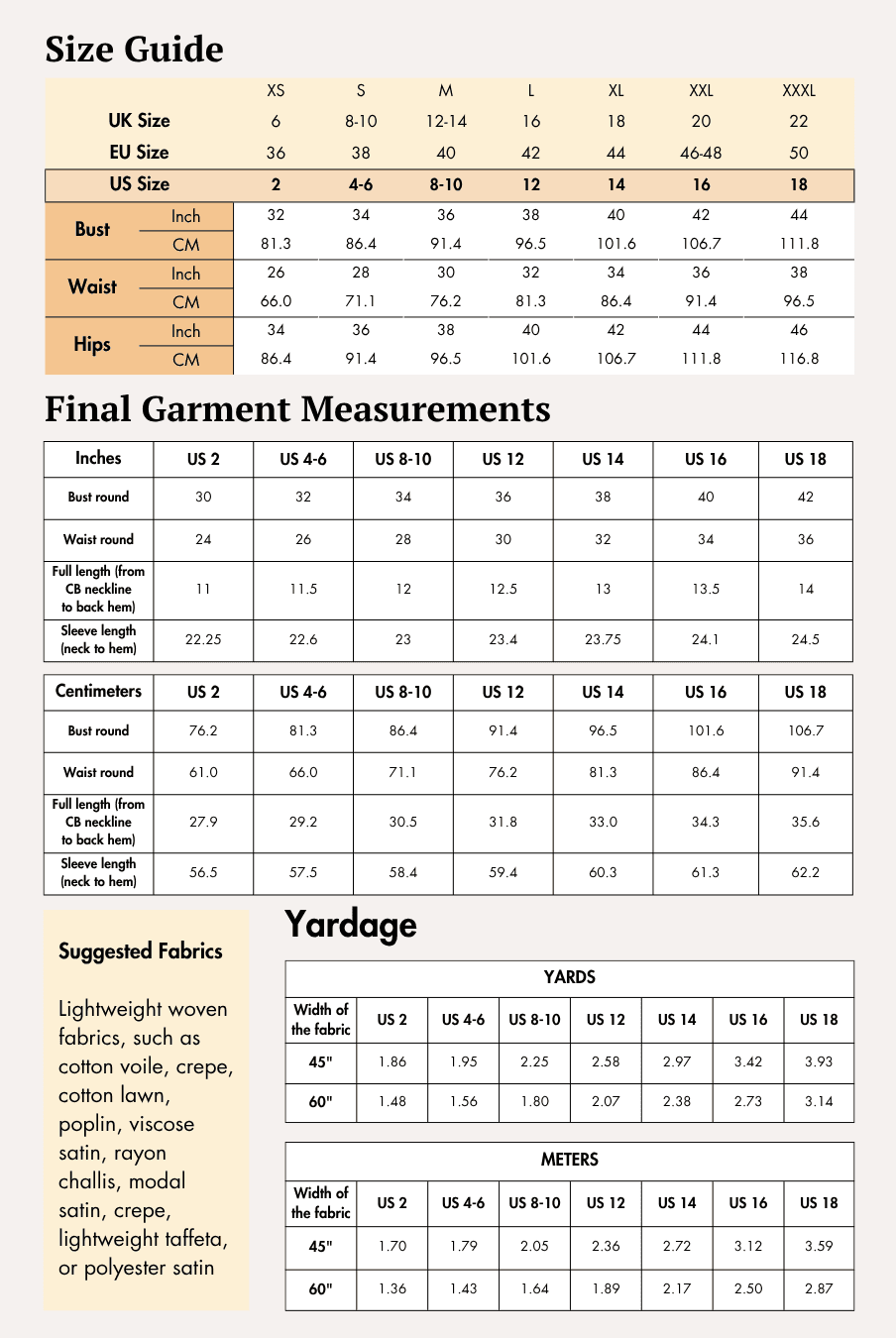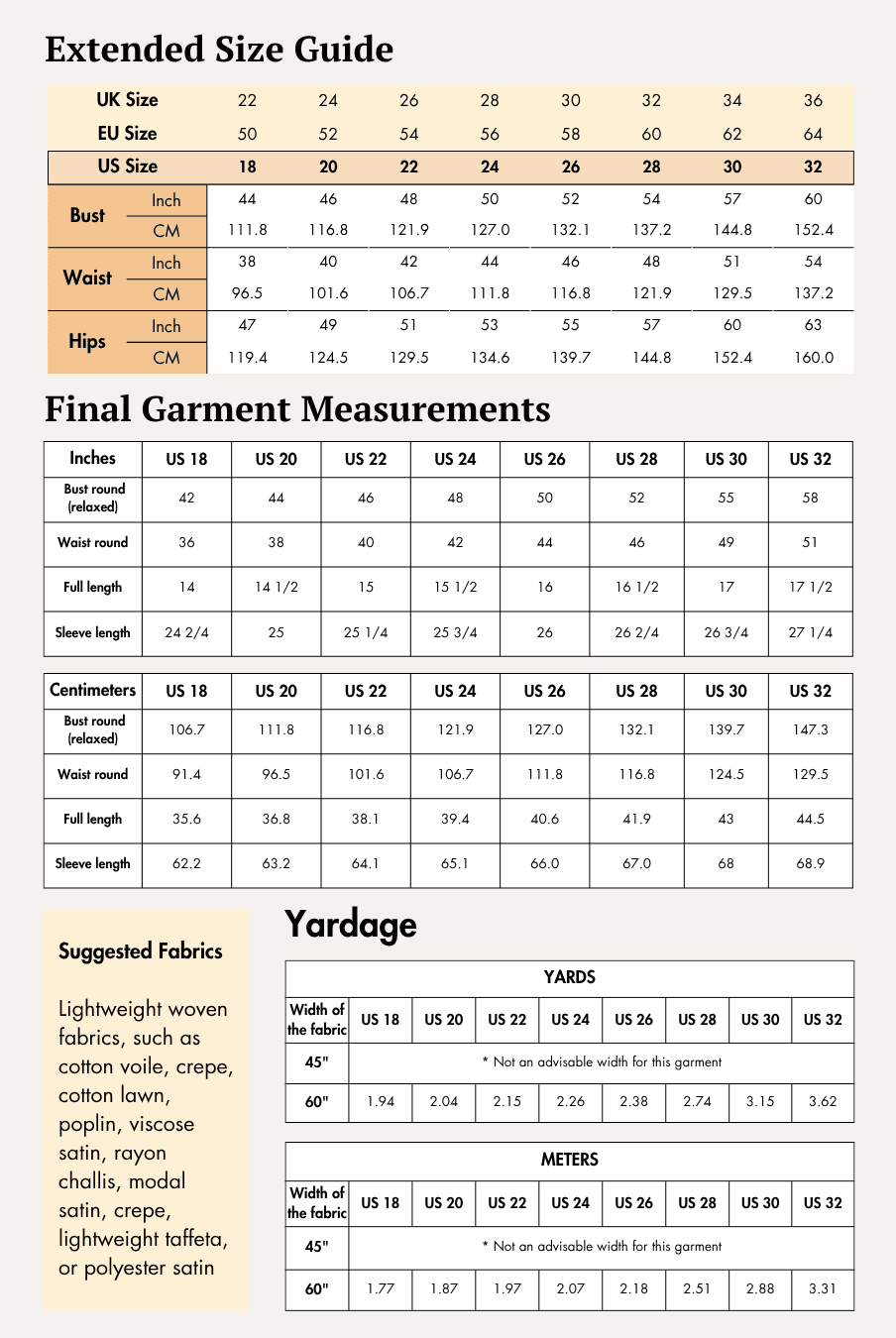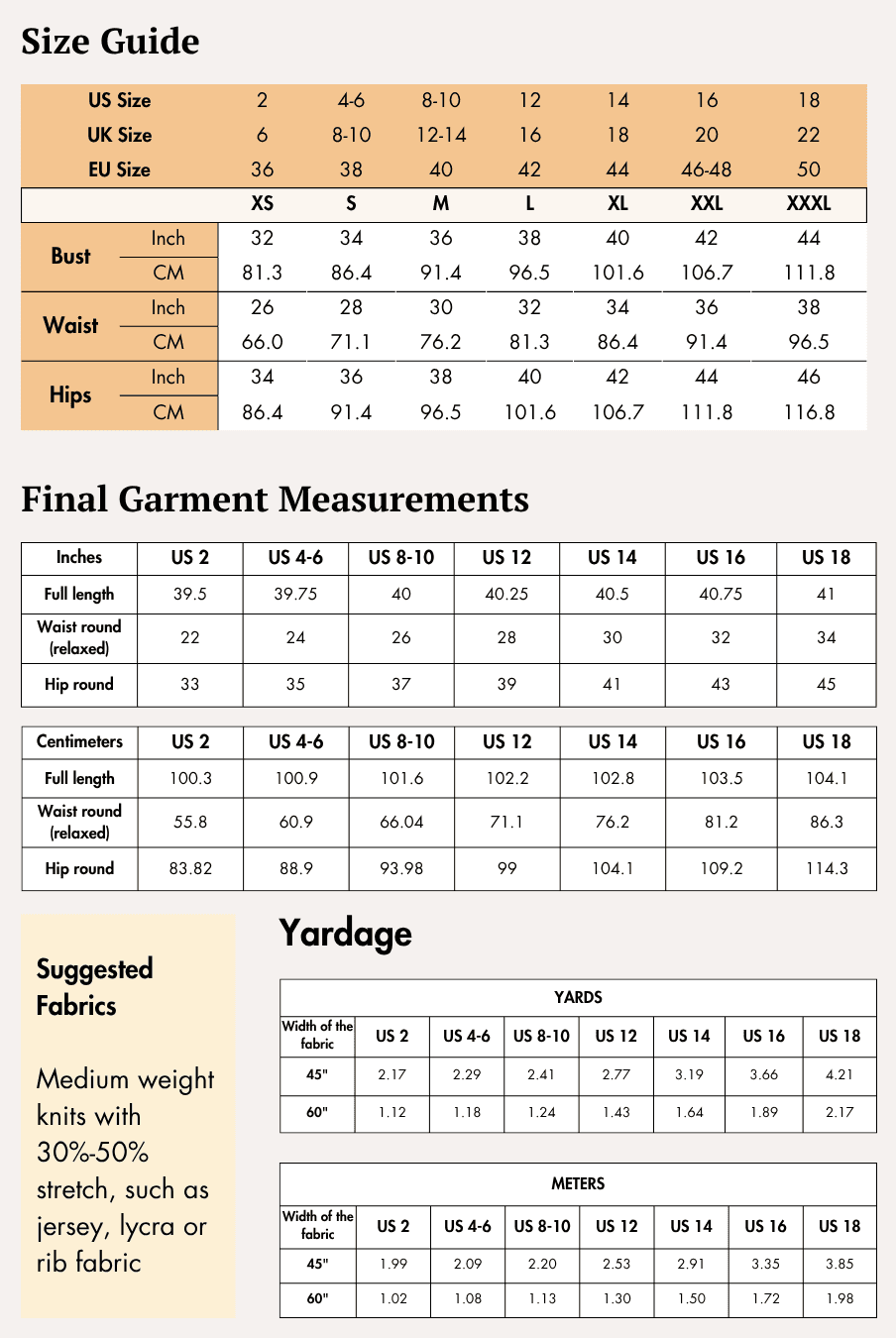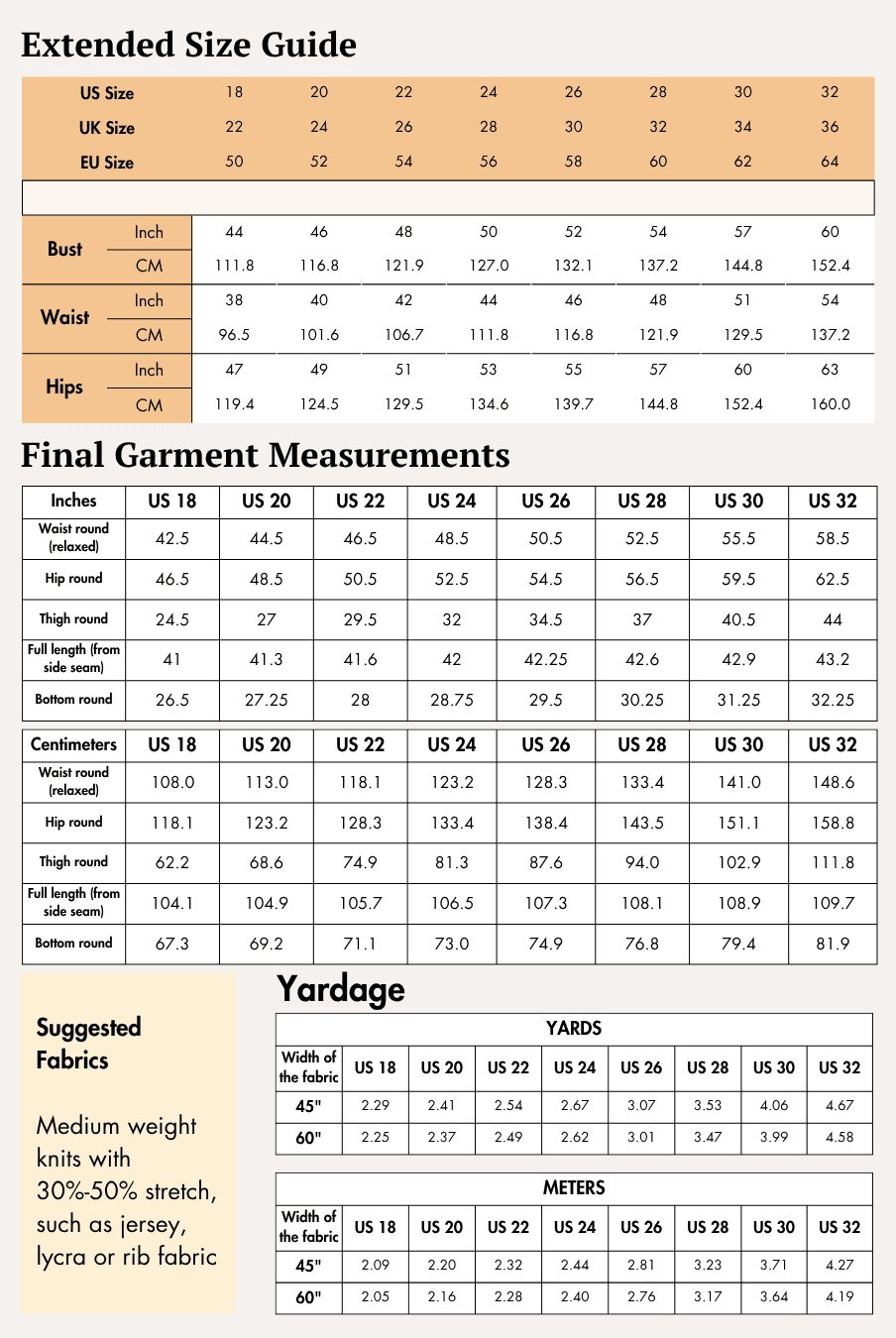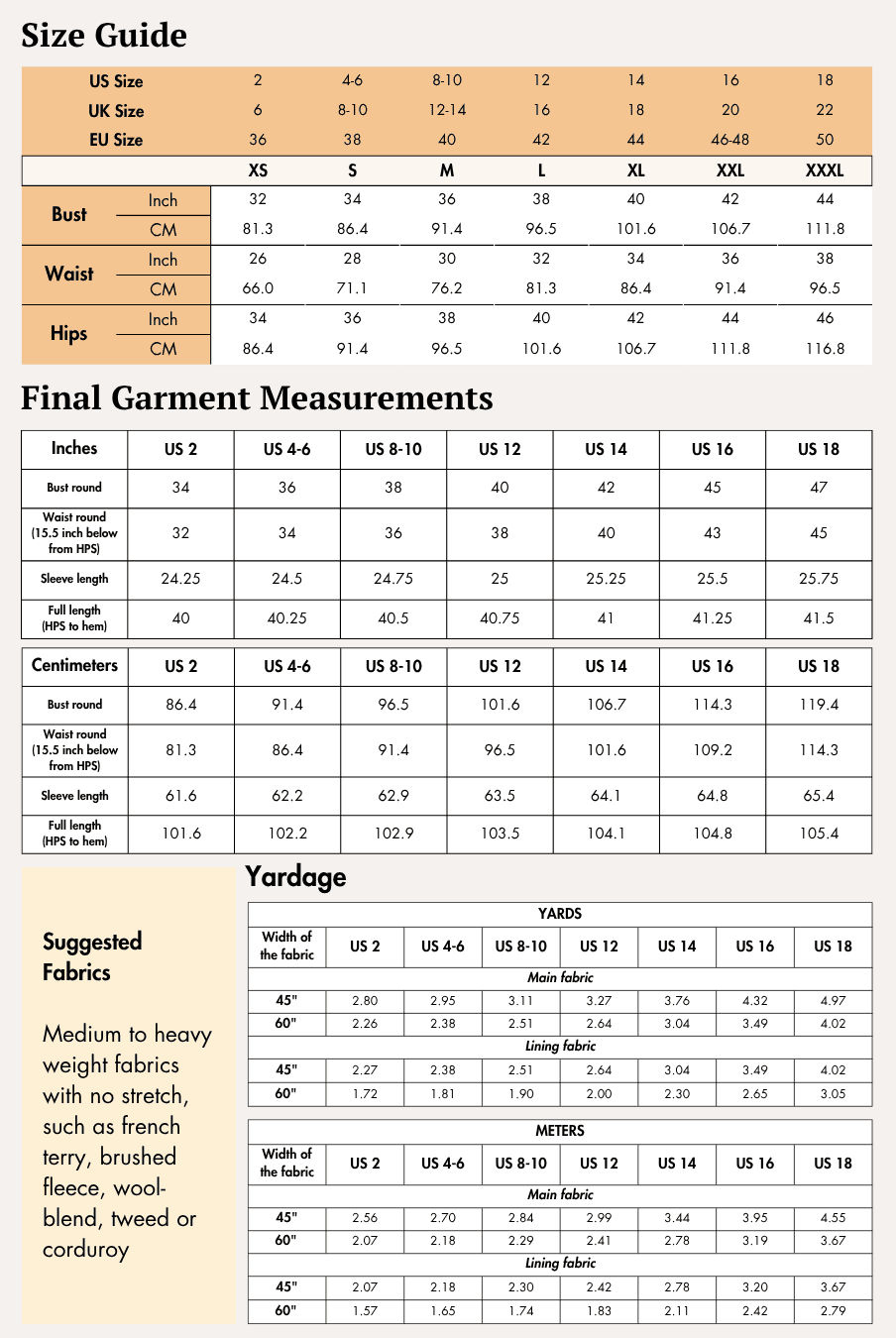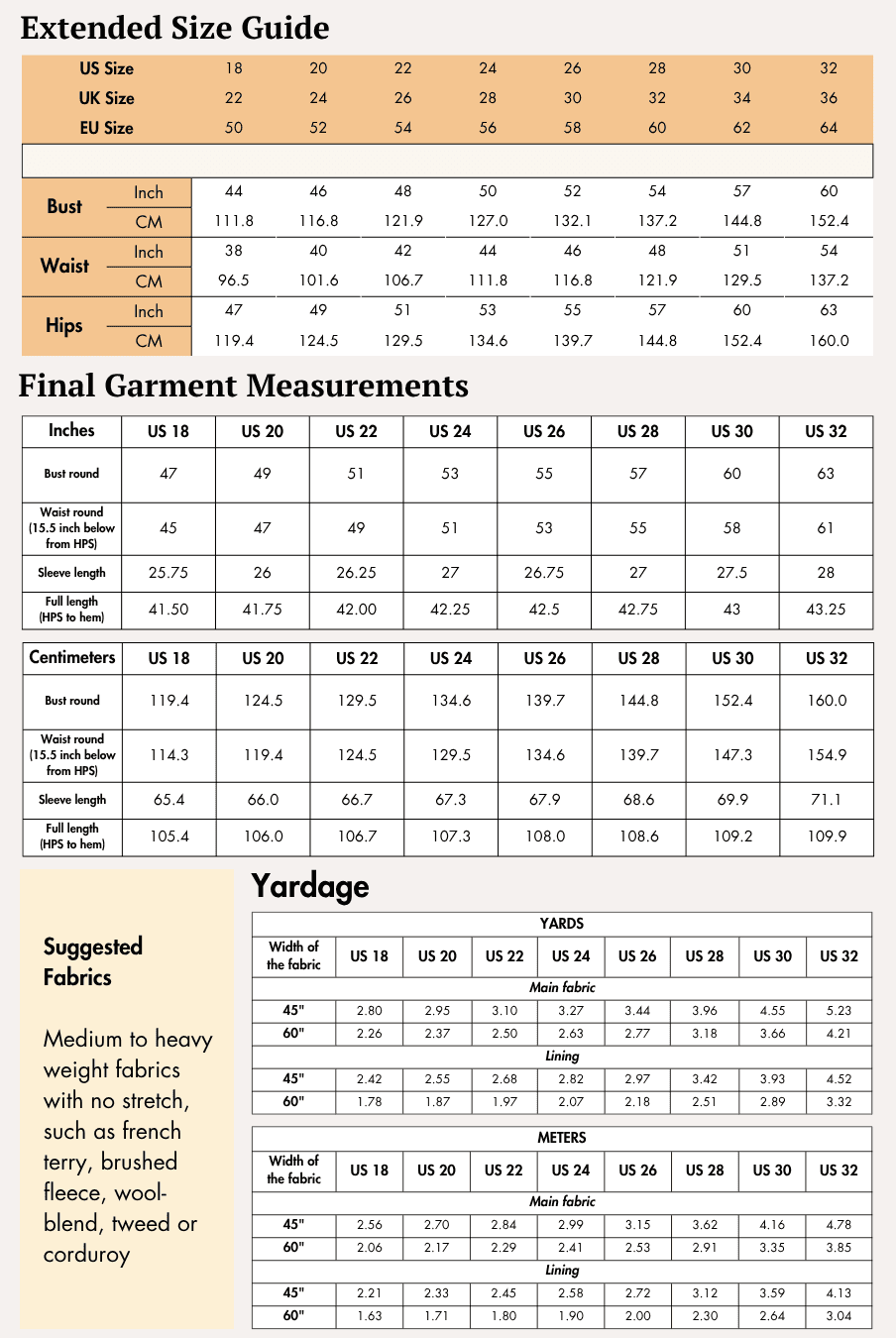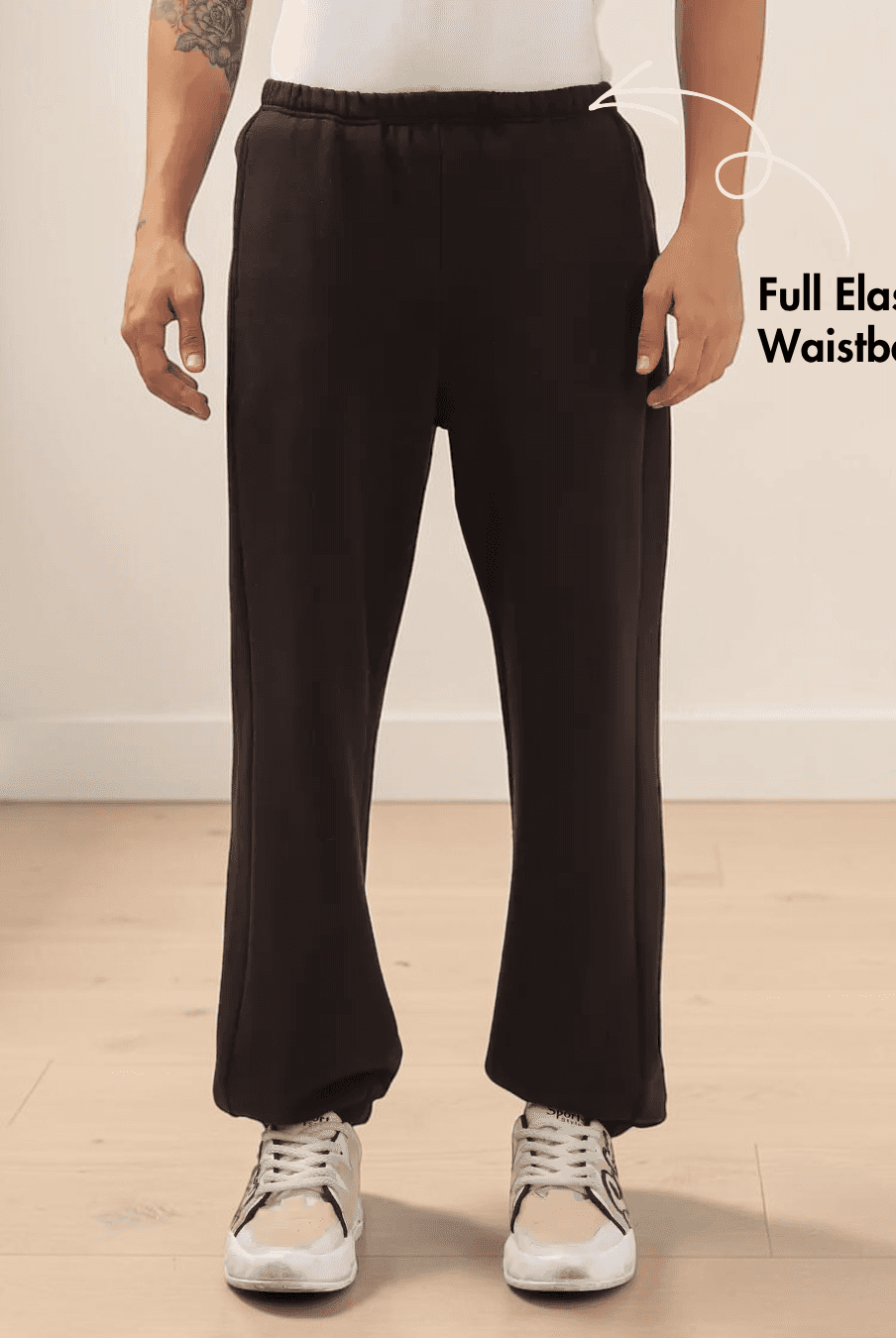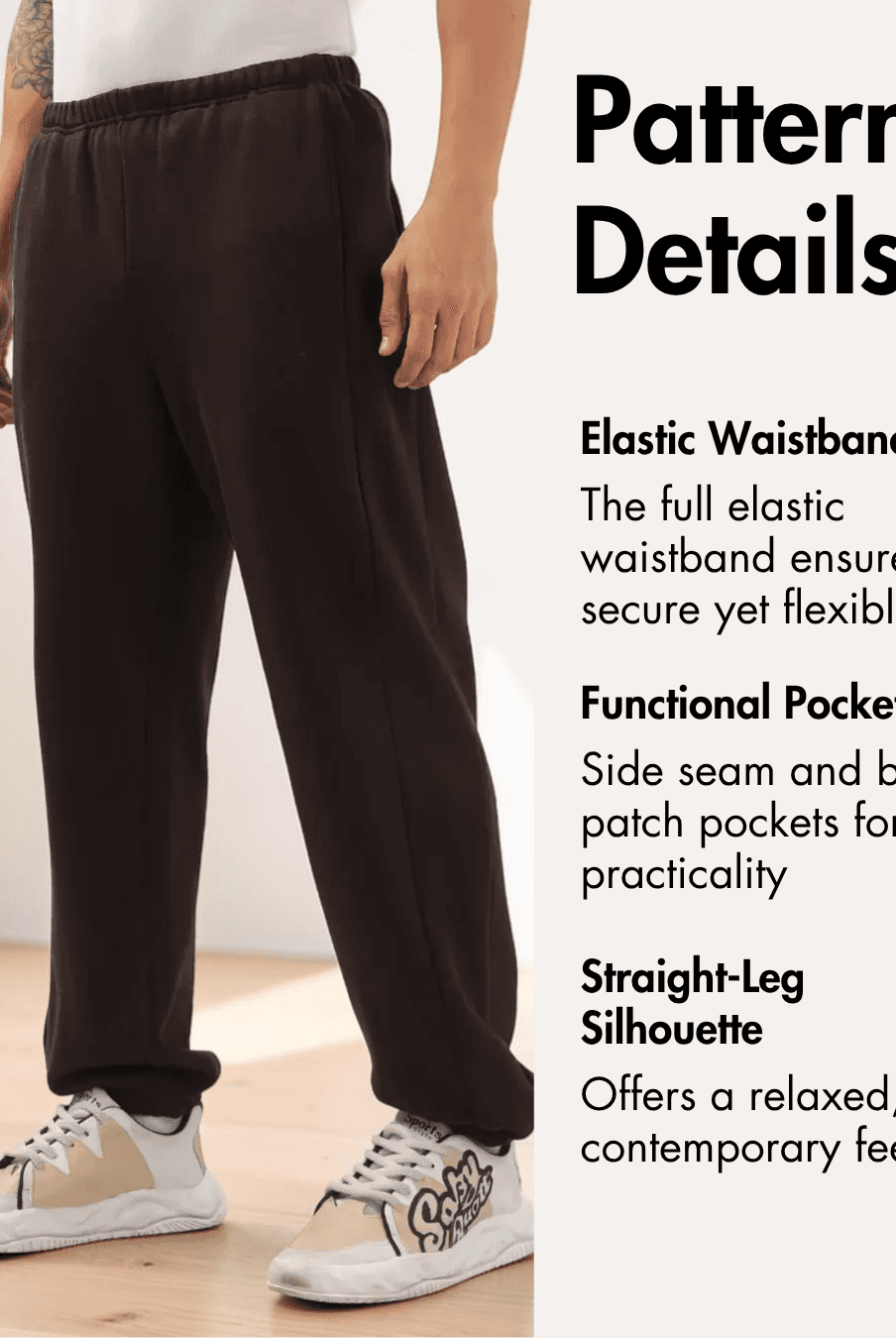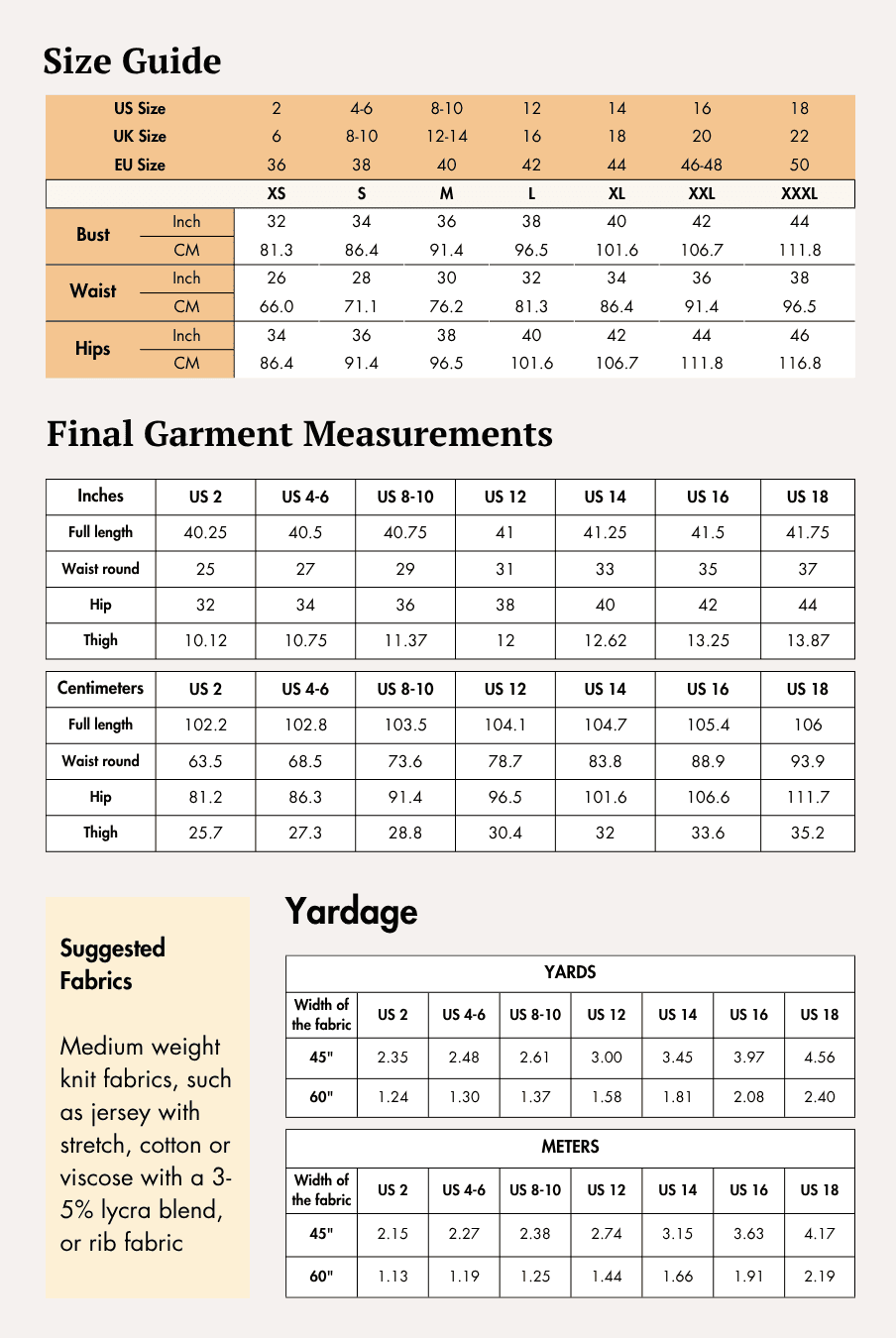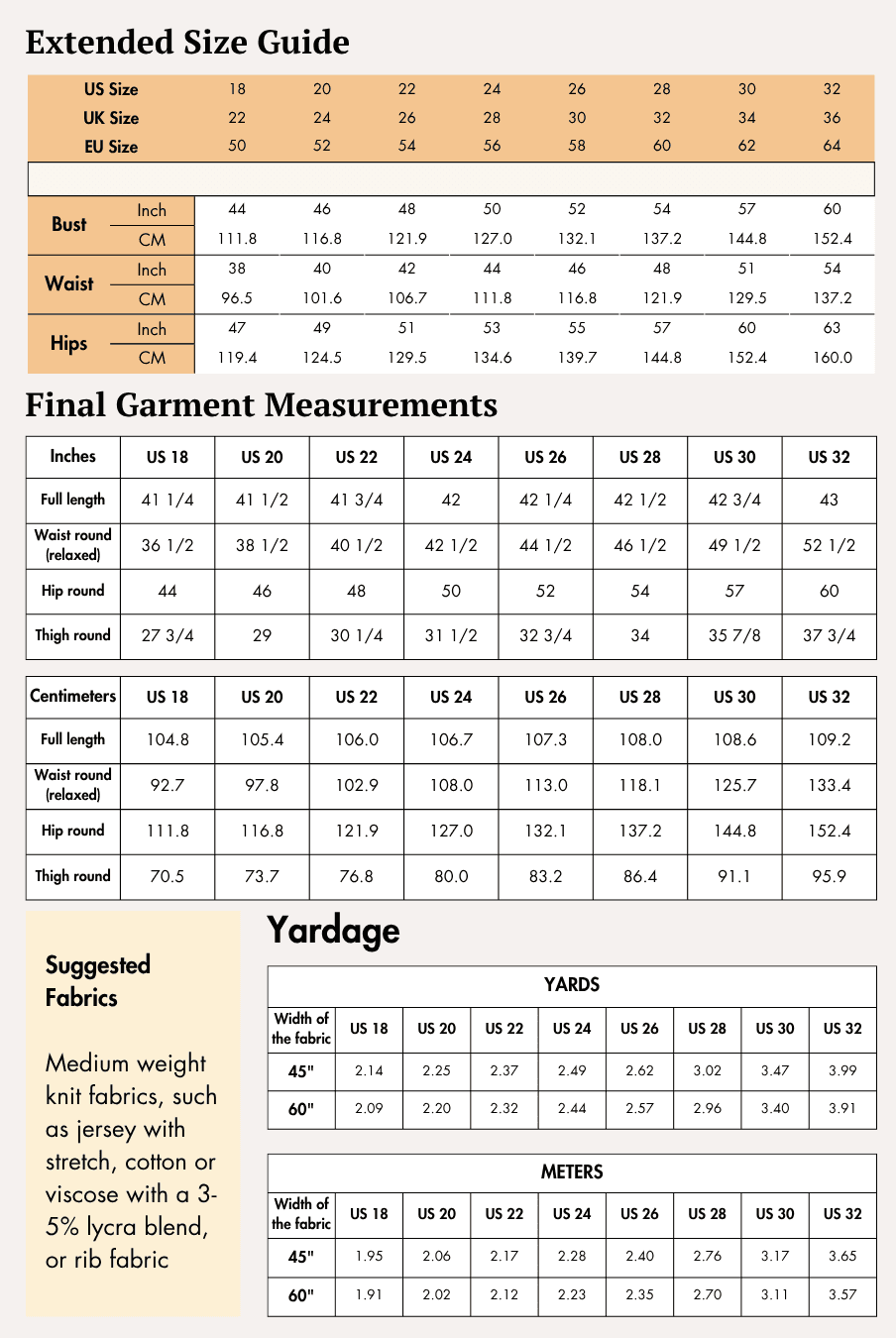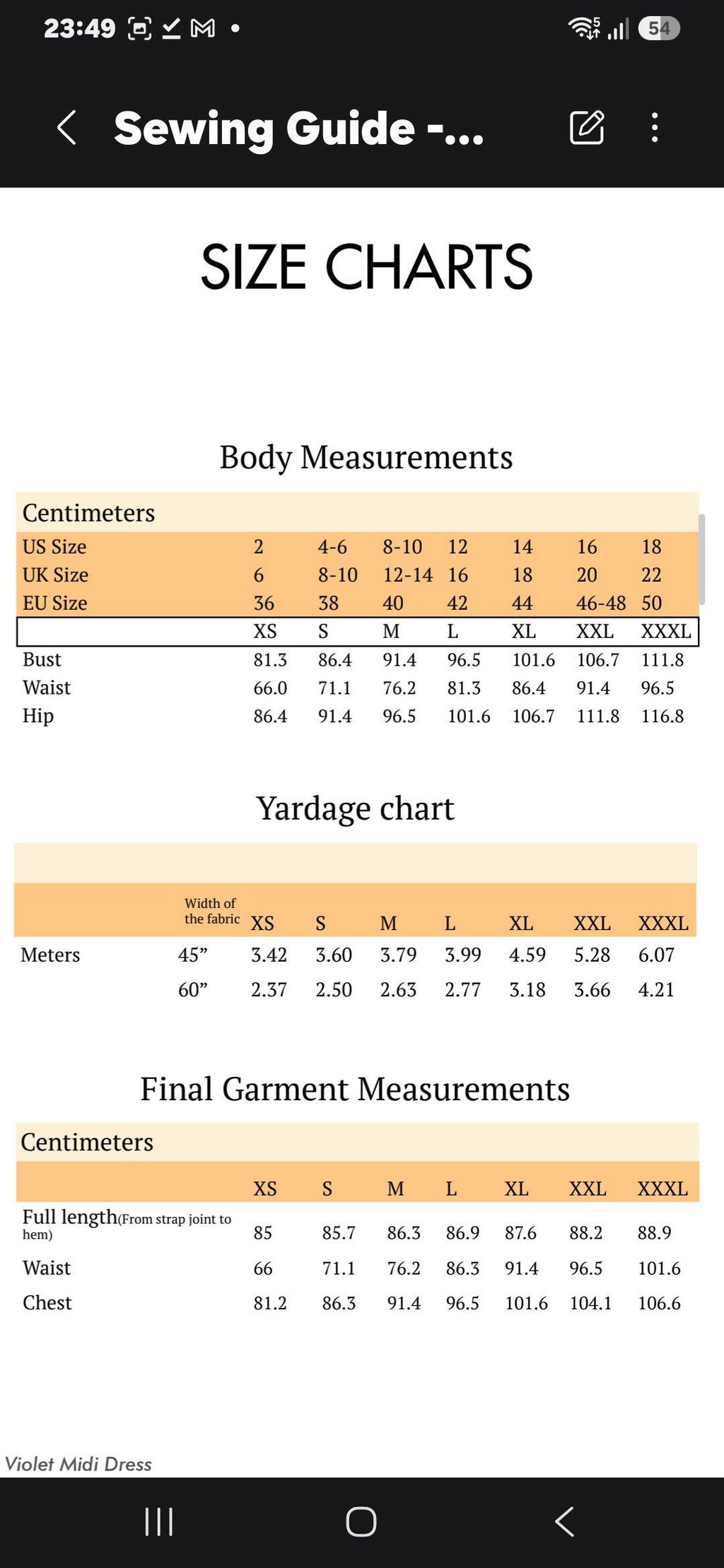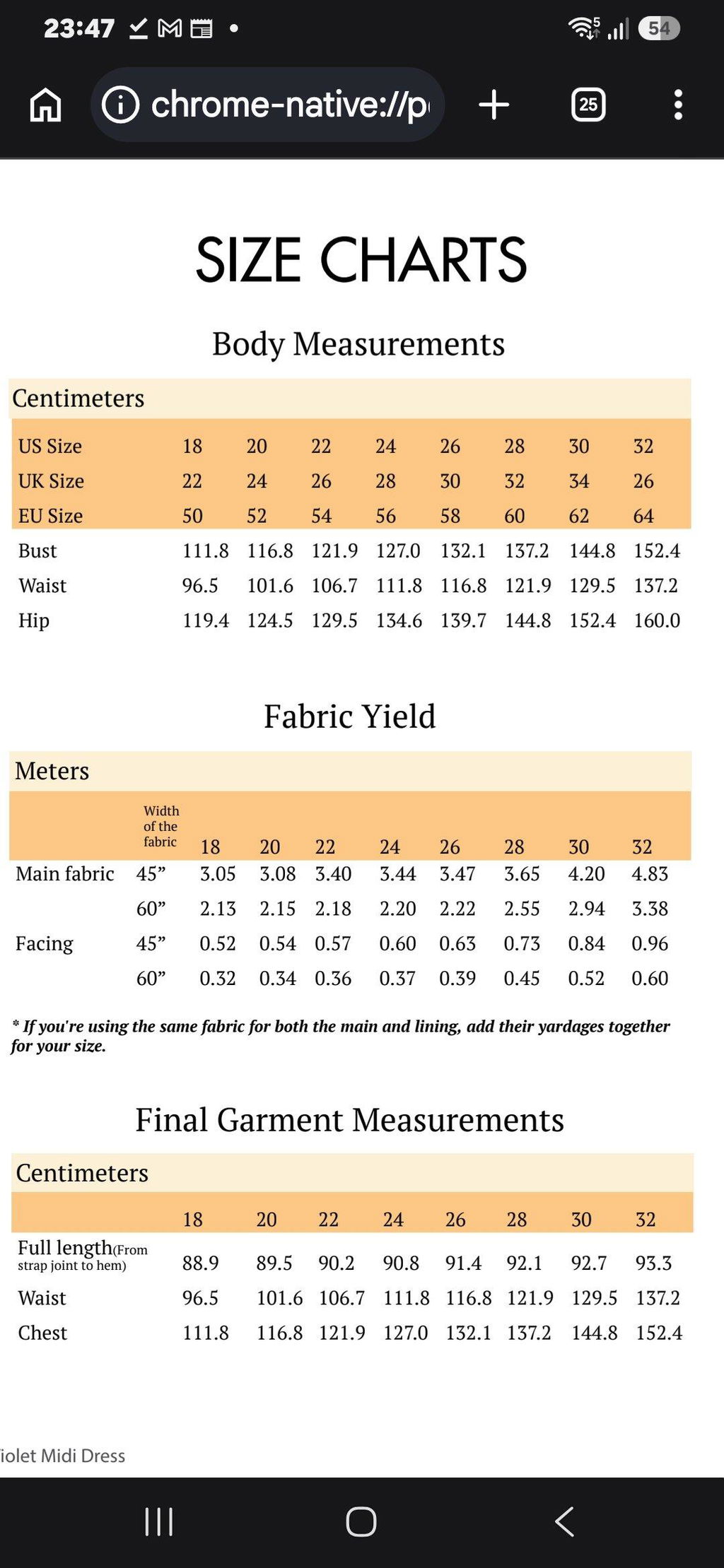
The amount of fabric you need for a garment depends on the size and number of pattern pieces, how efficiently they fit together, and the width of the fabric. A practical way to estimate fabric before buying is to recreate the usable fabric width, arrange your pattern pieces within it, and measure the total length they require.
In this guide, you’ll learn how to estimate fabric requirements from your sewing pattern, account for different fabric widths, arrange pieces efficiently, and calculate fabric for garments with multiple panels. If you’re working with a digital sewing pattern from Winslet's or another pattern, this method can help you understand how the individual pattern pieces translate into actual fabric usage.

What Determines How Much Fabric You Need?
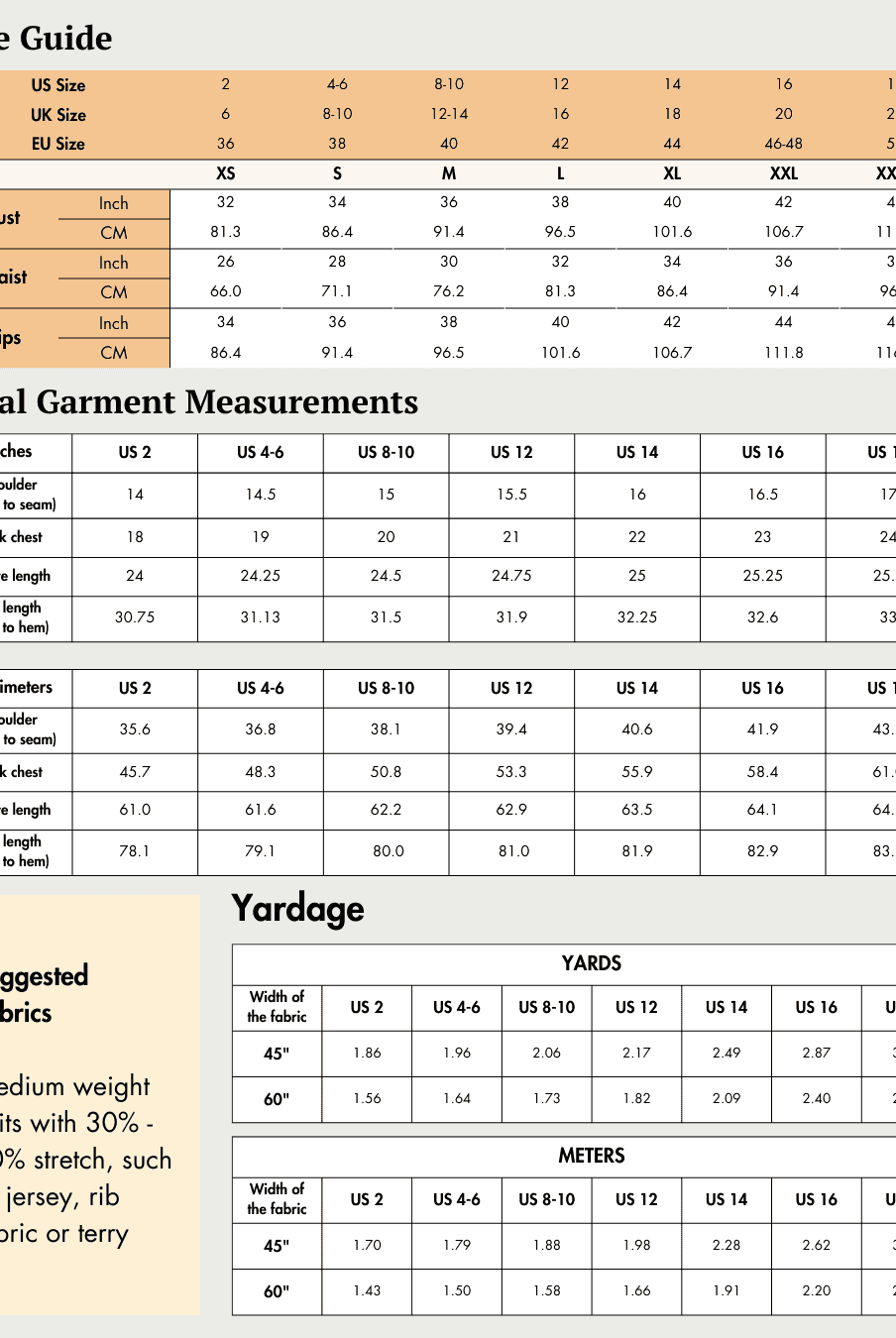
Fabric requirements are determined mainly by the dimensions and arrangement of your pattern pieces within the available fabric width.
Two fabrics with different widths can require very different lengths for exactly the same garment. A wider fabric may allow two pieces to sit alongside one another, while narrower fabric may force them to be arranged one after another.
The number of pieces also matters. A garment can have only a few different pattern pieces but still require several copies of those pieces to complete the garment.
For that reason, estimating fabric is not simply a matter of measuring the overall length of each pattern piece. You need to consider how all the required pieces can actually be arranged within the fabric width.
Does Fabric Width Affect How Much Fabric You Need?
Yes. Fabric width can make a significant difference to the total amount of fabric required.
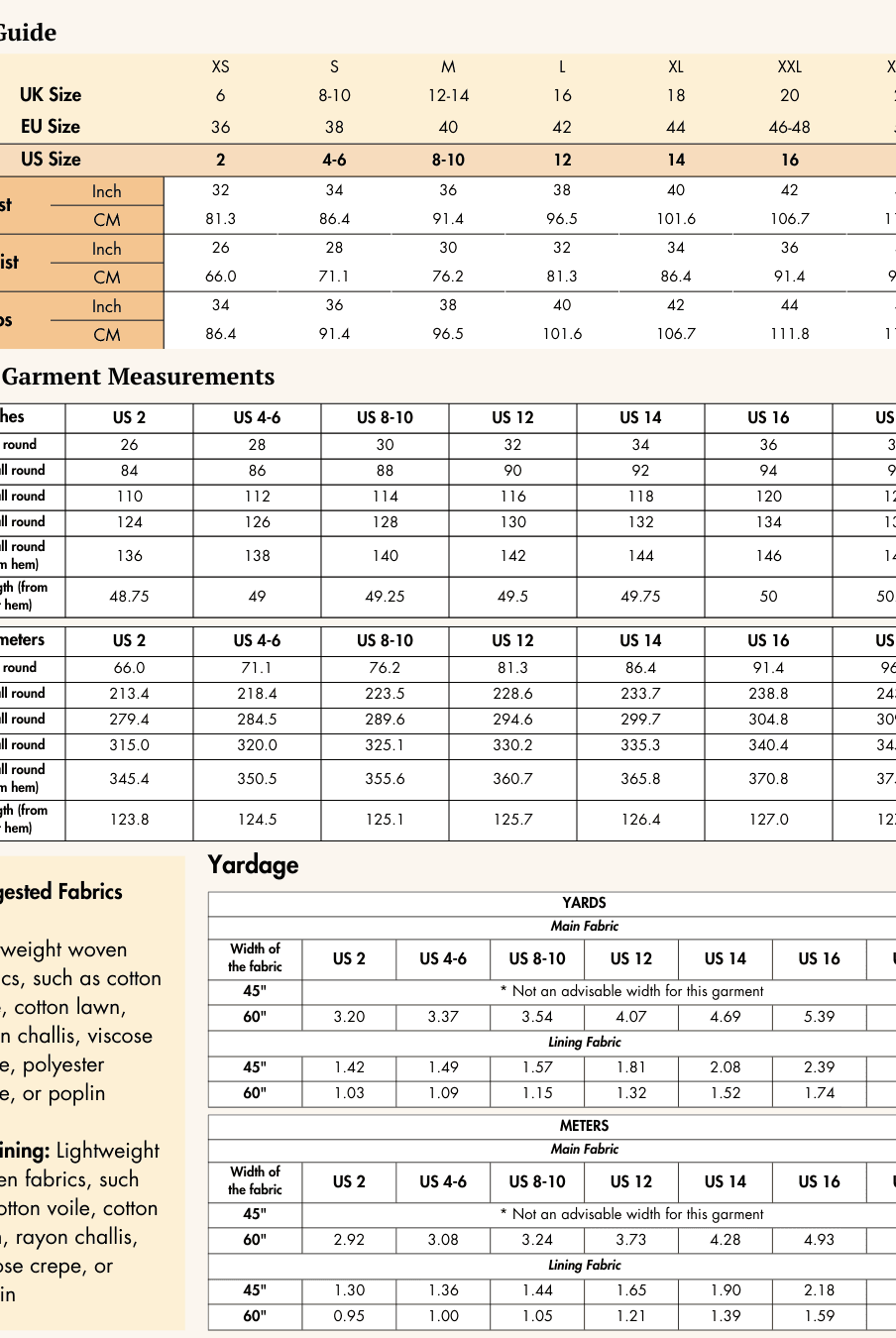
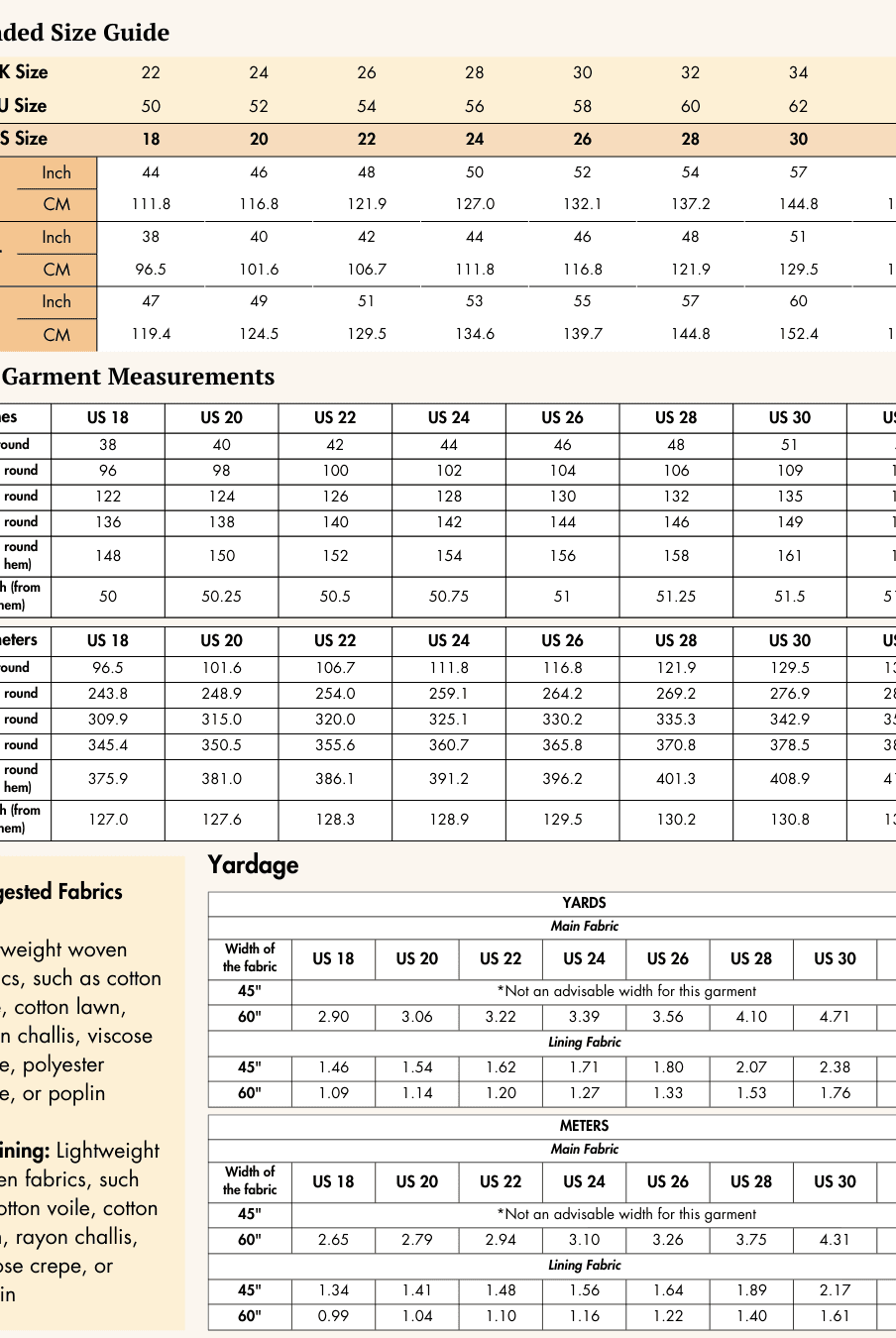
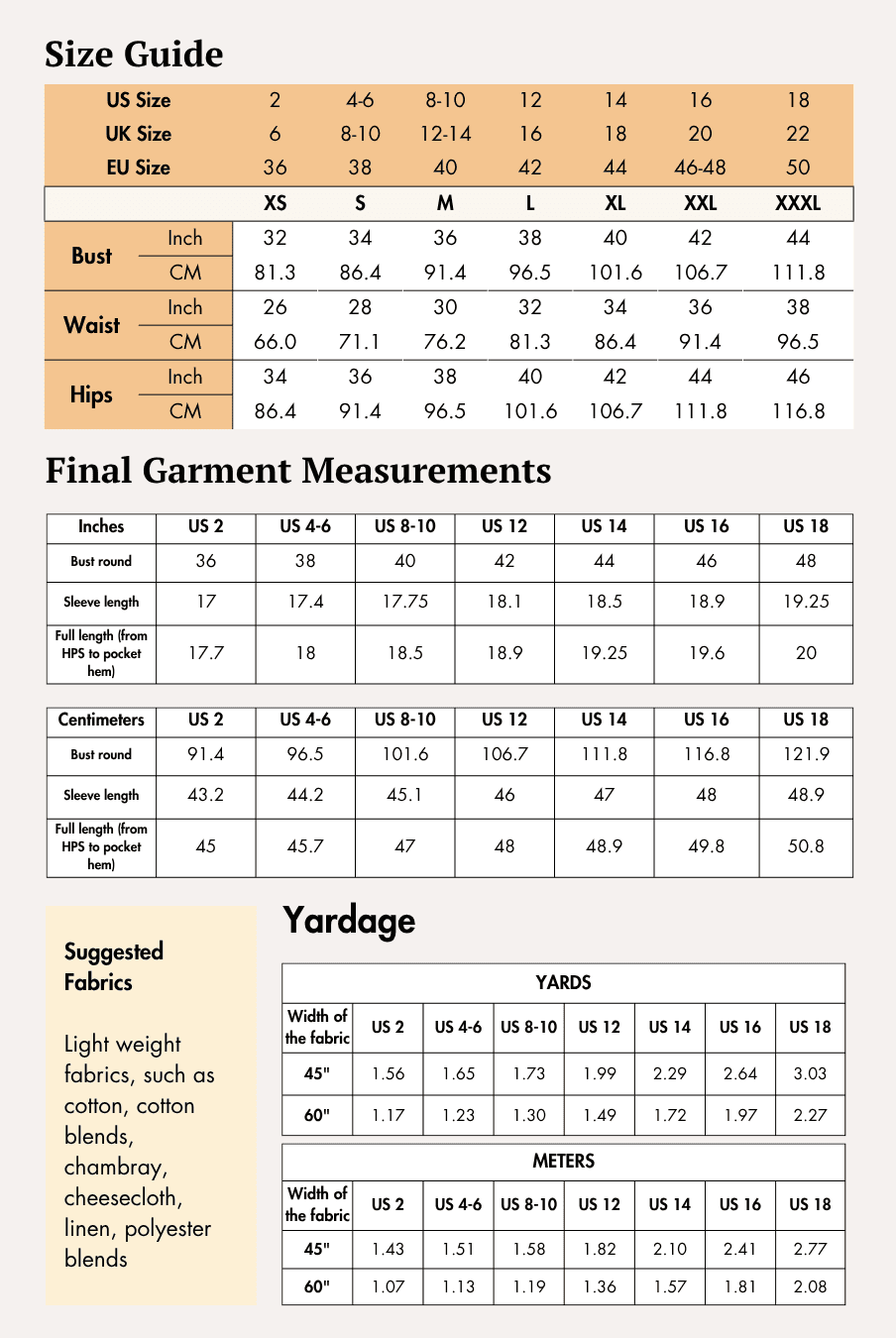
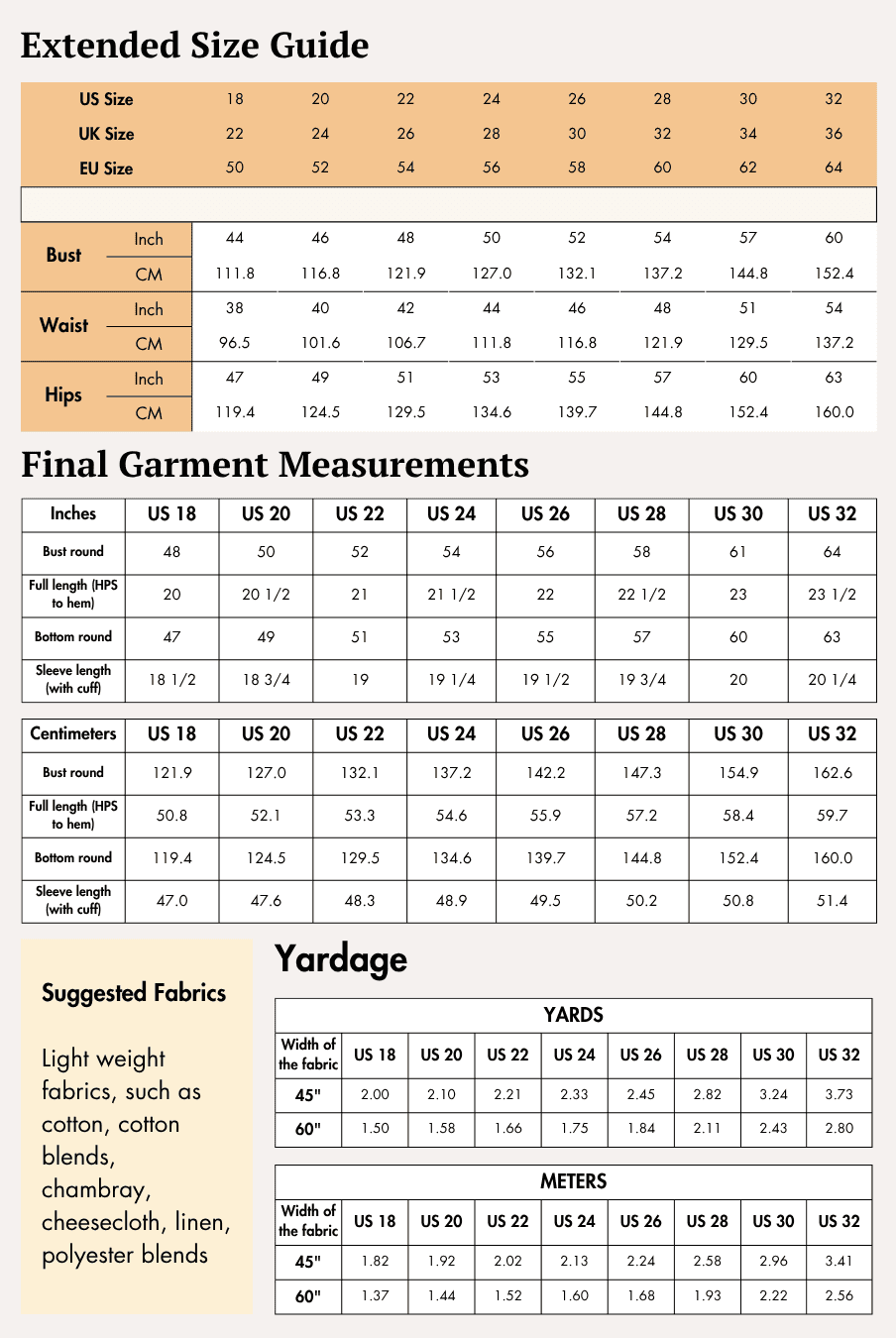
The example uses common fabric widths ranging from approximately 44 inches for narrower fabric to 60 inches for wider fabric.
To demonstrate the calculation, a 55-inch-wide fabric is used. Because the pattern pieces are being considered with the fabric folded, half of that width is:
55 ÷ 2 = 27.5 inches
A 27.5-inch space therefore represents the usable width on each side of the fold for this example.
The wider your fabric, the more opportunities you may have to position pieces efficiently within the same length.
What Do You Need to Estimate Fabric Requirements?
You need your sewing pattern, measuring tools, and enough space to recreate the dimensions of the fabric.
Useful items include:
-
All required pattern pieces
-
Measuring tape
-
Pen and notepad
-
Long ruler or another straight measuring tool
-
A flat surface large enough to arrange the pattern
The demonstration creates a one-meter-long area to make it easier to see how many pattern pieces can fit within each meter of fabric.
You do not need exactly the same tools. A measuring tape and a sufficiently large table can also be used.
How Do You Calculate Fabric Needed From a Sewing Pattern?
The simplest method is to create a mock fabric area at the correct width and arrange all the pattern pieces inside it as efficiently as possible.
Before you start, identify how many times every pattern piece needs to be cut. A small pattern piece may still consume substantial fabric if several copies are required.
Step-by-Step Fabric Estimation Method
-
Find the width of the fabric you plan to use.
Your layout needs to represent the actual width available. -
Create a measured fabric area.
Mark out the correct width on a table or floor and use one-meter sections to help measure the length. -
Prepare all the pattern pieces.
Lay them flat so their dimensions can be assessed accurately. -
Position the first pattern piece.
Place it within your imaginary fabric width while keeping its grainline correctly oriented in relation to the selvage. -
Add the remaining pieces.
Try to fit as many required pieces as possible within the same length of fabric. -
Measure large pattern pieces when necessary.
Check both their length and widest point to understand how much space they consume. -
Account for every copy required.
If a piece must be cut twice or several times, make sure the layout provides enough room for all copies. -
Use smaller spaces efficiently.
Smaller pieces such as pockets or waistbands may fit beside or around larger pieces. -
Record each section of fabric used.
Keep notes as you progress rather than relying on memory. -
Add the sections together.
The total length gives you an estimate of the fabric required for the garment.
Why Should You Arrange the Pattern Pieces Before Calculating?
Arranging the pieces shows how much fabric the garment actually consumes rather than relying on pattern-piece dimensions alone.
Suppose two pieces are each less than one meter long. That does not automatically mean they require two meters of fabric. If the fabric is wide enough, you may be able to position them within the same one-meter section.
The goal is therefore to maximize the usable fabric width while maintaining the correct pattern-piece orientation.
This is particularly important when several narrow or irregularly shaped pieces can fit into spaces beside larger pieces.
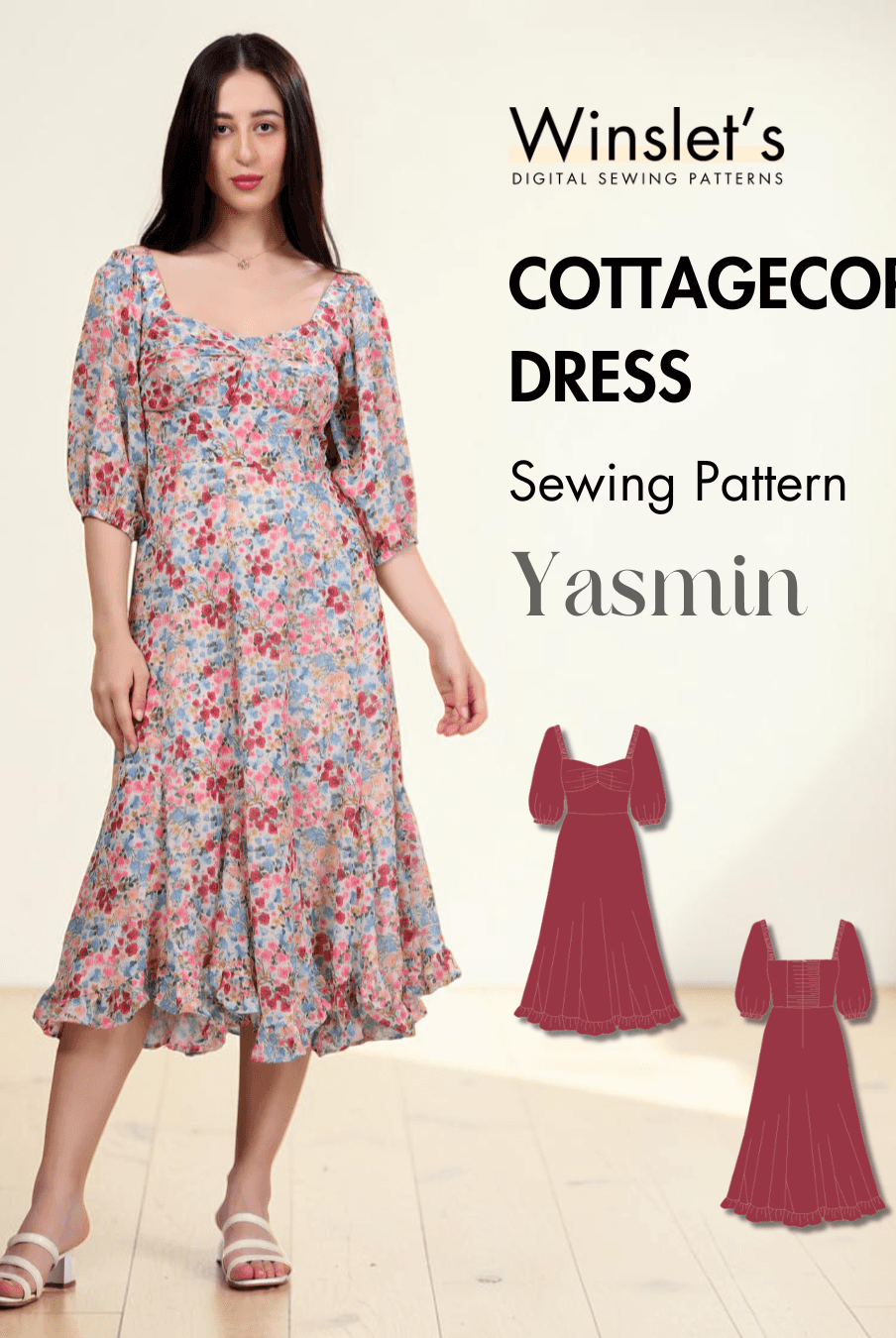
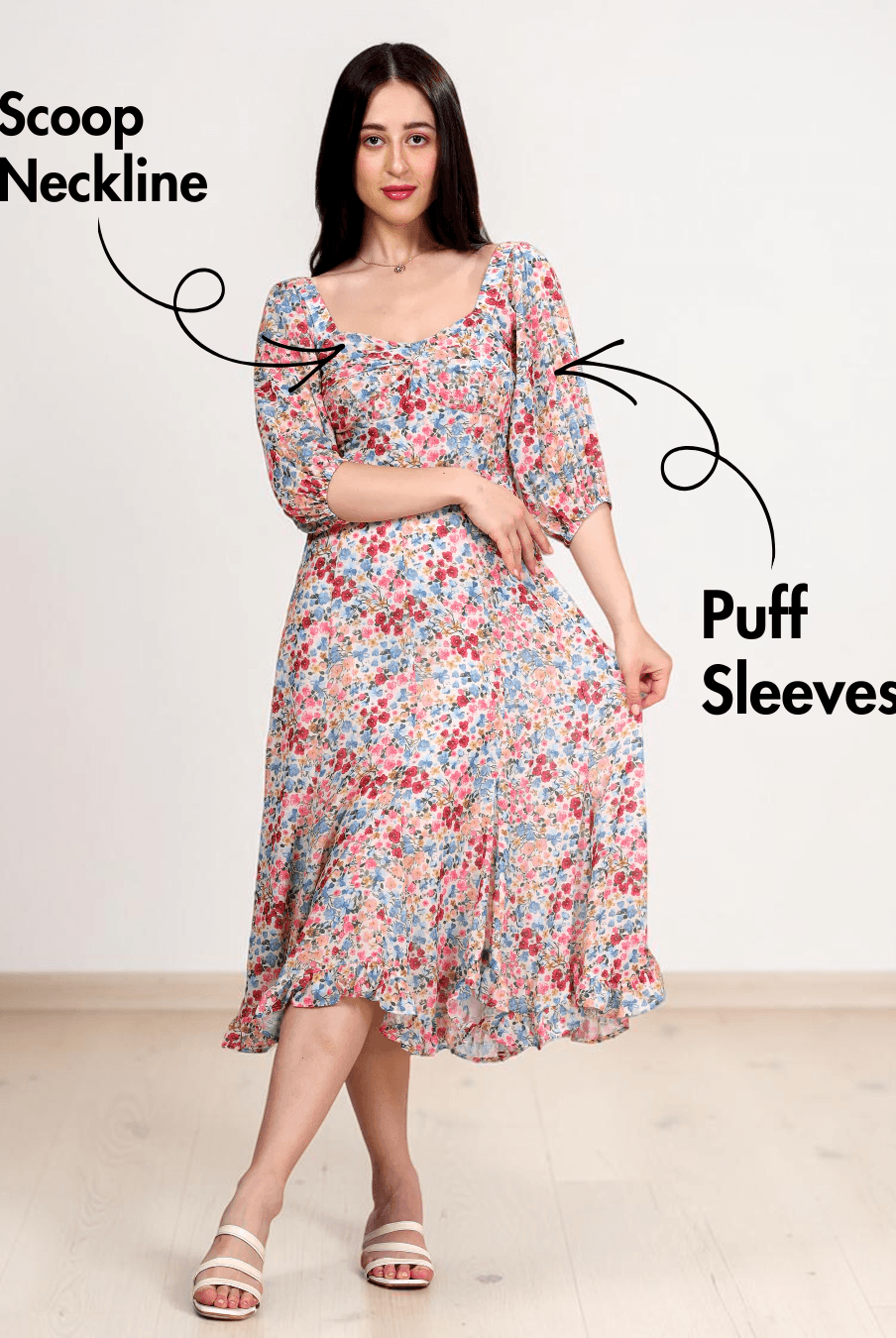
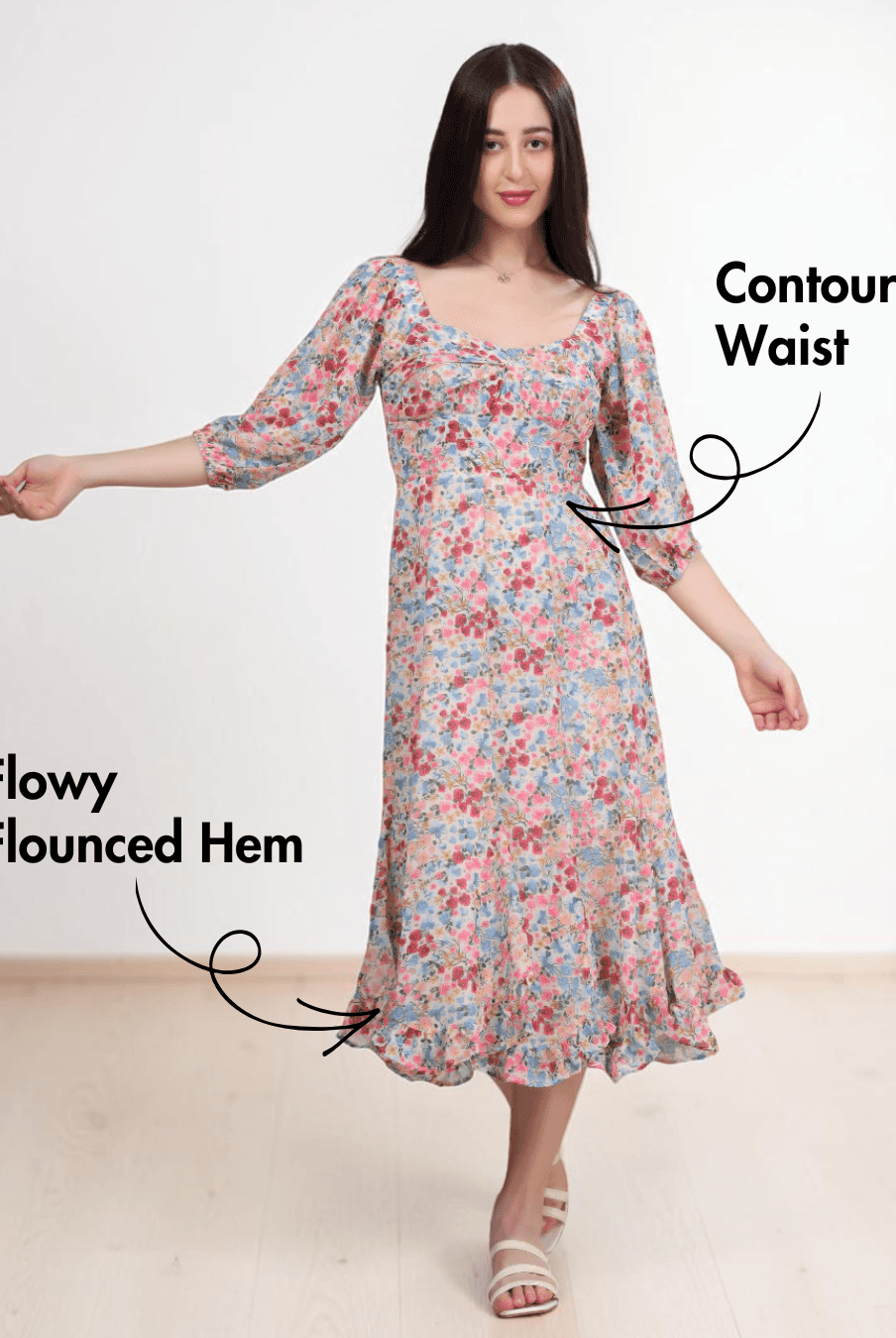
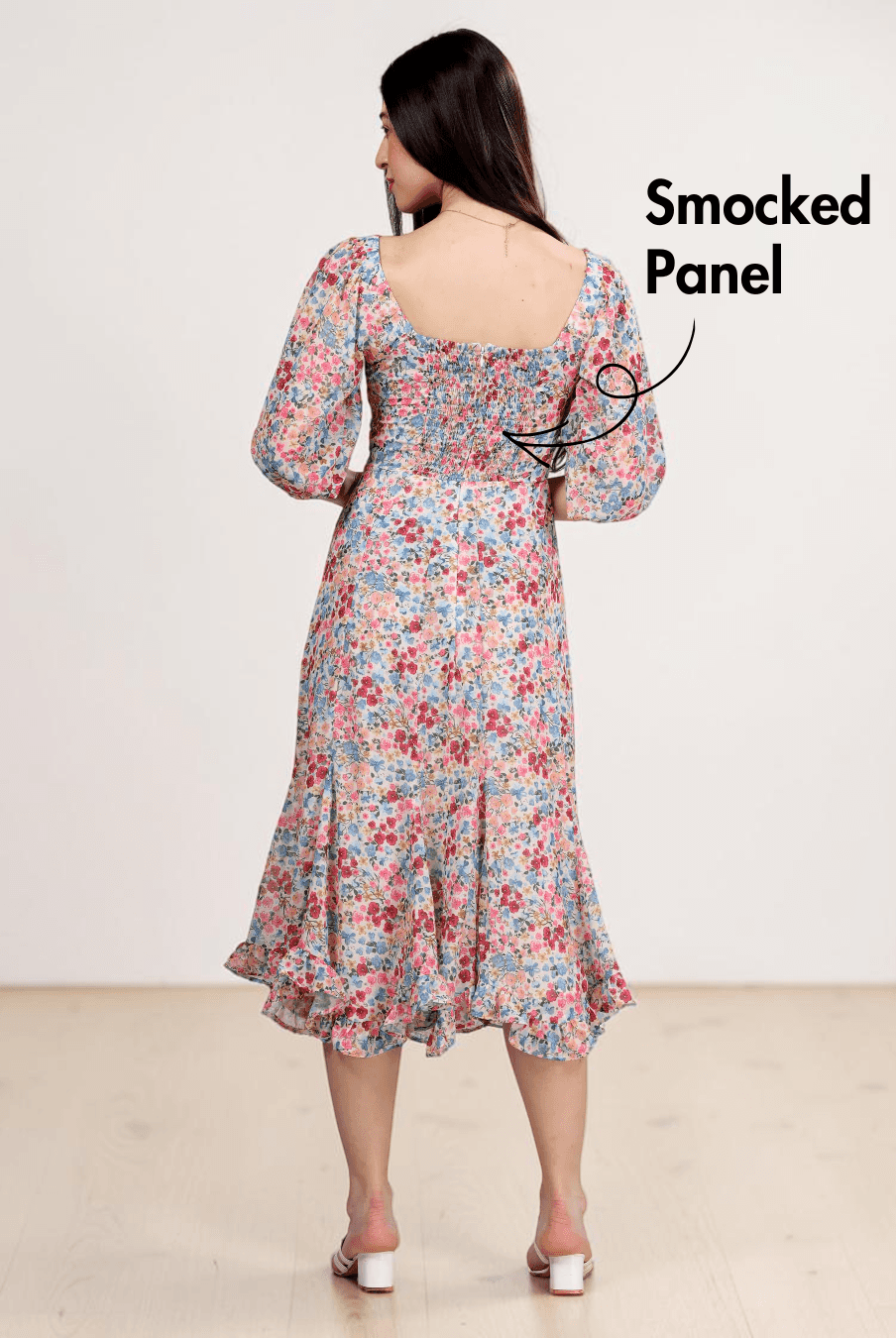
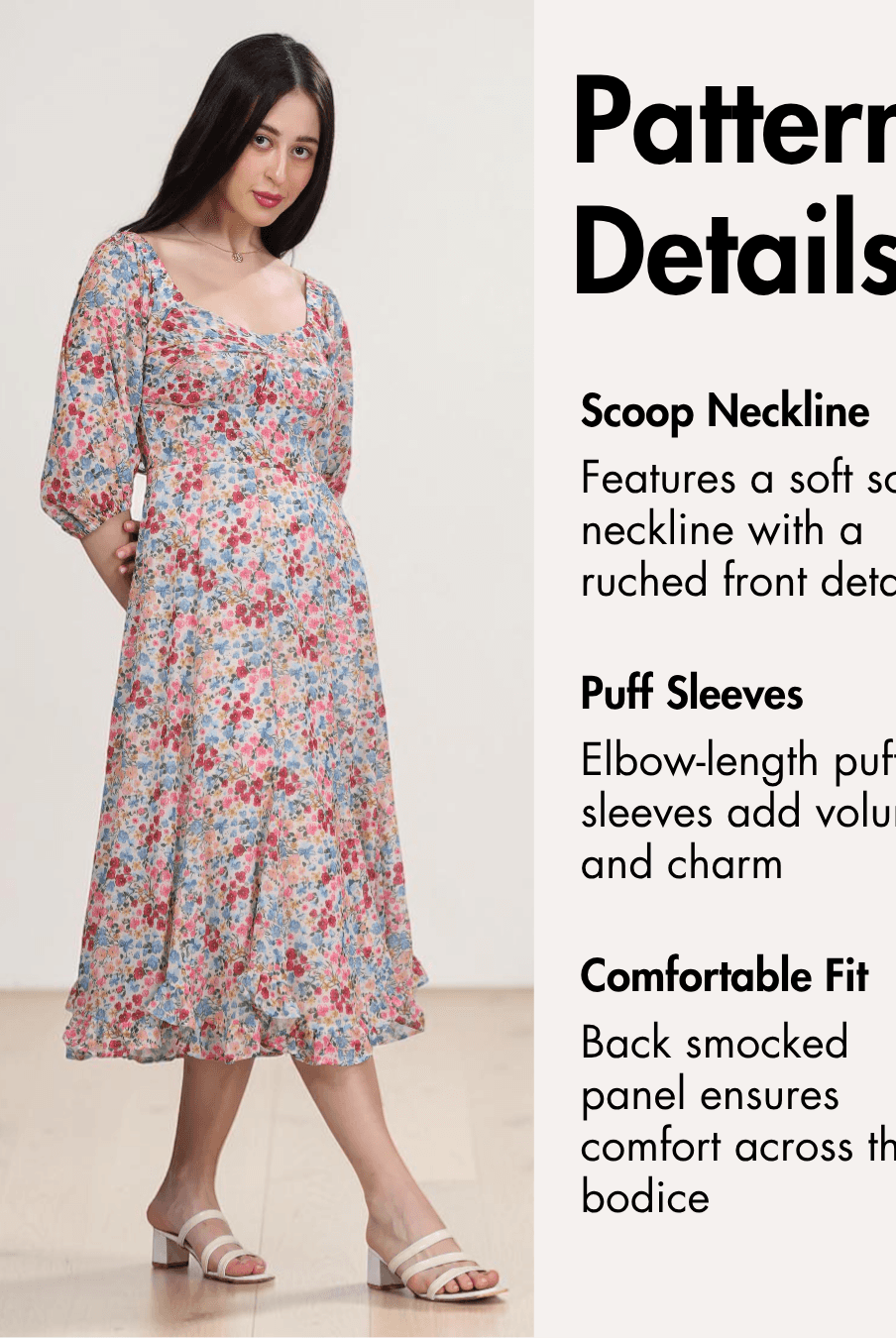
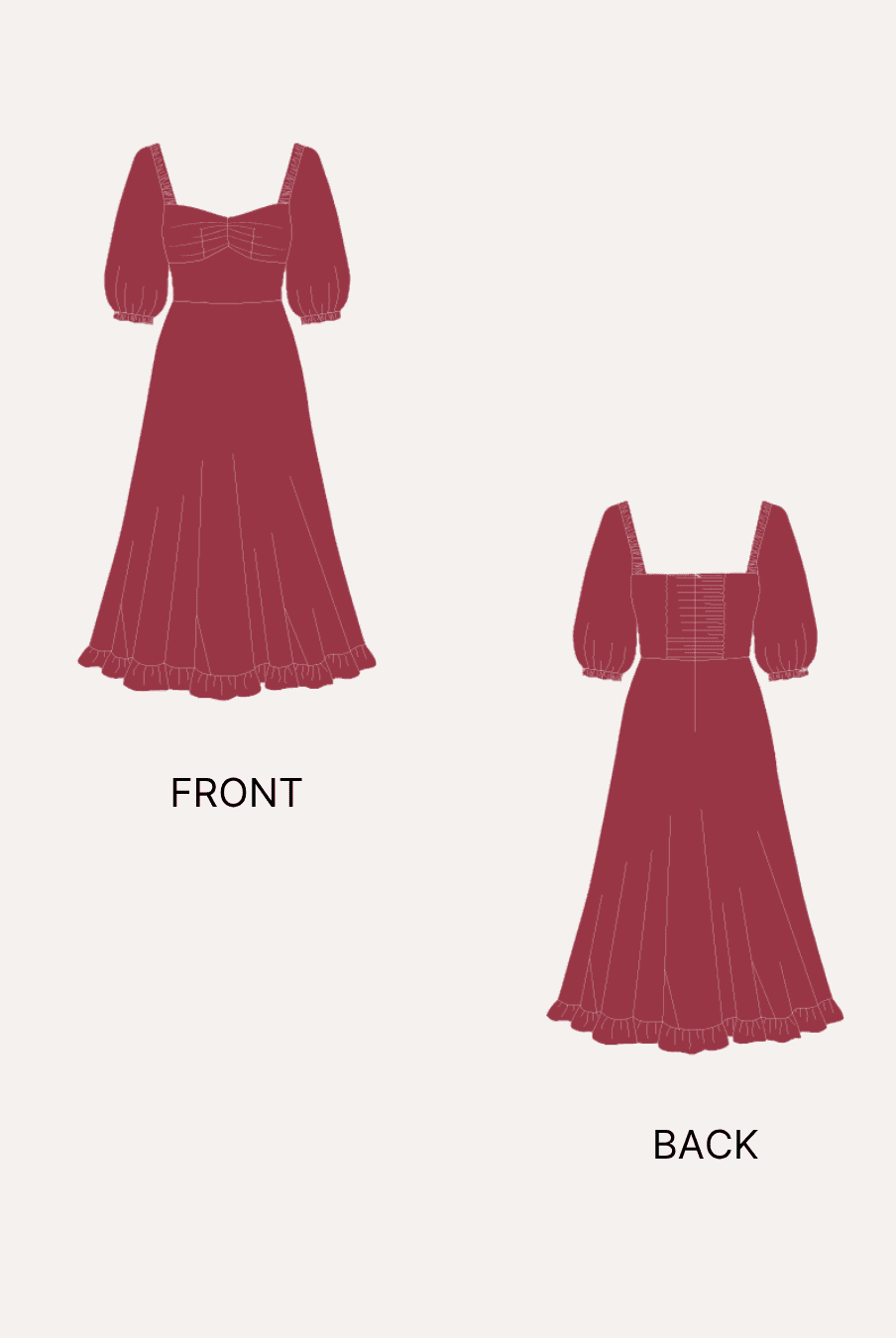
How Does the Method Work for a Dress?
For a dress, calculate the major sections separately and then combine their fabric requirements.
In the dress example, the front skirt and upper section can be accommodated within approximately one meter of the imaginary 55-inch-wide fabric.
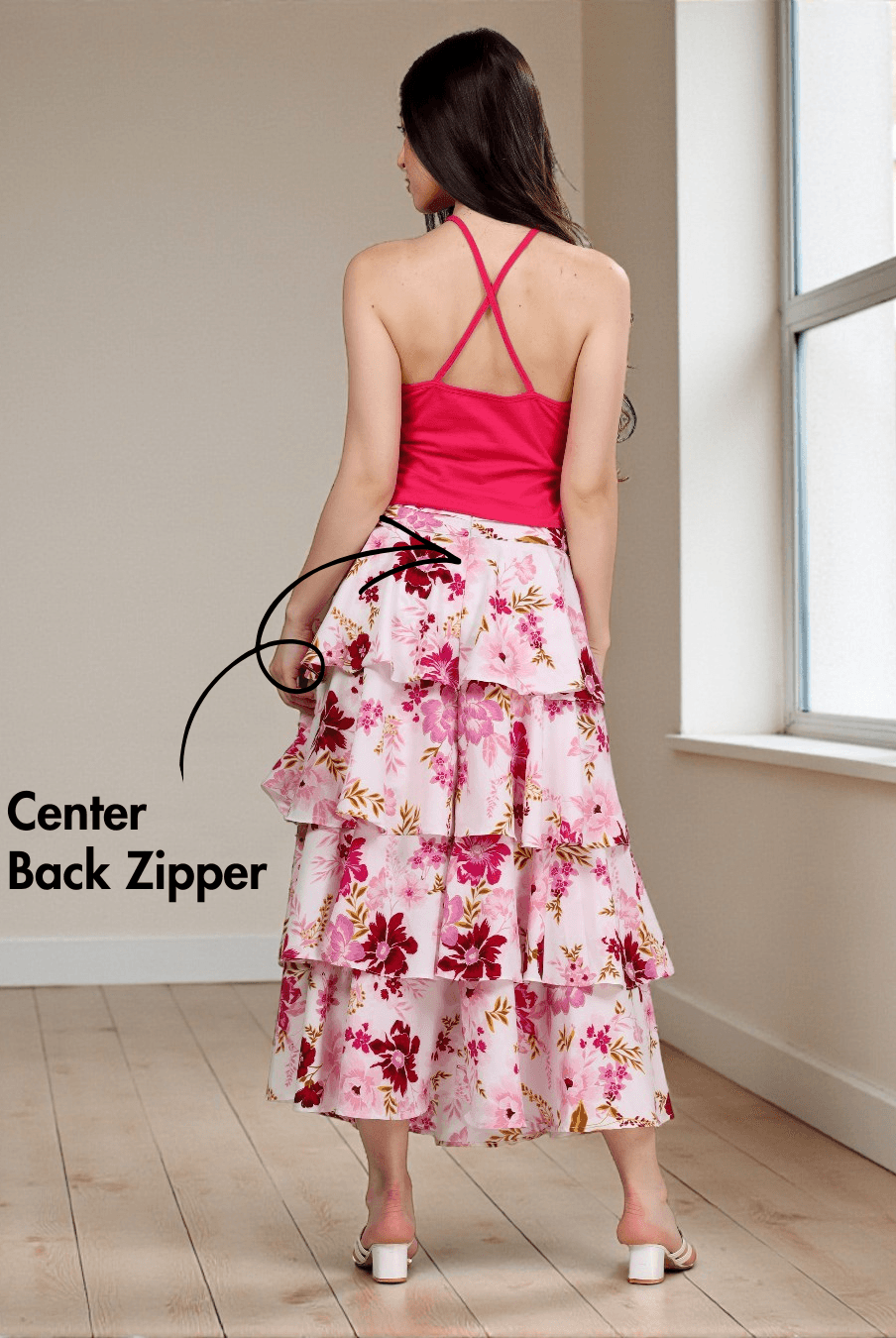
The back requires additional fabric, including consideration for the center-back zipper allowance.
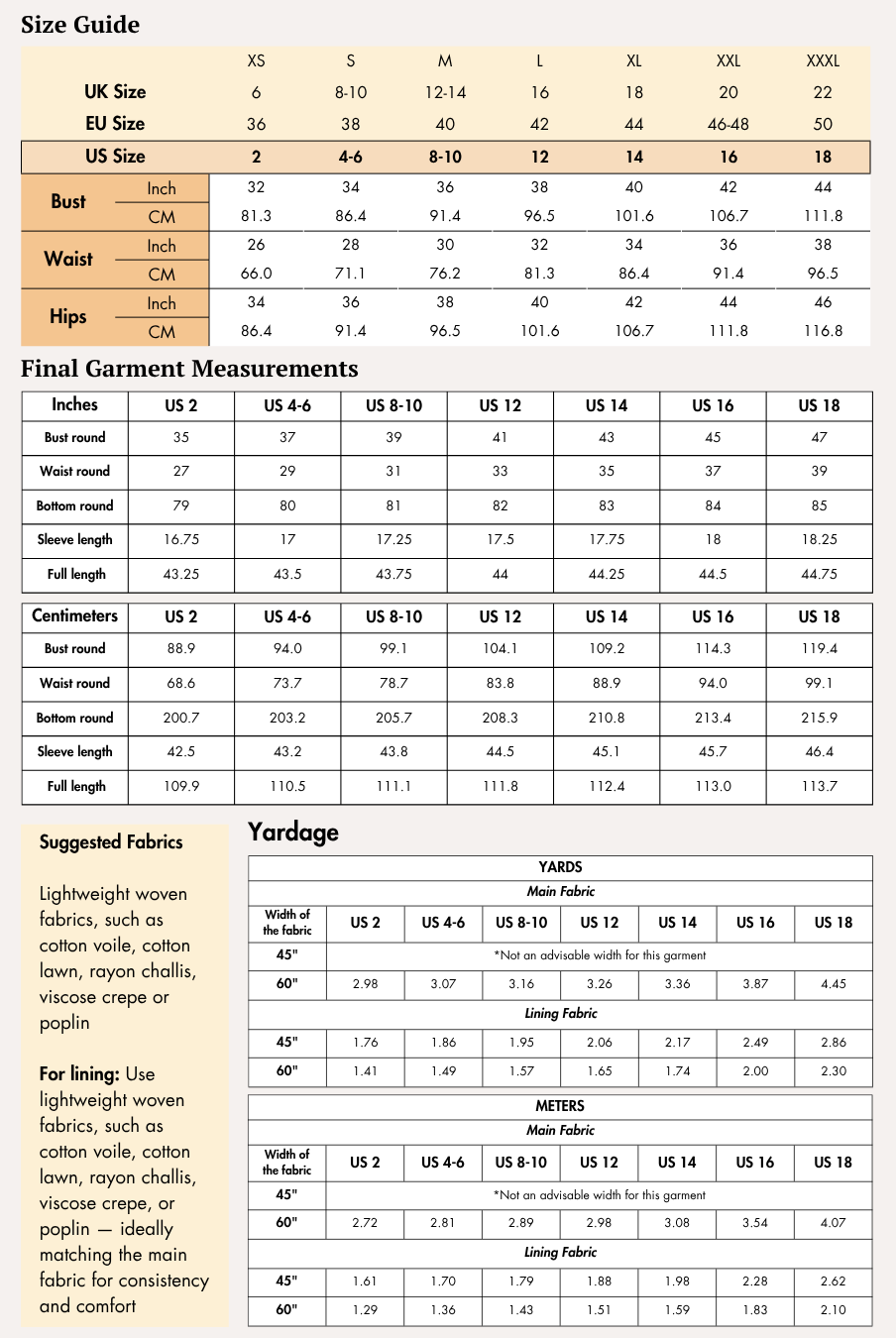
Together, the main dress pieces are estimated at approximately 1.5 to 2 meters of fabric.
The example then uses the same amount for the dress lining.
These measurements are specific to the demonstrated dress pattern. They should not be treated as a standard fabric requirement for every dress.
Your own dress may require more or less depending on its pattern pieces and the width of your fabric.
If you'd like to see the layout method demonstrated visually, you can watch the video below.
How Do You Calculate Fabric for a Multi-Panel Garment?
For a multi-panel garment, calculate how many copies of each panel can fit within the available width and repeat the layout until you have accounted for every required piece.
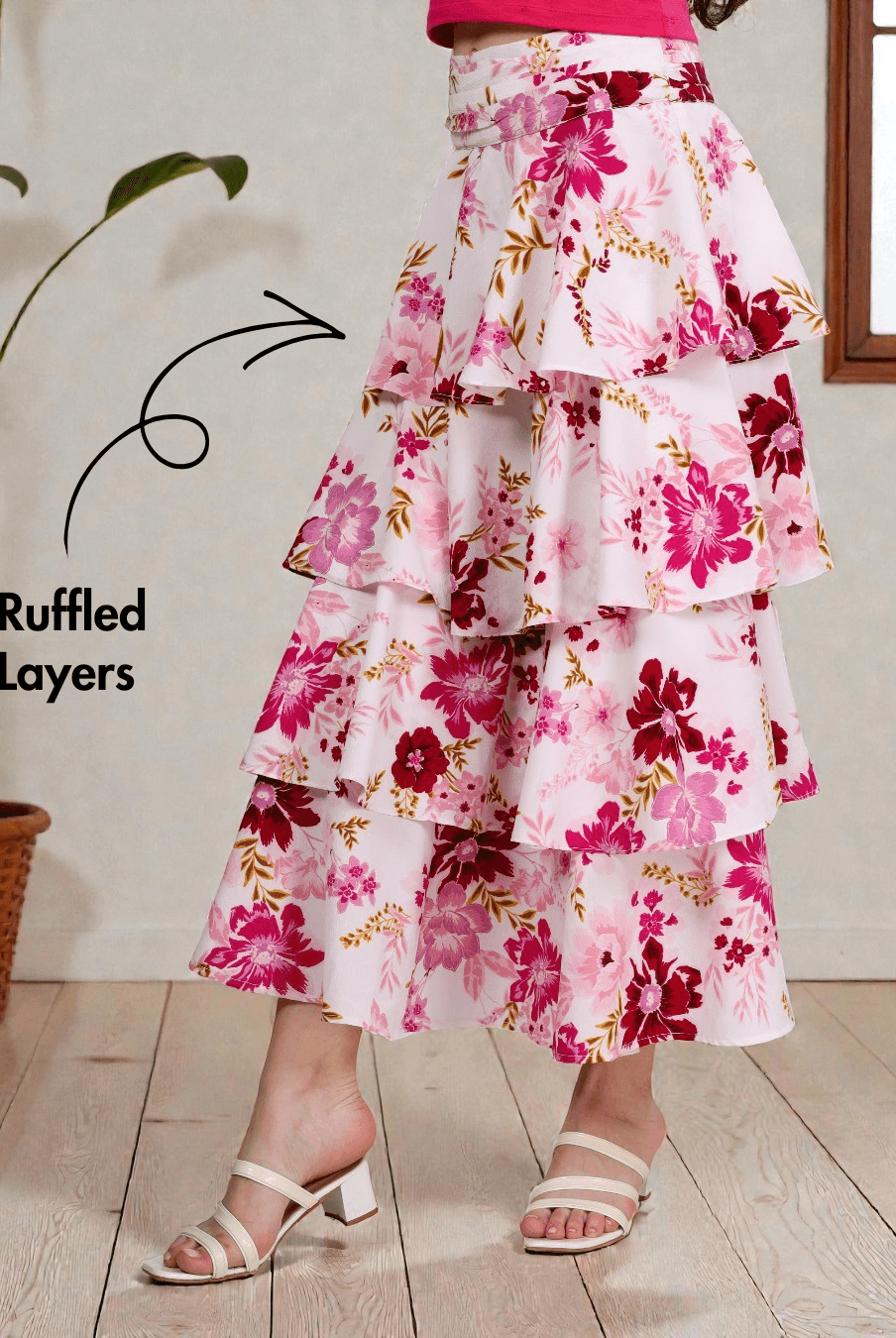
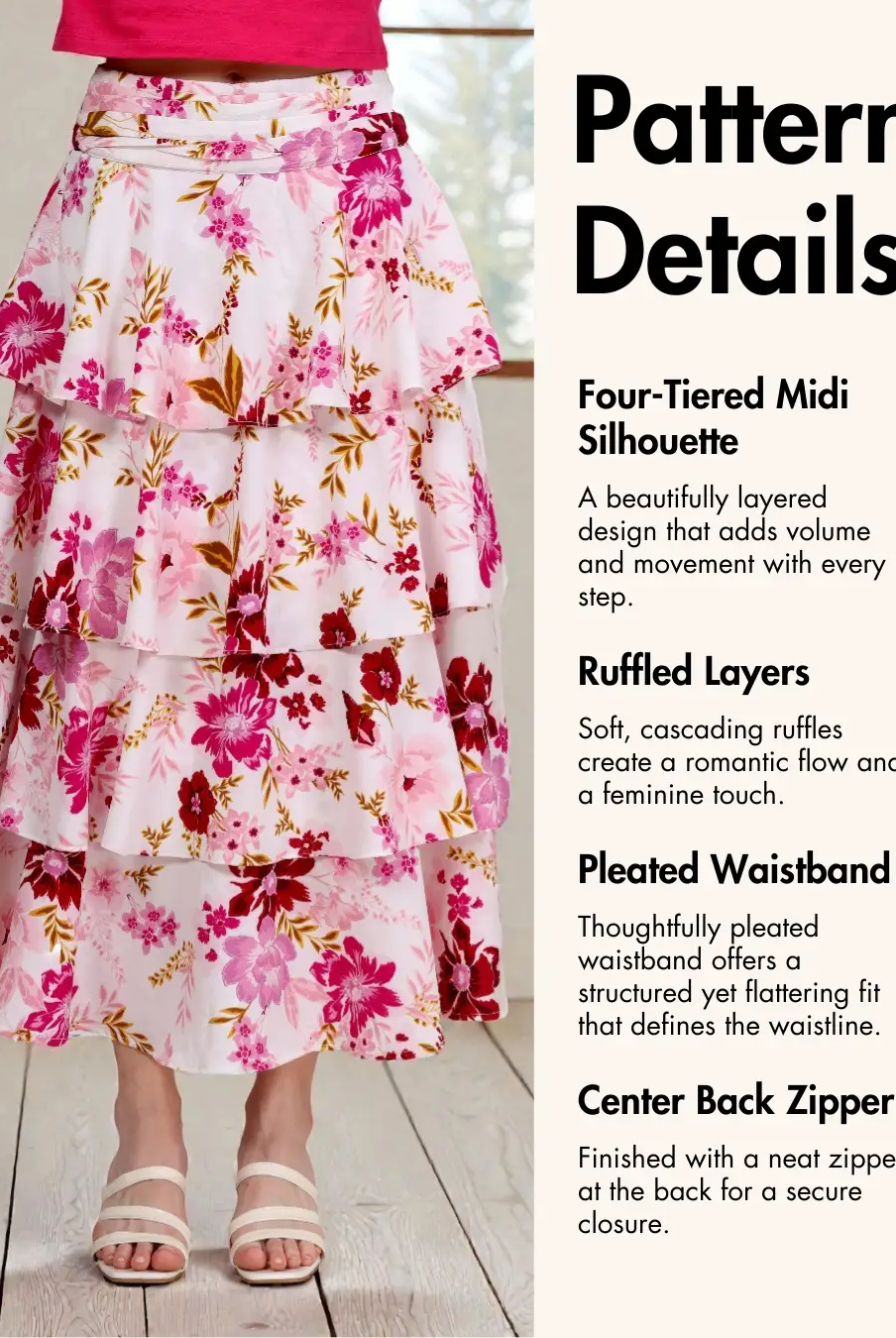
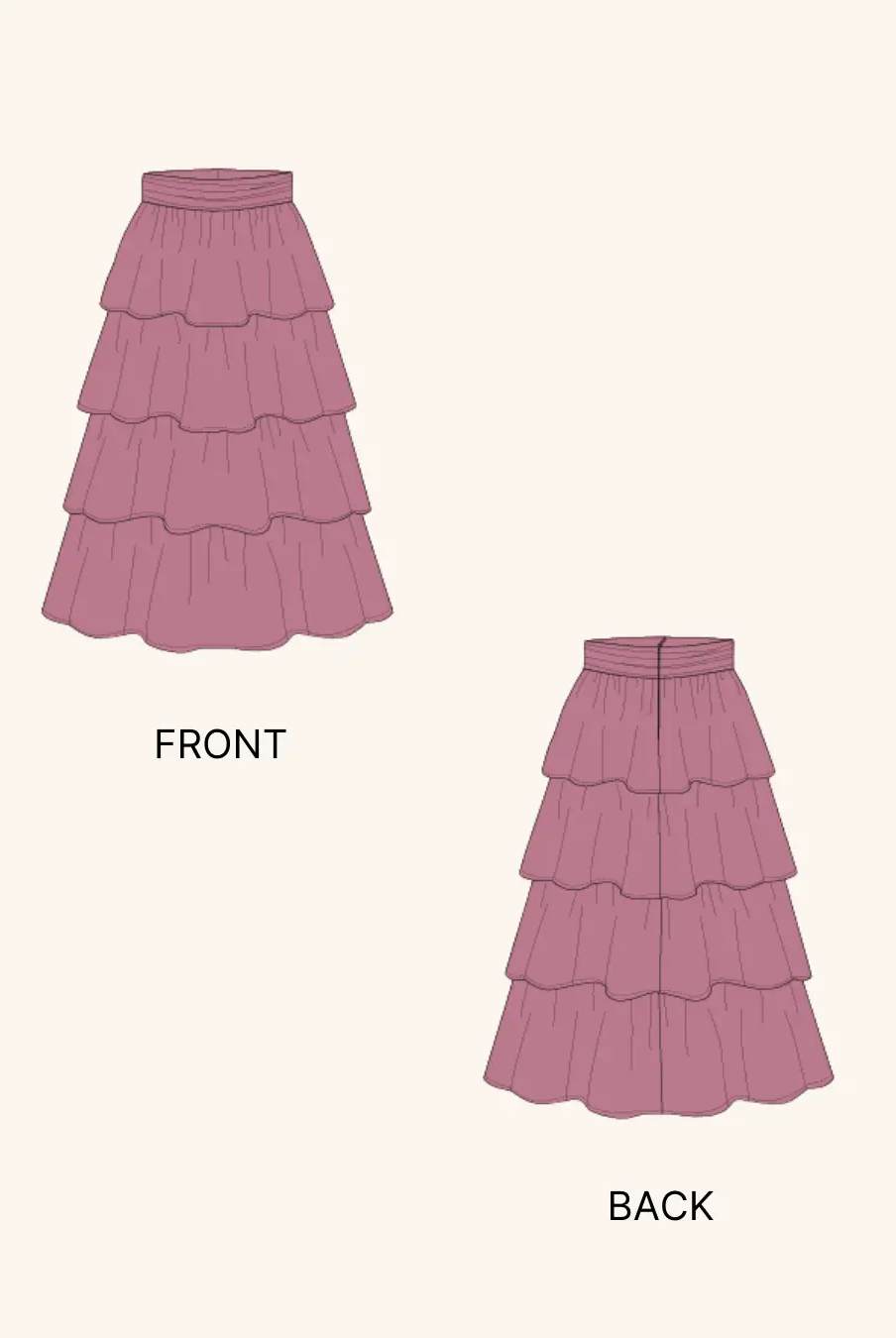
This is particularly important for garments such as paneled skirts. A pattern may appear to contain only a few different pattern pieces while the finished garment actually requires many cut sections.
Estimating Fabric for Multiple Panels
-
Place the main panel within your measured fabric area.
-
Check whether another copy can fit alongside or opposite it.
-
Repeat until you have accounted for every required panel.
-
Measure and include smaller pieces such as pockets.
-
Include waistband pieces in the layout.
-
Add the total fabric length used by all sections.
The fabric width can dramatically change the result.
In the maxi-skirt example, fabric wider than 55 inches is estimated to require approximately 2.5 meters. Narrower fabric around 40–44 inches is estimated to require approximately 4–4.5 meters.
That difference occurs because fewer pattern pieces can fit within each section of narrow fabric.
Again, these quantities apply to the specific skirt pattern being demonstrated, not to maxi skirts generally.
Why Can Wider Fabric Reduce the Length You Need?
Wider fabric can allow more pattern pieces to fit across the width, reducing how many sections of fabric are required.
For example, a skirt panel may be positioned so that two required pieces fit within a single meter of wider fabric. On narrow fabric, only one may fit within that same length.
This effect becomes especially noticeable with:
-
Large skirt panels
-
Multiple repeated panels
-
Wider garment sections
-
Projects containing several pattern pieces
However, you still need to test the actual layout. Fabric width alone does not tell you the final quantity.
How Should You Handle Pockets and Waistbands?
Fit smaller pattern pieces into available spaces whenever their required orientation and dimensions allow it.
Pockets and waistbands may require less fabric than the main garment panels, so they can sometimes be accommodated within leftover sections.
In the maxi-skirt example, the waistband and pocket pieces are estimated to use approximately another half meter of fabric.
Remember to account for quantity. If a pocket pattern needs to be cut multiple times, every required copy must be included in your estimate.
Why Is the Grainline Important When Estimating Fabric?
The pattern pieces should be positioned according to their grainline rather than rotated simply to make them fit.
When creating your mock layout, align the grainline with the direction of the selvage as required by the pattern.
This matters because an unrealistically compact layout is not useful if you could not actually cut the pattern pieces that way from the real fabric.
Your estimate should imitate the intended cutting arrangement as closely as possible.
Can You Calculate Fabric Without a One-Meter Ruler?
Yes. A measuring tape can be used to create the same measured layout.
The one-meter ruler and paper tube in the demonstration are simply guides for visualizing a meter of fabric.
If you have a long, wide table, you can measure the required fabric width directly on the table and use a tape measure to track the length.
The important part is accurate measurement, not the particular tools used.
Common Mistakes When Estimating Fabric
The most common errors come from ignoring fabric width or failing to account for every copy of every pattern piece.
Measuring Pieces Without Creating a Layout
Knowing the length and width of each piece is helpful, but the layout shows whether several pieces can share the same section of fabric.
Ignoring Fabric Width
A fabric requirement calculated using a 55-inch-wide layout may not work for a 44-inch-wide fabric.
Recalculate when the fabric width changes significantly.
Forgetting Repeated Pattern Pieces
A multi-panel skirt may contain relatively few unique pattern pieces but require many actual cut pieces.
Check every “cut” quantity before calculating.
Rotating Pieces Only to Save Space
Keep the grainline correctly aligned with the selvage. Do not turn pattern pieces into an orientation that would not be appropriate when cutting the actual fabric.
Forgetting Smaller Pieces
Waistbands and pockets still consume fabric. Include them even when they appear small compared with the main garment pieces.
Plan Your Fabric Before You Buy
The most reliable way to estimate how much fabric you need is to work from the actual sewing pattern. Recreate the fabric width, arrange every required pattern piece, keep the grainlines correctly oriented, and calculate how much length the complete layout occupies.
Most importantly, check the width of the fabric you intend to buy. The same garment can require substantially more length when cut from narrow fabric than from wider fabric.
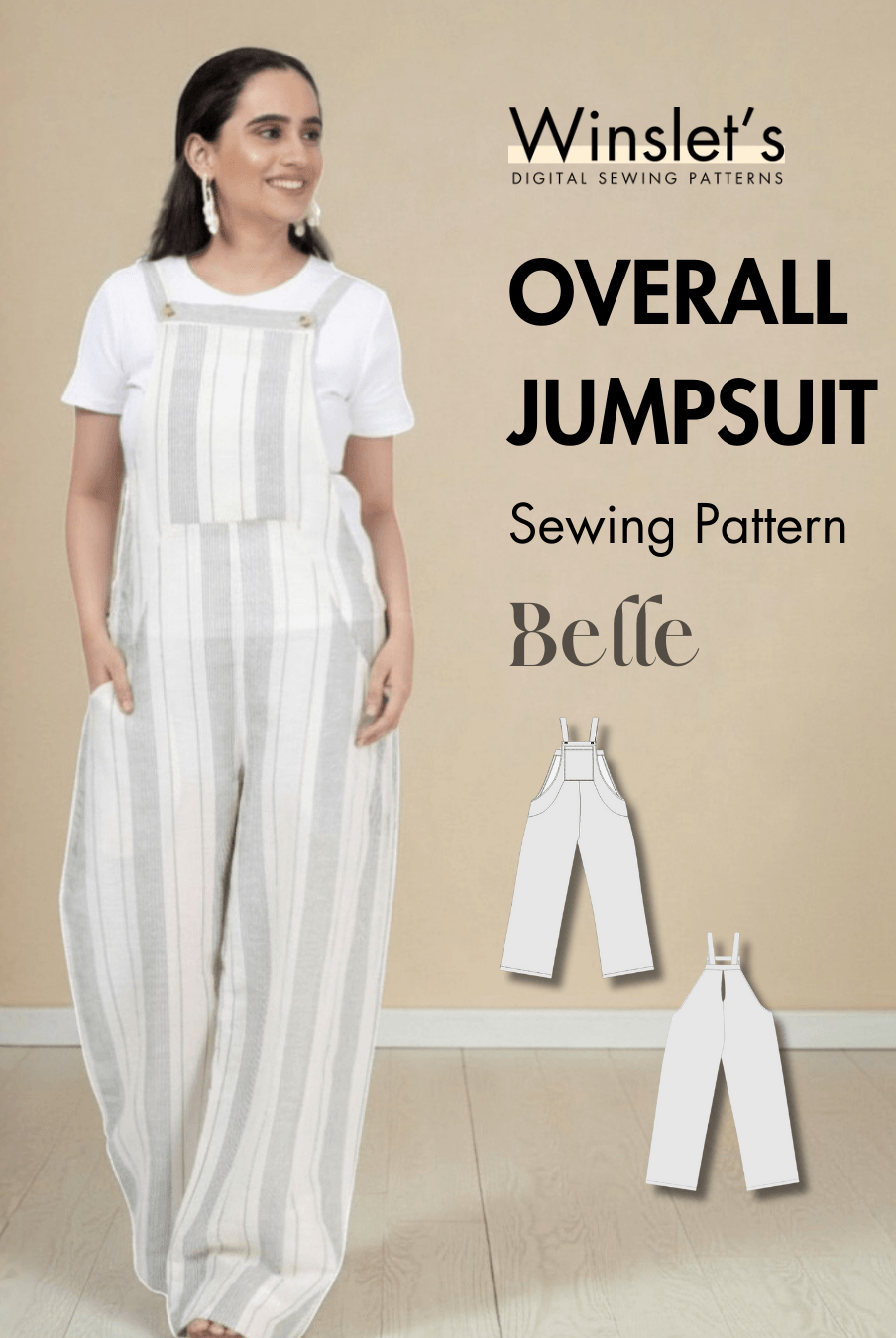
When planning your next project, explore Winslet's sewing patterns and use the individual pattern information together with the width of your chosen fabric to plan your project before cutting.
FAQs
How do I know how much fabric to buy for a sewing pattern?
Recreate the usable fabric width, arrange all required pattern pieces within it while maintaining their correct grainline, and measure the total length occupied by the layout.
Does wider fabric mean I need less fabric?
It can. Wider fabric may allow more pieces to fit beside each other, reducing the total length required.
How much fabric do I need for a dress?
There is no single quantity for every dress. The example discussed uses approximately 1.5–2 meters for the main dress, but that figure applies only to that particular pattern and layout.
How much fabric do I need for a maxi skirt?
It depends heavily on the pattern and fabric width. In the specific multi-panel skirt example, fabric wider than 55 inches requires approximately 2.5 meters, while 40–44-inch fabric requires approximately 4–4.5 meters.
Do I need to include pockets and waistbands in my calculation?
Yes. Include every piece that will be cut from the fabric, including pockets, waistbands, and repeated panels.
Can I estimate fabric using a measuring tape?
Yes. A measuring tape can be used to create the correct width and measure the total length of your mock layout.
Should I keep the grainline correct when testing the layout?
Yes. Keep each pattern piece aligned according to its grainline so the estimate reflects how you will actually cut the garment.