To lengthen or shorten a skirt pattern, make the adjustment at a lengthen/shorten line that runs perpendicular to the grainline or fold line, rather than changing the pattern randomly. For shortening, overlap the cut sections; for lengthening, spread them apart over extra paper while keeping the grainline aligned.
In this guide, you’ll learn how to create an adjustment line if your pattern does not already include one, shorten a skirt pattern, lengthen it with extra paper, and smooth the side seams afterward. These techniques can also be useful when adjusting skirt-based sewing patterns from Winslet's before cutting your fabric.

What Does Lengthening or Shortening a Skirt Pattern Mean?
Lengthening or shortening a skirt pattern changes the vertical length of the skirt before the fabric is cut.
The adjustment is made through the pattern itself using a horizontal lengthen/shorten line. The pattern is cut along this line and either overlapped to remove length or spread apart to add length.
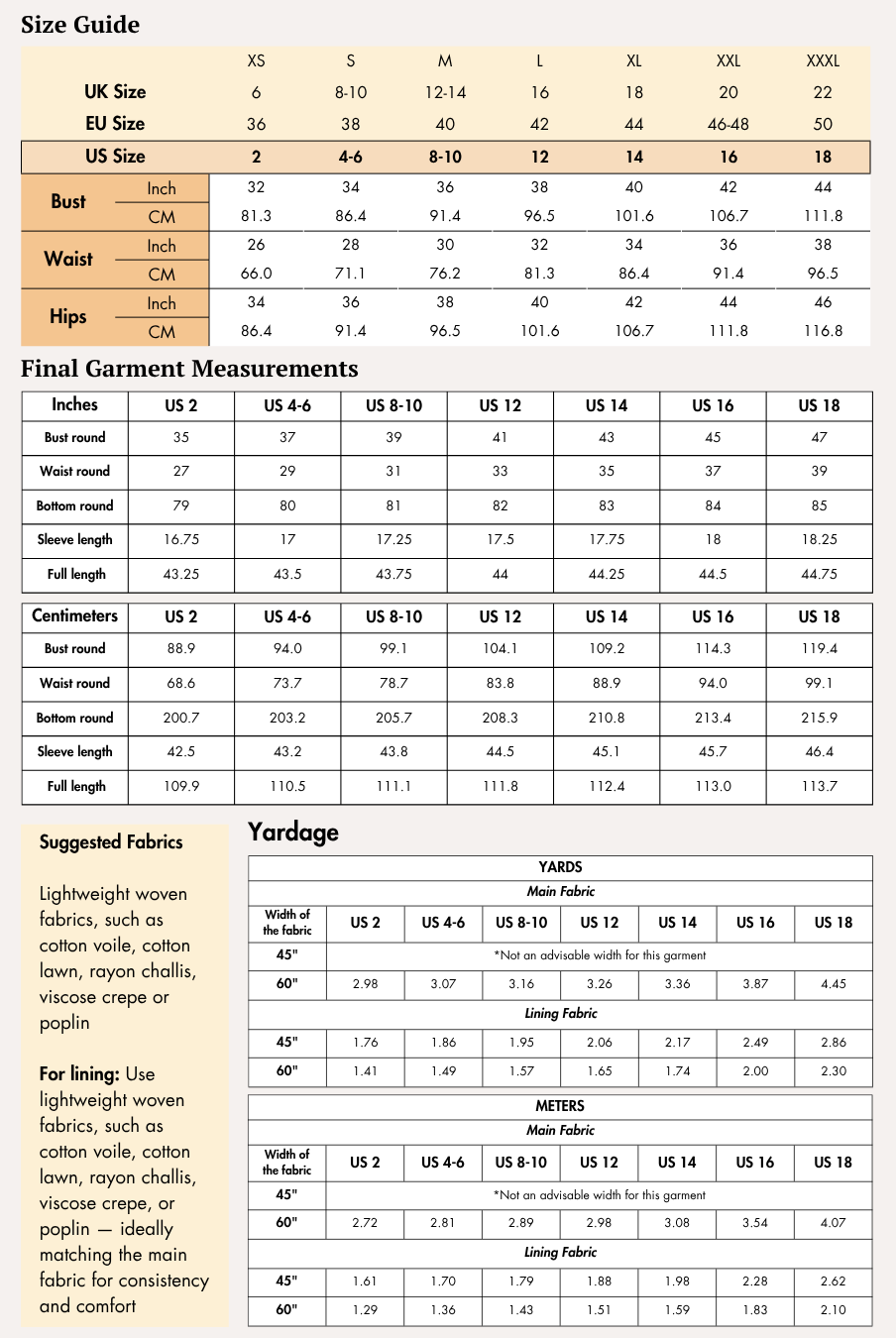
The amount you add or remove depends on the individual pattern, your measurements, and your preferred finished length.
Where Should You Lengthen or Shorten a Skirt Pattern?
Use the pattern's marked lengthen/shorten line when one is provided. If there is no adjustment line, draw your own line perpendicular to the grainline or fold line.
A perpendicular line keeps the adjustment square to the vertical direction of the pattern.
Once the line is marked, cut completely across it before moving the sections.
How Do You Decide How Much Length to Add or Remove?
The amount depends on the pattern, your measurements, and how long you want the finished skirt to be.
One practical way to determine your preferred length is to compare the sewing pattern with a similar garment whose length you already like. The adjustment itself stays the same whether you are removing a small amount or adding extra length; what changes is the distance between the pattern sections.
How to Shorten a Skirt Pattern
To shorten a skirt pattern, cut across the lengthen/shorten line and overlap the two sections by the amount you want to remove.
Step-by-Step: Shortening a Skirt
-
Locate the lengthen/shorten line.
Look for the marked adjustment line on your skirt pattern. -
Draw one if your pattern does not include it.
Use a ruler to draw a straight line across the pattern, perpendicular to the grainline or fold line. -
Cut along the adjustment line.
Separate the pattern into an upper and lower section. -
Mark how much you want to shorten.
Above the cut line, draw a parallel guideline showing the amount of length you want to remove. -
Move the lower pattern section upward.
Overlap it with the upper section until its cut edge reaches your guideline. -
Keep the grainline aligned.
Make sure the upper and lower sections have not shifted sideways. -
Secure the overlap.
Tape the pattern pieces together once the amount and alignment are correct. -
Redraw the side seam.
The overlap may create a jagged or uneven edge. Draw a smooth new side-seam line through the altered area. -
Trim away excess paper.
Cut along the newly smoothed edge.
You can then use the adjusted pattern as it is or trace a clean copy.
Why Do You Need to Redraw the Side Seam After Shortening?
Overlapping the pattern sections can interrupt the original side-seam line.
The edges above and below the adjustment may no longer meet smoothly, so redraw the seam through the altered area before cutting your fabric.
The goal is a continuous, smooth edge without sharp steps or jagged sections.
How to Lengthen a Skirt Pattern
To lengthen a skirt pattern, cut through the adjustment line, place extra paper underneath, and separate the sections by the amount of length you want to add.
Step-by-Step: Lengthening a Skirt
-
Find the lengthen/shorten line.
Use the printed line if your pattern includes one. -
Add a line if needed.
Draw it perpendicular to the grainline or fold line. -
Cut across the line.
Separate the upper and lower portions of the pattern. -
Place scrap paper underneath.
Position extra paper beneath the cut so there is enough room to spread the pattern sections apart. -
Tape the upper section to the extra paper.
-
Extend the grainline.
Using a ruler, continue the grainline from the upper pattern section onto the added paper. -
Mark the amount to lengthen.
Draw a guideline below the original cut edge showing how much extra length you want to add. -
Move the lower section downward.
Position its cut edge along the new guideline. -
Align the grainline.
Use the extended grainline to keep both pattern sections straight. -
Tape the lower section in place.
-
Redraw the seams.
Smooth any jagged or disconnected edges created by spreading the pattern. -
Trim away excess paper.
Cut along the corrected seam lines.
As with a shortened pattern, you can use the altered piece directly or trace a new clean pattern.
Why Is the Grainline Important When Adjusting Skirt Length?
The grainline keeps the two sections of the skirt pattern aligned vertically.
When shortening, the grainlines on the overlapping sections should remain in line. When lengthening, extend the existing grainline onto the inserted paper and use it as a guide when positioning the lower pattern piece.
Without this reference, the lower part of the skirt could shift sideways during the adjustment.
If you'd like to see the adjustment demonstrated step by step, you can watch the video below.
Can You Use This Method on a Dress Skirt?
Yes. The same basic adjustment can be used to change the length of the skirt portion of a dress.
The demonstrated technique applies to both skirts and dresses: establish a perpendicular lengthen/shorten line, cut through it, and either overlap or spread the sections depending on whether you need less or more length.
Common Mistakes When Adjusting Skirt Length
The main things to watch are the direction of the adjustment line, grainline alignment, and the seam shape after the pattern has been moved.
Drawing the Adjustment Line at an Angle
If you need to create your own lengthen/shorten line, draw it perpendicular to the grainline or fold line rather than freehanding it at an angle.
Letting the Pattern Shift Sideways
Keep the grainlines aligned when overlapping a shortened pattern or spreading a lengthened pattern.
Forgetting to Smooth the Side Seam
Both shortening and lengthening can create jagged edges where the sections meet. Redraw these areas into a smooth seam before trimming the pattern.
Skipping the Guideline
Mark the exact amount you want to add or remove before repositioning the pattern section. The guideline gives you a clear reference for the finished adjustment.
Adjust Your Skirt Length Before Cutting the Fabric
Lengthening or shortening a skirt pattern is a straightforward adjustment when you work through a properly positioned lengthen/shorten line. Keep the adjustment perpendicular to the grainline, maintain alignment when moving the pattern pieces, and smooth the seams once the new length is established.
Making the change on the paper pattern first lets you establish the skirt length you want before fabric cutting begins. For your next sewing project, explore Winslet's sewing patterns collection and make any needed length adjustments before moving on to your fabric.
FAQs
Where should I shorten a skirt sewing pattern?
Use the pattern's lengthen/shorten line. If there is no marked line, draw one across the skirt perpendicular to the grainline or fold line.
How do I shorten a skirt pattern?
Cut along the adjustment line, mark the amount you want to remove above it, overlap the lower section up to that guideline, keep the grainline aligned, tape the sections together, and smooth the side seam.
How do I lengthen a skirt pattern?
Cut along the adjustment line, insert scrap paper, extend the grainline, mark the amount of additional length, move the lower section down to that guideline, tape it in place, and redraw the seams.
How do I know how much to shorten or lengthen my skirt?
The amount depends on your measurements, the individual pattern, and your preferred finished length. Comparing the pattern length with a similar garment you like can help you decide.
Do I need extra paper to shorten a skirt pattern?
Not for the basic shortening method. The pattern sections are overlapped. Extra paper is used when lengthening because a gap is created between the cut sections.
Why do I need to redraw the side seam?
Moving the sections can leave an uneven or jagged transition along the edge. Redrawing creates a smooth continuous seam.
Can I use this method on a dress?
Yes. The same technique can be applied when adjusting the length of the skirt portion of a dress.